
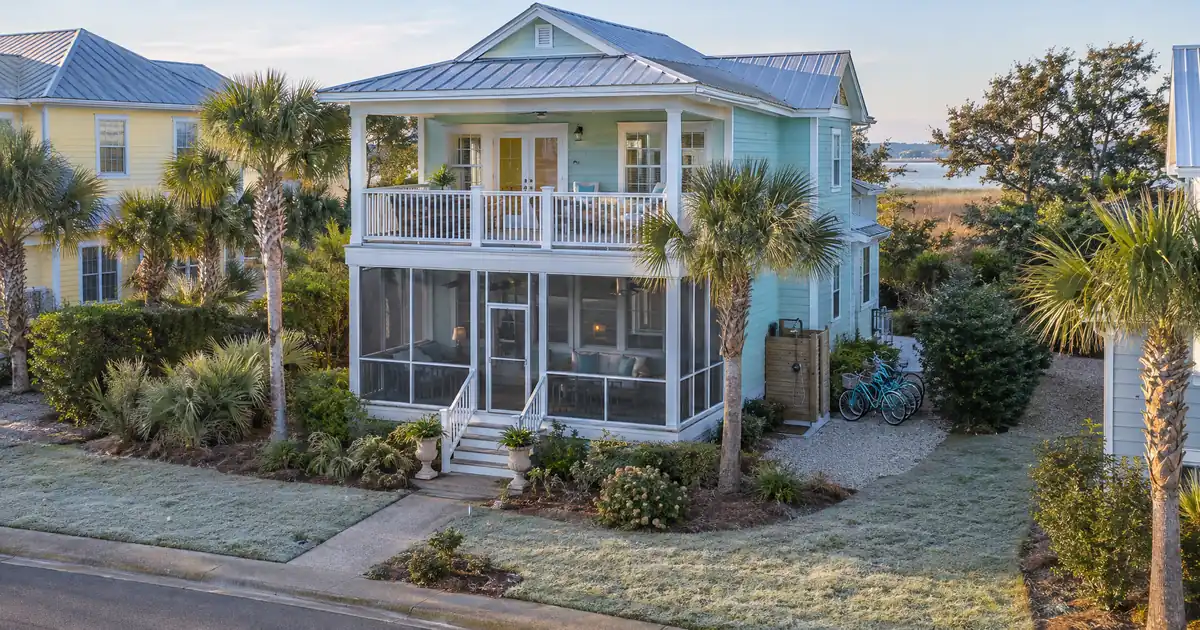
The Quick Read: Treat the permit as a pass/fail gate first, then run the deal on three income cases before you make an offer. A permit cap limits how many short-term rental permits a jurisdiction will issue, and the seller’s permit often does not convey to you. If you cannot legally operate, the short-term income behind your coverage ratio stops being supportable.
- Check the permit status of the specific address, not the market.
- Assume the seller’s permit does not transfer until the ordinance says otherwise.
- Run three coverage ratios: short-term rental, long-term rent, and permit denied or delayed.
- Tie your contract to permit issuance, with enough time to get an answer.
- Short-term rental rules can vary by city, county, HOA, and property type, so investors should confirm local rules before relying on projected rental income.
What Is Permit-Cap Risk?
A permit cap limits how many short-term rental permits a jurisdiction issues. The limit can be a fixed count, a share of the housing stock, a per-zone limit, a per-owner limit, or a distance buffer between permitted units. A night cap is a different thing: it limits how many nights a unit can be rented, not whether you can operate at all.
Short-Term Rental Calculator
Run the STR numbers in your market
Rate source: Freddie Mac 30-yr average via FRED® — Federal Reserve Bank of St. Louis · effective Oct 15, 2026
Prefilled with starting assumptions — enter your nightly rate, occupancy, taxes, and insurance for a more accurate picture.
Short-term rental income is documented with a 12-month history or a market data report. Program parameters update from Lendmire’s centralized guideline source.
As of Oct 15, 2026 · General Freddie Mac market benchmark, not a Lendmire loan offer. Nightly rate, occupancy, taxes, and insurance are editable estimates. Qualifying income for short-term rentals varies by program — some use appraisal market rent, others use documented STR history or projections — and is confirmed in underwriting. Not a Loan Estimate, approval, or commitment to lend. Program availability and eligibility are subject to lender guidelines, credit approval, property review, and underwriting.
Caps come in many shapes. Staystra’s permit-cap survey describes San Diego limiting whole-home permits to 1% of total housing stock, and notes that Hood River, Oregon won a court challenge to its cap. BiggerPockets describes New Orleans as allowing one permit per block.
Other places have no cap at all. Colorado Springs says on its own STR page that it has no cap on the number of short-term rentals it approves, though non-owner-occupied units face extra standards. So “does this market have a cap?” has a different answer in every jurisdiction. Never generalize.
Why Does a Permit Cap Matter to a DSCR Loan?
A DSCR loan qualifies primarily on property-level rental income covering the payment, subject to lender guidelines. DSCR means debt service coverage ratio: monthly rental income divided by the monthly payment of principal, interest, taxes, insurance, and any HOA dues (PITIA).
On a short-term rental, the income figure usually rests on a projection or platform history instead of a lease. If the unit cannot legally operate as a short-term rental, that income is not supportable. The ratio you thought you had changes.
Here is what we see across our wholesale network: deals rarely fail because the numbers were bad. They fail because the income was never legally the buyer’s. Lenders differ in how strictly they check legality and what fallback income they use, so a permit problem can surface late in the file.
Program context matters too. Across the network, short-term rental purchases typically go up to 75% LTV on the strongest files. LTV is loan-to-value, the loan as a share of the property’s value. Refinances and cash-outs on short-term rentals generally top out around 70%. Most programs expect a 640 or higher credit score and about 12 months of landlord or host experience. Purchase and refinance files each start at a 1.00 coverage floor, subject to lender guidelines. Our complete DSCR loans guide covers the full program picture.
How Do You Underwrite It, Step by Step?
Work the problem in this order. Each step can kill the deal, so do not skip ahead to the spreadsheet.
Step 1: Confirm the zone and the HOA
Is short-term rental use allowed at that address at all? Zoning, owner-occupancy or primary-residence requirements, and HOA covenants all matter. Some counties ban short-term rentals outright, and others license them at real cost in time and money. Covenants can block use even in an eligible zone, so get the HOA’s written authorization.
Step 2: Get the live cap count and queue position
Ask the jurisdiction, not the listing agent. How many permits exist, how many are allowed, and is there a waitlist? Local guides report some towns at or near their limits. One guide puts Truckee, California at a 1,255-permit cap with 304 applicants waiting as of July 2, 2026. Another says two Northern Michigan townships have full caps with waitlists. Those counts come from local agent and practitioner pages, not the ordinances, and they change. Treat them as illustrations and pull the current number from the city or county.
Step 3: Assume the permit does not convey
This is the central mechanic. Many ordinances tie the permit to the applicant, not the address. The City of Steamboat Springs FAQ says licenses do not transfer with a sale, so the new owner must get a license in their own name before operating. The city also treats a transfer of ownership interest in an entity owner as triggering a new license.
Local guides report the same pattern in Nashville, Sedona, Memphis, and La Quinta. Grandfathered status usually ends at sale, too. A seller’s glowing reviews and twelve-month income statement prove demand. They do not prove you can operate.
Step 4: Pick the income basis that matches legal reality
If a permit is not available to you, the defensible fallback is long-term rent, which is usually lower. One investor discussion on BiggerPockets recommends underwriting mid-term and long-term rent as a downside case to confirm the deal survives a rule change. That is the right instinct.
Step 5: Collect documents during the contract period
- The seller’s current permit and registration number.
- Written confirmation from the jurisdiction on zoning eligibility, cap count, and waitlist position.
- The HOA or CC&R authorization letter.
- The new owner’s application and fee schedule.
- The seller’s lodging-tax filings and platform statements.
Step 6: Decide
Three questions decide it. Is the address eligible by zone and HOA? Is a permit slot available to you on a timeline that fits the contract and loan? Does the deal still work on fallback income?
Know Your Cap Type
Different caps fail in different ways. Match the cap to the question you ask the city.
| Cap type | How it works | Typical failure |
|---|---|---|
| Fixed count | Set number of permits | Full, waitlisted |
| Share of housing | Percent of stock | Slots run out |
| Distance buffer | Spacing between units | Neighbor blocks you |
| Per-owner limit | Max permits per host | Portfolio hits limit |
| Lottery | Draw when oversubscribed | No guaranteed slot |
One Coachella Valley guide describes a city capping permitted rentals at 4% of residential properties with a 500-foot separation rule. Verify any figure like these with the city before relying on it.
Where the General Rule Breaks
Several edge cases change the answer.
- Waiting periods before you can apply. The Truckee guide reports a 365-day post-sale rule, with a reported average wait of roughly 16 months after that. That almost always defeats a purchase underwritten on short-term income.
- Owner-occupant exemptions. Some places exempt owner-occupied homes from the cap. An owner-occupant can get a permit an investor cannot. A DSCR loan is a business-purpose product for non-owner-occupied investment property, so you may land on the wrong side of that line.
- Rules change mid-process. One Colorado county discussed a draft that would end its waitlist and simply stop accepting applications once a zone hits its cap. Rules can move between contract and closing.
- Entity transfers. Buying through an LLC, subject to lender program eligibility, can matter. Steamboat Springs counts a change of ownership interest in an entity as a new-license trigger, and a Sedona guide reports the same.
- Per-unit permits. A Sedona guide says each advertised unit needs its own permit, so a main house plus casita needs two.
- Fees without approval. A Monterey Peninsula law-firm guide says paying the application fee gets you considered, not approved. If the cap is full, the application can be rejected or waitlisted, and fees are typically non-refundable.
- No rules at all. Open markets shift the risk to zoning, HOAs, and future votes. BiggerPockets notes that places with no rules worry experienced investors, because one vote could change everything.
How Do You Run Three Coverage Cases?
Run three ratios before you offer. Express each as a DSCR, not a cash-flow dollar.
1. Short-term case. Projected or historical short-term income against the full payment. Strong files clear it with room to spare.
2. Long-term case. The same property on long-term rent. This is your honest fallback.
3. Denied or delayed case. The long-term ratio, plus the carry cost of every month you wait before the permit arrives.
Picture a property priced on short-term revenue that clears 1.30x on that basis but sits near 0.85x on long-term rent. If the permit fails, you own a rental priced for income it cannot earn. Coverage below 1.00 is available through select lenders in the network, with leverage and terms adjusted. But you would be financing a smaller-leverage deal you never planned, or bringing more cash to close.
Also remember what DSCR measures. It compares rent to PITIA only. Clearing 1.00 is not positive cash flow, because repairs, vacancy, management, utilities, and capex sit outside the calculation. Strong short-term numbers also vary by season, which is part of why short-term loans get closer review than long-term ones.
Build the Timeline and the Contract
Timeline risk is financing risk. A waiting period or a long waitlist can outlast your contract, your interim-income plan, and your reserve cushion. Reserves vary by lender, leverage, loan size, and transaction type, commonly around six months of PITIA. A long wait burns through that cushion on a property that earns nothing as a short-term rental.
Protect yourself in the contract. Ask your attorney about a permit or zoning contingency, an extended due-diligence window tied to permit issuance, and deposit protection if the permit is denied. Buyer-side contingencies are an investor practice, not a regulator rule, and counsel should word them.
Questions to Ask Your Lender Before You Offer
- What income do you use if the permit is denied or delayed?
- How do you verify that short-term use is legal for this address?
- Does the appraisal treat income as short-term or long-term?
- What happens if permit status changes after closing?
As a broker, Lendmire can compare how different lenders in its wholesale network answer these, so you hear the differences before you commit. Several programs treat legality checks differently, and you want that answer in writing.
Go, Renegotiate, or Walk
| Signal | Read | Action |
|---|---|---|
| Permit transfers by ordinance | Green | Proceed, confirm in writing |
| Slot open, buyer must apply | Yellow | Add contingency |
| Cap full, waitlist | Red | Price on long-term rent |
| Waiting period before applying | Red | Walk, or buy for long-term use |
| Deal fails on fallback income | Red | Walk |
If the deal only works on short-term income and the permit is not yours yet, price the property as a long-term rental or walk. Do not pay an operating-business premium for a business you cannot legally run.
DSCR vs. conventional financing
There are two common ways to finance an investment property, and they qualify you differently — here’s how investors weigh them.
Why investors choose it
- Qualifies on the property’s rental income — no personal tax returns, W-2s, or pay stubs needed to document income.
- No personal debt-to-income ceiling to clear, so existing mortgages and obligations don’t cap your borrowing the same way.
- Can be closed in an LLC, keeping the property inside a business entity.
- Built for scaling — not held to the limit on number of financed properties that conventional financing applies.
- Underwriting centers on the deal: generally qualifies when the rent covers the payment, a 1.00x coverage ratio being a common baseline (confirmed in underwriting).
- Designed specifically for investment property, including long-term and, where the program allows, short-term rentals.
Where it’s strong
- Often the lowest ongoing financing cost for a buyer who fully qualifies on personal income — a fit for a first property or a cost-first purchase.
Trade-offs for investors
- Requires full personal income documentation and must fit within a debt-to-income limit — salary, existing debts, and other mortgages all count.
- Typically held in your personal name rather than a business entity.
- Caps how many financed properties you can carry, which can become a ceiling as a portfolio grows.
- Evaluates you as a borrower as much as the property, which usually means more paperwork.
How investors usually choose: a first or single property often optimizes for the lowest financing cost; portfolio builders often optimize for leverage, vesting in an LLC, and scaling past conventional caps. The right answer depends on your goals, the property, and current guidelines — both paths run through select lenders in Lendmire’s wholesale network, with eligibility and terms confirmed in underwriting.
After You Close
Rules keep moving. Track council agendas, renewal dates, and whether grandfathered permits count against the cap. If you plan to cash out later, see Lendmire’s piece Can You Cash-Out Refinance an Airbnb Before Twelve Months?. A permit you can renew supports your exit. One you cannot shrinks your buyer pool to investors who can obtain a new permit.
Tax treatment can depend on how the funds are used and how the property is held; investors should keep clear records and speak with a qualified tax professional before relying on any deduction.
Key Terms Defined
Permit cap: A limit on how many short-term rental permits a jurisdiction will issue.
Grandfathered permit: A permit that survives a rule change for the current holder, usually ending at sale.
DSCR: Monthly rental income divided by the monthly PITIA payment.
PITIA: Principal, interest, taxes, insurance, and any HOA dues.
Non-transferable permit: A permit that belongs to the applicant, not the address.
Fallback income: The long-term rent you would rely on if short-term use is not allowed.
Frequently Asked Questions
Does the seller’s permit transfer to me?
Often not. Steamboat Springs says licenses do not transfer with a sale, and local guides report the same in several other towns. Assume it does not until the ordinance and the jurisdiction confirm otherwise in writing.
What if the cap is full when I apply?
You may be waitlisted or rejected, and application fees are typically non-refundable. Price the property on long-term rent, use a permit contingency, or pass. A full cap makes a short-term-income purchase a gamble.
Will a DSCR lender finance a property in a capped market?
It depends on the lender, the address, and the income basis. Programs in the network typically want legal short-term operation for short-term income, and may fall back to long-term rent. Everything remains subject to lender guidelines, credit approval, and property review.
Does buying through an LLC change permit eligibility?
It can, because some cities treat a change in entity ownership as a new-permit trigger. LLC purchases are subject to lender program eligibility as well, so confirm both before you sign.
What is the first step?
Confirm legal status at the address with the city or county before you tour. Then get HOA authorization, cap count, and waitlist position. Do the math only after those answers are in.
If you are buying or refinancing a rental property and want to see how the numbers work, Lendmire can help you compare DSCR loan options based on the property income, credit profile, leverage, and investor goals. Programs change, every file is underwritten individually. This is not a commitment to lend.
Many caps look permanent until a council vote reshapes them, so the safest short-term rental purchase is one that still works if the permit never arrives.
Investors focused on short-term rentals can review DSCR loans for Airbnb and short-term rentals.
About Lendmire
Lendmire (NMLS# 2371349), a non-QM mortgage broker serving investors in 41 markets including Washington, D.C., helps structure DSCR scenarios commonly evaluated around a property’s rental income rather than personal income paperwork, subject to lender guidelines. A Scotsman Guide Top Mortgage Workplace in 2025 and 2026, Lendmire places loans through wholesale investor lenders and is not a direct lender.
Get Started
Ready to find the right loan for you?
In about 30 seconds you can review financing options available for your investment property. No commitment required.
Informational only. Not a Loan Estimate, approval, or commitment to lend. Program availability and eligibility are subject to lender guidelines, credit approval, property review, and underwriting.
References
2. BiggerPockets: markets to think twice about
3. City of Colorado Springs STR page
4. City of Steamboat Springs STR FAQ
5. BiggerPockets forum: short-term rental loophole
6. HOMEmade Coachella Valley guide
This article is part of Lendmire’s short-term rental loan program — full qualification details, guidelines, and scenarios live on the program page.
Related reading: How to Qualify for a DSCR Loan in Mississippi · How to Qualify for a DSCR Loan in Oklahoma · How to Buy an Airbnb With a Partner Using a DSCR Loan
Brandon Miller
Founder & CEO, Mortgage Loan Originator, Lendmire LLC
- Mortgage Loan Originator · NMLS# 1129696 · Verify on NMLS Consumer Access
- North Carolina Real Estate Broker · License# 343312 · Verify on NCREC
- North Carolina Insurance Producer · License# 19053198 · Property, Casualty, Life, Health · Verify on NAIC SBS
- Lendmire LLC · Firm NMLS# 2371349 · Verify firm licensure
Legal disclosures. Lendmire (NMLS# 2371349) is a state-licensed mortgage brokerage that arranges financing through wholesale lender relationships. Lendmire is not a direct lender, depository institution, or registered financial advisor. The discussion above is general informational content about real estate financing — it is not financial, legal, or tax advice, and readers should consult licensed professionals for guidance on their individual circumstances. Loan inquiries are subject to lender underwriting; this article does not represent a commitment to lend. Loan terms, rates, and qualification standards vary by borrower, property, and state, and are subject to change at any time. Equal Housing Opportunity. NMLS Consumer Access: nmlsconsumeraccess.org.