
The Quick Read: Start with the income the rental program actually pays the owner, not the building’s advertised nightly rate, then apply the lender’s income factor and divide by the full monthly obligation, including association dues and resort fees, so the resulting coverage ratio can be compared with the program floor and stress-tested.
- Use the owner-statement figure, meaning what the rental pool pays you after its split, not gross revenue.
- Put every dues and fee line into the payment side, because they can sink coverage on their own.
- On short-term rental collateral, select programs in Lendmire’s wholesale network typically go up to 75% LTV on a purchase and up to 70% on a refinance or cash-out, subject to lender guidelines.
- Clearing the coverage floor is not the same as positive cash flow, so run a second, investor-side check.
- Run the ratio three ways (base case, weaker occupancy, higher dues) before you make an offer.
Key Terms Defined
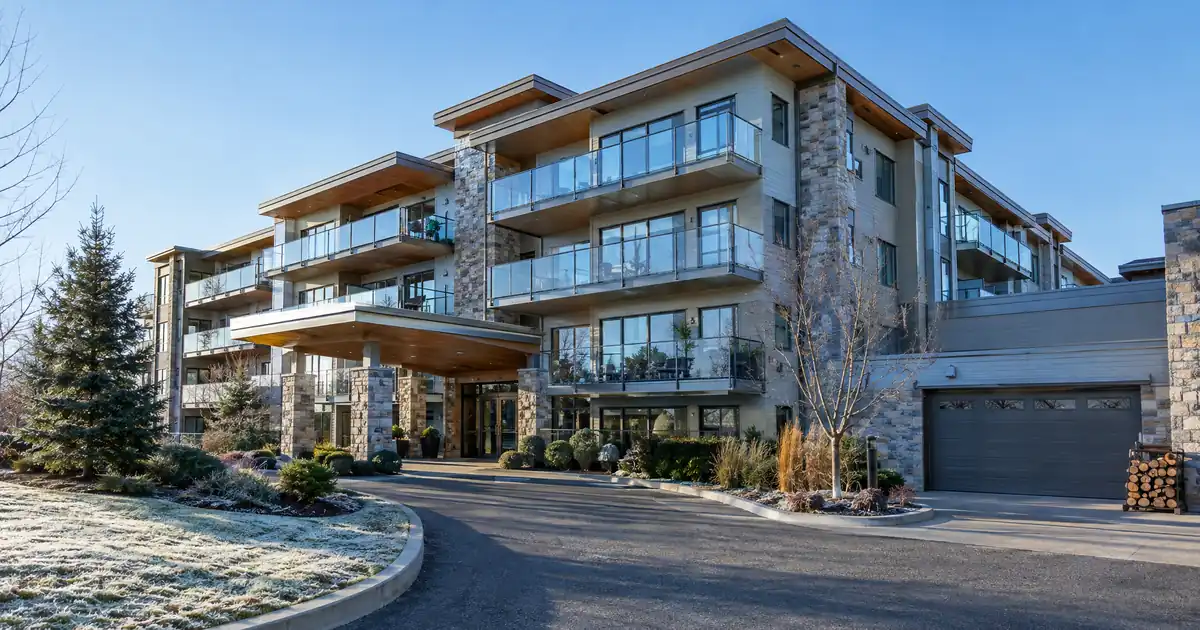
Condotel: A condo unit inside a building that operates like a hotel, usually with a front desk and a rental program that rents your unit to guests.
Rental pool: An arrangement where the operator rents many owners’ units together and splits the revenue between the operator and each owner.
DSCR (debt service coverage ratio): Qualifying monthly income divided by the full monthly payment. A result of 1.00 means income exactly covers the payment.
PITIA: Principal, interest, taxes, insurance, and association dues. It is the payment side of the ratio.
ADR (average daily rate): The average nightly price actually paid for booked nights.
Occupancy: Booked nights divided by nights available, so blocked nights do not count against you.
LTV (loan-to-value): The loan balance as a percentage of the property’s value.
Seasoning (hosting history): The track record a lender wants to see, such as about 12 months of documented short-term rental operation.
Why a Condotel Gets Its Own Math
A condotel does not behave like an ordinary rental, because someone other than you runs the rental business and takes a cut. The loan numbers have to follow the money as it actually reaches you. A standard long-term rental pays rent straight to the owner. In a condotel, guests pay the operator, and the operator pays you.
That one difference changes every input. You cannot take the building’s average nightly rate, multiply by nights, and call it your income. Between the guest’s payment and your bank account sit the operator’s share, fees, and reserve charges.
The first step is confirming the property is a true condotel. Sometimes the label is attached to a self-managed short-term rental inside a regular condo building, with no hotel program behind it. That is a different property type with its own review. The second step is collecting the paperwork: the association documents, the rental-program or management agreement, and the condo questionnaire. Those three documents tell you who runs the rentals, how revenue is split, and what the building charges owners.
Step One: Choose the Income Number
Lenders reach a condotel’s income through one of three routes, and each produces a different number. Most files in the network lean on documented history when it exists. When it does not, they lean on an appraiser’s analysis.
| Income route | What it is | Typical use |
|---|---|---|
| Trailing history | Twelve months of operator or rental-pool statements | Refinance, or a seasoned unit |
| Appraisal STR analysis | Appraiser’s estimate from comparable stays | Purchase with no history |
| Long-term rent schedule | Appraiser’s monthly-lease estimate (Form 1007 or 1025) | Stress test and fallback |
The long-term rent schedule deserves a note. The appraisal forms behind it assume a home with one tenant on a monthly lease. That is why a condotel needs a short-term analysis in the first place, and why the long-term figure works best as a comparison rather than the main number.
Purchase files usually require an experienced investor. Short-term rental programs typically expect about 12 months of landlord or hosting experience, subject to lender guidelines. Third-party tools can help you sanity-check the ADR and occupancy behind a projection. Per AirDNA’s revenue documentation, its revenue figures are nightly rates plus cleaning fees, minus service fees and discounts, and they leave out other host fees. That makes the output a gross-style number, not net income. The vendor’s own glossary defines net operating income as revenue after operating costs such as maintenance, cleaning, and management fees. The two figures are not interchangeable.
One more limit applies to comparable-listing tools. AirDNA’s site says its Rentalizer projects revenue from comparable listings within a 10-mile radius. A resort condotel with a front desk and a pool is not like an ordinary apartment listing a few miles away. Treat a radius-based projection as a rough guide, not a substitute for the operator’s statements.
Step Two: Convert Gross Into Owner Income
This is the step where most condotel deals change shape. Your credited income is what the rental pool pays you, not what guests pay the building. Gross revenue is the marketing number. The owner statement is the underwriting number.
Splits vary by project. Wikipedia’s condo hotel entry says splits vary but most hover around 50%, and it lists a furniture-and-fixtures reserve and resort fees among the typical monthly charges. One investor in a BiggerPockets condo hotel discussion described a 60/40 split in the management company’s favor. Treat those as examples of the range, not as your deal. Your agreement sets your split.
Here is the practical rule. Feed the underwriter the owner-statement figure or net proceeds. Then ask the lender which number its income factor applies to. If the program applies a haircut on top of an already-split figure, your coverage is thinner than a gross calculation suggests. Confirming that before you offer saves a bad surprise later.
Participation terms matter here too. Ask whether the rental program is mandatory or optional. Ask about owner-use day limits and blackout dates. A resort buyer who wants weeks of personal use may reduce the documented income, and heavy owner use can affect how the unit is treated as an investment.
Step Three: Build the Payment Side
The denominator is the full PITIA, and in a condotel the dues line can be large. Include principal, interest, taxes, insurance, plus association dues and any resort or amenity charges the building bills to owners. Budget for taxes and insurance as they vary by county, and ask the operator whether any special assessments are planned.
Do not forget the lines owners tend to overlook. A furniture-and-fixtures reserve, a resort fee, and a dues increase all land on the payment side or reduce what the pool pays you. Build the ratio with the full obligation, then check what happens if dues rise.
The Worked Example (Modeled, Not a Quote)
This example uses index units rather than dollars, and every input is a modeled assumption, not market data or a loan quote. Say the building’s gross unit revenue is 100 units over a year.
| Line | Modeled value |
|---|---|
| Gross unit revenue | 100 |
| Owner share after pool split (modeled 50%) | 50 |
| After the lender’s income factor (modeled haircut) | 45 |
| Full payment obligation, dues and fees included | 40 |
| Coverage ratio (45 ÷ 40) | 1.125 |
That unit clears a 1.00 floor with some room. Now stress it. The table below changes one input at a time against the same base.
| Scenario | Qualifying income | Ratio |
|---|---|---|
| Base case | 45 | 1.125 |
| Occupancy one-tenth lower | 40.5 | about 1.01 |
| Dues and fees up 10% | 45 | about 1.02 |
| Both together | 40.5 | about 0.92 |
| Owner share drops to 40% of gross | 36 | 0.90 |
Two lessons come out of that table. First, the break-even is close. In this model, income can fall only about 11% from the base case before coverage reaches 1.00. Second, a worse split hurts more than a slower season. A unit that looks comfortable on gross revenue can fall below the floor once the pool’s share and a rise in dues are included.
Two Numbers: The Lender’s and Yours
The coverage ratio compares income to the loan payment and nothing else. It leaves out repairs, vacancy beyond what the statements show, utilities you pay, replacement of furnishings, and capital expenses. Clearing 1.00 does not mean the unit puts money in your pocket.
So run a second number. Take the owner-statement income, subtract the costs the DSCR calculation ignores, and compare what remains with your cash invested. A deal can pass the lender’s test and still earn little. A resort buyer who also values personal use should weigh that trade-off honestly, because the unit’s value to you is not only its rental return.
What the Financing Looks Like Across the Network
Across the select lenders Lendmire places short-term rental files with, the typical guidelines run like this, and they are subject to lender guidelines, credit approval, and property review. On a purchase of short-term rental collateral, leverage tops out at 75% LTV on the strongest files. On a refinance or cash-out of short-term rental collateral, it is up to 70%. Expect a credit score of 640 or higher. Pricing and available terms vary by lender, borrower profile, property type, and full underwriting review. Coverage on a purchase has a floor of 1.00, and on a refinance the floor is also 1.00. Standard programs go up to $3,000,000, and smaller balances route through select lenders in the network.
Coverage below 1.00 is a separate path. It is available through select lenders in the network, with leverage and terms adjusted. It is not the same program with a lower floor, and it usually asks more of the borrower elsewhere in the file.
A bigger down payment helps in two ways. It lowers the payment, which lifts the ratio, and it keeps the loan inside the leverage caps. It does not erase credit floors, reserve rules, or property eligibility. The strongest files clear both tests, enough equity and enough rental coverage. For the full picture of how these loans work, see the complete DSCR loans guide.
Reserves vary by lender, leverage, loan size, and transaction type. Many files ask for around six months of PITIA in cash after closing, and larger loans can step up from there. Ask early, because reserves are a frequent late-stage surprise.
Where the General Rule Breaks
The steps above cover the usual condotel. These edge cases change the path.
No operating history. A new building or a new owner has no statements. Underwriting then falls to the appraisal’s short-term analysis or a projection. That route is harder to clear because it rests on an estimate, not on proven performance.
A self-managed unit labeled a condotel. If you run the rentals yourself inside a regular condo, the property is a short-term rental condo, not a condotel. Its income comes from your own hosting history.
Heavy booking-platform listings without hotel operations. A building that lists units on booking sites does not automatically become a condotel, and reviewers may not treat it as one. How the building is classified is a project-level question.
Professional management alone. Some buildings hire a resort manager for property services with no rental program. That does not by itself make the property a condotel.
Projects with a transient character. Fannie Mae’s Selling Guide lists hotel-style projects as ineligible, citing traits such as primarily transient use, rental of units on a daily or short-term basis, and registration services. That limit attaches to the building, not to the buyer, which is why a DSCR path is the usual route. It does not set DSCR guidelines, which come from the investor lenders themselves.
Project health. Association insurance, reserves, litigation, and special assessments can stop a file regardless of the coverage ratio. A strong ratio does not rescue a troubled building.
Cash-out. Leverage and loan-size limits are tested separately, and the stricter one governs. A cash-out on a condotel treated as short-term rental collateral stays within the 70% ceiling noted earlier.
Unsupported income methods. Acceptance of third-party projection data varies by lender. Some programs use it only on purchases. Others want statements. Ask before you build your plan around one method.
Decision Time: A Pre-Offer Checklist
Before you make an offer, request these items from the seller, operator, and association:
- The last twelve months of rental-pool statements showing owner distributions, not just building totals.
- The rental-program agreement, including split, fees, owner-use limits, and any mandatory participation.
- The association budget, current dues, any resort fees, and notice of planned assessments.
- Proof of the building’s insurance and the association’s reserve position.
- Confirmation of how the building is classified for lending.
Then run the ratio on the owner-statement income, with the full payment side, at base, weaker, and higher-dues settings. If the unit only works at the best case, treat that as a warning. If it passes the stress cases and your own cash-flow check, you have a deal worth pricing.
The common mistakes are predictable. Buyers use gross ADR as income. They leave dues out of the payment. They assume the 1.00 floor means cash flow. They treat a projection like a history. And they rely on one good month. Tax treatment can depend on how the funds are used and how the property is held; investors should keep clear records and speak with a qualified tax professional before relying on any deduction.
Frequently Asked Questions
What income do lenders use for a condotel?
They typically use the owner’s documented income after the rental pool’s split, then apply an income factor. On a refinance this usually comes from trailing statements. On a purchase it often comes from the appraisal’s short-term analysis, and it is subject to lender guidelines.
Can I use the building’s gross nightly rate?
No, not as qualifying income. Guests pay the operator, and the operator pays you after its share and fees. Gross revenue is useful for sanity checks, but underwriting follows what reaches the owner.
What if the ratio comes in below 1.00?
You have options. Coverage below 1.00 is available through select lenders in the network, with leverage and terms adjusted. You can also bring a larger down payment, negotiate price, or choose a different term structure such as an extended term or an interest-only period, which are available through select lenders.
Does a larger down payment fix a weak building?
It improves the ratio and keeps you within the leverage caps, but it does not change property eligibility. A building that fails on classification, insurance, or association health stays a problem at any down payment.
How much can I borrow against a condotel unit?
On short-term rental collateral, leverage typically tops out at 75% of value on a purchase and up to 70% on a refinance or cash-out. The final amount also depends on whether the unit clears the coverage floor, your credit score (640 or higher is typical), and reserves, subject to lender guidelines.
Next Steps
If you are buying or refinancing a rental property and want to see how the numbers work, Lendmire can help you compare DSCR loan options based on the property income, credit profile, leverage, and investor goals. As a mortgage broker, Lendmire arranges these loans through select lenders in its wholesale network across 41 markets, including Washington, D.C. Approval and terms are set by the lenders and are not a commitment to lend.
Investors focused on short-term rentals can review DSCR loans for Airbnb and short-term rentals.
About Lendmire
Lendmire is a non-QM mortgage brokerage (NMLS# 2371349) arranging DSCR investor loans in 41 markets, including Washington, D.C. DSCR eligibility is generally reviewed around property-level rental income rather than personal income, subject to lender and program guidelines, a fit for self-employed investors and LLC-owned portfolios. Lendmire was recognized as a Scotsman Guide Top Mortgage Workplace in 2025 and 2026.
Get Started
Ready to find the right loan for you?
In about 30 seconds you can review financing options available for your investment property. No commitment required.
Informational only. Not a Loan Estimate, approval, or commitment to lend. Program availability and eligibility are subject to lender guidelines, credit approval, property review, and underwriting.
References
1. AirDNA Help: How AirDNA Calculates Revenue
2. AirDNA Glossary: Short-Term Rental Revenue
3. AirDNA
5. BiggerPockets: Condo Hotel Discussion
6. Fannie Mae Selling Guide: Ineligible Projects
This article is part of Lendmire’s short-term rental loan program — full qualification details, guidelines, and scenarios live on the program page.
Related reading: How to Confirm 2026 STR Rules Before a DSCR Loan on a Condotel · Condotel vs House for a First-Time STR Loan Borrower · 15% Down vs. 25% Down on a DSCR Loan for a Resort or Cabin STR
Brandon Miller
Founder & CEO, Mortgage Loan Originator, Lendmire LLC
- Mortgage Loan Originator · NMLS# 1129696 · Verify on NMLS Consumer Access
- North Carolina Real Estate Broker · License# 343312 · Verify on NCREC
- North Carolina Insurance Producer · License# 19053198 · Property, Casualty, Life, Health · Verify on NAIC SBS
- Lendmire LLC · Firm NMLS# 2371349 · Verify firm licensure
Important disclosures. Lendmire (NMLS# 2371349) is a licensed mortgage brokerage. Lendmire is not a direct lender, depository institution, or financial advisor. All loan inquiries are subject to lender underwriting; this article does not constitute a commitment to lend. Rates, terms, and program guidelines are subject to change without notice and vary by borrower profile, property type, and state. Information in this article is general in nature and is not financial, legal, or tax advice. Equal Housing Opportunity. NMLS Consumer Access: nmlsconsumeraccess.org.