
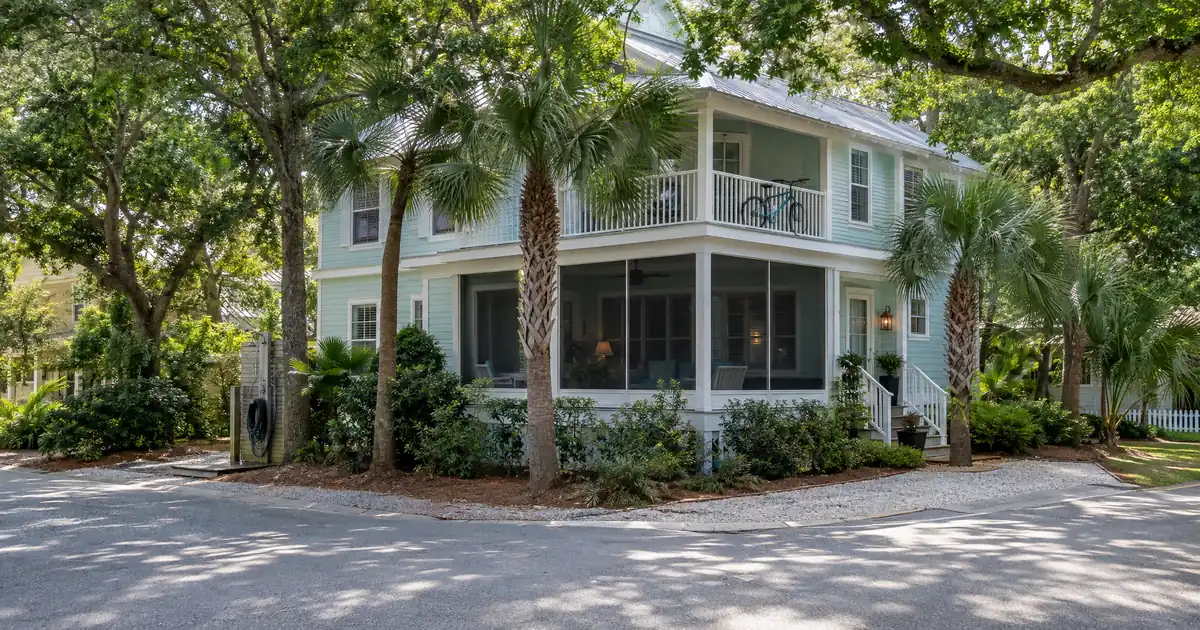
The Quick Read: A full-time host buys a rental home by qualifying on the property’s income rather than on a tax return that shows paper losses. For an investment property, the loan path is usually a DSCR loan, which qualifies primarily on property-level rental income covering the payment, subject to lender guidelines.
- Short-term-rental purchases typically reach up to 75% LTV on the strongest files, with a 640 minimum credit score.
- Expect lenders to want about 12 months of hosting history, and a 1.00 coverage floor on purchases.
- Your own primary residence is a different product. DSCR is for investment property only.
- Legal STR status for the exact address decides whether the income counts at all.
- Clearing 1.00 is not the same as positive cash flow.
Hosting full time creates a documentation problem before it creates a loan problem. Your real income sits in platform payouts and bank deposits. Your tax return shows depreciation and write-offs. A conventional underwriter reads the return. The wholesale network behind Lendmire, a mortgage broker arranging DSCR investor loans in 41 markets including Washington, D.C., reads the property. This piece walks through how that works, step by step, and where it breaks.
Short-Term Rental Calculator
Run the STR numbers in your market
Rate source: Freddie Mac 30-yr average via FRED® — Federal Reserve Bank of St. Louis · effective Oct 15, 2026
Prefilled with starting assumptions — enter your nightly rate, occupancy, taxes, and insurance for a more accurate picture.
Short-term rental income is documented with a 12-month history or a market data report. Program parameters update from Lendmire’s centralized guideline source.
As of Oct 15, 2026 · General Freddie Mac market benchmark, not a Lendmire loan offer. Nightly rate, occupancy, taxes, and insurance are editable estimates. Qualifying income for short-term rentals varies by program — some use appraisal market rent, others use documented STR history or projections — and is confirmed in underwriting. Not a Loan Estimate, approval, or commitment to lend. Program availability and eligibility are subject to lender guidelines, credit approval, property review, and underwriting.
What Does “Buying a Home” Mean for a Host?
Two different loans hide behind that phrase, and the occupancy declaration picks between them. One is an investment purchase: a house you will operate as a rental business. The other is a primary residence: the home you live in.
For the investment case, the usual non-QM answer is a DSCR loan. It looks at whether the property’s income covers the full monthly obligation (principal, interest, taxes, insurance, and any HOA dues). The Lendmire complete DSCR loans guide covers the basics in more detail.
For a primary residence, DSCR is the wrong tool. HousingWire’s non-QM guide sorts borrowers this way: self-employed buyers with strong deposits but low taxable income start with bank statement, 1099, or profit-and-loss programs, and rental buyers start with DSCR. Bank statement programs review 12 to 24 months of deposits and apply an expense factor to business accounts. A host who wants to live in the home needs that documentation path instead.
Agency loans are a contrast point only. Fannie Mae’s Selling Guide lets lenders use positive rental income only when the borrower has at least 12 months of property management experience. DSCR loans are not agency products and do not follow that rule. The point is why a strong operator can still look under-qualified on a conventional file.
Key Terms Defined
DSCR (debt service coverage ratio): Monthly property income divided by the monthly PITIA.
PITIA: Principal, interest, taxes, insurance, and association dues, the full monthly housing obligation.
TTM (trailing twelve months): The most recent 12 months of income, taken from platform payouts, a manager statement, or deposits.
Form 1007 / Form 1025: Appraiser rent-schedule forms for single-family homes (1007) and for 2-4 unit properties (1025).
Haircut: A reduction applied to gross short-term-rental revenue before the ratio is calculated.
Seasoning: The ownership period a lender expects before certain transactions, such as cash-out.
How Does Underwriting Treat Airbnb Income, Step by Step?
Underwriting a host file comes down to one question: which income number goes over the payment. The ratio is simple. The input is where files differ.
1. Pick the income method. Programs differ. The first document a lender usually asks for is the trailing-12-month income statement, built from platform payouts, a property manager statement, or bank deposits. Where there is no operating history, as on many purchases, a third-party projection report or the appraiser’s market rent fills the gap.
2. Apply the haircut. Programs often discount short-term-rental revenue before dividing. The percentage varies by program, and the network does not use one number across the board.
3. Divide by PITIA. Revenue over the full monthly obligation gives the coverage number. As a pure illustration, income that is double the obligation reads 2.00, and income that falls short of it reads below 1.00. That is simply how the ratio works.
4. Run the property checks. The appraisal sets value and market rent. Legal STR eligibility has to be confirmed for that address.
5. Run the borrower checks. DSCR skips personal income documentation, but it is not no-doc. Credit, assets, and reserves still apply.
6. Confirm the entity. Many DSCR files close in an LLC name, subject to lender program eligibility.
Across the network, short-term-rental purchases go to 75% LTV, with refinances around 70%. Most programs want a 640+ score on these files. Loan sizes run up to $3,000,000 on standard programs. Reserves vary by lender, leverage, and loan size, commonly around 6 months of PITIA. All of this is subject to lender guidelines and individual underwriting.
Here is the catch most hosts miss. The same house can pass on trailing-12 income and fail on the appraiser’s long-term rent, or the reverse. Run every method before making an offer.
What Counts as Qualifying Income for a Host?
Actual income is documented history. Subject income is a projection. Lenders generally accept the first and treat the second as a fallback, and Fannie Mae’s guidance on short-term rental income shows the agency side also moved toward a defined method, though the details are not needed for a DSCR file.
Sporadic or one-time rental income is generally not accepted. Seasonality gets averaged: because the trailing-12 method spreads income across the full year, a summer peak does not carry a weak winter.
Gross revenue is also not the same as what a lender uses. Repairs, management, utilities, and capex sit outside the DSCR calculation, so a file can clear 1.00 and still lose money at the property. Keep your own net-income math separate.
The Tax-Return Gap
Depreciation and write-offs help at tax time and hurt conventional qualification. That is the core reason full-time hosts get routed to property-based programs.
How a short-term rental is classified for tax purposes is also contested. Keeper says an average stay of 7 days or less plus substantial services points to Schedule C, while Taxstra says most STRs stay on Schedule E, treating the 7-day rule as a passive-activity test. Tax treatment varies; consult a qualified professional.
What Structures and Variations Exist?
There are a few honest paths for a full-time host.
| Situation | Typical path | Income basis |
|---|---|---|
| Buying a rental, no hosting history | DSCR purchase | Projection or appraiser rent |
| Established host buying another rental | DSCR purchase | Trailing-12 documented income |
| Host wanting to live in the home | Bank statement / 1099 / P&L | Deposits and expense factor |
| Refinancing an existing STR | DSCR refinance | Documented history |
Beyond the path, terms vary. The spine is a 30-year fixed, with extended terms and interest-only periods available through select lenders in the network, and ARM structures for investors who want them. Above $2,500,000, the network generally holds to 30-year fixed.
On leverage, a larger down payment lowers the monthly obligation and can lift coverage. It never erases credit floors, reserve rules, or property eligibility. The strongest files clear both tests: enough equity and enough rental coverage.
Coverage below 1.00 is a separate matter. 1.00 is where select programs start for short-term rentals, and a separate select-lender path takes coverage below 1.00 with leverage and terms adjusted. No-ratio qualification is available only through select lenders, generally for borrowers who already own a primary residence.
Where Does the General Rule Break?
Most hosting files run clean on the standard path. These are the cases that don’t.
No operating history. First-time hosts and long-term-rental switchers rely on projections or appraiser analysis. Refinances generally need actual history, and the network usually expects about 12 months of hosting experience.
Occupancy mismatch. Declaring a property investment while planning to live in it breaks the file. The declaration drives the program.
Ineligible property types. Manufactured homes (single- and double-wide), log homes, and barndominiums are not offered through the network’s DSCR programs.
Local rules. Short-term rental rules can vary by city, county, HOA, and property type, so investors should confirm local rules before relying on projected rental income. Lofty notes there is no federal STR law. A permit cap can erase the income basis: AirROI cites a 190-permit cap in one small city, with about $25,701 in annual revenue per listing at stake. Treat that as an illustration, not a typical figure.
Hotel-like buildings. Fannie Mae’s multifamily guide treats short stays as commercial leases, which is an agency-side contrast, not a DSCR rule.
What Does the Decision Look Like in Practice?
Picture an established host with a documented trailing-12 history who wants a second house. Her coverage clears 1.00 on documented income but falls short on the appraiser’s long-term rent. The file is workable only if the program accepts the TTM method. That one choice decides the outcome, so she asks the broker which programs use which method before choosing a property.
Now take a first-time host with a strong credit profile and no history. His purchase leans on projection or appraiser rent, and leverage may sit lower. Credit of 700+ opens stronger tiers on the network’s wider programs, and 640 is the short-term-rental floor.
A working habit helps both. Reconcile platform payouts, bank deposits, and traditional personal-income documentation before the file goes in. Commingled accounts and gaps between payouts and deposits are the quiet reason files stall. Entity documents, reserves documentation, and appraisal access are the others.
Lendmire’s piece Can a Full-Time Airbnb Cash-Out Refi Replace a Second-Home Loan? covers the equity side for hosts who already own.
DSCR loans are designed for non-owner-occupied investment properties. Because they are business-purpose investor loans, they are reviewed differently from a standard owner-occupied mortgage.
Frequently Asked Questions
Can a full-time host use a DSCR loan to buy the home they live in?
No. DSCR is built for investment property. A host buying a primary residence is generally pointed to bank statement, 1099, or profit-and-loss programs, which review 12 to 24 months of deposits. The occupancy declaration decides which path applies.
How much hosting history do I need?
About 12 months is typical for short-term-rental files, with a 640+ credit score. Without history, a purchase may rely on a third-party projection or the appraiser’s market rent, with terms adjusted by lender. Each figure is subject to lender guidelines and a complete review of property type, leverage, and credit.
How much can I borrow on a short-term rental purchase?
Leverage goes up to 75% LTV on the strongest files, and refinances run around 70%. Standard programs reach $3,000,000. Reserves and credit tiers still apply, and each file is underwritten individually. Leverage, reserves, and pricing vary by lender and program; the final terms follow the full file review.
Does clearing 1.00 mean the property cash flows?
No. The ratio compares income to PITIA only. Repairs, vacancy, management, utilities, and capex sit outside it, so run a separate net-income analysis.
What if the DSCR comes in below 1.00?
Select lenders in the network offer programs below 1.00, with leverage and terms adjusted. Eligibility depends on credit, reserves, and the property.
If you are buying or refinancing a rental property and want to see how the numbers work, Lendmire can help you compare DSCR loan options based on the property income, credit profile, leverage, and investor goals. Reach the team at 828-256-2183 or request a quote.
Confirm the address is legal to operate as a short-term rental before the appraisal gets ordered, since permit eligibility is a separate question from loan eligibility.
About Lendmire
Lendmire, NMLS# 2371349, is a mortgage brokerage focused on investor financing, arranging DSCR loans in 40 states plus Washington, D.C. — 41 markets total. Qualification is based on the property’s income rather than personal income documentation, subject to lender guidelines, making it a fit for LLC-held rentals and scaling portfolios. Scotsman Guide named Lendmire a Top Mortgage Workplace in both 2025 and 2026.
Get Started
Ready to find the right loan for you?
In about 30 seconds you can review financing options available for your investment property. No commitment required.
Informational only. Not a Loan Estimate, approval, or commitment to lend. Program availability and eligibility are subject to lender guidelines, credit approval, property review, and underwriting.
References
1. HousingWire — Non-QM loans guide
2. Fannie Mae Selling Guide, rental income
3. Fannie Mae’s guidance on short-term rental income
This article is part of Lendmire’s short-term rental loan program — full qualification details, guidelines, and scenarios live on the program page.
Related reading: How to Cash-Out Refinance Your Home to Buy an Investment Property · Buying an Airbnb With Cash vs. a DSCR Loan · How Much Down Payment Does an Airbnb Loan Require?
Brandon Miller
Founder & CEO, Mortgage Loan Originator, Lendmire LLC
- Mortgage Loan Originator · NMLS# 1129696 · Verify on NMLS Consumer Access
- North Carolina Real Estate Broker · License# 343312 · Verify on NCREC
- North Carolina Insurance Producer · License# 19053198 · Property, Casualty, Life, Health · Verify on NAIC SBS
- Lendmire LLC · Firm NMLS# 2371349 · Verify firm licensure
Important disclosures. Lendmire (NMLS# 2371349) is a licensed mortgage brokerage. Lendmire is not a direct lender, depository institution, or financial advisor. All loan inquiries are subject to lender underwriting; this article does not constitute a commitment to lend. Rates, terms, and program guidelines are subject to change without notice and vary by borrower profile, property type, and state. Information in this article is general in nature and is not financial, legal, or tax advice. Equal Housing Opportunity. NMLS Consumer Access: nmlsconsumeraccess.org.