
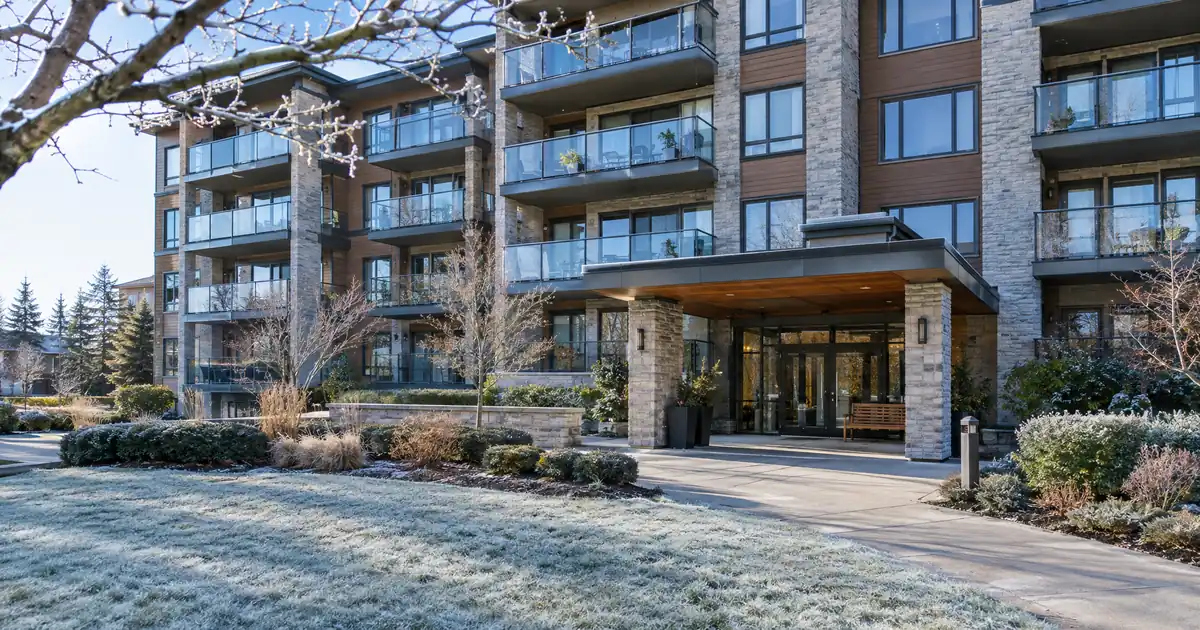
The Quick Read: A condotel loan clears two separate tests: the building must be eligible, and the unit’s rental income must cover the full payment, HOA dues included. Lenders underwrite those tests separately, so strong income cannot rescue a building the lender will not take. Most files run through non-QM DSCR programs, and the lender pool for condotels is narrower than for ordinary rentals.
- Short-term rental purchases typically reach up to 75% LTV, with a 640 minimum credit score and about 12 months of hosting experience expected.
- Refinances and cash-out on short-term-rental collateral typically top out near 70% LTV.
- Coverage starts at 1.00 on select programs, and HOA and hotel-style fees count in the payment.
- Mandatory rental pools, no owner use, and no full kitchen are the usual building-level deal killers.
- Identify the property type before you make an offer, not after.
Say you find an oceanfront studio listed as “Airbnb friendly” and a pre-approval letter in your inbox. That combination feels like a green light. It is not one. The letter was probably written for a standard rental, and the building has not been looked at yet. This guide walks through what a lender actually reviews, step by step, so you know your answer before you pay for an appraisal.
Short-Term Rental Calculator
Run the STR numbers in your market
Rate source: Freddie Mac 30-yr average via FRED® — Federal Reserve Bank of St. Louis · effective Oct 15, 2026
Prefilled with starting assumptions — enter your nightly rate, occupancy, taxes, and insurance for a more accurate picture.
Short-term rental income is documented with a 12-month history or a market data report. Program parameters update from Lendmire’s centralized guideline source.
As of Oct 15, 2026 · General Freddie Mac market benchmark, not a Lendmire loan offer. Nightly rate, occupancy, taxes, and insurance are editable estimates. Qualifying income for short-term rentals varies by program — some use appraisal market rent, others use documented STR history or projections — and is confirmed in underwriting. Not a Loan Estimate, approval, or commitment to lend. Program availability and eligibility are subject to lender guidelines, credit approval, property review, and underwriting.
What Is a Condotel, and Why Does It Change the Loan?
A condotel is a deeded condo unit inside a building run like a hotel. You own the unit, but the building usually has a front desk, housekeeping, a central reservation system, and often a rental program. Lenders treat that operating model as commercial in character, which is why condotels sit in a more restricted tier than ordinary condos.
Not every condo that allows Airbnb is a condotel. The table shows how the three common condo categories differ.
| Factor | Warrantable condo | Non-warrantable condo | Condotel |
|---|---|---|---|
| Operation | Residential | Residential, with flagged issues | Hotel-style |
| Typical flag | None | Investor concentration, litigation | Front desk, rental program |
| Rental pool | No | Usually no | Sometimes mandatory |
| Lender pool | Widest | Narrower | Narrowest |
| Financing path | Standard DSCR | DSCR with overlays | Select DSCR lenders |
Scotsman Guide notes that lenders often classify condotels as commercial-type properties. It also explains that non-QM financing offers the most flexibility because those loans are not sold to government-backed buyers. The DSCR loan is a popular non-QM option, since the lender weighs the property’s income potential. Business-purpose investor loans like these are reviewed differently from a standard owner-occupied mortgage.
Classification turns on how the building operates, not what its name says. A building that is heavily listed on booking platforms can still land in the hotel-style category during underwriting. The determination happens in the file, not on the listing page.
The Four Gates a Lender Checks
Lenders review a condotel in four layers: the building, the unit, the income, and the borrower. A weak answer at any gate stops the file, and each gate has its own documents.
Gate 1: the building. The lender asks how the project is run. Is there a mandatory rental pool? Who manages rentals? Is a hotel management company required? The lender also reads the HOA budget and project questionnaire for litigation, reserves, insurance, and how many units one entity owns.
Gate 2: the unit. Many lenders want a full kitchen rather than a kitchenette. Some set a minimum size. Most want you able to use the unit yourself, because owner use is what separates a condo from a pure hotel room.
Gate 3: the income. The lender picks a method to measure rent (covered in the next section) and compares it to the full payment.
Gate 4: the borrower. Across the wholesale network Lendmire places files with, short-term rental programs typically look for a 640 or better credit score. They also look for about 12 months of hosting experience and reserves. Reserves vary by lender, leverage, loan size, and transaction type, and a common expectation is around 6 months of the full housing payment. Borrowers can usually hold title in an LLC, subject to lender program eligibility.
Gates 1 and 2 are where condotel files differ most from ordinary rentals. Many investors prepare only for gates 3 and 4.
How Short-Term Income Counts
Lenders measure condotel income three ways. Which one applies depends on the program, the building, and whether the unit has history.
| Method | What the lender uses | Best fit |
|---|---|---|
| Trailing history | Platform payouts or program statements | Units with a track record |
| Market projection | Third-party STR report, often discounted | Units with no history |
| Long-term market rent | Appraiser’s rent schedule | Conservative fallback |
Trailing history means Airbnb or VRBO payout records, or the distribution statements from the hotel or rental program. In a managed rental program, those net statements usually stand in for platform history. That matters because the operator often keeps a large share of revenue, and your qualifying income is what reaches you, not the gross booking total.
A market projection is a third-party report estimating what the unit could earn. Lenders often discount it, so the projection and the qualifying figure can differ.
The appraiser’s long-term market rent is the conservative fallback. Appraisers document it on a rent schedule form (Form 1007 for a single unit, Form 1025 for two to four units). Programs that rely on it ignore the nightly-stay upside entirely.
For purchases, short-term rental files in the network carry a 1.00 coverage floor. For refinances, the floor is also 1.00. Those are floors for select programs, not a universal rule. Stronger coverage opens better pricing and leverage.
How the Coverage Math Works With Condotel Costs
DSCR is the ratio of qualifying monthly income to the full monthly housing payment: principal, interest, taxes, insurance, and HOA dues. A result of 1.00 means the income exactly covers that payment.
Condotel HOA dues can be heavy because they fund staffing, amenities, and building reserves. Hotel-style fees add to the load. Those costs sit in the denominator, so they pull the ratio down. Gross revenue means little here. What matters is what lands in your account after the operator’s share, set against everything the payment includes.
Here are three modeled scenarios. The inputs are assumptions for illustration, not market data, and no dollar figures are used because the ratios carry the lesson.
Scenario A: a unit in a managed rental program, with statements. Assume the net owner distributions, divided by the full payment with HOA, produce about 1.05x. That clears the 1.00 floor with little cushion. Any increase in dues or dip in distributions could push it under, so the file is thin.
Scenario B: a self-managed unit with a year of platform history. Assume trailing payouts, after a lender discount, cover the full payment at about 1.30x. This file has room. It also needs the HOA and building to allow independent listing, which many condotels do not.
Scenario C: a new purchase with no history. Assume the appraiser’s long-term rent covers the payment at roughly 0.85x. On a standard program, that stops the file. The paths a lender may review are a select-lender program below 1.00 with leverage and terms adjusted. Others are an interest-only period through select lenders, a larger down payment, or a unit with history. Each is subject to lender guidelines, credit approval, and property review.
One caution on all three scenarios. DSCR compares rent to the payment only. Clearing 1.00 does not mean the property is cash-flow positive, because repairs, vacancy, management, utilities, and capital costs sit outside the calculation. Condotels, with their fees and operator splits, are where that gap shows most.
Which Type of Condotel Do You Have?
Your building type decides which income method, documents, and lenders apply. This is the question most borrowers skip.
| Condotel type | Likely income method | Typical lender view |
|---|---|---|
| Optional pool, self-listing allowed | Platform history | Reviewed by select lenders |
| Optional pool, hotel-managed | Program statements | Reviewed case by case |
| Mandatory pool, no owner use | Program statements | Many lenders decline |
| New purchase, no history | Projection or market rent | Lower leverage possible |
An optional pool with owner use is the friendliest structure because the unit still behaves like a condo. A mandatory pool that eliminates owner use pushes the building toward the hotel category. Some lenders will review those buildings individually. Others decline the category outright, and the answer differs even among lenders in the same network. That is why a single “no” from one lender does not close the question.
Where the General Rule Breaks
The headline rule is that a condotel needs non-QM financing. Several edge cases bend it.
Agency and FHA loans. Government-backed channels exclude these buildings. Fannie Mae’s Selling Guide lists projects operating as hotels or motels, along with timeshare and fractional projects, as ineligible. A HUD mortgagee letter lists condominium hotels among ineligible projects for FHA. The HUD letter is old, so treat it as a statement of principle. This also hurts resale, because future buyers who need those loans cannot use them on your unit.
Non-warrantable but not a condotel. Some buildings fail agency tests for reasons like investor concentration or litigation, yet operate as residences. They usually get standard DSCR treatment with overlays. Scotsman Guide points out that fewer lenders take these properties and that costs and down payments can run higher than on a standard loan.
Personal-income alternatives. A condotel can sometimes be financed on documented personal income under another program, subject to lender guidelines. The building-eligibility issue stays the same either way.
No operating history. Programs differ on whether a new acquisition can qualify on a projection or needs a trailing record. Without history, expect lower leverage in some programs.
Ineligible property types. The network’s DSCR programs do not offer loans on manufactured homes, log homes, or barndominiums. A condotel is a different category, but the principle is the same: property type is decided before income matters.
Building-Vetting Checklist Before You Make an Offer
Ask for these items before paying for an appraisal. A bad answer on any one can end the deal cheaply.
From the HOA or management company:
- The current budget and the project questionnaire
- Reserve funding and any planned special assessments
- Pending or recent litigation
- Insurance coverage on the building
- The percentage of units owned by investors or a single entity
- The rental program agreement, including whether participation is mandatory
- Rules on owner use, kitchens, and independent listing
From you:
- Platform payout records or program distribution statements
- An entity package, if you will hold title in an LLC
- Proof of reserves and sources of your down payment
- Insurance quotes for the unit
- Government ID and credit authorization
Local permits come first. Short-term rental rules can vary by city, county, HOA, and property type, so investors should confirm local rules before relying on projected rental income. Condotel buildings are often set up for nightly stays, which can lower the odds of a local obstacle compared with a standalone Airbnb. Still, confirm it rather than assume it.
In many files Lendmire sees across wholesale lenders, the condotel rejection comes from the rental program agreement, not the borrower. An investor with strong credit and plenty of equity hits a mandatory-pool clause and the file stops. Reading that agreement early saves the appraisal fee and a lot of frustration.
The Sequence From First Look to Underwriting
Order matters more than speed here. The steps below run in the order that wastes the least money.
1. Identify the property type. Decide whether the building is a warrantable condo, a non-warrantable condo, or a condotel.
2. Confirm local and HOA rules on short-term rentals.
3. Screen the building against the checklist above.
4. Match the lender. A broker with access to many lenders can find the ones that accept your building type.
5. Choose the income method and gather the matching documents.
6. Order the appraisal with a rent or short-term income analysis.
7. Go through underwriting. The outcome turns on building eligibility, income method and amount, leverage, and reserves.
The pre-approval trap lives between steps 1 and 4. A letter issued before the property type is known may not cover a condotel at all.
Purchase vs. Refinance, New Host vs. Existing Host
The same building can produce different answers depending on your position.
A first-time buyer without history faces the toughest path. The programs expect about 12 months of hosting experience, and a unit with no record leans on projections or long-term rent. Lower leverage is common.
An existing host buying another unit brings a track record that supports the income gate. Purchase leverage typically reaches up to 75% LTV on the strongest files, which means at least 25% down.
A refinancer can use the unit’s own operating history. Refinance and cash-out on short-term-rental collateral typically top out near 70% LTV, compared with about 75% on a cash-out for a standard long-term rental. Cash-out files commonly expect around 6 months of seasoning, which is the time you have owned the property.
Loan sizes run up to $3,000,000 on standard programs, and above $2,500,000 the network generally holds to 30-year fixed structures. Extended terms and interest-only periods are available through select lenders. ARM structures exist for investors who want them. All of this is subject to lender guidelines and individual underwriting.
If You Don’t Qualify Yet
A decline is information, not the end. Match the fix to the failed gate.
- Building fails: a different building is the only real fix. A different lender may help if the issue is a lender-specific overlay rather than a hard exclusion.
- Coverage too low: add down payment, since a larger down payment lowers the payment and can lift coverage. Or ask about select lenders that go below 1.00 with leverage and terms adjusted.
- No history: build a record, or use the appraiser’s rent method if the program allows.
- Credit short: a 640 minimum applies to short-term rental files, and 700 or better opens the strongest leverage tiers. Time and paydowns move this gate.
- Reserves thin: reserves vary by lender and file, so ask which programs fit your balance.
A bigger down payment never erases credit floors, reserve rules, or property eligibility. The strongest files have enough equity and enough coverage.
Is a condotel worth the hassle? That is a real question. Operators often keep a large share of revenue, and owners have little say over HOA costs and building-wide spending. The honest answer is that a condotel can work for an investor who wants a managed, hands-off unit in a building zoned for nightly stays. The numbers have to survive the fees, though.
Key Terms Defined
Condotel: a deeded condo unit in a building operated like a hotel, usually with a front desk, housekeeping, and a rental program.
DSCR (debt service coverage ratio): monthly qualifying income divided by the full monthly housing payment, which shows whether the property’s rent covers its own payment.
LTV (loan-to-value): the loan amount as a percentage of the property’s value or price.
Non-warrantable condo: a condo project that fails certain standard lending tests, for example due to litigation or too many investor-owned units.
Rental pool: a program where owners’ units are rented together under one operator, with income shared by formula.
Hosting history: the record of past short-term rental activity, shown through platform or program statements.
Reserves: liquid funds you keep after closing to cover payments if income dips.
Seasoning: the time you have owned a property before a lender will count a cash-out refinance against its value.
Tax treatment can depend on how the funds are used and how the property is held; investors should keep clear records and speak with a qualified tax professional before relying on any deduction.
Frequently Asked Questions
Can a condotel qualify for a DSCR loan at all?
Yes, through select lenders in a wholesale network that accept the category. Others decline condotels outright, so a refusal from one lender does not mean every lender will refuse.
Can I use my Airbnb income to qualify?
Often, if the building lets you list independently and you have platform history. In a managed rental program, the program’s net distribution statements usually replace platform records. The appraiser’s long-term market rent is the fallback, and some programs use it alone.
Does a mandatory rental pool disqualify a building?
Many lenders decline buildings where a mandatory pool removes owner use, and some review them case by case. Check the rental agreement before you make an offer. That single document often decides whether the deal can move forward.
How much down payment will I need?
Short-term rental purchases typically reach up to 75% LTV on the strongest files, which means at least 25% down, and condotel buildings may draw tighter leverage from some lenders. A larger down payment can lift coverage but does not override credit, reserve, or property rules.
Do I need a special lender?
In practice, yes, because many lenders will not touch condotels. A broker who places files across many lenders can match your building to one that accepts it, though approval always rests with the lender and depends on guidelines, credit, and property review.
Next Step
If you are buying or refinancing a rental property and want to see how the numbers work, Lendmire can help you compare DSCR loan options based on the property income, credit profile, leverage, and investor goals. Lendmire is a broker that arranges financing through select lenders across 41 markets, including Washington, D.C. The complete DSCR loans guide covers the wider program picture. The calculator on the site gives an illustrative estimate you can edit. It is a starting point, not a quote or a commitment to lend.
Investors focused on short-term rentals can review DSCR loans for Airbnb and short-term rentals.
For current guidelines and terms, see Lendmire’s DSCR loan programs page.
About Lendmire
Lendmire, NMLS# 2371349, is a mortgage brokerage focused on investor financing, arranging DSCR loans in 40 states plus Washington, D.C. — 41 markets total. Qualification is based on the property’s income rather than personal income documentation, subject to lender guidelines, making it a fit for LLC-held rentals and scaling portfolios. Scotsman Guide named Lendmire a Top Mortgage Workplace in both 2025 and 2026.
Get Started
Ready to find the right loan for you?
In about 30 seconds you can review financing options available for your investment property. No commitment required.
Informational only. Not a Loan Estimate, approval, or commitment to lend. Program availability and eligibility are subject to lender guidelines, credit approval, property review, and underwriting.
References
1. Scotsman Guide, Take Advantage of the Best of Both Worlds
2. Fannie Mae Selling Guide, Ineligible Projects
3. HUD Mortgagee Letter on Condominium Project Approval
4. Scotsman Guide, Condominium Expertise Can Pay Dividends
This article is part of Lendmire’s short-term rental loan program — full qualification details, guidelines, and scenarios live on the program page.
Related reading: How to Buy a Short-Term Rental When the Permit Does Not Transfer · How to Rework a Short-Term Rental Offer When the Projection Falls · How to Refinance a DSCR Loan When Moving a Mid-Term Rental to Airbnb
Brandon Miller
Founder & CEO, Mortgage Loan Originator, Lendmire LLC
- Mortgage Loan Originator · NMLS# 1129696 · Verify on NMLS Consumer Access
- North Carolina Real Estate Broker · License# 343312 · Verify on NCREC
- North Carolina Insurance Producer · License# 19053198 · Property, Casualty, Life, Health · Verify on NAIC SBS
- Lendmire LLC · Firm NMLS# 2371349 · Verify firm licensure
Compliance and disclosures. Lendmire (NMLS# 2371349) is a licensed mortgage broker and is not a direct lender, depository institution, financial advisor, or tax professional. Content in this article is general market analysis and educational information — not financial, legal, or tax advice for any specific situation. Lendmire does not guarantee loan approval; every transaction is subject to underwriting by the funding lender. Mortgage pricing and loan program guidelines are subject to change at any time without notice and vary by borrower characteristics, property type, and state regulations. Lendmire complies with Equal Housing Opportunity. Licensure verification: NMLS Consumer Access.