
The Quick Read: A suburban house usually wins on simpler rules and lower monthly dues, while a resort condo or resort-community home can earn more per night but adds association control, higher dues in the payment, and project review, so the better pick depends on whether your file can carry that extra weight. Both can qualify primarily on property-level rental income covering the payment, subject to lender guidelines.
- Short-term rental purchases typically top out at 75% LTV, with a 640 credit score and about 12 months of hosting experience as the usual expectations.
- Short-term rental refinances and cash-outs typically go up to 70% LTV, with a 1.00 coverage floor on purchases and on refinances.
- Dues sit inside the payment, so a resort unit needs more income to reach the same coverage ratio as a house.
- The rules that decide whether you can rent short term at all differ: a city or county for a house, an association for a condo.
- Clearing 1.00 does not mean positive cash flow. Repairs, vacancy, management, and utilities sit outside the calculation.
The honest answer to the suburban-versus-resort question is that it is not really about the loan. The loan treats both the same way. It checks whether the property’s income covers the payment. What changes is the property type, who controls your right to rent, how steady the income is, and how much documentation you must pull together.
Short-Term Rental Calculator
Run the STR numbers in Florida
Rate source: Freddie Mac 30-yr average via FRED® — Federal Reserve Bank of St. Louis · effective Oct 15, 2026
Prefilled with starting assumptions — enter your nightly rate, occupancy, taxes, and insurance for a more accurate picture.
Short-term rental income is documented with a 12-month history or a market data report. Program parameters update from Lendmire’s centralized guideline source.
As of Oct 15, 2026 · General Freddie Mac market benchmark, not a Lendmire loan offer. Nightly rate, occupancy, taxes, and insurance are editable estimates. Qualifying income for short-term rentals varies by program — some use appraisal market rent, others use documented STR history or projections — and is confirmed in underwriting. Not a Loan Estimate, approval, or commitment to lend. Program availability and eligibility are subject to lender guidelines, credit approval, property review, and underwriting.
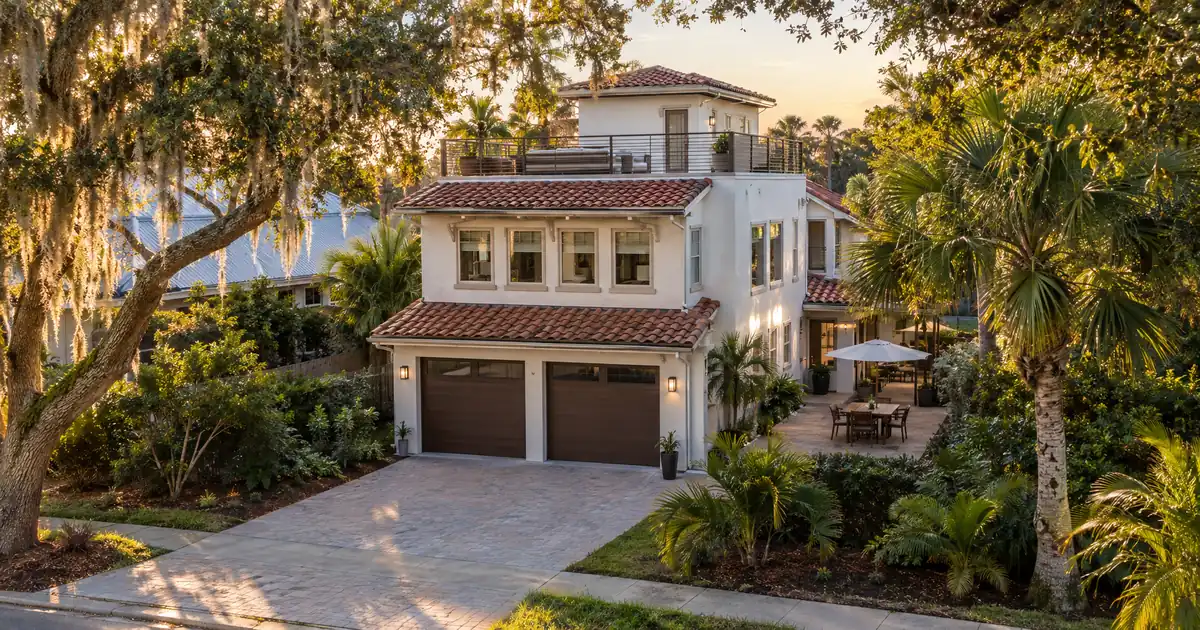
No lender uses the labels “suburban” and “resort” as formal categories. They are shorthand. Suburban means a house or townhome in an ordinary residential area. Resort means a condo or home inside a vacation community, usually with amenities and dues.
A suburban Airbnb suits an investor who wants fewer moving parts. A resort Airbnb suits one who has the reserves, the patience for paperwork, and a read on seasonal income. Neither is the safer choice by default.
Side-by-Side
The table below covers what changes on a DSCR file. It leaves out pricing on purpose, because pricing lives in the calculator and varies by file.
| Factor | Suburban house or townhome | Resort condo or community unit |
|---|---|---|
| Review basis | Property income vs. full payment | Same test, with dues in the payment |
| Income documentation | Host history, manager statements, or projection | Same, plus seasonal swings to explain |
| Typical property types | Single-family, townhome, small multifamily | Condo, townhome, home in a managed community |
| Who controls rental rights | City or county, plus any HOA | Association documents, plus local rules |
| Project review | Rarely applies | Condo project review is common |
| Reserves | Commonly around 6 months of PITIA | Same range, often sized up for dues risk |
| Income steadiness | Steadier, more year-round demand | More seasonal, wider swings |
| Entity vesting | Per program eligibility | Per program eligibility |
PITIA means principal, interest, taxes, insurance, and association dues. It is the full monthly housing obligation. DSCR (debt service coverage ratio) is the property’s income divided by that obligation.
Vesting in an LLC is available subject to lender program eligibility, and the same holds for both property types. Reserves vary by lender, leverage, loan size, and transaction type. Treat the 6-month figure as a common starting point, not a promise.
What Both Options Share
Both property types run through the same underwriting spine. Across our wholesale network, most programs want to see a credit score around 660 or better. Short-term rental files typically ask for 640 or higher. Stronger scores open stronger leverage tiers.
Leverage on short-term rental collateral is tighter than on a long-term rental. A purchase typically tops out at 75% LTV on the strongest files. A refinance or cash-out on short-term rental collateral goes up to 70%. LTV is loan-to-value, the loan balance as a share of the property’s value.
Most programs also want about 12 months of hosting or landlord experience. Standard loan sizes run up to $3,000,000. Smaller balances route through select lenders in the network.
The 1.00 coverage level is where select programs start, not a universal rule. A separate select-lender path takes coverage below 1.00, with leverage and terms adjusted. Eligibility always depends on lender guidelines, credit, reserves, and the property itself.
One property list is off the table for both. DSCR programs in the network do not offer manufactured homes, log homes, or barndominiums.
Short-term rental rules can vary by city, county, HOA, and property type, so investors should confirm local rules before relying on projected rental income.
When a Suburban Airbnb Is the Better Fit
A suburban house is the better fit when you want simple ownership and a clean income story. You own the structure, the lot, and the decisions. There is no condo board between you and your guests.
The payment stays leaner. A house has no amenity-funded dues, or at most a modest HOA fee. That means the same income produces a higher coverage ratio than it would on a resort unit. For a first short-term rental, that cushion matters.
Demand is also steadier in many suburban pockets. Guests such as traveling workers, visiting families, and event-goers book through more of the year. A trailing 12-month statement from a suburban house often looks flatter than a resort statement. A flatter statement is easier for a lender to read.
Here is the catch. A suburban house can still be restricted. A city or county may set its own rules. An HOA around the house may have its own covenants. Verify both before you write an offer. A short-term rental that is not allowed cannot use its Airbnb income to qualify, and a file may fall back to long-term rent.
That fallback is where the appraiser’s rent schedule comes in. Appraisers use Form 1007 for single-family homes and Form 1025 for two-to-four-unit properties. Both estimate long-term rent. For a vacation-style house, that figure often sits well below what nightly bookings produce, so a program that defaults to it can pull coverage under 1.00.
Suburban also fits investors planning to scale. Houses are easier to resell to a wide buyer pool, and you are not exposed to a building’s finances. For a sense of how the broader market splits, see Lendmire’s piece Secondary vs Resort STR Markets for a DSCR Airbnb Loan.
When a Resort Airbnb Is the Better Fit
A resort unit is the better fit when the location itself sells the stay. Pools, beach access, and proximity to attractions can lift nightly pricing and occupancy during peak periods. If your thesis is premium income, this is the property type built for it.
It also fits investors who want a hands-off setup. Many resort communities run on-site management, and renting is part of the community’s design. Buyers in those places often expect to host.
The cost is control. State rules limit what local governments can do about vacation rentals, but Hamilton Mikes notes that those limits do not bind private associations. A recorded declaration with a minimum lease term can be enforced against the owners it covers. Check the declaration before you buy, because a buyer takes the unit subject to what is already in place.
Condo and HOA rules are also easy to mix up. Mosaic HOA’s guide says the two sets of rental-amendment rules are commonly conflated and do not work the same way. Read the actual documents for your building or community. Do not rely on a summary.
Next comes the payment. Dues sit in the denominator of the coverage ratio. A resort condo with heavy dues needs more income to reach the same number as a house. Special assessments can make that worse.
Then comes project review. For a condo, the lender looks at the association’s budget, reserves, and structural status. Urban Land magazine reports that Florida’s newer condo rules push associations to disclose reserve shortfalls, and that a deficient building can become hard to underwrite. Each program sets its own condo standards, so a building that works for one lender may not work for another. Comparing programs is where a broker earns the fee.
Hotel-style condo projects get extra scrutiny. Mandatory rental pools, nightly minimums, daily housekeeping, and resort fees all signal hotel operation. Some programs will not touch those projects. Others review them case by case.
Finally, seasonality. Resort income swings more. A trailing 12-month history captures the peaks and the slow stretches. A projection averages them. Lenders see this as a general market pattern, not a rule about resort files.
A Worked Example, Ratios Only
Picture two properties bought at the same price. Both are modeled assumptions, not market data.
The first is a suburban house with low dues. Its modeled income clears roughly 1.15x coverage.
The second is a resort condo with heavy dues. It books more nights at higher prices, yet the dues push the payment up. Its coverage lands near 1.00x.
The resort unit earns more and still covers less. That is the dues effect.
Now change the method. If the lender counts only the appraiser’s long-term rent on either property, both ratios can drop. If the file has a clean 12-month booking history, both can rise. The income method matters as much as the property type.
A larger down payment lowers the payment and can lift the ratio. It does not erase leverage caps, credit floors, or reserve rules. Strong files clear two tests: enough equity and enough rental coverage.
If coverage falls under 1.00, a path exists. Sub-1.00 coverage is available through select lenders in the network, with leverage and terms adjusted. Interest-only structures and blended income methods can also change the picture. All of it is subject to credit approval, property review, and lender guidelines.
Remember what this ratio leaves out. DSCR compares rent to PITIA only. A property that clears 1.00 can still lose money after vacancy, repairs, management, utilities, furnishing, and capital costs. Treat the ratio as the lender’s test, not your own profit forecast.
DSCR vs. conventional financing
There are two common ways to finance an investment property, and they qualify you differently — here’s how investors weigh them.
Why investors choose it
- Qualifies on the property’s rental income — no personal tax returns, W-2s, or pay stubs needed to document income.
- No personal debt-to-income ceiling to clear, so existing mortgages and obligations don’t cap your borrowing the same way.
- Can be closed in an LLC, keeping the property inside a business entity.
- Built for scaling — not held to the limit on number of financed properties that conventional financing applies.
- Underwriting centers on the deal: generally qualifies when the rent covers the payment, a 1.00x coverage ratio being a common baseline (confirmed in underwriting).
- Designed specifically for investment property, including long-term and, where the program allows, short-term rentals.
Where it’s strong
- Often the lowest ongoing financing cost for a buyer who fully qualifies on personal income — a fit for a first property or a cost-first purchase.
Trade-offs for investors
- Requires full personal income documentation and must fit within a debt-to-income limit — salary, existing debts, and other mortgages all count.
- Typically held in your personal name rather than a business entity.
- Caps how many financed properties you can carry, which can become a ceiling as a portfolio grows.
- Evaluates you as a borrower as much as the property, which usually means more paperwork.
How investors usually choose: a first or single property often optimizes for the lowest financing cost; portfolio builders often optimize for leverage, vesting in an LLC, and scaling past conventional caps. The right answer depends on your goals, the property, and current guidelines — both paths run through select lenders in Lendmire’s wholesale network, with eligibility and terms confirmed in underwriting.
Key Terms Defined
DSCR is the property’s income divided by its full monthly obligation. A result of 1.00 means income matches the payment.
PITIA is principal, interest, taxes, insurance, and association dues combined.
LTV is the loan balance divided by the property’s value.
Trailing 12-month history is a year of actual booking income from platform or manager statements.
Non-warrantable condo is a condo project that a given program will not finance because of its structure, finances, or operation.
The Verdict
Choose suburban if you want the cleaner file, the higher coverage cushion, and fewer parties with a say in your rental. It is the easier first step and the easier property to exit.
Choose resort if the location’s earning power is the whole thesis and your file can absorb dues, project review, and seasonal swings. It rewards investors who read the documents and carry real reserves.
This one is a genuine split decision. The resort unit usually earns more per night. The suburban house usually keeps more of what it earns inside the ratio. Whichever you pick, run the coverage on both short-term income and long-term rent before you make an offer. If the deal only works on the optimistic number, it is thin.
Lendmire’s complete DSCR loans guide covers how the ratio, leverage, and reserves fit together. For the Airbnb-specific side, the DSCR loan for Airbnb page walks through how short-term income is counted.
Frequently Asked Questions
Can I use Airbnb income to qualify on a Florida DSCR loan?
Often, yes. Short-term rental files typically use booking history, a manager statement, or a third-party projection, depending on the program. Purchases with no history may lean on the appraiser’s analysis or a projection. The property must also be permitted to operate as a short-term rental, and eligibility depends on lender guidelines.
Do resort HOA dues count against my coverage ratio?
Yes. Dues are part of PITIA, so they sit in the denominator. Higher dues mean you need more income to reach the same ratio. Special assessments can add pressure, which is why you should ask for the budget and any assessment history before you commit.
What if the HOA or condo association bans short-term rentals?
Then the property cannot use Airbnb income to qualify, and renting short term could violate the declaration. A file may fall back to long-term rent, which often produces a lower ratio. Read the recorded documents for the specific building or community before you write an offer.
Does a brand-new short-term rental with no history qualify?
It can, though a 12-month history is generally preferred and most programs expect about 12 months of hosting experience from the borrower. Without property history, the file leans on a projection or an appraiser’s rental analysis. Select lenders in the network handle these differently, so structure matters.
Can I do a cash-out refinance on a short-term rental?
Yes, on eligible properties. Cash-out on short-term rental collateral goes up to 70% LTV, typically with about 6 months of seasoning and a 1.00 coverage floor. Credit, reserves, and project eligibility still apply. For a resort condo, the building’s own finances get reviewed again.
Next Step
If you are buying or refinancing a rental property and want to see how the numbers work, Lendmire can help you compare DSCR loan options based on the property income, credit profile, leverage, and investor goals. As a broker, Lendmire arranges financing through select lenders in its wholesale network across 41 markets, including Washington, D.C. It is not a commitment to lend, and every file is reviewed individually.
Tax treatment can depend on how the funds are used and how the property is held; investors should keep clear records and speak with a qualified tax professional before relying on any deduction.
A house keeps its income inside the ratio, a resort unit chases a bigger number, and the investor who tests both before offering is the one who sleeps well.
About Lendmire
Lendmire is a non-QM mortgage brokerage (NMLS# 2371349) arranging DSCR investor loans in 41 markets, including Washington, D.C. DSCR eligibility is generally reviewed around property-level rental income rather than personal income, subject to lender and program guidelines, a fit for self-employed investors and LLC-owned portfolios. Lendmire was recognized as a Scotsman Guide Top Mortgage Workplace in 2025 and 2026.
Get Started
Ready to find the right loan for you?
In about 30 seconds you can review financing options available for your investment property. No commitment required.
Informational only. Not a Loan Estimate, approval, or commitment to lend. Program availability and eligibility are subject to lender guidelines, credit approval, property review, and underwriting.
References
1. Hamilton Mikes – Leasing Restrictions
2. Mosaic HOA – Florida HOA and condo Airbnb ban guide
3. Urban Land – New condo regulations in South Florida
This article is part of Lendmire’s short-term rental loan program — full qualification details, guidelines, and scenarios live on the program page.
Related reading: Second Home vs DSCR Loan for a Cabin or Rural Airbnb · DSCR Loan vs Business Loan for an LLC or Partnership Airbnb Investor · How to Finance an Airbnb Through an LLC With a DSCR Loan
Guides: Short-Term Rental Loans in Florida
Brandon Miller
Founder & CEO, Mortgage Loan Originator, Lendmire LLC
- Mortgage Loan Originator · NMLS# 1129696 · Verify on NMLS Consumer Access
- North Carolina Real Estate Broker · License# 343312 · Verify on NCREC
- North Carolina Insurance Producer · License# 19053198 · Property, Casualty, Life, Health · Verify on NAIC SBS
- Lendmire LLC · Firm NMLS# 2371349 · Verify firm licensure
Disclosures. The information presented in this article is general market commentary, not financial, legal, or tax advice. Lendmire is a mortgage brokerage (NMLS# 2371349) — not a direct lender or depository institution — and loan placement is subject to lender underwriting. Nothing in this content represents a commitment to lend. Loan terms, pricing, and program availability vary based on borrower qualifications, property characteristics, and state of subject property, and are subject to change at any time. Lendmire complies with Equal Housing Opportunity requirements. Consumer access: nmlsconsumeraccess.org.