
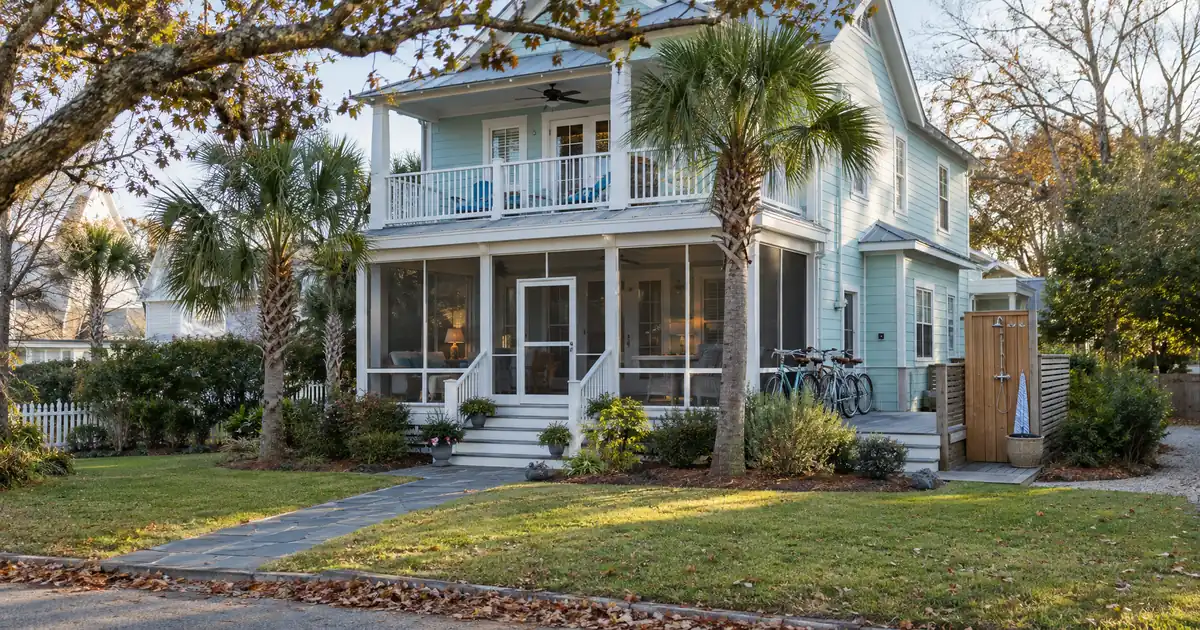
The Quick Read: Usually, yes, but the difficulty comes from proving the income and finding a lender that accepts the property, not from a stricter ratio. Both loan types divide qualifying income by the full monthly payment, and select programs in Lendmire’s wholesale network start at a 1.00 coverage floor on both STR purchases and refinances. An Airbnb file simply has more steps before that math can be run.
- The coverage formula is the same for both rental types.
- STR files lean on operating history, an appraiser’s STR analysis, or a market projection.
- Fewer lenders take STRs, and each one has its own overlays.
- STR leverage runs lower: up to 75% LTV on a purchase, and up to 70% on a refinance or cash-out.
- A 640 score and about 12 months of hosting experience are typical expectations on STR files, subject to lender guidelines.
DSCR loans are designed for non-owner-occupied investment properties. Because they are business-purpose investor loans, they are reviewed differently from a standard owner-occupied mortgage. For the full program picture, see the complete DSCR loans guide.
Short-Term Rental Calculator
Run the STR numbers in your market
Rate source: Freddie Mac 30-yr average via FRED® — Federal Reserve Bank of St. Louis · effective Oct 15, 2026
Prefilled with starting assumptions — enter your nightly rate, occupancy, taxes, and insurance for a more accurate picture.
Short-term rental income is documented with a 12-month history or a market data report. Program parameters update from Lendmire’s centralized guideline source.
As of Oct 15, 2026 · General Freddie Mac market benchmark, not a Lendmire loan offer. Nightly rate, occupancy, taxes, and insurance are editable estimates. Qualifying income for short-term rentals varies by program — some use appraisal market rent, others use documented STR history or projections — and is confirmed in underwriting. Not a Loan Estimate, approval, or commitment to lend. Program availability and eligibility are subject to lender guidelines, credit approval, property review, and underwriting.
What Stays the Same Between an Airbnb and a Long-Term Rental
The core test does not change. A DSCR loan qualifies primarily on property-level rental income covering the payment, subject to lender guidelines. The payment is the full PITIA: principal, interest, taxes, insurance, and any HOA dues.
These pieces are identical on both file types, as the points below show.
- No personal income documents are the centerpiece of the file. The property’s income carries it.
- The ratio is rent divided by PITIA. Nothing else enters the calculation.
- Closing in an LLC is common on both, subject to lender program eligibility.
- Ineligible property types stay ineligible. Manufactured homes, log homes, and barndominiums are not offered in the network, whether the plan is a lease or a nightly booking.
So a borrower who expects a harsher formula for an Airbnb will not find one. The ratio is not where the files diverge.
Where an Airbnb File Gets Harder
The DSCR formula itself stays the same on an Airbnb file. What changes is how much work it takes to produce an income figure the lender will accept.
Income documentation
A long-term rental has a signed lease or an appraiser’s market rent. An Airbnb has no lease, so the lender needs a substitute. Across the network, the substitutes are an appraiser’s STR analysis, a trailing-12-month statement from a property manager or platform, bank statements, or a market projection from a data provider. Each lender picks which ones it accepts. Some take one. Some take several and use the lowest.
Lender availability
This is the largest source of friction. Many DSCR lenders do not lend on STRs at all. Others do, but conservatively: they either qualify the property as if it were a long-term rental, or they want 12 full months of documented operating history. Across the files this brokerage places, that split shows up again and again. A file sent to the wrong lender gets declined on policy, not on merit.
Operating history
On STR files, about 12 months of landlord or host experience is the usual expectation in the network. A seasoned Airbnb with a full record has the easiest path. A purchase with no booking history leans on a projection or the appraiser’s rent. A conversion from long-term to short-term has no STR record at all, so the lender often falls back on long-term market rent until a year of bookings exists.
Appraisal
The appraiser documents value and monthly market rent. On a one-unit property that is Form 1007, and on a 2-4 unit property it is Form 1025. Fannie Mae’s appraiser update states that the 1007 was not designed for appraising single-family homes used as STRs, and that an appraiser cannot take STR comparables and multiply the nightly fee by 30. That is a contrast point only. Agency rules do not govern DSCR loans. But it explains why a rent schedule alone often understates an Airbnb’s real income.
McKissock Learning adds the other half: the 1007 documents monthly rent, and the final call on income belongs to the lender. STR use also does not change the appraised value of the real estate. The appraisal supports the file. It does not prove the Airbnb income.
Leverage and credit
STR programs run tighter than long-term programs. Purchase leverage tops out at 75% LTV on STR collateral, refinance runs around 70%, and cash-out is capped at 70% on STR collateral. A standard long-term rental purchase can reach 75%-80% LTV, and cash-out on a standard rental tops out around 75%. The STR credit floor is about 640, against a 620 floor in parts of the network for long-term files. All of this is subject to lender guidelines.
Local rules and HOA
Whether the STR is allowed at the address is a separate gate from the ratio. Short-term rental rules can vary by city, county, HOA, and property type, so investors should confirm local rules before relying on projected rental income. A permit change or a ban can wipe out the income basis the file was built on.
The Scorecard: Same, Slightly Harder, or Notably Harder
| Factor | Long-term rental | Airbnb / STR | Difference |
|---|---|---|---|
| Coverage formula | Rent ÷ PITIA | Income ÷ PITIA | Same |
| Income proof | Lease or market rent | History or projection | Notably harder |
| Lender pool | Wide | Narrower | Notably harder |
| Purchase LTV | Up to 75%-80% | Up to 75% | Slightly harder |
| Cash-out LTV | Around 75% | Up to 70% | Slightly harder |
| Appraisal | Rent schedule | Rent schedule plus STR analysis | Slightly harder |
| Local rules | Rarely a gate | Often a gate | Notably harder |
Read the table as friction, not as a pass-fail test. Three of the seven rows are notably harder, and they all concern proof and availability.
Does Higher Airbnb Income Make It Easier?
Not automatically. Airbnb projections are often cited as running well above long-term rent, but that is a market claim, not a rule. A lender can still count the lower number.
The reason is underwriter logic. Nightly income swings with seasons, reviews, and local demand. When the income line is volatile, lenders tighten everything around it: leverage, reserves, documentation. So a stronger ratio on paper can sit alongside a harder file.
Scotsman Guide has reported that some lenders turn to AirDNA-type data to estimate what a home can earn on Airbnb or Vrbo. That reporting is dated, so treat it as background. The practical point holds: lenders rarely take a projection at face value. Expect it to be discounted before it is divided by the payment.
Same Property, Two Outcomes
Run the numbers on a modeled property to see how the answer can flip. These are illustrative assumptions, not market data.
Assume a long-term market rent that covers the payment at roughly 0.95x.
- A lender that accepts only the appraiser’s long-term rent sees 0.95x. That is below the 1.00 floor on select programs. Coverage below 1.00 is available through select lenders in the network, with leverage and terms adjusted.
- A lender that accepts a discounted STR projection sees 1.15x and clears the 1.00 floor on the STR program, subject to lender guidelines, credit, and property review.
Now reverse it. In a weak STR market, the discounted projection might land at 0.90x while the long-term rent covers at 1.10x. A lender that allows the long-term fallback clears the file. A lender that requires STR income fails it.
The property did not change. The lender’s income method did. That is why lender selection matters more on an Airbnb file than on a long-term one.
Purchase Versus Refinance
| Item | Purchase | Refinance |
|---|---|---|
| Income basis | Projection or appraiser rent | Actual trailing record |
| Max LTV | Up to 75% | Up to 70% |
| Coverage floor | 1.00 | 1.00 |
| Main friction | No history | Documenting the record |
A refinance on a seasoned Airbnb is usually the easier STR file, because actual bookings replace guesswork. A first purchase carries the most uncertainty. On cash-out, the 70% ceiling applies to STR collateral, while a standard long-term rental cash-out tops out around 75%. A recent purchase also hits the seasoning expectation, commonly about 6 months, documented by the settlement statement.
Two related pieces from Lendmire cover the edge cases: whether a converted rental can cash out on projected income, and how a rental used both long-term and as an Airbnb is treated at cash-out.
Why Airbnb Files Get Turned Down
Most denials trace to a short list. Each has a fix.
- Wrong lender. The lender does not do STRs. Fix: screen for STR appetite before submitting.
- Income method mismatch. The lender uses long-term rent only, and the ratio falls short. Fix: ask which methods the lender accepts before ordering the appraisal.
- Thin history. A new host has no record. Fix: use a projection program, or build 12 months first.
- Reserves. Reserves vary by lender, leverage, and loan size, commonly around 6 months of PITIA, with larger loans stepping up to about 9 months. Fix: document liquid funds early.
- Local restrictions. The address is not permitted. Fix: confirm zoning, permits, and HOA rules before the offer.
- Ineligible property. A manufactured home, log home, or barndominium is not offered. Fix: none within these programs.
DSCR vs. conventional financing
There are two common ways to finance an investment property, and they qualify you differently — here’s how investors weigh them.
Why investors choose it
- Qualifies on the property’s rental income — no personal tax returns, W-2s, or pay stubs needed to document income.
- No personal debt-to-income ceiling to clear, so existing mortgages and obligations don’t cap your borrowing the same way.
- Can be closed in an LLC, keeping the property inside a business entity.
- Built for scaling — not held to the limit on number of financed properties that conventional financing applies.
- Underwriting centers on the deal: generally qualifies when the rent covers the payment, a 1.00x coverage ratio being a common baseline (confirmed in underwriting).
- Designed specifically for investment property, including long-term and, where the program allows, short-term rentals.
Where it’s strong
- Often the lowest ongoing financing cost for a buyer who fully qualifies on personal income — a fit for a first property or a cost-first purchase.
Trade-offs for investors
- Requires full personal income documentation and must fit within a debt-to-income limit — salary, existing debts, and other mortgages all count.
- Typically held in your personal name rather than a business entity.
- Caps how many financed properties you can carry, which can become a ceiling as a portfolio grows.
- Evaluates you as a borrower as much as the property, which usually means more paperwork.
How investors usually choose: a first or single property often optimizes for the lowest financing cost; portfolio builders often optimize for leverage, vesting in an LLC, and scaling past conventional caps. The right answer depends on your goals, the property, and current guidelines — both paths run through select lenders in Lendmire’s wholesale network, with eligibility and terms confirmed in underwriting.
Making a Hard Airbnb File Easier
1. Pick the lender by income method, not by headline terms. Ask whether they use the 1007 only, an STR analysis, or both.
2. Run the ratio two ways before you offer. Compute long-term rent coverage and discounted STR coverage. Know which one carries the deal.
3. Assemble the record. Gather platform statements, property-manager reports, and bank statements covering the hosting period.
4. Document reserves. Liquid funds, seasoned, in the borrower’s or entity’s name.
5. Confirm the use is legal at the address. Do this before the contract, not after.
6. Order the right appraisal form. A 1007 for one unit, a 1025 for 2-4 units, and make sure the appraiser knows the STR plan.
7. Plan for a larger down payment if coverage is thin. More equity can lower the payment and lift the ratio. It does not erase leverage caps, credit floors, or reserve rules. Strong files clear both tests: enough equity and enough rental coverage.
Clearing 1.00 does not mean the property cash flows. Repairs, vacancy, management, utilities, and capex sit outside the DSCR calculation. Budget for them separately.
When Another Path May Be Easier
If the property has no hosting history, the local rules are unsettled, and the only supportable number is a long-term rent that falls short, the answer may be to underwrite it as a long-term rental first. Some investors buy on long-term rent coverage, then convert once bookings build a record.
Key Terms Defined
- DSCR: Debt service coverage ratio, the property’s qualifying income divided by its full monthly payment.
- PITIA: Principal, interest, taxes, insurance, and any association dues.
- Form 1007: The appraiser’s single-family rent schedule, which documents monthly market rent.
- Form 1025: The appraiser’s operating income statement for 2-4 unit properties.
- Trailing 12 months (TTM): A statement of actual income and expenses over the most recent year.
- Seasoning: The ownership period a lender expects before cash-out is available.
Self-Check Before You Apply
- Does the lender you are considering accept STR income at all?
- Do you have about 12 months of hosting history, or a plan without it?
- Does the property clear 1.00 on long-term rent alone?
- Is the STR legal at this address, under the HOA, and in the municipality?
- Are reserves documented?
- Is your score near or above 640?
- Is the property a type the network offers?
Tax treatment varies; consult a qualified professional before relying on any deduction.
Frequently Asked Questions
Is an Airbnb DSCR loan harder than a long-term rental one?
Usually, yes. The formula is the same, but the income is harder to document, fewer lenders participate, and STR leverage runs lower: up to 75% LTV on a purchase and up to 70% on a refinance or cash-out. Each lender’s income method often decides the outcome.
Can I qualify with no hosting history?
Sometimes. Lenders typically expect about 12 months of hosting experience, but a purchase can lean on an appraiser’s analysis or a market projection, and some lenders fall back on long-term market rent. Select programs differ, and everything is subject to lender guidelines.
Do I need more reserves on an Airbnb?
Possibly. Reserves vary by lender, leverage, loan size, and transaction type. They commonly run around 6 months of PITIA, with larger loans stepping up to about 9 months. Some STR files may be asked for more than a comparable long-term file.
What if the lender only uses long-term rent?
The ratio is run on the appraiser’s market rent. If that clears the floor, the file can proceed as if it were a long-term rental. If it falls short, coverage below 1.00 is available through select lenders in the network, with leverage and terms adjusted.
Do local STR rules affect approval?
Yes. A lender may ask for proof the use is legal.
If you are buying or refinancing a rental property and want to see how the numbers work, Lendmire can help you compare DSCR loan options based on the property income, credit profile, leverage, and investor goals. Lendmire is a broker arranging DSCR financing through select lenders in its wholesale network across 41 markets, including Washington, D.C. This is not a commitment to lend.
About Lendmire
As a DSCR and non-QM mortgage broker, Lendmire — NMLS# 2371349 — connects investors with wholesale lending channels across 41 markets, including Washington, D.C. The property’s rental income, not the borrower’s traditional personal-income documentation, is central to lender review, which works for self-employed operators and portfolios beyond four financed properties. Scotsman Guide named Lendmire a Top Mortgage Workplace in both 2025 and 2026.
Get Started
Ready to find the right loan for you?
In about 30 seconds you can review financing options available for your investment property. No commitment required.
Informational only. Not a Loan Estimate, approval, or commitment to lend. Program availability and eligibility are subject to lender guidelines, credit approval, property review, and underwriting.
References
1. Fannie Mae Appraiser Update
2. McKissock Learning: Form 1007 and Short-Term Rental Appraisals
This article is part of Lendmire’s short-term rental loan program — full qualification details, guidelines, and scenarios live on the program page.
Related reading: How to Qualify for an Airbnb DSCR Loan for a 2-4 Unit Short-Term Rental · Does Mid-Term Rental Income Count on a 2-4 Unit DSCR Loan? · How DSCR Loan Rental Income Rules Work for a Self-Employed Airbnb Host
Brandon Miller
Founder & CEO, Mortgage Loan Originator, Lendmire LLC
- Mortgage Loan Originator · NMLS# 1129696 · Verify on NMLS Consumer Access
- North Carolina Real Estate Broker · License# 343312 · Verify on NCREC
- North Carolina Insurance Producer · License# 19053198 · Property, Casualty, Life, Health · Verify on NAIC SBS
- Lendmire LLC · Firm NMLS# 2371349 · Verify firm licensure
Important disclosures. Lendmire (NMLS# 2371349) is a licensed mortgage brokerage. Lendmire is not a direct lender, depository institution, or financial advisor. All loan inquiries are subject to lender underwriting; this article does not constitute a commitment to lend. Rates, terms, and program guidelines are subject to change without notice and vary by borrower profile, property type, and state. Information in this article is general in nature and is not financial, legal, or tax advice. Equal Housing Opportunity. NMLS Consumer Access: nmlsconsumeraccess.org.