
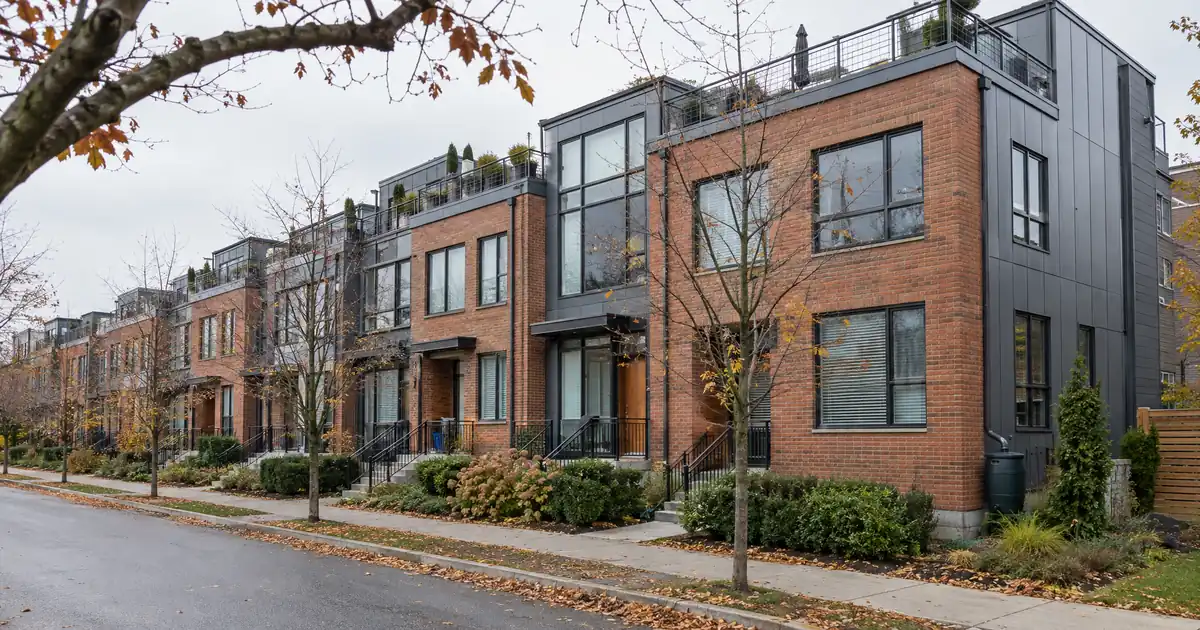
The Quick Read: Usually not on its own. A standard landlord policy is written for long-term tenants and commonly excludes nightly stays, so a lender reviewing a condotel Airbnb typically wants a layered package: the association’s master policy, plus a unit-level policy that discloses and covers short-term use.
- A landlord policy (DP-3) is built for long-term, non-owner-occupied tenancies.
- The master policy covers the building shell, not your unit’s interior.
- The premium for the right policy feeds the monthly obligation and moves your coverage ratio.
- Condotels have the narrowest lender pool, so choose the program before the policy.
- Every file is reviewed individually, subject to lender guidelines.
Lendmire is a mortgage broker that arranges DSCR investor loans through select lenders in its wholesale network, with programs available across 41 markets, including Washington, D.C. The question here comes up on nearly every condotel file, and the answer is more about matching the policy to the use than about any single form name.
Short-Term Rental Calculator
Run the STR numbers in your market
Rate source: Freddie Mac 30-yr average via FRED® — Federal Reserve Bank of St. Louis · effective Oct 15, 2026
Prefilled with starting assumptions — enter your nightly rate, occupancy, taxes, and insurance for a more accurate picture.
Short-term rental income is documented with a 12-month history or a market data report. Program parameters update from Lendmire’s centralized guideline source.
As of Oct 15, 2026 · General Freddie Mac market benchmark, not a Lendmire loan offer. Nightly rate, occupancy, taxes, and insurance are editable estimates. Qualifying income for short-term rentals varies by program — some use appraisal market rent, others use documented STR history or projections — and is confirmed in underwriting. Not a Loan Estimate, approval, or commitment to lend. Program availability and eligibility are subject to lender guidelines, credit approval, property review, and underwriting.
Key Terms Defined
Condotel: A condo unit in a building run like a hotel, often with a front desk, a rental program, or pooled rentals.
DSCR: Debt service coverage ratio, meaning monthly rent divided by the full monthly housing obligation.
PITIA: Principal, interest, taxes, insurance, and association dues, the total the rent has to cover.
Master policy: The association’s insurance on the building shell and common areas.
HO-6: The unit-owner policy that covers a condo’s interior, from the walls in.
Landlord policy (DP-3): A dwelling-fire form written for rental homes with long-term tenants.
STR endorsement: An add-on that tells the carrier the unit is rented nightly and extends coverage to that use.
Why a Landlord Policy Usually Falls Short
A landlord policy is priced and worded for a tenant who signs a lease. Insurance-education sources note that DP-3 and HO-3 forms typically exclude transient occupancy, generally stays shorter than about 30 days, because carriers treat nightly renting as a business activity. Another carrier-side explanation says a standard landlord policy will usually exclude a claim tied to an Airbnb or VRBO listing.
That matters to a lender for a simple reason. The lender needs to see that the collateral carries adequate hazard and liability coverage for the way the unit is actually used. A policy that excludes the use does not show that.
Here’s the catch. A wrong policy can create a closing condition, and it can also create a claim problem after closing. One independent agent notes a claim can be denied when the adjuster reviews booking activity. The lender’s concern and your own exposure point the same direction.
There is also a vacancy wrinkle. A standard DP-3 does not cover vacant properties, per Proper Insurance, which also argues a DP-3 relabeled as short-term rental keeps the same underlying structure. That insurer sells a competing product, so treat it as a viewpoint. Still, seasonal gaps in a resort unit are worth raising with the carrier.
How Does Condo Insurance Layer in a Hotel-Style Building?
Condo coverage runs in two layers. The association’s master policy covers the shell and common areas. The unit owner’s policy covers everything from the walls in. Neither replaces the other.
For a rented unit, the second layer is either an HO-6 with the right rental endorsement or a landlord-style condo form. An HO-6 is built around an owner-occupant. One education page notes it is underwritten with the assumption that the named insured lives in the unit. Some carriers will still write it for a rented unit, provided the rental is disclosed and the correct endorsement is added, according to Risman Insurance. Leaving an old owner-occupied HO-6 unchanged after you start renting may create serious coverage concerns.
In a true condotel, the master policy itself may be commercial or hotel-type. That is why lenders look at it separately and ask for the evidence of coverage.
The Package Lenders Typically Want to See
Across the lenders in Lendmire’s wholesale network, the documents asked for on a condotel are consistent in spirit, even when the details differ. Expect the following, and confirm with the loan officer:
| Item | What it proves | Who usually supplies it |
|---|---|---|
| Master policy evidence | Building shell and common areas are insured | Association or its manager |
| Unit policy declarations | Interior and liability coverage exist | Your insurance agent |
| STR disclosure or endorsement | Carrier knows about nightly use | Your agent and carrier |
| Flood policy, if needed | Water damage is covered separately | Your agent |
| HOA questionnaire and budget | Project health and rental rules | Association |
Flood deserves its own line. Standard HO-6 and DP-2 policies generally exclude flood or surface water, per Risman, so a separate policy may be required depending on the building and its location.
Landlord Policy vs. Endorsement vs. Dedicated STR Policy
The choice is rarely binary. Three structures show up most often.
| Structure | Typical fit | Watch for |
|---|---|---|
| Landlord policy, no change | Long-term tenants only | Transient-use exclusion |
| Landlord form plus STR endorsement | Some carriers will add it | Coverage limits and vacancy clause |
| Dedicated STR or commercial policy | Active nightly hosting | Higher cost, narrower carrier pool |
Some carriers will add a short-term rental endorsement to a standard DP-3. Whether that satisfies a given lender depends on the endorsement language and the program’s review. A dedicated STR policy is the cleaner answer, if the premium fits the numbers.
Two traps are worth naming.
First, owner use. Landlord coverage generally requires the property to be non-owner-occupied, as one agency notes (Fuller). A condotel owner who also stays in the unit may not fit a landlord form at all.
Second, platform coverage. Airbnb’s AirCover is described by one agent as a limited indemnification program without state insurance-regulator oversight. It is not a substitute for a policy a lender can review.
How the Premium Moves Your Coverage Ratio
Insurance and association dues sit inside PITIA. DSCR is monthly rent divided by that total, so a higher premium lowers the number even when rent stays flat.
Picture a condotel unit that clears roughly 1.15x using a cheap long-term landlord quote. Swap in the real STR policy, and the same unit might land closer to 1.05x. Nothing about the rent changed. The denominator did. (That’s a modeled illustration, not a quote.)
The practical rule: quote the correct policy before you estimate coverage. A long-term landlord quote on a nightly-stay unit gives a number that won’t survive the lender’s review. One agency notes a rented condo is underwritten differently, with reduced contents coverage and added landlord liability.
Clearing 1.00 is also not the same as positive cash flow. DSCR compares rent to PITIA only. Repairs, vacancy, management fees, utilities, and capex sit outside the calculation, and a resort unit with a hotel-style management split carries more of those than a typical rental.
Where the Program Parameters Fit
For short-term rental collateral, Lendmire’s network figures run like this, always subject to lender guidelines and credit approval:
- Purchase leverage tops out at 75% LTV on the strongest files.
- Refinance and cash-out on short-term rental collateral sit around 70% LTV.
- A credit score of 640 or higher is expected.
- Coverage of 1.00 is where select programs start on both purchases and refinances. Separately, a select-lender path exists that goes below 1.00, with leverage and terms adjusted.
- About 12 months of hosting history is the usual expectation.
- Standard programs run up to $3,000,000. Each figure is subject to lender guidelines and a complete review of property type, leverage, and credit.
Condotels sit in a tighter category than a regular condo, and lenders in the network differ on them. Some decline condotels outright. Others review them case by case, often with lower leverage than a conventional condo. A standard condo is not treated differently from a house in most STR programs, but hotel-style management or mandatory rental pooling changes that. Short-term rental rules can vary by city, county, HOA, and property type, so investors should confirm local rules before relying on projected rental income.
How the income is counted matters too. Across the network, short-term income can count at a discount to gross, using trailing history on a refinance or the appraisal’s rental analysis on a purchase.
If You Already Own a Landlord Policy
This is the common situation. A step-by-step path:
1. Read the policy for a transient or short-term exclusion. Look at the declarations page and the endorsement list.
2. Call the carrier and disclose the Airbnb use plainly. Ask whether an STR endorsement is available.
3. If the carrier declines, get quotes for a dedicated STR or condo rental policy.
4. Confirm the master policy and the HOA package are in hand.
5. Rerun the coverage ratio with the new premium before going further.
Order the insurance quote early. The HOA package and the policy form both gate the file, and a late discovery is how closings stall.
DSCR vs. conventional financing
There are two common ways to finance an investment property, and they qualify you differently — here’s how investors weigh them.
Why investors choose it
- Qualifies on the property’s rental income — no personal tax returns, W-2s, or pay stubs needed to document income.
- No personal debt-to-income ceiling to clear, so existing mortgages and obligations don’t cap your borrowing the same way.
- Can be closed in an LLC, keeping the property inside a business entity.
- Built for scaling — not held to the limit on number of financed properties that conventional financing applies.
- Underwriting centers on the deal: generally qualifies when the rent covers the payment, a 1.00x coverage ratio being a common baseline (confirmed in underwriting).
- Designed specifically for investment property, including long-term and, where the program allows, short-term rentals.
Where it’s strong
- Often the lowest ongoing financing cost for a buyer who fully qualifies on personal income — a fit for a first property or a cost-first purchase.
Trade-offs for investors
- Requires full personal income documentation and must fit within a debt-to-income limit — salary, existing debts, and other mortgages all count.
- Typically held in your personal name rather than a business entity.
- Caps how many financed properties you can carry, which can become a ceiling as a portfolio grows.
- Evaluates you as a borrower as much as the property, which usually means more paperwork.
How investors usually choose: a first or single property often optimizes for the lowest financing cost; portfolio builders often optimize for leverage, vesting in an LLC, and scaling past conventional caps. The right answer depends on your goals, the property, and current guidelines — both paths run through select lenders in Lendmire’s wholesale network, with eligibility and terms confirmed in underwriting.
Common Snags and Fixes
| Snag | Likely cause | Fix |
|---|---|---|
| Policy rejected | Transient-use exclusion | Endorsement or STR policy |
| Interior gap | Only master policy in file | Add HO-6 or condo rental form |
| Coverage ratio drops | Premium higher than estimated | Re-quote, adjust leverage |
| Lender declines property | Mandatory rental pool | Different lender or program |
A few misconceptions come up repeatedly. The master policy does not cover your unit’s interior. Your HO-6 does not protect a tenant’s belongings or liability, and tenants need their own HO-4, as The HOA Guide explains. And DSCR does not mean skipping the project review: lenders still look at the HOA and the building.
Pick the Program Before the Policy
Condotels carry the narrowest lender pool of any property type in this space. Settle which program will review the file, then buy the policy that program will accept. Buying first and shopping lenders second is the order that causes rework.
For the bigger picture on how these loans work, see Lendmire’s complete DSCR loans guide.
If you are buying or refinancing a rental property and want to see how the numbers work, Lendmire can help you compare DSCR loan options based on the property income, credit profile, leverage, and investor goals. Reach the team at 828-256-2183.
Tax treatment can depend on how the funds are used and how the property is held; investors should keep clear records and speak with a qualified tax professional before relying on any deduction.
Frequently Asked Questions
Does a landlord policy cover Airbnb stays?
Usually not. Standard landlord forms commonly exclude transient occupancy, so nightly guests may fall outside coverage. Ask the carrier for a short-term rental endorsement or move to a dedicated STR policy.
Do I need both a master policy and my own unit policy?
Yes, in a condo setting they cover different things. The association’s master policy covers the shell and common areas, and your unit policy covers the interior and your liability. Lenders typically want evidence of both.
Does an STR endorsement satisfy the lender?
Sometimes. It depends on the endorsement wording, the carrier, and the lender’s review of the file. Send the declarations page and endorsement to the loan officer early so any objection surfaces before the property is under contract pressure.
Does insurance affect my coverage ratio?
Yes. Insurance and association dues are part of PITIA, which is the denominator. A pricier, correct policy lowers the ratio, so quote it before estimating coverage.
What if the building has a mandatory rental pool?
That narrows the field sharply. Some lenders decline mandatory pools or restricted owner use outright, while others review them case by case. Confirm program fit before spending on appraisal or insurance work.
Investors focused on short-term rentals can review DSCR loans for Airbnb and short-term rentals.
About Lendmire
Lendmire — NMLS# 2371349 — is a mortgage brokerage specializing in DSCR investor loans, helping arrange financing across 41 markets, including Washington, D.C., through wholesale and investor-lending channels. The model centers on property-level rental income reviewed by the lender rather than W-2 documentation, subject to lender guidelines, suiting entity-owned and multi-property investors. Lendmire holds Scotsman Guide Top Mortgage Workplace recognition for 2025 and 2026.
Get Started
Ready to find the right loan for you?
In about 30 seconds you can review financing options available for your investment property. No commitment required.
Informational only. Not a Loan Estimate, approval, or commitment to lend. Program availability and eligibility are subject to lender guidelines, credit approval, property review, and underwriting.
References
1. LiveCovered: DP-3 Landlord Insurance
2. Steadily: What Landlord Insurance Covers
3. City Insurance: Short-Term Rental Insurance
4. Proper Insurance: Home Sharing Coverage
5. ApartmentCoverage (HO6 vs DP3)
6. Risman Insurance: Renting Out Your Condo
7. Fuller
8. Policy Sherpas (condo insurance)
This article is part of Lendmire’s short-term rental loan program — full qualification details, guidelines, and scenarios live on the program page.
Related reading: How a DSCR Lender Counts a Rabbu Projection for a Cabin Rental · Should You Use a DSCR Broker or Go Direct to a Lender? · Suburban vs Resort Airbnb on a DSCR Loan in Florida
Brandon Miller
Founder & CEO, Mortgage Loan Originator, Lendmire LLC
- Mortgage Loan Originator · NMLS# 1129696 · Verify on NMLS Consumer Access
- North Carolina Real Estate Broker · License# 343312 · Verify on NCREC
- North Carolina Insurance Producer · License# 19053198 · Property, Casualty, Life, Health · Verify on NAIC SBS
- Lendmire LLC · Firm NMLS# 2371349 · Verify firm licensure
Compliance and disclosures. Lendmire (NMLS# 2371349) is a licensed mortgage broker and is not a direct lender, depository institution, financial advisor, or tax professional. Content in this article is general market analysis and educational information — not financial, legal, or tax advice for any specific situation. Lendmire does not guarantee loan approval; every transaction is subject to underwriting by the funding lender. Mortgage pricing and loan program guidelines are subject to change at any time without notice and vary by borrower characteristics, property type, and state regulations. Lendmire complies with Equal Housing Opportunity. Licensure verification: NMLS Consumer Access.