
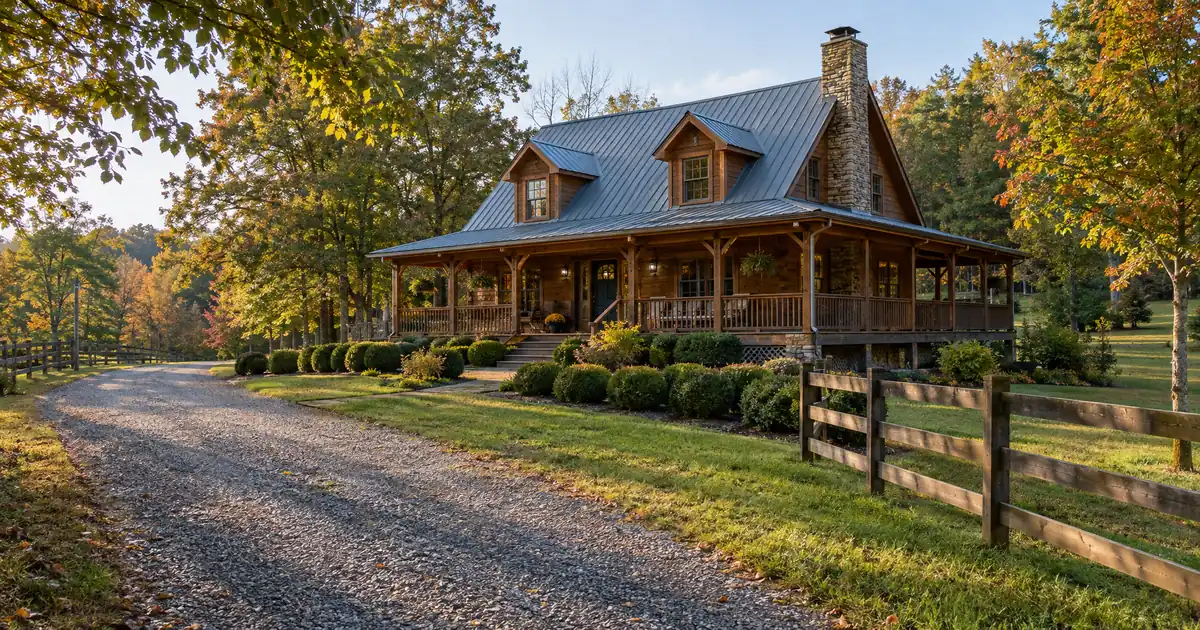
The Quick Read: Usually no. A plain long-term landlord policy is written for tenants on leases, so a lender will want to see an STR-endorsed landlord policy or a dedicated short-term rental policy on the declarations page once the cabin takes nightly guests. The premium for the right policy also counts inside the coverage ratio, which is why the choice matters before you make an offer.
- A landlord-only policy can stall a file at the insurance-evidence stage.
- An endorsement or STR policy that names nightly use on its declarations page is what lenders look for.
- The true premium raises the monthly obligation and lowers your coverage number, so model it early.
- Rural cabins add friction: carrier appetite, vacancy clauses, and flood or wind coverage that is often separate.
- Log homes and barndominiums are not offered through these DSCR programs, so no policy fixes them.
Key Terms Defined
DSCR (debt service coverage ratio): Monthly rental income divided by the monthly housing obligation. A 1.00 ratio means rent equals the obligation.
PITIA: Principal, interest, taxes, insurance, and association dues. This is the obligation the rent is measured against.
Landlord policy: A dwelling-fire form, often called a DP-3, built for a property leased to long-term tenants.
STR endorsement: A rider added to a landlord policy so it responds to short-term rental use.
Declarations page: The first page of a policy. It lists the policy type, coverage limits, and named insured.
Named insured: The person or entity the policy protects. On a cabin held in an LLC, it should match how the property is titled.
Loss-of-rents coverage: Coverage that pays lost rental income after a covered loss. It has to fit nightly income, not just monthly lease rent.
Short-Term Rental Calculator
Run the STR numbers in your market
Rate source: Freddie Mac 30-yr average via FRED® — Federal Reserve Bank of St. Louis · effective Oct 15, 2026
Prefilled with starting assumptions — enter your nightly rate, occupancy, taxes, and insurance for a more accurate picture.
Short-term rental income is documented with a 12-month history or a market data report. Program parameters update from Lendmire’s centralized guideline source.
As of Oct 15, 2026 · General Freddie Mac market benchmark, not a Lendmire loan offer. Nightly rate, occupancy, taxes, and insurance are editable estimates. Qualifying income for short-term rentals varies by program — some use appraisal market rent, others use documented STR history or projections — and is confirmed in underwriting. Not a Loan Estimate, approval, or commitment to lend. Program availability and eligibility are subject to lender guidelines, credit approval, property review, and underwriting.
What Does the Lender Check on the Insurance?
The underwriter checks two things: whether the policy responds to nightly guests, and what the premium does to the ratio. Both show up on the declarations page. A plain landlord form fails the first test, and a cheap quote can hide the second.
Across the wholesale network Lendmire places files through, the documents requested are fairly consistent:
- The declarations page showing policy type, dwelling coverage, and liability limits.
- An endorsement or note confirming short-term rental use is covered.
- Loss-of-rents or business-income coverage that fits nightly bookings.
- The binder at closing.
- Proof the cabin can legally operate as a short-term rental.
The premium matters because DSCR compares rent to PITIA, and insurance is the “I” in that formula. Quote a cheap landlord policy and the ratio looks better than it should. Quote the right STR policy and the denominator grows. Run the honest number first, because the lender will.
Why a Plain Landlord Policy Usually Falls Short
Carriers treat nightly rentals as a different risk from a leased house. Steadily, a landlord-insurance provider, says carriers view short-term rental activity as commercial use. It adds that a claim can be denied, or a policy voided retroactively, if the rental activity was not disclosed. Its stated fix is an STR endorsement or a specialty STR policy.
State regulators say the same thing in consumer language. The Wisconsin Office of the Commissioner of Insurance says a host’s homeowners or renters policy is not designed to cover accidents from renting property and that the insurer may deny the claim.
From the lender’s side, the logic is simple. The cabin is the collateral. If a guest-caused fire or injury claim gets denied, the borrower’s equity and the lender’s position are both exposed. That is why the form on the declarations page matters more than the word “landlord” on the cover.
Platform coverage does not fill the gap
Many hosts assume Airbnb’s host protection is their insurance. A Delaware state news release explains that Airbnb’s host liability program is secondary. It applies only after the primary insurance pays or denies the claim, with a limit of up to $1 million for third-party bodily injury or property damage. insurance.com likewise says AirCover does not replace your own insurance.
A lender wants a primary policy that stands on its own. A platform program is a supplement at best.
Landlord Policy, Endorsement, or STR Policy?
The middle path is the one most investors miss. Some carriers will add an STR endorsement to a landlord policy, and some write hybrid long-term and short-term forms. insurance.com notes that some insurers allow occasional rentals while others require an endorsement or a separate policy. If the declarations page shows the short-term coverage, that can satisfy a lender.
| Factor | Plain landlord policy | Landlord + STR endorsement | Dedicated STR or commercial policy |
|---|---|---|---|
| Covers nightly guests? | Generally no | Yes, if endorsement is shown | Yes |
| Liability fit | Built for lease tenants | Extended to guest use | Built for guest use |
| Lost-income coverage | Monthly rent basis | Check nightly fit | Usually designed for it |
| Typical lender reaction | Often rejected | Often accepted if shown | Generally accepted |
| Rural-cabin caveat | Cancellation risk | Carrier may not offer it | Carrier appetite varies |
No table cell is a promise. Lender guidelines, the carrier’s wording, and the property decide the outcome.
Worked Example: How the Premium Moves the Ratio
Run the numbers on a modeled rural cabin. These are illustrative assumptions, not market data. Say the rent figure, taxes, and loan terms stay fixed, and the only change is the insurance line.
With a cheap landlord policy in the file, the cabin clears at roughly 1.20x. Swap in the correct STR-ready policy, which typically costs more, and the same cabin lands near 1.08x. Still above 1.00, but the cushion has thinned.
Now picture a thinner file that starts at roughly 1.04x on the landlord quote. After the correct premium, it drops below 1.00. On most standard programs that is a problem. Select lenders in the network will review coverage below 1.00, but leverage and terms adjust, so the borrower trades cushion for a different deal.
Clearing 1.00 also does not mean the cabin cash flows. DSCR measures rent against PITIA only. Repairs, vacancy, utilities, management, and capital costs sit outside the calculation, and a seasonal cabin carries plenty of them.
What Makes a Rural Cabin Harder to Insure
Rural insurance friction is the second way these files stall. Carriers can decline, charge more, or limit coverage in wildfire zones, floodplains, or remote areas with long fire-response distances. Wood heat, wells, septic systems, and limited road access all draw questions. Shop rural and vacation-home carriers before you go under contract.
Seasonality adds another trap. One insurance agency’s vacation-home guide says standard homeowner and dwelling-fire forms commonly limit coverage after 30 to 60 consecutive vacant days. A cabin that sits empty between seasons can trigger that clause. Whether an STR policy removes it depends on the product, so ask the carrier directly and get the answer in writing.
Flood and wind are usually separate from the base policy. A lender may require them as stand-alone coverage, and that premium also belongs in the monthly obligation.
Gates that come before insurance
Insurance is not the only checkpoint. Log homes, barndominiums, and manufactured homes are not offered through these DSCR programs, so a log-built cabin fails before anyone looks at the policy. Utilities and road access matter too. And short-term rental rules can vary by city, county, HOA, and property type, so investors should confirm local rules before relying on projected rental income. An HOA covenant against rentals is a private contract that insurance cannot fix.
What the Loan Program Itself Expects
Program mechanics sit alongside the insurance question, so here is how most short-term rental files look across the network. Figures are typical ranges, subject to lender guidelines, and not a commitment to lend.
- Purchase leverage: up to 75% LTV on the strongest files.
- Refinance and cash-out: around 70% LTV for refinances, and 70% on cash-out against short-term rental collateral, compared with 75% for standard rentals.
- Credit: a 640 score is the minimum for short-term rentals.
- Hosting history: about 12 months of landlord or host experience is usually expected.
- Coverage: 1.00 is where select programs start on a purchase, and also on a refinance. A separate select-lender path accepts coverage below 1.00 with leverage and terms adjusted.
- Loan size: up to $3,000,000 on standard programs.
- Reserves: they vary by lender, leverage, loan size, and transaction type. About 6 months of PITIA is common.
Income evidence is the other rural stumbling block. Lenders generally accept either actual platform history or a market-data projection. A remote cabin may have few comparable listings nearby, which thins the projection. The strongest files bring booking history and a clean insurance package together. The complete DSCR loans guide covers how the ratio works from the start.
A bigger down payment helps the ratio by lowering the monthly obligation. It does not erase credit floors, reserve rules, leverage caps, or property eligibility. The file has to clear both the equity test and the coverage test.
DSCR vs. conventional financing
There are two common ways to finance an investment property, and they qualify you differently — here’s how investors weigh them.
Why investors choose it
- Qualifies on the property’s rental income — no personal tax returns, W-2s, or pay stubs needed to document income.
- No personal debt-to-income ceiling to clear, so existing mortgages and obligations don’t cap your borrowing the same way.
- Can be closed in an LLC, keeping the property inside a business entity.
- Built for scaling — not held to the limit on number of financed properties that conventional financing applies.
- Underwriting centers on the deal: generally qualifies when the rent covers the payment, a 1.00x coverage ratio being a common baseline (confirmed in underwriting).
- Designed specifically for investment property, including long-term and, where the program allows, short-term rentals.
Where it’s strong
- Often the lowest ongoing financing cost for a buyer who fully qualifies on personal income — a fit for a first property or a cost-first purchase.
Trade-offs for investors
- Requires full personal income documentation and must fit within a debt-to-income limit — salary, existing debts, and other mortgages all count.
- Typically held in your personal name rather than a business entity.
- Caps how many financed properties you can carry, which can become a ceiling as a portfolio grows.
- Evaluates you as a borrower as much as the property, which usually means more paperwork.
How investors usually choose: a first or single property often optimizes for the lowest financing cost; portfolio builders often optimize for leverage, vesting in an LLC, and scaling past conventional caps. The right answer depends on your goals, the property, and current guidelines — both paths run through select lenders in Lendmire’s wholesale network, with eligibility and terms confirmed in underwriting.
Decision Path: Which Policy Do You Need?
1. Decide the use. If the cabin will take nightly bookings at any point, treat it as a short-term rental. Occasional hosting does not change the answer for many carriers.
2. Ask whether the current carrier offers an STR endorsement. If yes, get it in writing. If no, move to a dedicated STR or commercial policy.
3. Match the named insured to the title. If an LLC will own the cabin, the policy should name it, subject to program terms.
4. Disclose the use honestly. An undisclosed rental is how claims get denied and policies get canceled.
5. Send the declarations page to the broker early. Lender review comes before you are committed.
Sequenced Checklist
Before you make an offer: price an STR-ready policy for this cabin, not a landlord quote. Confirm the carrier will write it. Check that the construction type is eligible.
Before you apply: gather the declarations page, endorsement language, booking history or market-data projection, and proof the rental is legal.
Before closing: confirm the binder, flood or wind coverage if required, and the named insured and mortgagee details.
What to Ask Your Insurer and Your Lender
Ask the insurer: Does this policy cover nightly paying guests? Is lost-income coverage written for nightly revenue? What happens during a vacant stretch? Will you put the short-term use on the declarations page?
Ask the lender or broker: Does this declarations page satisfy the program? Which form do you want to see? Does the premium change my coverage ratio enough to affect leverage?
Mistakes That Sink Rural Cabin Files
- Buying a landlord policy now and listing the cabin on a platform later.
- Treating Airbnb’s host protection as primary coverage.
- Assuming an umbrella policy fills the gap. An umbrella generally follows the underlying policy, so it will not cover what the base form excludes.
- Leaving off lost-income coverage and then relying on rental revenue to cover the loan.
- Expecting insurance to cure a missing permit or an HOA ban.
Tax treatment can depend on how the funds are used and how the property is held; investors should keep clear records and speak with a qualified tax professional before relying on any deduction.
Frequently Asked Questions
Can a landlord policy ever work on a cabin I rent by the night?
Only if it carries an STR endorsement, or the carrier writes a hybrid form that names short-term use on the declarations page. A plain dwelling-fire form usually will not satisfy a lender.
Does a higher premium hurt my chances?
It lowers the coverage ratio, because insurance is part of PITIA. A file that clears with room can absorb it. A file sitting just above 1.00 may drop below it, and sub-1.00 paths come with adjusted leverage and terms.
Can I hold the cabin in an LLC?
Often yes, subject to program terms. The policy’s named insured should match the title, so tell the insurer and the broker at the start.
What if the cabin sits empty part of the year?
Ask the carrier how its vacancy clause works. Many forms limit coverage after a stretch of consecutive vacant days, and seasonal cabins can run into that. The lender will also want income evidence that reflects the seasonal pattern.
Does Airbnb’s host protection count toward the lender’s requirement?
No. It is secondary coverage, so a lender still wants a primary policy that responds to nightly use.
Next Step
If you are buying or refinancing a rental property and want to see how the numbers work, Lendmire can help you compare DSCR loan options based on the property income, credit profile, leverage, and investor goals. Lendmire is a mortgage broker arranging financing through select lenders in its wholesale network, with investor programs across 41 markets, including Washington, D.C. Qualification is subject to lender guidelines, credit review, and property review.
Investors focused on short-term rentals can review DSCR loans for Airbnb and short-term rentals.
About Lendmire
Lendmire (NMLS# 2371349) is a DSCR-focused mortgage broker that helps arrange investor financing across 41 markets, including Washington, D.C., through wholesale and investor-lending channels. DSCR eligibility is generally reviewed by the lender around the property’s rental income rather than personal income documentation, subject to lender guidelines — which works for self-employed investors, LLC operators, and portfolios above four financed properties. Scotsman Guide named Lendmire a Top Mortgage Workplace in both 2025 and 2026.
Get Started
Ready to find the right loan for you?
In about 30 seconds you can review financing options available for your investment property. No commitment required.
Informational only. Not a Loan Estimate, approval, or commitment to lend. Program availability and eligibility are subject to lender guidelines, credit approval, property review, and underwriting.
References
1. Steadily — What Landlord Insurance Does Not Cover
2. Wisconsin Office of the Commissioner of Insurance — Home Sharing
3. Delaware News — Airbnb Host Protection
4. insurance.com — Airbnb and Homeowners Insurance
This article is part of Lendmire’s short-term rental loan program — full qualification details, guidelines, and scenarios live on the program page.
Related reading: How to Meet DSCR Closing Requirements for a First Rural Cabin STR Purchase · Suburban vs Resort Airbnb on a DSCR Loan in Florida · STR Endorsement vs Commercial Policy for a Rural Cabin DSCR Loan
Brandon Miller
Founder & CEO, Mortgage Loan Originator, Lendmire LLC
- Mortgage Loan Originator · NMLS# 1129696 · Verify on NMLS Consumer Access
- North Carolina Real Estate Broker · License# 343312 · Verify on NCREC
- North Carolina Insurance Producer · License# 19053198 · Property, Casualty, Life, Health · Verify on NAIC SBS
- Lendmire LLC · Firm NMLS# 2371349 · Verify firm licensure
Compliance and disclosures. Lendmire (NMLS# 2371349) is a licensed mortgage broker and is not a direct lender, depository institution, financial advisor, or tax professional. Content in this article is general market analysis and educational information — not financial, legal, or tax advice for any specific situation. Lendmire does not guarantee loan approval; every transaction is subject to underwriting by the funding lender. Mortgage pricing and loan program guidelines are subject to change at any time without notice and vary by borrower characteristics, property type, and state regulations. Lendmire complies with Equal Housing Opportunity. Licensure verification: NMLS Consumer Access.