
The Quick Read: Yes, if “business loan” means a business-purpose investor mortgage such as a DSCR loan, which qualifies primarily on property-level rental income covering the payment, subject to lender guidelines. No, if you mean an SBA or traditional small-business term loan, because those generally exclude passive landlords.
- Short-term rental purchases typically reach up to 75% LTV on the strongest files, and refinances and cash-outs up to 70%, subject to lender guidelines.
- Expect a credit score of 640 or higher and about 12 months of hosting history.
- The coverage floor starts at 1.00 for both STR purchases and refinances.
- You cannot live in any unit. Owner occupancy takes the building out of DSCR territory.
- Clearing 1.00 is not the same as positive cash flow.
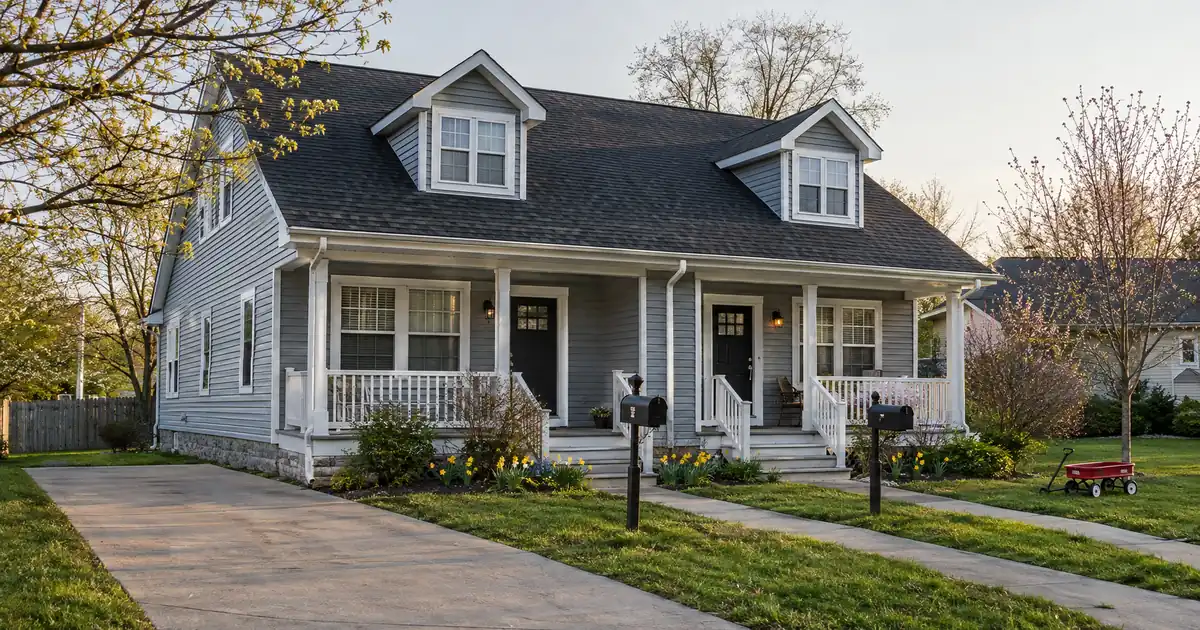
Most investors asking this question want one of two things. Some want to buy a duplex, triplex, or fourplex and run it on Airbnb. Others already own one and want to refinance or pull equity. Both paths run through the same product. This guide explains how it works, where it breaks, and how to decide.
Short-Term Rental Calculator
Run the STR numbers in your market
Rate source: Freddie Mac 30-yr average via FRED® — Federal Reserve Bank of St. Louis · effective Oct 15, 2026
Prefilled with starting assumptions — enter your nightly rate, occupancy, taxes, and insurance for a more accurate picture.
Short-term rental income is documented with a 12-month history or a market data report. Program parameters update from Lendmire’s centralized guideline source.
As of Oct 15, 2026 · General Freddie Mac market benchmark, not a Lendmire loan offer. Nightly rate, occupancy, taxes, and insurance are editable estimates. Qualifying income for short-term rentals varies by program — some use appraisal market rent, others use documented STR history or projections — and is confirmed in underwriting. Not a Loan Estimate, approval, or commitment to lend. Program availability and eligibility are subject to lender guidelines, credit approval, property review, and underwriting.
What Does “Business Loan” Actually Mean Here?
It means the purpose of the loan, not the product category. A business-purpose loan finances a property you hold as an investment and do not live in. It is a mortgage-style loan secured by the building. It is not a line of credit or a term loan for your hosting operation.
DSCR loans are designed for non-owner-occupied investment properties. Because they are business-purpose investor loans, they are reviewed differently from a standard owner-occupied mortgage. You sign an affidavit saying you will not occupy the property. The lender looks at what the building earns instead of your traditional personal-income documentation.
Here is how the two meanings of “business loan” compare for this property.
| Product | What it funds | Fit for a 2-4 unit STR |
|---|---|---|
| DSCR investor loan | Purchase or refinance of the building | Strong fit |
| SBA 7(a) or 504 | Operating businesses | Generally excluded for landlords |
| Operating-capital loan | Furniture, payroll, marketing | Useful, but does not buy the building |
| Conventional investment loan | Purchase or refinance | Hard if STR income lacks history |
The SBA point trips up many hosts. SBA rules generally exclude passive real estate investment businesses, as the NAA and investment property coalition comment letter to the CFPB notes. A hotel-style operation with real guest services is sometimes argued to be different. Treat that as an edge case, not the investor norm.
Why Do 2-4 Units Count as a Residential Loan?
Buildings with two to four units are underwritten as residential property, not commercial. That is why DSCR works here. Five or more units move into commercial underwriting, which is a different process with different documents.
For a 2-4 unit building, the lender measures every unit’s income against one monthly obligation. That obligation is PITIA, which stands for principal, interest, taxes, insurance, and association dues. DSCR is the debt service coverage ratio. You divide qualifying monthly income by PITIA. A result of 1.00 means income exactly matches the payment.
The appraisal reflects the unit count too. For 2-4 units, the appraisal uses Form 1025, which carries per-unit rent and value together. Single-family files use Form 1007, a rent survey. Both estimate long-term rent, and that matters a great deal for short-term rentals, as the next section shows.
How Do Lenders Count Short-Term Rental Income on Multiple Units?
Lenders accept short-term rental income through documented evidence, and the method changes your coverage number. Programs differ on which method they use. Some default to long-term rent from the appraisal. Others will use STR income when you document it.
The usual evidence sources are:
- Twelve months of platform statements or property-manager history.
- A market projection from a tool such as AirDNA or Rabbu.
- An appraiser’s short-term rental analysis.
On a purchase with no history, an appraiser’s analysis, a market projection, or both may support the income. On a refinance, lenders typically want actual operating history. That lines up with the network’s general expectation of about 12 months of hosting experience on STR files.
Here is the catch. The long-term rent survey often comes in well below what an STR can earn. Ask which basis the lender uses before you pay for an appraisal.
Mixed buildings work differently. Suppose two units are on leases and two are on Airbnb. The lender generally uses the leases for the long-term units and the STR evidence for the others. The total then sits against one PITIA.
What Do the Numbers Look Like?
On short-term rentals, purchase leverage tops out at 75% LTV, and refinance and cash-out top out at 70%, on the strongest files. LTV is loan-to-value, the loan as a percentage of the property’s value. Those caps apply to short-term-rental collateral. Standard long-term rentals run higher: most purchase files land at 75%-80% LTV, and cash-out on a standard rental tops out around 75%. Leverage, reserves, and pricing vary by lender and program; the final terms follow the full file review.
For STR files, the typical profile looks like this, subject to lender guidelines:
- Credit: a 640 minimum score, with stronger scores opening better pricing and leverage.
- Coverage: a 1.00 floor on purchases and 1.00 on refinances. Stronger ratios can improve terms.
- Experience: about 12 months of host or landlord history.
- Loan size: up to $3,000,000 on standard programs, with smaller balances routed through select lenders in the network.
- Reserves: these vary by lender, leverage, loan size, and transaction type. Many files see around 6 months of PITIA, and larger loans can step up.
Coverage below 1.00 is a separate path. It is available through select lenders in the network, with leverage and terms adjusted. Lenders that offer no-ratio structures generally limit them to borrowers who already own a primary residence. Both come with tradeoffs, so do not plan around them as the default.
Run the numbers on a fourplex like this. Say the four units together show rent that covers the full PITIA with a cushion, landing near 1.25x. Many programs would read that as a solid file. Now suppose the same building only reaches 0.95x on long-term rent but 1.30x on documented STR income. The basis the lender chooses decides which file you have.
A bigger down payment helps. It lowers the monthly obligation and can lift the ratio. It never erases leverage caps, credit floors, reserve rules, or property eligibility. The strongest files clear both tests: enough equity and enough rental coverage.
Does Clearing 1.00 Mean the Property Makes Money?
No. DSCR compares rent to PITIA only. Repairs, vacancy, management fees, utilities, cleaning, platform fees, furnishings, and capital expenses all sit outside the calculation.
STR owners feel this more than anyone. A short-term rental building can cover its payment on paper and still run thin after cleaning turnover, utilities, and an off-season month. (A healthy coverage number is a ticket into the loan, not a profit forecast.) Build your own operating budget separately and stress it against a slow quarter.
Lenders in the network set their own treatment, and it varies by program.
Can You Live in One of the Units?
Not with a DSCR loan. Living in a unit of a duplex, triplex, or fourplex removes DSCR eligibility. If you want to occupy one unit, you are shopping owner-occupied financing, which has its own rules, including limits on short-term use of the unit you live in.
Two details are easy to mix up. Federal rules treat a non-owner-occupied rental as business-purpose regardless of how many units it has. Under the CFPB’s Regulation Z commentary, an owner who expects to occupy the property for more than 14 days in the coming year cannot treat it as non-owner-occupied. So a vacation duplex you plan to use yourself does not fit the business-purpose frame.
The owner-occupied side is different. Per Compliance Alliance, an owner-occupied acquisition counts as business-purpose only when the property has more than two units. That is a regulatory classification, not DSCR program eligibility. The two questions are separate.
Putting the building in an LLC does not change who lives there. The occupancy rule follows the people, not the title.
Can an LLC Take the Loan?
Often yes, subject to lender program eligibility. Many investors hold STR buildings in an LLC for liability separation. Programs differ on whether the LLC is the borrower or whether you borrow personally and the LLC takes title. Expect personal guaranty requirements.
Coverage turns on the loan’s purpose, not the guaranty. The ABA Banking Journal discusses the case where an individual applies and an LLC guarantees. Federal exemptions for business-purpose loans also extend to loans made to entities that are not natural persons, according to America’s Credit Unions.
Business-purpose does not mean no rules. These loans skip some consumer mortgage disclosures, and that means fewer consumer protections for you. Read the terms carefully, especially prepayment structures.
What Documents Will You Need?
Property documents matter more than personal income documents. The file leans on the building’s income, your credit, and your reserves.
Plan to gather:
- A business-purpose and occupancy affidavit.
- Leases for any long-term units.
- Platform statements or manager reports for STR units.
- Entity documents if an LLC is involved.
- Proof of reserves.
- Insurance that fits the rental use.
Because the file qualifies primarily on property income, subject to lender guidelines, heavy tax write-offs matter less than they do with conventional underwriting. Conventional lenders often will not count STR income without documented history, which is why many hosts end up on the investor side.
Where Do Deals Fall Apart?
Usually on income basis, history, or local rules. Four problems show up again and again.
1. The appraisal defaults to long-term rent. An STR-heavy building then shows a thin ratio. Ask in advance.
2. No hosting history on a refinance. Most lenders want actual history, not a projection.
3. Occupancy. Any plan to live in a unit or use the building yourself more than a couple of weeks a year changes the product.
4. Local rules. Short-term rental rules can vary by city, county, HOA, and property type, so investors should confirm local rules before relying on projected rental income.
Across a wholesale network, one pattern stands out. Files that pair a clean income story with healthy reserves tend to move through lender review more smoothly than files with a great ratio and thin paperwork. The ratio opens the door. The documentation keeps it open.
Three property types are simply not offered. Manufactured homes, log homes, and barndominiums fall outside these DSCR programs. Tax treatment can depend on how the funds are used and how the property is held; investors should keep clear records and speak with a qualified tax professional before relying on any deduction.
Which Route Fits You?
Match the product to the goal. If you want to buy or refinance the building and you will not live in it, a DSCR investor loan is the fit. If you need money for furniture or operating costs, that is operating capital, a different product. If you want to live in one unit, you are looking at owner-occupied financing instead.
The complete DSCR loans guide covers the full program picture.
Before you apply, run this checklist:
- Will you live in any unit? If yes, DSCR is off the table.
- Do you have 12 months of hosting history, or a plan for the appraiser’s STR analysis?
- Is your credit at or above 640? Stronger scores help.
- Does your income basis clear 1.00 under the lender’s method, not just yours?
- Are reserves in place?
- Are local STR rules confirmed?
If you are buying or refinancing a rental property and want to see how the numbers work, Lendmire can help you compare DSCR loan options based on the property income, credit profile, leverage, and investor goals. Reach the team at 828-256-2183 or request a quote. Lendmire is a mortgage broker arranging DSCR financing through select lenders in its wholesale network across 41 markets, including Washington, D.C. This is not a commitment to lend, and every file is underwritten individually.
Key Terms Defined
DSCR: the ratio of qualifying monthly income to the monthly PITIA payment.
PITIA: principal, interest, taxes, insurance, and association dues, the full monthly obligation on the property.
LTV: loan-to-value, the loan amount as a percentage of the property’s value.
Business-purpose loan: a loan on a property held as an investment, not as a home.
Reserves: liquid funds a lender wants you to hold after closing, often measured in months of PITIA.
Frequently Asked Questions
Does an SBA loan work for a 2-4 unit short-term rental?
Generally no. SBA programs exclude passive real estate investment, as the Speritas SBA white paper explains by quoting the federal exclusion. A hotel-style operation with real guest services is sometimes argued to be an exception, but that is rare. Most investors use a DSCR loan instead.
Do I need 12 months of history to buy?
Not always. On a purchase, lenders may accept an appraiser’s STR analysis, a market projection, or both in place of history. Refinances usually want actual operating records. Programs differ, and network STR files generally expect about 12 months of hosting experience.
Can I use an LLC?
Often, subject to lender program eligibility. Many programs lend to an LLC with a personal guaranty, and some lend to you personally with the LLC taking title. Confirm the structure before you form the entity.
What if I own five or more units?
That moves into commercial underwriting, which is outside the 2-4 unit residential-style DSCR product described here. The documents, pricing, and process all differ.
Does a ratio over 1.00 mean I will make money?
No. The ratio compares rent to PITIA only. Vacancy, repairs, management, utilities, and capital expenses are separate costs you still have to cover.
Investors focused on short-term rentals can review DSCR loans for Airbnb and short-term rentals.
About Lendmire
Lendmire (NMLS# 2371349), a non-QM mortgage broker serving investors in 41 markets including Washington, D.C., helps structure DSCR scenarios commonly evaluated around a property’s rental income rather than personal income paperwork, subject to lender guidelines. A Scotsman Guide Top Mortgage Workplace in 2025 and 2026, Lendmire places loans through wholesale investor lenders and is not a direct lender.
Get Started
Ready to find the right loan for you?
In about 30 seconds you can review financing options available for your investment property. No commitment required.
Informational only. Not a Loan Estimate, approval, or commitment to lend. Program availability and eligibility are subject to lender guidelines, credit approval, property review, and underwriting.
References
1. NAA and Investment Property Coalition comments to the CFPB
2. CFPB Regulation Z §1026.3 and commentary
3. Compliance Alliance — Regulation Z and Investment Properties
4. ABA Banking Journal — Individual applicant with LLC guarantor
5. America’s Credit Unions — Regulations and Business Loans
6. Speritas Capital — SBA 7(a) ineligible business use white paper
This article is part of Lendmire’s short-term rental loan program — full qualification details, guidelines, and scenarios live on the program page.
Related reading: Is a DSCR Loan a Good Idea for a One to Four Unit Rental? · How to Qualify for a Short-Term Rental DSCR Refinance on Actual Bookings · Can You Get a Short-Term Rental Loan With Less Than 25% Down?
Brandon Miller
Founder & CEO, Mortgage Loan Originator, Lendmire LLC
- Mortgage Loan Originator · NMLS# 1129696 · Verify on NMLS Consumer Access
- North Carolina Real Estate Broker · License# 343312 · Verify on NCREC
- North Carolina Insurance Producer · License# 19053198 · Property, Casualty, Life, Health · Verify on NAIC SBS
- Lendmire LLC · Firm NMLS# 2371349 · Verify firm licensure
Legal disclosures. Lendmire (NMLS# 2371349) is a state-licensed mortgage brokerage that arranges financing through wholesale lender relationships. Lendmire is not a direct lender, depository institution, or registered financial advisor. The discussion above is general informational content about real estate financing — it is not financial, legal, or tax advice, and readers should consult licensed professionals for guidance on their individual circumstances. Loan inquiries are subject to lender underwriting; this article does not represent a commitment to lend. Loan terms, rates, and qualification standards vary by borrower, property, and state, and are subject to change at any time. Equal Housing Opportunity. NMLS Consumer Access: nmlsconsumeraccess.org.