
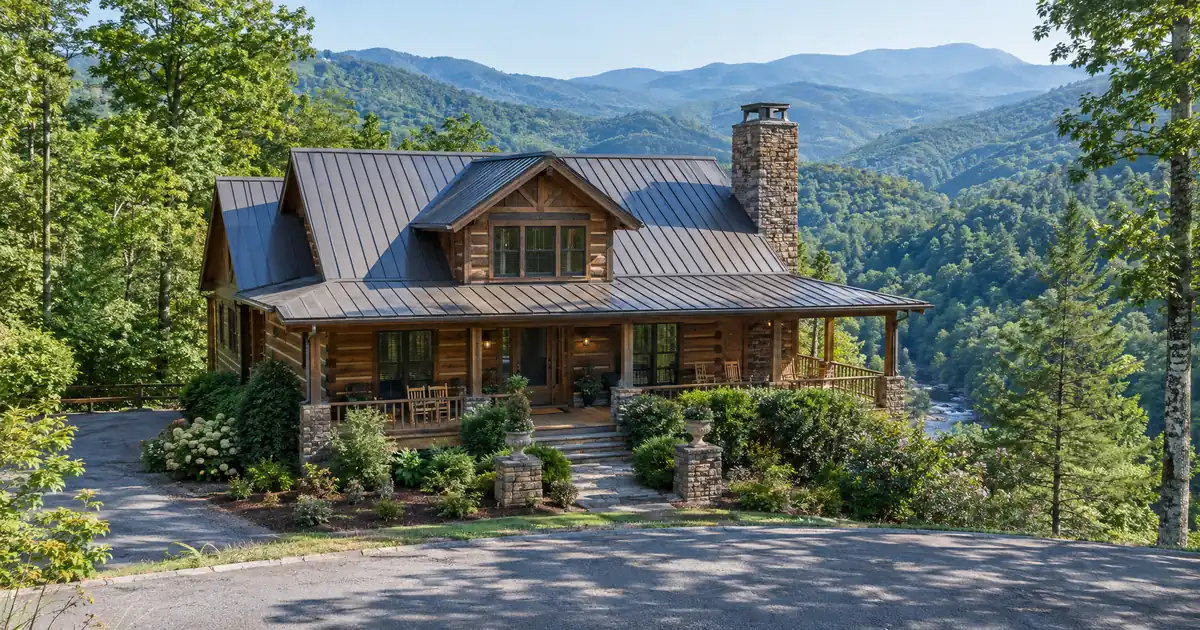
The Quick Read: Usually yes in practice: a DSCR lender wants proof that short-term rental use is legal at the exact address before it counts nightly income, and in Gatlinburg that proof is normally the city’s Tourist Residency permit, though a buyer who must apply in their own name after closing can often show zoning confirmation and an application path instead.
- The permit does not change the coverage math. It decides whether nightly-rental income can count at all.
- A live Airbnb listing is not proof of legal use, and a seller’s permit should not be assumed to transfer to you.
- If the lender cannot count short-term income, the file may be underwritten on long-term market rent instead.
- Short-term rental purchases on the strongest files go up to 75% LTV (loan-to-value, the loan as a share of the property’s value), subject to lender guidelines.
- Start with the parcel’s jurisdiction and zoning, because a Gatlinburg mailing address can sit outside city limits.
DSCR stands for debt service coverage ratio. It measures whether a property’s income covers its monthly obligation. This article walks through what the lender is really checking, how the permit fits into a contract timeline, and what to do when the permit cannot exist yet. For the full background on how these loans work, see the complete DSCR loans guide.
Short-Term Rental Calculator
Run the STR numbers in your market
Rate source: Freddie Mac 30-yr average via FRED® — Federal Reserve Bank of St. Louis · effective Oct 15, 2026
Prefilled with starting assumptions — enter your nightly rate, occupancy, taxes, and insurance for a more accurate picture.
Short-term rental income is documented with a 12-month history or a market data report. Program parameters update from Lendmire’s centralized guideline source.
As of Oct 15, 2026 · General Freddie Mac market benchmark, not a Lendmire loan offer. Nightly rate, occupancy, taxes, and insurance are editable estimates. Qualifying income for short-term rentals varies by program — some use appraisal market rent, others use documented STR history or projections — and is confirmed in underwriting. Not a Loan Estimate, approval, or commitment to lend. Program availability and eligibility are subject to lender guidelines, credit approval, property review, and underwriting.
What the Lender Is Actually Checking
A DSCR lender checks three separate things: whether the use is legal, whether the paperwork proves it, and whether the income is documented. The permit sits in the first two. It does not touch the third.
Here is the logic. On a short-term rental file, the lender wants to count nightly income. It can only count income the property is allowed to earn. A cabin that cannot be rented legally cannot support short-term coverage, no matter how strong the listing history looks.
That is why the permit question comes up. Most programs we place files with do not write it as a standalone “permit in hand” box on every file. Underwriters ask for evidence of legal use, and in a permit-required city the permit is the cleanest evidence.
Notice what the permit does not do. It does not raise or lower the DSCR. The ratio is monthly rental income divided by PITIA, which is principal, interest, taxes, insurance, and any HOA dues. The permit only decides which income number the lender may use in the top half of that fraction.
Short-term rental rules can vary by city, county, HOA, and property type, so investors should confirm local rules before relying on projected rental income.
Gatlinburg Permit Basics in One Screen
Gatlinburg calls its permit a Tourist Residency permit. The city’s own Tourist Residency Application scales the fee with bedroom count. It also sets sprinkler requirements for larger buildings and carries office-use fields for zoning and a building-code inspection before approval.
That last detail matters for your closing. The permit is not a clerical stamp. Zoning gets checked and an inspection happens first. An older revision of the city form tells applicants to verify with the Building and Planning office that the property is zoned for overnight rental before they apply.
So a buyer often cannot hold an issued permit on the day of closing. The inspection and approval steps belong to the person applying, and that person may be you.
Two other points shape the picture. First, strcityregs.com reports that some residential zones in Gatlinburg prohibit short-term rentals while others allow them, so the parcel’s zone is a gate you pass before anything else. Second, Ten by App notes that Sevier County runs its own separate permit program outside city limits. Check whether your parcel is inside the city or in unincorporated county land. They are different regimes with different paperwork.
Owners also tend to need business and tax registrations on top of the permit, according to The Short Term Shop. Those registrations belong in your evidence file too.
Permit Status at Closing: What a Lender May Accept
Where the permit stands on closing day decides what the lender can do. The table below shows the common situations and how files typically get handled.
| Status at closing | What a lender may accept | Your move |
|---|---|---|
| Permit issued to the buyer | Permit copy as legal-use evidence | Match the permit name to the vesting |
| Seller’s permit in place | Usually not enough alone | Ask the city if it reissues on sale |
| Application filed, pending | Case-by-case, program-dependent | Get the lender’s written position early |
| Zoning letter, no permit yet | May support purchase, income method varies | Confirm the application path with the city |
| Inspection failed or denied | Short-term income likely excluded | Fix and refile, or underwrite as long-term |
| Zone prohibits rentals | No short-term credit available | Rework the deal or walk |
The key point is the difference between evidence levels. An issued permit is the strongest. A zoning confirmation plus a clear application path is weaker. A listing screenshot is not evidence at all.
Lendmire’s piece How to Get Gatlinburg STR Permits in a Regulated Market Before DSCR Closing covers how permit tiers (permissive, permit-required, prohibited) change what lenders ask for.
The Chicken-and-Egg Problem
Here is the catch with Gatlinburg: the buyer often has to apply in their own name, but the buyer does not own the property yet. So what can realistically exist before closing?
Three things usually can. You can get written zoning confirmation from the city’s planning office. You can confirm which jurisdiction the parcel belongs to. And you can learn exactly what the application and inspection will require, so the lender sees a defined path rather than a hope.
What often cannot exist is the finished permit itself. In that case, the useful conversation is with your loan officer, before you go under contract. Ask the lender how it treats a file with zoning confirmation and an application path but no issued permit. Some programs will proceed on one income basis and some on another.
This is where a broker earns its keep. Across a wholesale network, lenders handle this scenario differently. Some want the permit issued. Some want zoning evidence and will count short-term income after the permit issues. Some will not touch a short-term file without hosting history and a live permit. Learning which camp a file fits before the contract is signed costs nothing. Learning it after costs a lot.
Does the Seller’s Permit Transfer?
Plan as if it does not. A permit in the seller’s name is a permit issued to the seller for that seller’s operation, and it often ends or needs reissuing when ownership changes. Do not assume it carries over until the city confirms otherwise in writing.
This matters for underwriting in a second way. A prior owner’s booking history does not prove your right to rent. It proves what the property earned under someone else’s permit.
Ask the planning office directly: does this permit transfer, reissue, or lapse on sale? Get the answer in writing and put it in the loan file.
Keep the Names Lined Up
A permit holder, a borrower, and a title holder that do not match is one of the most common snags on short-term files. Say the permit is in an individual’s name while the loan vests in an LLC. The lender sees a legal-use document that belongs to a different party than the borrower.
Vesting means the exact name under which the borrower will hold title. Loans to LLCs are available subject to lender program eligibility, and the permit should be applied for in the same name that will hold title. If you plan to buy through an entity, decide that before you apply for the permit, not after.
The Sequence Inside Your Due-Diligence Window
Order matters more than speed here. Work the steps in this sequence, and start the first ones before you waive any contingency.
1. Locate the parcel. Confirm city limits versus unincorporated county.
2. Check zoning. Get written confirmation from the city’s planning office that overnight rental is allowed on that parcel.
3. Check HOA and deed rules. These sit on top of city rules and can ban rentals outright.
4. Ask about the existing permit. Find out whether it reissues on sale or ends.
5. Plan the application. Line up the buyer’s name or entity, the inspection, and any sprinkler questions for larger buildings.
6. Talk to the loan officer. Ask what evidence level the chosen lender needs before closing.
7. Assemble the lender packet. Gather permit or application proof, tax registrations, zoning evidence, HOA letter, entity documents, and insurance.
Ask your agent or attorney about contingency and extension language tied to zoning and permit approval. A contract that lets you walk or extend if the permit path fails protects you better than hope does.
If the Permit Cannot Be Shown at Closing
When the lender will not count short-term income without the permit, the file does not necessarily die. It often falls back to long-term market rent, taken from the appraiser’s rent schedule. Form 1007 is that rent schedule for single-family homes, and Form 1025 is the equivalent income report for two-to-four-unit properties.
The catch is that long-term rent on a vacation cabin is usually well below its nightly-rental potential. The coverage ratio can drop a lot on that basis. A deal that looks like 1.3x on nightly income might read thin or fall below 1.00 on long-term rent.
That is a different calculation, not a failure. Across the network, 1.00 is where many select programs start. A separate select-lender path takes coverage below 1.00, with leverage and terms adjusted. Either way, qualification is subject to lender guidelines, credit approval, and property review.
Some lenders also do not do short-term rentals at all and restrict themselves to long-term leases. That is a program choice, not a rule about your property. It is one reason to run the file through a broker who can see many lenders at once.
DSCR vs. conventional financing
There are two common ways to finance an investment property, and they qualify you differently — here’s how investors weigh them.
Why investors choose it
- Qualifies on the property’s rental income — no personal tax returns, W-2s, or pay stubs needed to document income.
- No personal debt-to-income ceiling to clear, so existing mortgages and obligations don’t cap your borrowing the same way.
- Can be closed in an LLC, keeping the property inside a business entity.
- Built for scaling — not held to the limit on number of financed properties that conventional financing applies.
- Underwriting centers on the deal: generally qualifies when the rent covers the payment, a 1.00x coverage ratio being a common baseline (confirmed in underwriting).
- Designed specifically for investment property, including long-term and, where the program allows, short-term rentals.
Where it’s strong
- Often the lowest ongoing financing cost for a buyer who fully qualifies on personal income — a fit for a first property or a cost-first purchase.
Trade-offs for investors
- Requires full personal income documentation and must fit within a debt-to-income limit — salary, existing debts, and other mortgages all count.
- Typically held in your personal name rather than a business entity.
- Caps how many financed properties you can carry, which can become a ceiling as a portfolio grows.
- Evaluates you as a borrower as much as the property, which usually means more paperwork.
How investors usually choose: a first or single property often optimizes for the lowest financing cost; portfolio builders often optimize for leverage, vesting in an LLC, and scaling past conventional caps. The right answer depends on your goals, the property, and current guidelines — both paths run through select lenders in Lendmire’s wholesale network, with eligibility and terms confirmed in underwriting.
What Short-Term Rental Programs Typically Expect
Short-term rental files carry tighter parameters than standard long-term rentals. Across the network, here is what typical files look like, subject to lender guidelines:
- Purchase leverage: up to 75% LTV on the strongest short-term rental purchase files.
- Refinance and cash-out leverage: around 70% LTV on short-term rental collateral, a step below the 75% ceiling on standard long-term rentals.
- Credit score: a 640 minimum is typical for short-term rental files.
- Hosting history: about 12 months of landlord or host experience is usually expected.
- Coverage: a 1.00 floor on purchases and a separate 1.00 floor on refinances, with stronger ratios opening better terms.
- Loan size: up to $3,000,000 on standard programs.
Reserves vary by lender, leverage, and loan size. A commonly cited ballpark is around 6 months of PITIA, and larger loans step up. Treat that as flexible, not universal.
Notice that none of these figures change because of the permit. The permit is the entry ticket. Credit, leverage, reserves, and coverage still have to clear on their own. Clearing 1.00 also does not mean the property cash flows. Repairs, vacancy, management, utilities, and capital expenses sit outside the DSCR calculation.
DSCR loans are designed for non-owner-occupied investment properties. Because they are business-purpose investor loans, they are reviewed differently from a standard owner-occupied mortgage. And some property types are simply not offered in the network: manufactured homes, log homes, and barndominiums fall outside these programs, which matters in a market full of log-style cabins. Confirm the construction type before you fall in love with a listing.
Documents to Gather for the Lender
Build this packet early. A clean file gives the lender less to question.
- Permit or registration certificate, or the application and written zoning confirmation if the permit is not yet issued.
- Business and tax registrations the jurisdiction requires.
- Written zoning verification from the city’s planning office.
- HOA rules or an HOA letter confirming rentals are allowed.
- Entity documents showing the vesting name.
- Insurance that reflects short-term rental use.
- The income method: an appraiser’s short-term analysis, a manager’s trailing-12-month statement, bank deposit history, or a market projection, depending on the program.
Some programs lean on the appraiser’s rent schedule, some on market data, and some on both. Which one applies is the lender’s call.
Common Mistakes
Treating the listing as proof. A live listing shows someone is renting. It does not show they are allowed to.
Waiting until after closing to ask. Zoning and inspection steps belong in the due-diligence window. If they slip, the contract timeline or the income method can change.
Assuming a Gatlinburg address means city rules. The parcel may be in the county, which has its own program.
Letting names drift. Permit holder, borrower, and title holder should match.
Confusing legal with profitable. A permit makes the income countable. It does not make the deal good.
Tax treatment can depend on how the funds are used and how the property is held; investors should keep clear records and speak with a qualified tax professional before relying on any deduction.
Key Terms Defined
DSCR (debt service coverage ratio): the property’s monthly rental income divided by its monthly obligation.
PITIA: principal, interest, taxes, insurance, and any HOA dues, the full monthly obligation on the property.
LTV (loan-to-value): the loan amount as a percentage of the property’s value.
Vesting: the exact legal name, person or LLC, under which the borrower will hold title.
Form 1007 and Form 1025: the appraiser’s rent schedule for single-family homes and the income report for two-to-four-unit properties.
Zoning verification: written confirmation from the city that a parcel’s zone allows the intended use.
Frequently Asked Questions
Does the lender need the permit before closing?
Usually the lender needs evidence of legal use, and an issued permit is the strongest form of it. Some programs accept zoning confirmation plus a clear application path on a purchase. Others want the permit in hand. Ask your loan officer which applies to the program your file fits.
Can I close with a pending application?
Sometimes, depending on the program. A pending application is weaker evidence than an issued permit, so the lender may count long-term rent until the permit issues. Get the lender’s position in writing before you remove contingencies.
Does the seller’s permit transfer to me?
Plan as if it does not. A permit often ends or needs reissuing on sale, and a prior owner’s booking history does not prove your right to rent. Ask the city whether it transfers or reissues, and keep the answer in the file.
What if my cabin is outside city limits?
Then the city permit is not the right document. Sevier County runs a separate program for unincorporated areas, per Ten by App. Confirm the parcel’s jurisdiction first, then ask the lender what evidence that program’s approval provides.
Does the HOA matter to the lender?
Yes. A city permit does not override an HOA or deed rule that bans rentals. Lenders review those rules as part of confirming legal use, so get an HOA letter early.
If You Want to Run the Numbers
If you are buying or refinancing a rental property and want to see how the numbers work, Lendmire can help you compare DSCR loan options based on the property income, credit profile, leverage, and investor goals. As a mortgage broker, it arranges financing through select lenders in its wholesale network across 41 markets, including Washington, D.C., and you can reach the team at 828-256-2183 or through the Lendmire quote page. Qualification is subject to lender guidelines and is not a commitment to lend.
In a market where the permit depends on zoning, an inspection, and your own name on the application, the buyers who do best are the ones who start the paperwork before the contract does.
About Lendmire
Lendmire (NMLS# 2371349) is a mortgage brokerage built around DSCR investor lending, with programs available in 41 markets, including Washington, D.C. DSCR lenders commonly evaluate rental-income coverage instead of personal income paperwork — a practical fit for LLC-owned and multi-property investors. Terms vary by lender, property, leverage, and program. Scotsman Guide named Lendmire a Top Mortgage Workplace in both 2025 and 2026.
Get Started
Ready to find the right loan for you?
In about 30 seconds you can review financing options available for your investment property. No commitment required.
Informational only. Not a Loan Estimate, approval, or commitment to lend. Program availability and eligibility are subject to lender guidelines, credit approval, property review, and underwriting.
References
1. City of Gatlinburg Tourist Residency Application
2. strcityregs.com – Gatlinburg
3. Ten by App – Gatlinburg short-term rental laws
4. The Short Term Shop – Smoky Mountain short-term rental regulations
This article is part of Lendmire’s short-term rental loan program — full qualification details, guidelines, and scenarios live on the program page.
Related reading: How Much Down Payment Does a DSCR Loan in Texas Require? · How Many Reserve Months DSCR Lenders Actually Require · How Much Down Payment Does a DSCR Loan in Connecticut Require?
Guides: Short-Term Rental Loans in Gatlinburg, TN · Short-Term Rental Loans in Tennessee
Brandon Miller
Founder & CEO, Mortgage Loan Originator, Lendmire LLC
- Mortgage Loan Originator · NMLS# 1129696 · Verify on NMLS Consumer Access
- North Carolina Real Estate Broker · License# 343312 · Verify on NCREC
- North Carolina Insurance Producer · License# 19053198 · Property, Casualty, Life, Health · Verify on NAIC SBS
- Lendmire LLC · Firm NMLS# 2371349 · Verify firm licensure
Legal disclosures. Lendmire (NMLS# 2371349) is a state-licensed mortgage brokerage that arranges financing through wholesale lender relationships. Lendmire is not a direct lender, depository institution, or registered financial advisor. The discussion above is general informational content about real estate financing — it is not financial, legal, or tax advice, and readers should consult licensed professionals for guidance on their individual circumstances. Loan inquiries are subject to lender underwriting; this article does not represent a commitment to lend. Loan terms, rates, and qualification standards vary by borrower, property, and state, and are subject to change at any time. Equal Housing Opportunity. NMLS Consumer Access: nmlsconsumeraccess.org.