
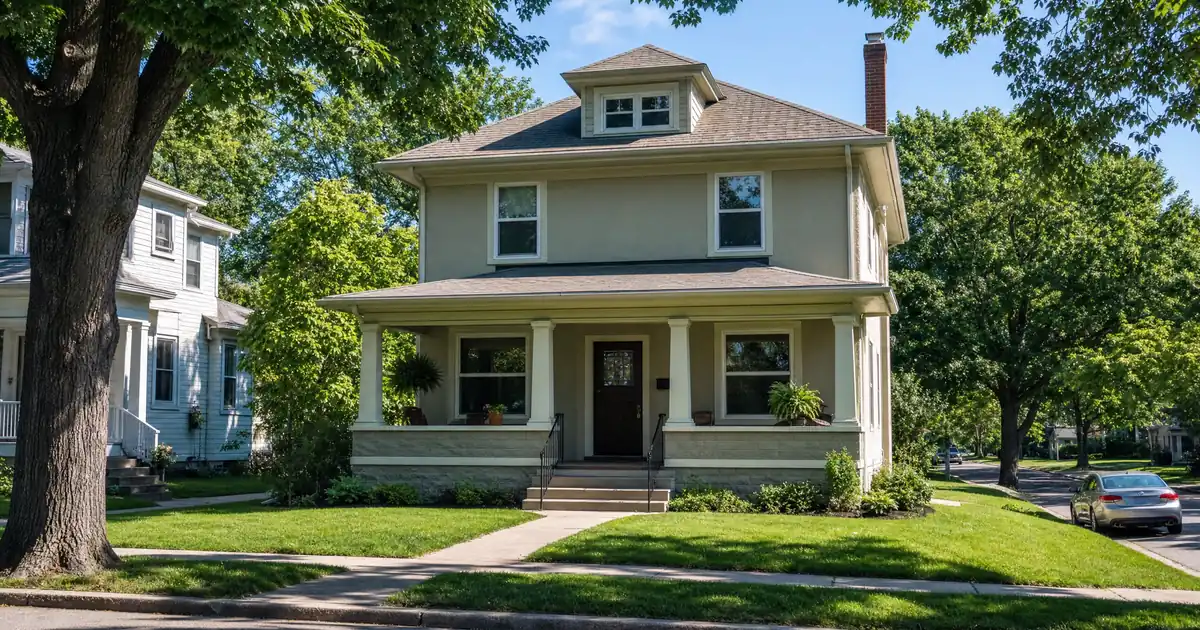
DSCR Loan Denied Because The Appraisal Classified The Property Differently Than Expected — The Quick Read: This happens when the appraiser’s independent findings on unit count, zoning, condition, or use don’t match what the loan file assumed going in. The appraiser — not the borrower’s application, not a lease, not a listing description — decides what the property legally and physically is, and that decision sets both the value and the rent used for lender review. When the classification shifts, the debt-service-coverage math built around the old assumption can fall apart, sometimes taking the whole loan program with it.
Key Takeaways
- The appraiser independently determines unit count, condition, zoning conformity, and highest and best use — the loan application’s description carries no weight against those findings.
- A DSCR appraisal does two jobs at once: it sets the property’s value for leverage purposes and sets the market rent used to calculate the coverage ratio.
- Common classification traps include unpermitted second units, mixed-use buildings crossing a commercial square-footage threshold, buildings that come in at five-plus units, poor condition ratings, and rural or agricultural designations.
- Vacant properties are more exposed to a classification surprise than leased ones, because there’s no signed lease to anchor the rent conclusion.
- A wrong classification isn’t automatically final — a Reconsideration of Value request, backed by real evidence, is the formal channel to challenge it.
What “Classified Differently Than Expected” Actually Means
The gap between “expected” and “appraised” almost always traces back to one thing: the appraiser’s on-site inspection and public-record research overriding whatever assumption the loan file was built on. Nobody at the lender decided the property was a single-family home instead of a duplex — the appraiser did, based on what they found at the property and in the county’s records.
DSCR Calculator
Run the numbers in your market
Rate source: Freddie Mac 30-yr average via FRED® — Federal Reserve Bank of St. Louis · effective Aug 27, 2026
Prefilled with local estimates — enter your own rent or nightly figures, taxes, insurance, and HOA for a more accurate picture.
Program parameters update from Lendmire’s centralized guideline source. Taxes and insurance are editable estimates.
As of Aug 27, 2026 · General Freddie Mac market benchmark, not a Lendmire loan offer. Rent, nightly rate, occupancy, taxes, and insurance are editable estimates. Short-term rental figures are estimates only and vary significantly by season, property type, management approach, and local short-term-rental rules — confirm local regulations before relying on them. Qualifying income for short-term rentals varies by program — some use appraisal market rent, others use documented STR history or projections — and is confirmed in underwriting. Not a Loan Estimate, approval, or commitment to lend. Program availability and eligibility are subject to lender guidelines, credit approval, property review, and underwriting.
DSCR loans are business-purpose loans made to real estate investors, priced and structured around the property’s income rather than the borrower’s paycheck. They sit outside Fannie Mae and Freddie Mac’s world — there is no agency selling guide sitting behind a DSCR file. But almost every non-QM lender still uses the same appraisal forms and rent-schedule methodology that the agencies built, which is exactly why an appraiser’s classification call can reach into a DSCR file the same way it reaches into a conventional one.
Practically, this shows up as one of two outcomes. Either the rent used for lender review shrinks because a unit, a permitted use, or a rentable condition got knocked out of the file — or the property gets kicked out of the standard residential DSCR box entirely and has to be re-routed to a different program. Both are classification problems. Only one of them is fixable without starting over.
Key Terms Defined
DSCR (debt-service-coverage ratio): the property’s monthly rental income divided by its full monthly housing payment (principal, interest, taxes, insurance, and any HOA dues) — a number above 1.00 means the rent covers the payment.
Form 1007 / Form 1025: the two rent-schedule forms an appraiser attaches to a DSCR appraisal — Form 1007 for one-unit properties and Form 1025 for two-to-four-unit buildings — with the unit count the appraiser confirms on-site deciding which one applies, per Fannie Mae’s rental income guidance.
Highest and best use: the appraisal test that identifies which legally permissible, physically possible, and financially feasible use of the property actually applies — it can override how a property was marketed if zoning doesn’t legally support that use.
Reconsideration of Value (ROV): a formal, evidence-based request routed through the lender asking the appraiser to revisit a specific conclusion — not a customer-service complaint, and not a shortcut around a disputed classification.
PITIA: the full monthly housing obligation used on the expense side of the DSCR calculation — principal, interest, taxes, insurance, and association dues where they apply.
How the Appraisal Actually Drives the DSCR Decision
The appraisal decides the classification before it decides the number. Underwriting doesn’t pull the rent from the loan application or the listing sheet — it pulls it from whichever rent schedule the appraiser attaches, and which one that is depends entirely on what the appraiser finds standing at the property.
Step one is the form assignment. If the appraiser’s inspection or county-record check turns up a different legal unit count than the file assumed, the wrong rent schedule gets triggered on the spot, and the rent used for lender review moves with it.
Step two is highest and best use. This is a required appraisal standard, not a discretionary opinion — The Appraisal Foundation’s USPAP requires appraisers to weigh a property’s current use against its legally permissible use. That’s the mechanic behind a rental “duplex” appraising as a single-family home: if the second unit was never legally permitted, the legal-permissibility test forces the single-family conclusion regardless of what’s physically built.
Step three is occupancy at inspection. A leased property gives the appraiser a documented rent to reference. A vacant one doesn’t — the entire rent conclusion rests on the appraiser’s comp selection alone, which is one reason a vacant acquisition carries more classification risk than a stabilized rental. Lendmire’s guide to a DSCR loan denied because the property was vacant at appraisal covers this exact failure mode in more depth.
Step four is the structural test on mixed-use buildings. Eligible configurations generally cap commercial space at just under half the building’s total area, and that threshold is confirmed by the appraisal itself, not negotiated after the fact.
Step five is condition. A property rated in the two lowest condition tiers is treated as not safely rentable as-is, and a DSCR appraisal generally can’t be submitted “subject to” future repairs — the property has to clear the bar as it sits on inspection day.
Where Classification Actually Breaks the File
Six situations account for most of the classification surprises seen across DSCR files, and each one hits the loan differently — some shrink the rent used for program review, others end eligibility outright.
| Classification Trigger | What the Appraiser Is Testing | What It Changes in the File |
|---|---|---|
| Unpermitted second unit | Whether the extra unit is a legally recognized use | Rent schedule drops to one unit’s income only |
| Mixed-use over the commercial threshold | Share of building square footage used commercially | Property exits the residential DSCR box entirely |
| Building comes in at five-plus units | Actual unit count, on-site and in public records | Program no longer applies; needs commercial underwriting |
| Condition rated in the two lowest tiers | Whether the property is safely rentable as-is | Appraisal can’t proceed until repairs are complete |
| Vacant at time of inspection | No lease to anchor the rent conclusion | Rent figure rests entirely on the appraiser’s comps |
| Rural or agricultural designation | Zoning classification and comp availability | Can pull the file out of standard DSCR eligibility |
A seventh category doesn’t even need an appraisal surprise to sink a file — it’s categorical. Manufactured homes, both single- and double-wide, along with log homes and barndominiums, are not offered on DSCR programs across the wholesale network, regardless of condition, location, or how strong the rent looks on paper. If an appraiser’s inspection reveals the structure is a manufactured or modular chassis build rather than a stick-built home, the file doesn’t get repriced — it exits the program entirely.
The Same Property, Two Classifications
Here’s how the math actually shifts when a classification assumption doesn’t hold — using coverage ratios only, since the real dollar figures vary file to file.
Picture an investor structuring a purchase around a second-floor space they’ve been calling a legal accessory unit. Assuming both units count, the combined rent clears coverage somewhere around 1.20x — comfortably above the 1.00 floor that select programs use as a starting point. The appraiser inspects the property, checks the parcel against local zoning, and finds the second unit was never permitted and isn’t legally recognized as a separate dwelling.
Under Form 1007 treatment, that appraisal now rent-schedules the property as a single unit. The same loan amount, now qualifying against one unit’s rent instead of two, might land closer to 0.80x-0.85x coverage — a meaningful drop, and potentially below what the target program requires.
That doesn’t automatically kill the deal. It usually forces a decision: reduce the loan amount to restore coverage, shop the file to a lender whose leverage and pricing flex for sub-1.00 scenarios, or walk away and revisit the property’s actual permitted use before trying again. This is also the exact scenario where the DSCR loans guide is worth reading start to finish — it walks through how coverage, leverage, and property eligibility interact across a full file, not just at the appraisal stage.
Across the wholesale network Lendmire arranges through, sub-1.00 coverage scenarios aren’t a dead end — they’re available through select lenders, with leverage and terms adjusted to reflect the thinner cushion. No-ratio structures, where the property’s rent isn’t underwritten against the payment at all, exist too, but generally only through select lenders and generally for borrowers who already own a primary residence. Neither path is universal, and neither should be assumed going in — but both exist as real options when a classification shift knocks a file below the standard floor.
Where Investors Get Surprised Beyond Unit Count
Not every classification mismatch is about counting units. A handful of other property types carry the same risk for different reasons.
Condotels and mandatory rental-pool condos. A condo unit inside a building where management runs a hotel-style program is a different asset than a standalone investment condo — the owner doesn’t control occupancy independently, and the appraisal and property data will surface that distinction even if the listing called it a plain condo.
Short-term rental income on a long-term rent schedule. A standard appraisal doesn’t capture nightly-rate income the way an investor’s own STR platform data does. On a short-term rental purchase, most programs in the network want coverage at 1.00 or better based on the appraiser’s supported figures, plus roughly a 640-plus credit score and around 12 months of hosting history. On a short-term rental refinance, coverage generally also needs to clear 1.00, but that’s a separate underwriting event from the purchase — the two shouldn’t be assumed to run on identical terms just because the coverage floor happens to match. Lendmire’s dedicated guide to STR financing covers how that income gets documented.
Corporate or master-leased buildings. A property leased entirely to one commercial tenant, rather than to individual residential tenants, gets treated as a different risk profile than a standard rental — Lendmire’s breakdown of a DSCR loan denied because the property has a corporate or master lease walks through that specific mismatch.
DSCR vs. conventional financing
Two common ways to finance an investment property in this market. They qualify you differently — here’s how investors weigh them.
Why investors choose it
- Qualifies on the property’s rental income — no personal tax returns, W-2s, or pay stubs needed to document income.
- No personal debt-to-income ceiling to clear, so existing mortgages and obligations don’t cap your borrowing the same way.
- Can be closed in an LLC, keeping the property inside a business entity.
- Built for scaling — not held to the limit on number of financed properties that conventional financing applies.
- Underwriting centers on the deal: generally qualifies when the rent covers the payment, a 1.00x coverage ratio being a common baseline (confirmed in underwriting).
- Designed specifically for investment property, including long-term and, where the program allows, short-term rentals.
Where it’s strong
- Often the lowest ongoing financing cost for a buyer who fully qualifies on personal income — a fit for a first property or a cost-first purchase.
Trade-offs for investors
- Requires full personal income documentation and must fit within a debt-to-income limit — salary, existing debts, and other mortgages all count.
- Typically held in your personal name rather than a business entity.
- Caps how many financed properties you can carry, which can become a ceiling as a portfolio grows.
- Evaluates you as a borrower as much as the property, which usually means more paperwork.
How investors usually choose: a first or single property often optimizes for the lowest financing cost; portfolio builders often optimize for leverage, vesting in an LLC, and scaling past conventional caps. The right answer depends on your goals, the property, and current guidelines — both paths run through select lenders in Lendmire’s wholesale network, with eligibility and terms confirmed in underwriting.
Can You Fight the Classification?
Yes, through a formal Reconsideration of Value request — but it has to be built on comp-level evidence, not frustration with the outcome. This is the same escalation path Fannie Mae, Freddie Mac, and HUD standardized for agency loans, and non-QM lenders generally mirror the structure even though DSCR files aren’t bound by agency rules.
The mechanics matter here. Appraisal standards prohibit an appraiser from discussing results with anyone other than the client or the client’s designated agent, so a complaint routed through a real estate agent or the borrower directly typically goes nowhere — it has to move through the lender. Federal bank regulators back this framework with real teeth: the Federal Reserve’s interagency guidance on reconsiderations of value requires appraisals in federally related transactions to conform with national appraisal standards, including nondiscrimination requirements.
An ROV that brings genuine comps, a corrected unit count, or documented zoning approval can result in a revised conclusion. One that just restates disagreement with the value or classification generally won’t. Know the difference before filing.
Flagging the Risk Before the Appraisal Gets Ordered
a more affordable fix for a classification surprise is never needing the fix at all. Before a purchase contract commits an investor to a specific loan structure, a few checks catch most of the problems above.
Pull the parcel’s zoning and confirm any second unit, ADU, or additional structure is legally permitted — not just physically present. Check whether the county’s records show the unit count the listing claims. If the building has any commercial tenant, get a real square-footage breakdown before assuming it stays under the mixed-use threshold. And if the property is vacant, weigh whether getting even a short-term lease signed before the appraisal is ordered is worth the delay — a signed lease gives the appraiser something concrete to anchor rent to, instead of leaving the whole conclusion to comp selection.
None of this replaces the appraisal. It just narrows the range of surprises the appraisal can produce.
What This Looks Like in Practice for an Investor
Across the files seen in a wholesale DSCR network, the properties that run into classification trouble share a pattern: something about the unit count, the use, or the condition was assumed rather than confirmed before the contract was signed. The properties that sail through tend to have one thing in common — the investor already knew what the appraiser was going to find, because they checked first.
Purchase leverage across most programs in the network runs 75%-80% loan-to-value, with select high-leverage programs reaching 85% for borrowers around a 700-plus credit score. Cash-out refinances typically top out closer to 75% LTV, with roughly six months of seasoning expected on the property before the file is submitted. None of that changes because of a classification issue — what changes is whether the property is even eligible for that leverage tier in the first place. A bigger down payment can lift coverage and offset a rent shortfall, but it never overrides a hard property-type exclusion or restores eligibility a building lost by crossing a unit-count or commercial-use threshold.
If coverage or classification comes back weaker than expected, the practical menu is short: restructure the leverage, bring more cash to the deal, route the file to a program built for the corrected classification, or dispute the finding through a formal ROV if the evidence supports it. For a broader look at how refinances handle equity and timing once a property’s classification is settled, Lendmire’s guide on when it makes sense to refi a rental property is worth a read. And if the issue isn’t classification at all but the rent simply doesn’t clear the payment, Lendmire’s breakdown of a DSCR loan denied because the property does not cash flow covers that separate, more common scenario.
DSCR loans are designed for non-owner-occupied investment properties. Because they’re business-purpose investor loans, they’re reviewed differently from a standard owner-occupied mortgage, and qualification runs primarily on the property’s rental income covering the payment, subject to lender guidelines. That’s also why a single appraiser’s classification call can carry so much weight — there’s no personal income file to fall back on if the property-level numbers move.
Lendmire arranges DSCR financing through a wholesale network of lenders spanning 40 markets, including Washington, D.C., and the team routinely works through exactly this kind of classification issue with investors before it becomes a denial. If a rental property’s appraisal outcome doesn’t match what the loan was structured around, or an investor wants to pressure-test a deal before it gets to that stage, Lendmire can help compare DSCR loan options based on the property’s income, its actual classification, credit profile, and leverage. Reach the team at 828-256-2183 or request a quote to walk through a specific property before the appraisal is ordered.
Frequently Asked Questions
Does a bigger down payment fix a classification-driven denial?
Sometimes, but only for the coverage side of the problem — not for eligibility. A larger down payment lowers the loan amount and can lift the DSCR back above the target floor, but it can’t override a hard exclusion, like a building that came in at five-plus units or a manufactured home the network doesn’t finance at all.
Can I use my own lease instead of the appraiser’s rent number?
Not entirely. A signed lease gives the appraiser a documented figure to weigh, and it removes the vacancy risk that leaves rent entirely to the appraiser’s opinion — but the appraiser’s independent market-rent conclusion, built on Form 1007 or 1025, is still what most DSCR underwriting relies on.
What if the appraiser says my duplex is really a single-family home?
That usually comes down to zoning, not the physical layout. If the second unit was never legally permitted for the parcel, the appraiser’s highest-and-best-use analysis can force a single-family conclusion, and the rent schedule drops to reflect only the legally recognized unit.
Is a mixed-use property automatically ineligible for DSCR financing?
No — the line is a specific commercial square-footage threshold, not a blanket rule against any commercial component. A building where commercial space stays under roughly half the total area can still qualify as a residential-dominant DSCR file; cross that line and it needs a different program.
What happens if the appraisal comes back with a lower rent than I projected?
The file qualifies against the appraiser’s figure, not the investor’s projection or an online rent estimate. If that lower number drops coverage below the target program’s floor, the options are restructuring leverage, adding cash, routing to a lender that works with thinner coverage, or filing a Reconsideration of Value if there’s real comp-level evidence the appraiser’s number was off.
About Lendmire
As a non-QM mortgage broker (NMLS# 2371349), Lendmire facilitates DSCR investor loans across 40 markets, including Washington, D.C. DSCR eligibility is generally reviewed around property-level rental income instead of personal income documentation, subject to lender guidelines, serving LLC-structured portfolios and self-employed borrowers who don’t fit conventional boxes. A two-time Scotsman Guide Top Mortgage Workplace (2025, 2026).
Lendmire’s Top Mortgage Workplace recognition is documented by Scotsman Guide 2025 Top Mortgage Workplace and Scotsman Guide 2026 Top Mortgage Workplace.
Get Started
Ready to find the right loan for you?
In about 30 seconds you can review financing options available for your home or investment property. No commitment required.
Informational only. Not a Loan Estimate, approval, or commitment to lend. Program availability and eligibility are subject to lender guidelines, credit approval, property review, and underwriting.
References
1. Fannie Mae Selling Guide — Rental Income (B3-3.8-01)
2. The Appraisal Foundation — USPAP
3. Federal Reserve — Interagency Guidance on Reconsiderations of Value
Brandon Miller
Founder & CEO, Mortgage Loan Originator, Lendmire LLC
- Mortgage Loan Originator · NMLS# 1129696 · Verify on NMLS Consumer Access
- North Carolina Real Estate Broker · License# 343312 · Verify on NCREC
- North Carolina Insurance Producer · License# 19053198 · Property, Casualty, Life, Health · Verify on NAIC SBS
- Lendmire LLC · Firm NMLS# 2371349 · Verify firm licensure
Required disclosures. Lendmire (NMLS# 2371349) operates as a licensed mortgage broker, not a direct lender or depository. The discussion in this article is general in nature and should not be relied upon as financial, legal, or tax advice — every investment scenario is unique and should be reviewed by a qualified professional. Any loan inquiry is subject to lender underwriting, and this article is not a commitment to lend or a guarantee of approval. Mortgage rates, loan terms, and program guidelines vary by borrower, property, and state, and may change without notice. Equal Housing Opportunity. Verify licensure at NMLS Consumer Access.


