
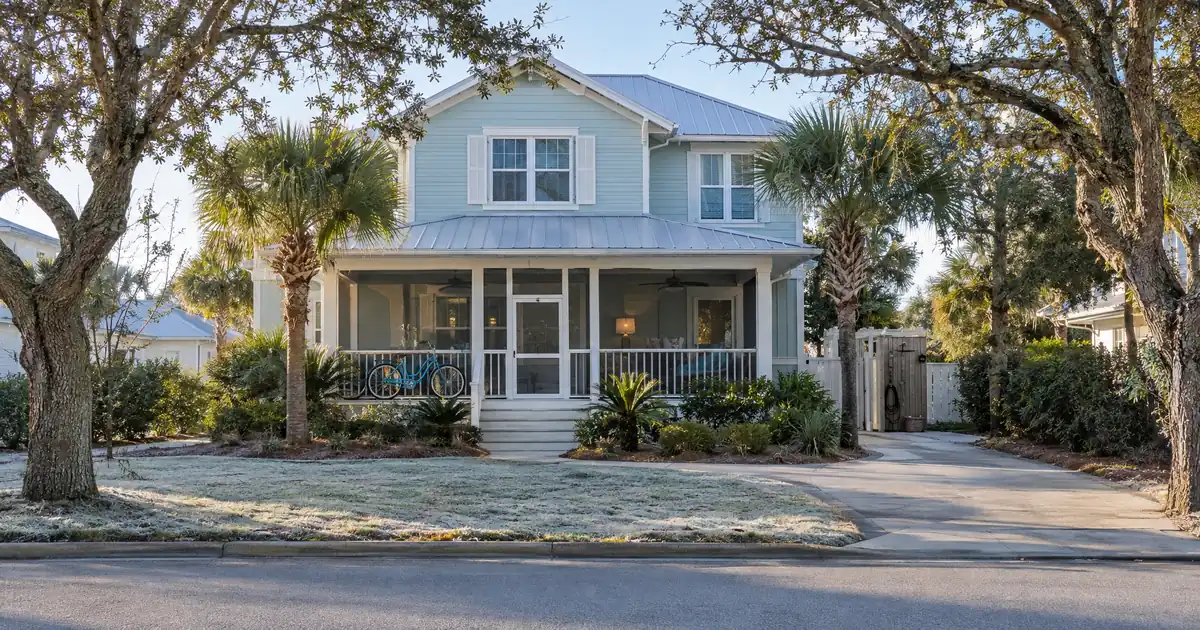
The Quick Read: Yes, it can, as long as two separate approvals both arrive: the seller’s lender must accept less than it is owed, and the DSCR lender must accept the property and its rental income. A short sale is how you buy the property. The short-term rental is how the lender measures income. Neither one disqualifies the other.
- Short-term rental purchases on select programs typically reach up to 75% LTV (loan-to-value, the loan as a share of the price).
- Expect a credit score of about 640 or higher and roughly 12 months of host or landlord experience.
- The coverage floor on a short-term rental purchase is 1.00 on typical programs.
- Timing is the biggest risk, because short-sale approvals can run weeks to many months.
- The property must be legal to rent short-term at that address, and it must pass appraisal and condition review.
Subject to lender guidelines, credit approval, and property review. Nothing here is a commitment to lend.
Short-Term Rental Calculator
Run the STR numbers in your market
Rate source: Freddie Mac 30-yr average via FRED® — Federal Reserve Bank of St. Louis · effective Oct 15, 2026
Prefilled with starting assumptions — enter your nightly rate, occupancy, taxes, and insurance for a more accurate picture.
Short-term rental income is documented with a 12-month history or a market data report. Program parameters update from Lendmire’s centralized guideline source.
As of Oct 15, 2026 · General Freddie Mac market benchmark, not a Lendmire loan offer. Nightly rate, occupancy, taxes, and insurance are editable estimates. Qualifying income for short-term rentals varies by program — some use appraisal market rent, others use documented STR history or projections — and is confirmed in underwriting. Not a Loan Estimate, approval, or commitment to lend. Program availability and eligibility are subject to lender guidelines, credit approval, property review, and underwriting.
Two Approvals, Two Different Gatekeepers
A short sale is a sale of a property that is underwater, meaning the owner owes more than it is worth. BiggerPockets explains that the seller’s lender must agree to take less than the debt, that approval takes longer than a traditional deal, and that not every short sale gets approved.
Your DSCR lender plays no part in that decision. It does not care that the other bank said yes. It cares about your credit, your leverage, your reserves, and whether the property’s income covers its payment.
Think of it as a relay race. The seller’s servicer runs the first leg. Your loan runs the second. A fast second leg does nothing if the baton never arrives.
DSCR stands for debt service coverage ratio. You divide the property’s monthly rent by its full monthly obligation: principal, interest, taxes, insurance, and any HOA dues. The result is the coverage number. Lendmire’s complete DSCR loans guide walks through the formula in detail.
How a Lender Evaluates a Short-Term Rental Purchase
Across the wholesale network Lendmire works with, short-term rental purchases typically go up to 75% LTV. Cash-out and refinance files top out around 70%. Most programs want a credit score near 640 or higher, and they expect about 12 months of hosting history. Coverage on a purchase is typically 1.00 or better on select programs. Loan sizes run up to $3,000,000 on standard programs. Every file is underwritten individually.
Here is the part short-sale buyers must understand. A distressed property usually has no booking history under you. So where does the income number come from?
On a purchase, the lender can often rely on an appraiser’s short-term rental analysis or a market-data projection. A refinance usually needs actual platform history. Treat that as general market practice, since each program sets its own method.
One common projection tool is AirDNA’s Rentalizer. AirDNA says it projects annual revenue from the weighted performance of comparable listings within a 10-mile radius. Its tool also scores each projection’s comp set as Low, Medium, or High strength. A Low score in a thin market is a warning sign for any lender relying on that number.
Projections are not promises. One STR consultancy, VaultSTR, argues that Rentalizer estimates run optimistic and suggests underwriting year one at 60% to 75% of the projection. That is one commentator’s opinion, not a lending rule. Still, it is a sane stress test. Lenders may apply their own discount to projected income, and the discount varies by program.
Run your numbers on the conservative case. If the deal only clears at the full projection, it is thinner than it looks.
One more point that trips up new investors. Clearing 1.00 does not mean the property cash flows. DSCR compares rent to the monthly obligation only. Repairs, vacancy, cleaning, management, utilities, and capital expenses all sit outside the calculation.
What Changes When the Property Is a Short Sale
The contract itself changes. A short-sale contract typically depends on the seller’s lienholders agreeing to a payoff below the debt, and a title underwriter’s guide from Attorneys’ Title Guaranty Fund notes that a second lien holder can complicate this. Zillow adds that a second mortgage forces both lenders to approve, and that approval can take 30 to 90 days or longer.
Published timelines are inconsistent, and some are old. The honest description is weeks to many months. Plan for the long end.
That uncertainty collides with your financing in three places:
1. Appraisal validity. Order the appraisal too early and it may go stale before the seller’s servicer answers.
2. Locks and deadlines. Your loan terms and financing deadlines can expire while you wait.
3. Earnest money and inspection costs. A deal that dies after approval drags on can leave you with out-of-pocket costs.
The fix is sequencing. Get preapproved before you make the offer, which both BiggerPockets and the escrow industry’s short-sale checklists recommend. The Attorneys’ Title Guaranty Fund coordination package lists a mortgage preapproval letter or proof of funds, a buyer information form, and a signed arm’s-length affidavit among the buyer’s items. Then hold the appraisal and the final loan steps until the servicer’s approval letter is in hand or clearly close.
A lender on the short-sale side will also review your offer against its own valuation and often counters. It does not see your appraisal. A low appraisal can sometimes help you negotiate, but your DSCR lender will still lend off its own value.
The Arm’s-Length Rule and the Seller-as-Tenant Trap
Servicers want proof that the buyer and seller are unrelated and that no side deals exist. That is the job of the arm’s-length affidavit. Fannie Mae’s short-sale affidavit instructions are a useful example of the form. They confirm that no agreement lets the seller stay on as a tenant or regain title later. DSCR servicers use their own versions, so treat Fannie Mae’s form as an illustration only.
For an investor, the practical point is simple. Do not plan to rent the property back to the seller, and do not promise the seller a way to buy it back. That kind of arrangement can breach the affidavit and sink the sale. Because a short-term rental is meant to be furnished and hosted by you, this rarely comes up. But it matters if the seller is still living in the house.
Is the Property Legal and Eligible?
Check this before you write the offer, not after approval. Short-term rental rules can vary by city, county, HOA, and property type, so investors should confirm local rules before relying on projected rental income. A ban, a permit cap, or an HOA restriction can wipe out the income assumption entirely. Lendmire’s piece Can a Short-Term Rental DSCR Loan Close If the HOA Caps Rentals? covers that problem in depth.
Property type matters too. Manufactured homes (single- and double-wide), log homes, and barndominiums are not offered in the network’s DSCR programs, however good the rental numbers look.
Condition is the other hurdle. Most short sales are sold as-is, and a vacant or damaged home may fail a lender’s condition standards. Some programs will not lend on a property that needs work. In that case, investors sometimes buy with cash or short-term money, repair and furnish the home, and season the rental before moving to a DSCR loan. That route lets the refinance use actual booking history. It also changes your leverage: refinances on short-term rental collateral typically sit around 70% LTV, and cash-out is also around 70%.
Where Short-Sale STR Deals Break
| Failure point | Why it happens | Catch it early by |
|---|---|---|
| Seller approval | Servicer counters, rejects, or stalls | Preapproval and patient timeline |
| Stale appraisal | Approval takes months | Order it late |
| Weak income support | Projection or comps run thin | Stress-test at a haircut |
| Legal use | Zoning, HOA, or permit limits | Confirm before offering |
| Condition | As-is, vacant, deferred repairs | Inspect before committing |
| Credit or reserves | Borrower falls short of program | Review the file up front |
Reserves vary by lender, leverage, loan size, and transaction type. They commonly run around six months of PITIA (principal, interest, taxes, insurance, and association dues), and larger loans can step up.
What If You Had a Short Sale Yourself?
That is a different question from buying one. A short sale in your own history is a credit event, and lenders set their own waiting periods. No law sets a single number. Ask the lender about your specific situation before you assume a rule applies.
DSCR vs. conventional financing
There are two common ways to finance an investment property, and they qualify you differently — here’s how investors weigh them.
Why investors choose it
- Qualifies on the property’s rental income — no personal tax returns, W-2s, or pay stubs needed to document income.
- No personal debt-to-income ceiling to clear, so existing mortgages and obligations don’t cap your borrowing the same way.
- Can be closed in an LLC, keeping the property inside a business entity.
- Built for scaling — not held to the limit on number of financed properties that conventional financing applies.
- Underwriting centers on the deal: generally qualifies when the rent covers the payment, a 1.00x coverage ratio being a common baseline (confirmed in underwriting).
- Designed specifically for investment property, including long-term and, where the program allows, short-term rentals.
Where it’s strong
- Often the lowest ongoing financing cost for a buyer who fully qualifies on personal income — a fit for a first property or a cost-first purchase.
Trade-offs for investors
- Requires full personal income documentation and must fit within a debt-to-income limit — salary, existing debts, and other mortgages all count.
- Typically held in your personal name rather than a business entity.
- Caps how many financed properties you can carry, which can become a ceiling as a portfolio grows.
- Evaluates you as a borrower as much as the property, which usually means more paperwork.
How investors usually choose: a first or single property often optimizes for the lowest financing cost; portfolio builders often optimize for leverage, vesting in an LLC, and scaling past conventional caps. The right answer depends on your goals, the property, and current guidelines — both paths run through select lenders in Lendmire’s wholesale network, with eligibility and terms confirmed in underwriting.
Backup Paths
If the timeline or the income support does not hold up, you still have options.
- Cash first, refinance later. Buy with cash or short-term money, season the rental, then refinance with real history, subject to lender guidelines.
- Underwrite on long-term rent. Some lenders may qualify the property on a standard rental basis if short-term income is not accepted. Coverage usually looks different there.
- Lower coverage. A path below 1.00 may be available through select lenders in the network, with leverage and terms adjusted.
A larger down payment can lower the payment and lift your coverage ratio. It does not erase leverage caps, credit floors, or property eligibility. The strongest files clear both tests: enough equity and enough rental coverage.
Questions to Ask Before You Write the Offer
- Will the program accept a projection on a purchase, or does it need history?
- Does it discount projected income, and by how much?
- What are the coverage, credit, host-experience, and reserve expectations?
- How long does an appraisal stay valid?
- What happens if the property needs repairs?
Tax treatment can depend on how the funds are used and how the property is held. Investors should keep clear records and speak with a qualified tax professional before relying on any deduction.
If you are buying or refinancing a rental property and want to see how the numbers work, Lendmire can help you compare DSCR loan options based on the property income, credit profile, leverage, and investor goals. DSCR financing is arranged through select lenders in a wholesale network covering 41 markets, including Washington, D.C. Call 828-256-2183.
Key Terms Defined
Short sale: a sale for less than the seller owes, which the seller’s lender must approve.
DSCR: the property’s monthly rent divided by its full monthly obligation.
LTV: the loan amount as a percentage of the property’s value or price.
Seasoning: the waiting period or track record a lender wants before a transaction or after an event.
Arm’s-length affidavit: a signed statement that buyer and seller are unrelated and no side deals exist.
Reserves: liquid savings a lender wants you to hold after closing.
Frequently Asked Questions
Can I close a DSCR loan on a short sale with no booking history?
Often yes on a purchase, because the lender can rely on an appraiser’s short-term rental analysis or a market-data projection. A refinance usually wants actual platform history. Each program sets its own method, and lenders may discount projected income.
Does the short-sale lender approve my DSCR loan?
No. The seller’s servicer only decides whether to accept less than it is owed. Your DSCR lender separately reviews your credit, leverage, reserves, the appraisal, and the property’s rental income.
How long does a short-sale approval take?
Weeks to many months. Zillow says lender approval may take 30 to 90 days or longer. Plan your appraisal and financing steps around the slow end.
What leverage can I expect on a short-term rental purchase?
Typically up to 75% LTV on the strongest files, with a credit score near 640 or higher and about 12 months of hosting experience. Subject to lender guidelines and individual underwriting.
Does clearing 1.00 coverage mean the property makes money?
No. Repairs, vacancy, cleaning, management, and utilities sit outside it.
Investors focused on short-term rentals can review DSCR loans for Airbnb and short-term rentals.
About Lendmire
Lendmire — NMLS# 2371349 — is a mortgage brokerage specializing in DSCR investor loans, helping arrange financing across 41 markets, including Washington, D.C., through wholesale and investor-lending channels. The model centers on property-level rental income reviewed by the lender rather than W-2 documentation, subject to lender guidelines, suiting entity-owned and multi-property investors. Lendmire holds Scotsman Guide Top Mortgage Workplace recognition for 2025 and 2026.
Get Started
Ready to find the right loan for you?
In about 30 seconds you can review financing options available for your investment property. No commitment required.
Informational only. Not a Loan Estimate, approval, or commitment to lend. Program availability and eligibility are subject to lender guidelines, credit approval, property review, and underwriting.
References
1. BiggerPockets Glossary: Short Sale
2. AirDNA
3. VaultSTR
4. Attorneys’ Title Guaranty Fund
6. Attorneys’ Title Guaranty Fund: Short Sale Coordination Package
7. Fannie Mae Short Sale Affidavit instructions
This article is part of Lendmire’s short-term rental loan program — full qualification details, guidelines, and scenarios live on the program page.
Related reading: How Much Reserve Cash a DSCR Short-Term Rental Loan Requires · Does Mid-Term Rental Income Count on a 2-4 Unit DSCR Loan? · Do You Need a Lease for a Short-Term Rental DSCR Loan?
Brandon Miller
Founder & CEO, Mortgage Loan Originator, Lendmire LLC
- Mortgage Loan Originator · NMLS# 1129696 · Verify on NMLS Consumer Access
- North Carolina Real Estate Broker · License# 343312 · Verify on NCREC
- North Carolina Insurance Producer · License# 19053198 · Property, Casualty, Life, Health · Verify on NAIC SBS
- Lendmire LLC · Firm NMLS# 2371349 · Verify firm licensure
Compliance and disclosures. Lendmire (NMLS# 2371349) is a licensed mortgage broker and is not a direct lender, depository institution, financial advisor, or tax professional. Content in this article is general market analysis and educational information — not financial, legal, or tax advice for any specific situation. Lendmire does not guarantee loan approval; every transaction is subject to underwriting by the funding lender. Mortgage pricing and loan program guidelines are subject to change at any time without notice and vary by borrower characteristics, property type, and state regulations. Lendmire complies with Equal Housing Opportunity. Licensure verification: NMLS Consumer Access.