
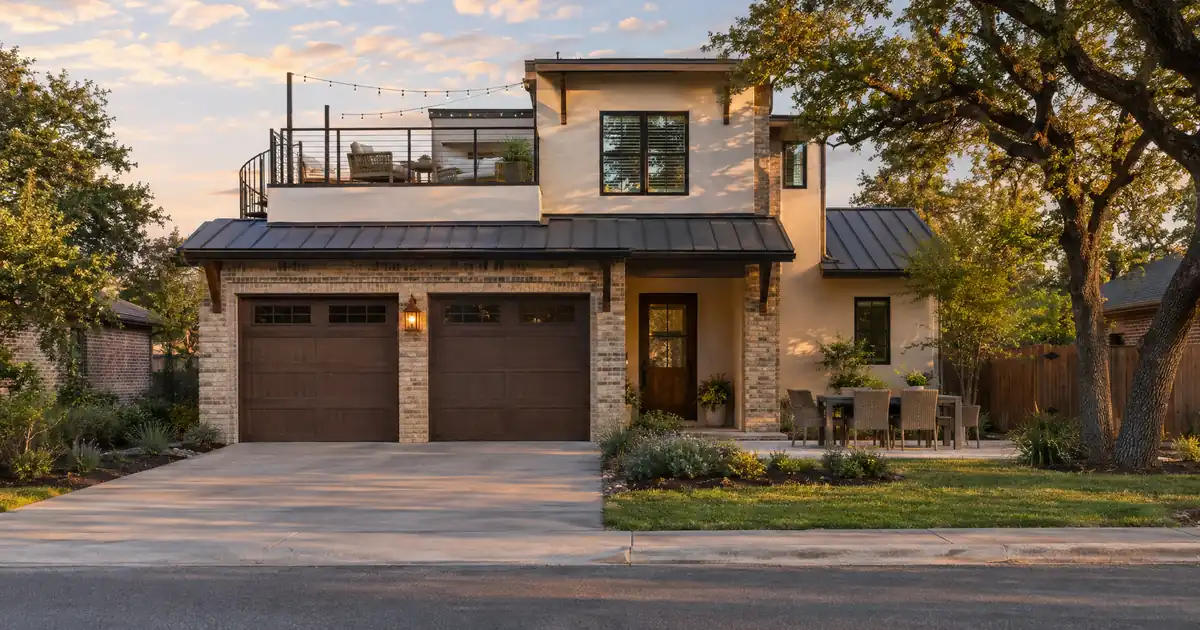
The Quick Read: Yes, a short-term rental can be financed with a DSCR loan in Texas, but only through programs that accept short-term rental income, and that is a narrower slice of the market than most investors assume. Texas adds no statewide barrier to the loan itself. The real hurdles are the income method a program uses, local rules, and HOA language.
- Short-term rental purchases typically reach up to 75% LTV on the strongest files, while refinance and cash-out run up to about 70%.
- Expect a credit score of roughly 640 or higher and about 12 months of host or landlord experience.
- Coverage on STR files typically starts at 1.00 for both purchases and refinances, subject to lender guidelines.
- A clean 1.00 is not positive cash flow. Cleaning, platform fees, vacancy, and lodging taxes sit outside the ratio.
- Whether the property can legally operate as a rental is a financing question, not just a compliance one.
Short-term rental rules can vary by city, county, HOA, and property type, so investors should confirm local rules before relying on projected rental income.
Short-Term Rental Calculator
Run the STR numbers in Texas
Rate source: Freddie Mac 30-yr average via FRED® — Federal Reserve Bank of St. Louis · effective Oct 15, 2026
Prefilled with starting assumptions — enter your nightly rate, occupancy, taxes, and insurance for a more accurate picture.
Short-term rental income is documented with a 12-month history or a market data report. Program parameters update from Lendmire’s centralized guideline source.
As of Oct 15, 2026 · General Freddie Mac market benchmark, not a Lendmire loan offer. Nightly rate, occupancy, taxes, and insurance are editable estimates. Qualifying income for short-term rentals varies by program — some use appraisal market rent, others use documented STR history or projections — and is confirmed in underwriting. Not a Loan Estimate, approval, or commitment to lend. Program availability and eligibility are subject to lender guidelines, credit approval, property review, and underwriting.
How Does a DSCR Loan Work on an Airbnb?
A DSCR loan is reviewed for the property primarily on its rental income covering the full monthly obligation, subject to lender guidelines. The ratio is monthly income divided by principal, interest, taxes, insurance, and any HOA dues. Personal income is not the main test, which is why self-employed and portfolio investors use it. The complete DSCR loans guide covers the basics.
For an Airbnb, the question is which income figure goes in the numerator. That single choice can decide the file.
DSCR loans are designed for non-owner-occupied investment properties. Because they are business-purpose investor loans, they are reviewed differently from a standard owner-occupied mortgage.
Do All DSCR Lenders Finance Short-Term Rentals?
No. Across a wholesale network, programs sort into three rough groups. Some will not touch short-term rentals at all. Some underwrite the property as a long-term rental, or ask for a full year of documented hosting history. A smaller group accepts projection-based income for properties with no track record.
That sorting is why the same Texas Airbnb can be declined in one place and approved in another. Choosing the program is a financing decision, not a formality. A broker who sees many lenders’ guidelines can match the property to the right bucket before an appraisal is ordered. Applying to a program that excludes STRs wastes the appraisal fee and the time.
How Is Airbnb Income Counted?
Programs generally lean on one of three income methods. Each fits a different situation.
| Method | When it applies | What to watch |
|---|---|---|
| Trailing platform history | Existing STR with records | Needs a documented track record |
| Third-party projection | New purchase, no history | Often discounted; fewer programs accept it |
| Appraiser’s market rent | Fallback on many files | Usually sits below STR potential |
The third row matters most. Appraisals for investor loans include a market-rent schedule (Form 1007 for one unit, Form 1025 for two to four units). That figure reflects long-term rent, which commonly sits well below what a strong Airbnb earns, as Lendmire’s how to choose DSCR or conventional for your first Airbnb explains. If a program defaults to it, a property that clears 1.00 on Airbnb income can fall short on paper.
Most files we place work best when the investor brings platform statements for an existing property, or a projection report from a data service such as AirDNA for a new one, and asks up front which method the program accepts.
What Do STR Programs Typically Require?
Short-term rental terms are tighter than standard long-term rental terms, and they move together with leverage.
- Purchase leverage: up to 75% LTV on the strongest files.
- Refinance and cash-out: up to about 70% LTV on short-term rental collateral. Standard long-term rentals reach 75% on a cash-out, so STR files carry less leverage.
- Credit: a 640 minimum, subject to lender guidelines.
- Experience: about 12 months of host or landlord history.
- Coverage: 1.00 on purchases and refinances, subject to lender guidelines.
- Loan size: up to $3,000,000 on standard programs.
Sub-1.00 coverage is available through select lenders in the network, with leverage and terms adjusted, so a thin ratio is not automatically the end of the road.
A bigger down payment can lower the monthly obligation and lift the ratio. It does not erase leverage caps, credit floors, or property eligibility. The strongest files clear both tests: enough equity and enough rental coverage.
Does Texas Add Any Barriers?
Not to the loan itself. Texas has a statewide lodging tax but, as far as secondary guides report, no statewide short-term rental license, so permits and bans come from cities and counties. Treat that licensing point as general orientation and check your own city. That local layer is where Texas deals most often get complicated.
Why it matters to financing: a lender wants income that can legally continue. A property in a city that prohibits or caps STRs, or in an HOA that bans them, loses the income the loan was sized on. Check three things before making an offer:
1. The city or county rules for the property’s address.
2. Whether a lodging tax registration is required and in place.
3. The HOA or deed-restriction language, covered next.
Can an HOA Block an Airbnb Even If the City Allows It?
It can, depending on the exact wording. In Tarr v. Timberwood Park Owners Association, the Texas Supreme Court held that covenants limiting a property to residential purposes did not, on their own, restrict short-term rentals. The ruling turned on the covenant language.
Two edges follow. An explicit clause, such as a minimum lease length, can still ban short stays, and an HOA may be able to add one later by vote, according to Texas real-estate practitioners. Read the covenants and amendments before you commit, not after.
What Does Texas Lodging Tax Do to the Numbers?
It cuts net income, though not the DSCR ratio. The Texas Comptroller states that the 6 percent state hotel occupancy tax applies to short-term rentals of houses and condos rented for fewer than 30 consecutive days. Local governments add their own lodging taxes on top. Stays of 30 days or more are generally exempt as permanent-resident stays, which is why mid-term rentals are treated differently.
Platforms often collect and remit the state tax for bookings made through them. Direct bookings can leave the host responsible. Late filing carries penalties, with a tax-law firm summary noting 5% for the first 30 days late and 10% after that.
Tax treatment can depend on how the funds are used and how the property is held; investors should keep clear records and speak with a qualified tax professional before relying on any deduction.
Why a 1.00 Ratio Isn’t Cash Flow
DSCR compares income to PITIA and nothing else. Cleaning, platform fees, management, utilities, vacancy, and capex are outside the calculation. A short-term rental can clear coverage comfortably and still earn little after real costs.
Picture a property that clears roughly 1.25x in a strong month. If occupancy drops in a slow season, the same house can slide toward 1.00x or below. Underwriters often look at the more conservative income method for exactly this reason. Run your own pro forma with a slow-season case before relying on the ratio, because seasonal markets, such as event-driven cities and vacation destinations, swing the most.
DSCR vs. conventional financing
There are two common ways to finance an investment property, and they qualify you differently — here’s how investors weigh them.
Why investors choose it
- Qualifies on the property’s rental income — no personal tax returns, W-2s, or pay stubs needed to document income.
- No personal debt-to-income ceiling to clear, so existing mortgages and obligations don’t cap your borrowing the same way.
- Can be closed in an LLC, keeping the property inside a business entity.
- Built for scaling — not held to the limit on number of financed properties that conventional financing applies.
- Underwriting centers on the deal: generally qualifies when the rent covers the payment, a 1.00x coverage ratio being a common baseline (confirmed in underwriting).
- Designed specifically for investment property, including long-term and, where the program allows, short-term rentals.
Where it’s strong
- Often the lowest ongoing financing cost for a buyer who fully qualifies on personal income — a fit for a first property or a cost-first purchase.
Trade-offs for investors
- Requires full personal income documentation and must fit within a debt-to-income limit — salary, existing debts, and other mortgages all count.
- Typically held in your personal name rather than a business entity.
- Caps how many financed properties you can carry, which can become a ceiling as a portfolio grows.
- Evaluates you as a borrower as much as the property, which usually means more paperwork.
How investors usually choose: a first or single property often optimizes for the lowest financing cost; portfolio builders often optimize for leverage, vesting in an LLC, and scaling past conventional caps. The right answer depends on your goals, the property, and current guidelines — both paths run through select lenders in Lendmire’s wholesale network, with eligibility and terms confirmed in underwriting.
When Is DSCR the Wrong Tool?
DSCR fits the investor whose traditional personal-income documentation understates income, who is near a debt-to-income limit, or who is scaling a portfolio. It tends to cost more than conventional financing. A borrower with strong traditional employment income and one property may be better served elsewhere, and a second-home loan can carry a lower down payment if the borrower will use the property personally.
Some properties are not offered at all. Manufactured homes (single- and double-wide), log homes, and barndominiums fall outside the network’s DSCR programs. Ground-up construction typically needs a different loan first, followed by a refinance.
Why STR Files Get Declined or Repriced
- Short-term use is not permitted by the city or HOA.
- The program does not accept STR income, or the projection is unsupported.
- Coverage falls short once the lender uses a conservative income figure.
- The borrower lacks the hosting history the program expects.
- Credit or reserves fall short of the program’s tier.
Most of these are fixable before application, which is why the order of operations matters: confirm legality, pick the program, then order the appraisal.
Key Terms Defined
DSCR: The property’s monthly income divided by its full monthly debt obligation.
PITIA: Principal, interest, taxes, insurance, and association dues, the denominator of the ratio.
Form 1007 / Form 1025: Appraisal rent schedules for one-unit and two-to-four-unit properties.
Hotel occupancy tax: The Texas lodging tax collected on rentals under 30 consecutive days.
Seasoning: The period a borrower must hold a property before certain refinances.
Frequently Asked Questions
Can I use projected Airbnb income on a new Texas purchase?
Some programs accept a third-party projection, usually discounted, while others require about 12 months of history or default to the appraiser’s market rent. Ask which method a program accepts before ordering an appraisal. Subject to lender guidelines.
Does buying through an LLC work for a Texas Airbnb?
Often yes, subject to lender program eligibility. Entity ownership also affects insurance and liability, so confirm the paperwork the program expects before closing on the property.
Can I cash out an existing Texas Airbnb?
Yes on eligible files, with cash-out typically reaching up to about 70% LTV on short-term rental collateral. Hosting history and coverage still apply.
What if my ratio falls under 1.00?
Select lenders in the network offer sub-1.00 paths, with leverage and terms adjusted. That can be a defensible choice with a clear appreciation story, but a persistently thin ratio can signal the wrong property.
Does the Texas hotel tax change my DSCR?
Not directly, because the ratio uses income against PITIA. It does reduce net cash flow, so include state and local lodging taxes in your own pro forma.
If you are buying or refinancing a rental property and want to see how the numbers work, Lendmire can help you compare DSCR loan options based on the property income, credit profile, leverage, and investor goals. Call 828-256-2183.
Investors focused on short-term rentals can review DSCR loans for Airbnb and short-term rentals.
About Lendmire
Lendmire — NMLS# 2371349 — is a mortgage brokerage specializing in DSCR investor loans, helping arrange financing across 41 markets, including Washington, D.C., through wholesale and investor-lending channels. The model centers on property-level rental income reviewed by the lender rather than W-2 documentation, subject to lender guidelines, suiting entity-owned and multi-property investors. Lendmire holds Scotsman Guide Top Mortgage Workplace recognition for 2025 and 2026.
Get Started
Ready to find the right loan for you?
In about 30 seconds you can review financing options available for your investment property. No commitment required.
Informational only. Not a Loan Estimate, approval, or commitment to lend. Program availability and eligibility are subject to lender guidelines, credit approval, property review, and underwriting.
References
1. Tarr v. Timberwood Park Owners Ass’n
2. Texas Comptroller – Hotel Occupancy Tax FAQs
3. Brown & Brown tax firm – Texas HOT
This article is part of Lendmire’s short-term rental loan program — full qualification details, guidelines, and scenarios live on the program page.
Related reading: How to Qualify for an Airbnb DSCR Loan for a 2-4 Unit Short-Term Rental · Airbnb Income vs Long-Term Rent Fallback on a DSCR Loan for a 2-4 Unit · How DSCR Loan Rental Income Rules Work for a Self-Employed Airbnb Host
Guides: Short-Term Rental Loans in Texas
Brandon Miller
Founder & CEO, Mortgage Loan Originator, Lendmire LLC
- Mortgage Loan Originator · NMLS# 1129696 · Verify on NMLS Consumer Access
- North Carolina Real Estate Broker · License# 343312 · Verify on NCREC
- North Carolina Insurance Producer · License# 19053198 · Property, Casualty, Life, Health · Verify on NAIC SBS
- Lendmire LLC · Firm NMLS# 2371349 · Verify firm licensure
Required disclosures. Lendmire (NMLS# 2371349) operates as a licensed mortgage broker, not a direct lender or depository. The discussion in this article is general in nature and should not be relied upon as financial, legal, or tax advice — every investment scenario is unique and should be reviewed by a qualified professional. Any loan inquiry is subject to lender underwriting, and this article is not a commitment to lend or a guarantee of approval. Mortgage rates, loan terms, and program guidelines vary by borrower, property, and state, and may change without notice. Equal Housing Opportunity. Verify licensure at NMLS Consumer Access.