
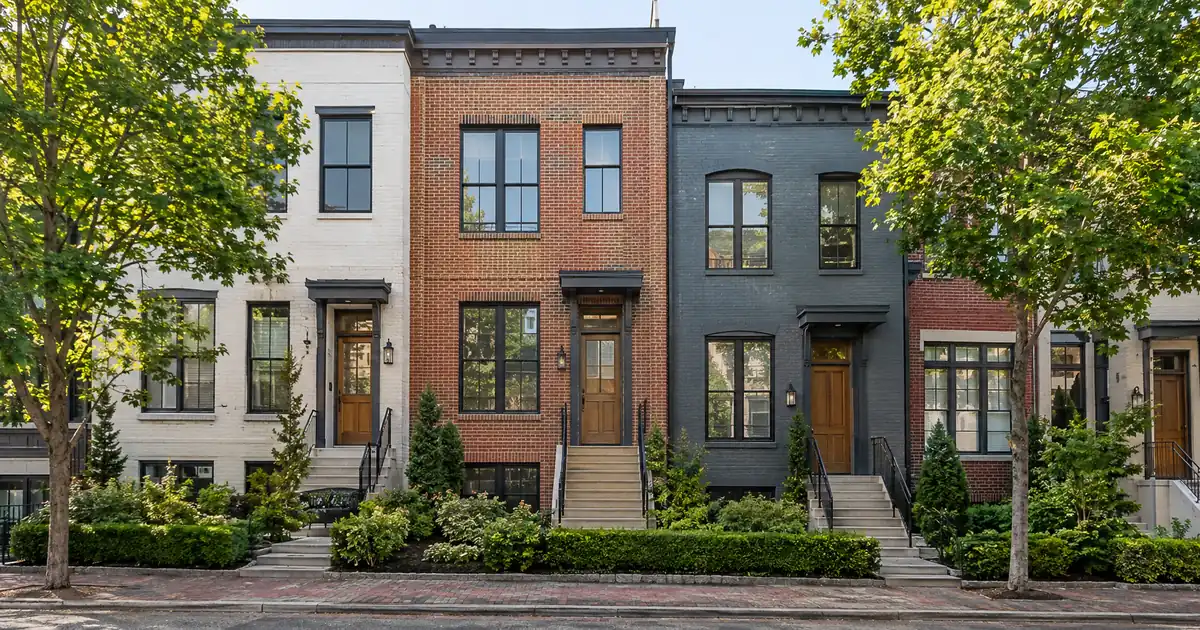
The Quick Read: It depends on the property. DSCR financing works for short-term rentals, but a lender can only count nightly income that is lawful and repeatable, and the District’s license generally covers an owner’s own primary residence, so a typical investor-owned, whole-home Airbnb often can’t be licensed or underwritten as one.
- A DSCR loan (debt service coverage ratio loan) qualifies primarily on property-level rental income covering the payment, subject to lender guidelines.
- For short-term rentals, select lenders in the network typically allow up to 75% LTV on a purchase, with a 640+ credit score and about 12 months of hosting history.
- If the property can’t be licensed, the file usually falls back to long-term or mid-term lease income. That is a normal rental DSCR file, not an Airbnb file.
- Clearing 1.00 coverage does not mean the deal makes money. Repairs, vacancy, management and utilities sit outside the ratio.
- Confirm the license status before you write an offer, not after.
How Does a DSCR Lender Count Airbnb Income?
Lenders count it three ways: your trailing twelve months of actual bookings, a projection from a short-term-rental data service, or the appraiser’s rent survey. Which one applies depends on the property, your history, and the program. Then the lender discounts the number before running the ratio.
Short-Term Rental Calculator
Run the STR numbers in your market
Rate source: Freddie Mac 30-yr average via FRED® — Federal Reserve Bank of St. Louis · effective Oct 15, 2026
Prefilled with starting assumptions — enter your nightly rate, occupancy, taxes, and insurance for a more accurate picture.
Short-term rental income is documented with a 12-month history or a market data report. Program parameters update from Lendmire’s centralized guideline source.
As of Oct 15, 2026 · General Freddie Mac market benchmark, not a Lendmire loan offer. Nightly rate, occupancy, taxes, and insurance are editable estimates. Qualifying income for short-term rentals varies by program — some use appraisal market rent, others use documented STR history or projections — and is confirmed in underwriting. Not a Loan Estimate, approval, or commitment to lend. Program availability and eligibility are subject to lender guidelines, credit approval, property review, and underwriting.
Across our wholesale network, the strongest short-term-rental files lead with documented history. Twelve months of host statements are the cleanest proof. A projection works for a first-time host, but lenders tend to haircut it, because forecasts run optimistic.
The appraiser’s rent survey (the 1007 form) is the weak link. It is built around a standard lease, so it often lands well below what a good nightly operation earns. Many borrowers expect it to capture Airbnb income. It usually doesn’t.
Short-term-rental program limits are tighter than standard rentals. Select lenders in the network typically go to 75% LTV on a purchase. They go to about 70% on a refinance and 70% on a short-term-rental cash-out. A 640+ credit score is the usual expectation, along with about 12 months of landlord or hosting experience. The coverage floor is 1.00 on a short-term-rental purchase and also on a refinance. All of that is subject to lender guidelines and not a commitment to lend.
Why Is Washington, DC Different?
The loan side and the legal side are separate questions, and in DC the legal side comes first. Short-term rental rules can vary by city, county, HOA, and property type, so investors should confirm local rules before relying on projected rental income. DC is a market where that check can decide the whole deal.
Here is the practical picture. Under D.C. Law 22-307, a host needs a basic business license plus a short-term-rental endorsement. A stay where the host is absent and the guest has the whole home needs a separate vacation-rental endorsement. In practice, the license is tied to the host’s primary residence. That is the sticking point for investors.
Then there is the night cap. Per the Mayor’s office release on pending legislation, unoccupied properties are limited to 90 nights. Annual revenue drives the coverage ratio. A 90-night ceiling on an empty property cuts legal income hard.
Why does this matter to a lender? Underwriting assumes the income can continue. If the address can’t be licensed, a projection built on nightly bookings has nothing to stand on. The lender sets it aside and looks at lease-based rent. Penalties for unlicensed operation are a real downside on a leveraged property, too.
What Does a DC Airbnb DSCR Deal Look Like on Paper?
Run a modeled example. These are assumptions, not market data.
Say a projected nightly-rental income stream implies roughly 1.35x coverage on the full payment before any discount. The lender applies a haircut to projected gross income. After that adjustment, the file lands closer to 1.10x. It still clears 1.00, but with less room than the first number suggested.
Now take the same property and drop the nightly plan because the license isn’t available. The lender uses lease rent instead. If a long-term lease supports about 1.05x, the file may still work as a standard rental, subject to lender guidelines. If it supports 0.90x, the options narrow. Many select programs start at 1.00, while a separate select-lender path takes coverage below 1.00 with leverage and terms adjusted. Expect lower LTV and different pricing on that path.
Two lessons come out of this. First, run both versions of the income on every DC property before you make an offer. Second, a passing ratio is not a profit statement. DSCR compares rent to PITIA (principal, interest, taxes, insurance, and any HOA dues) and nothing else. It ignores cleaning, turnover, furnishings, vacancy, and capital repairs, and those costs run heavier on a nightly rental than on a lease.
Which Situations Can Still Work?
Several can, but each needs a different structure.
An owner-occupant host. The person living in the home may be able to get the license. But DSCR loans are designed for non-owner-occupied investment properties. Because they are business-purpose investor loans, they are reviewed differently from a standard owner-occupied mortgage. A DSCR loan doesn’t fit a home you live in.
An LLC buyer. Holding DSCR properties in an LLC is common, subject to program terms. The DC license is a different matter. As it currently works, the license holder is generally a natural person. An LLC-held whole-home Airbnb is therefore a poor fit for nightly operation in the District.
Condos and co-ops. Association rules can prohibit short-term rentals even when a license exists. Read the bylaws before you read the pro forma. In many buildings the bylaws end the discussion.
An existing licensed operator. A property with a valid license and a full operating history may be underwritable on that history. The question is whether the license carries over to a buyer. Ask that directly, and get the answer in writing. Don’t assume it transfers.
Furnished stays over 30 nights. Mid-term rentals (furnished stays of a month or longer) generally sit outside the short-term-rental rules. This is the usual workaround. Underwrite them as lease-based DSCR files, with the lease as the income document. They are not Airbnb files, and the lender will treat them as ordinary rentals.
Is the Law Changing?
A proposal is pending, but it is not law. Bill 26-647 would let renters obtain short-term-rental licenses and would let DC residents license a second District property, per the DC Office of the Tenant Advocate. Second property need not be owner-occupied. It still carries the 90-night cap when unoccupied.
UrbanTurf adds that the bill would merge the license types, add a special-event license, and exclude rent-stabilized units. As of the sources reviewed, it is proposed, not enacted. Check the Council’s site for current status.
Here is the honest read for an investor. Even if the bill passes, a second-property path capped at 90 unoccupied nights still limits nightly income. A DSCR file on such a property would likely lean on long-term rent anyway. Don’t pay for a pending bill.
What Do Lenders Want in a DC Short-Term-Rental File?
Beyond the standard package, plan to bring proof the property can operate lawfully. A rough order:
1. The property’s license or endorsement status, or written confirmation of why it isn’t needed.
2. Twelve months of host statements, or a market report if you have no history.
3. The appraisal with its rent survey.
4. Entity documents, if the property is held in an LLC, and proof of insurance that covers nightly use.
5. Condo or HOA rules, if the property is in an association.
Here is how the typical program ranges compare for short-term rentals versus standard rentals. These are typical guidelines from select lenders in the network, not promises.
| Factor | Short-term rental | Standard rental |
|---|---|---|
| Purchase LTV | Up to 75% | 75%-80% typical |
| Cash-out LTV | Up to 70% on STR collateral | Around 75% |
| Credit score | 640+ expected | Around 660 typical |
| Coverage floor | 1.00 on purchase and on refinance | 1.00 where many select programs start |
| History | About 12 months hosting | Lease or market rent |
Loan sizes run up to $3,000,000 on standard programs, and reserves vary by lender, leverage, and loan size. Many files see around six months of PITIA. A bigger down payment can lift the ratio. It never overrides leverage caps, credit floors, or property eligibility.
One more property note: manufactured homes, log homes, and barndominiums are not offered in the network’s DSCR programs, so they fall outside these programs entirely.
DSCR vs. conventional financing
There are two common ways to finance an investment property, and they qualify you differently — here’s how investors weigh them.
Why investors choose it
- Qualifies on the property’s rental income — no personal tax returns, W-2s, or pay stubs needed to document income.
- No personal debt-to-income ceiling to clear, so existing mortgages and obligations don’t cap your borrowing the same way.
- Can be closed in an LLC, keeping the property inside a business entity.
- Built for scaling — not held to the limit on number of financed properties that conventional financing applies.
- Underwriting centers on the deal: generally qualifies when the rent covers the payment, a 1.00x coverage ratio being a common baseline (confirmed in underwriting).
- Designed specifically for investment property, including long-term and, where the program allows, short-term rentals.
Where it’s strong
- Often the lowest ongoing financing cost for a buyer who fully qualifies on personal income — a fit for a first property or a cost-first purchase.
Trade-offs for investors
- Requires full personal income documentation and must fit within a debt-to-income limit — salary, existing debts, and other mortgages all count.
- Typically held in your personal name rather than a business entity.
- Caps how many financed properties you can carry, which can become a ceiling as a portfolio grows.
- Evaluates you as a borrower as much as the property, which usually means more paperwork.
How investors usually choose: a first or single property often optimizes for the lowest financing cost; portfolio builders often optimize for leverage, vesting in an LLC, and scaling past conventional caps. The right answer depends on your goals, the property, and current guidelines — both paths run through select lenders in Lendmire’s wholesale network, with eligibility and terms confirmed in underwriting.
Who Should and Shouldn’t Try This?
It fits an investor buying a property with an existing, transferable license and a documented operating history. It also fits one buying a mid-term furnished rental on a lease, or one who has priced the deal on lease income and treats nightly upside as a bonus.
It doesn’t fit an investor who needs nightly income to make the numbers work on an unlicensable property. It doesn’t fit a buyer planning to hold the license through an LLC. And a person who intends to live in the property needs a different loan product.
Many investors would be better served by the plain version: buy the property, underwrite the lease, and let the DSCR file reflect that. Lender pricing and leverage reward a clean story. A file built on income that a lender has to discount, or can’t support at all, tends to cost more and go further in the review.
Tax treatment can depend on how the funds are used and how the property is held; investors should keep clear records and speak with a qualified tax professional before relying on any deduction.
For more on the mechanics behind these loans, the complete DSCR loans guide walks through the full process.
Key Terms Defined
DSCR (debt service coverage ratio): monthly rental income divided by the full monthly payment. At 1.00, income exactly covers it.
PITIA: principal, interest, taxes, insurance, and any HOA dues, the full monthly obligation the ratio measures against.
Hosting history: a record of past nightly bookings, usually twelve months of statements, that shows a short-term rental earns what you claim.
1007 rent survey: the appraiser’s form estimating market rent for a property. It tends to understate nightly income.
Mid-term rental: a furnished rental with stays of 30 nights or more, usually run on a lease.
Frequently Asked Questions
Can a DSCR lender finance a DC property I plan to run as an Airbnb?
Sometimes, if the property can lawfully operate that way and you can document the income. For most investor-owned whole homes, the license is the obstacle, not the loan. If the license isn’t available, the lender will typically underwrite the property on lease rent instead, subject to lender guidelines.
What if I have no hosting history?
Select lenders in the network may use a market projection in place of history, with a haircut and often tighter leverage. Programs generally expect about 12 months of hosting experience, so a first-time host should expect more scrutiny. A strong credit profile and reserves can help the file.
Can I buy a DC condo for Airbnb use?
Only if the building allows it and the license rules are met. Association rules can bar short-term rentals regardless of what the District permits. Get the bylaws and any rental restrictions before you commit.
Is a mid-term furnished rental a workable alternative?
Often, yes. Stays of 30 nights or more generally sit outside the short-term-rental rules, and lenders can underwrite them as lease-based files. The income is the lease, so a lender may still ask how stable it is.
Does a 1.00 coverage ratio mean the property cash flows?
No. The ratio compares rent to PITIA only. Vacancy, repairs, management, utilities, and capital costs all come out of your pocket. Nightly rentals tend to carry heavier operating costs than leased ones, so build your own budget beyond the ratio.
If you are buying or refinancing a rental property and want to see how the numbers work, Lendmire can help you compare DSCR loan options based on the property income, credit profile, leverage, and investor goals. As a broker, it arranges these loans through select lenders in its wholesale network across 41 markets, including Washington, D.C.
About Lendmire
Lendmire (NMLS# 2371349) is a mortgage brokerage focused on DSCR investor financing, helping arrange programs through wholesale and investor-lending channels in 41 markets, including Washington, D.C. DSCR loans are evaluated by the lender on property cash flow rather than personal income, subject to lender guidelines, supporting LLC closings and accommodating investors with four or more financed properties. Scotsman Guide Top Mortgage Workplace in both 2025 and 2026.
Get Started
Ready to find the right loan for you?
In about 30 seconds you can review financing options available for your investment property. No commitment required.
Informational only. Not a Loan Estimate, approval, or commitment to lend. Program availability and eligibility are subject to lender guidelines, credit approval, property review, and underwriting.
References
1. D.C. Law 22-307, Short-Term Rental Regulation Act
2. Mayor’s office release on short-term rental legislation
3. UrbanTurf DC on the proposed renter and second-home bill
This article is part of Lendmire’s short-term rental loan program — full qualification details, guidelines, and scenarios live on the program page.
Related reading: How Much Can You Borrow With a Jumbo DSCR Loan? · How DSCR Loan Qualification Thresholds Work From 1.0 to 1.25 and Above · How a High Net Worth DSCR Loan Works
Guides: Short-Term Rental Loans in Washington, D.C.
Brandon Miller
Founder & CEO, Mortgage Loan Originator, Lendmire LLC
- Mortgage Loan Originator · NMLS# 1129696 · Verify on NMLS Consumer Access
- North Carolina Real Estate Broker · License# 343312 · Verify on NCREC
- North Carolina Insurance Producer · License# 19053198 · Property, Casualty, Life, Health · Verify on NAIC SBS
- Lendmire LLC · Firm NMLS# 2371349 · Verify firm licensure
Disclosure information. Lendmire is a state-licensed mortgage brokerage under NMLS# 2371349. Lendmire is not a depository institution, direct lender, or financial advisor — all loans referenced are placed through wholesale lender partners and are subject to each lender's underwriting standards. This article is provided for general informational purposes and is not a commitment to lend, nor does it constitute financial, legal, or tax advice. Loan programs, terms, rates, and qualification standards change without notice and depend on borrower profile, property type, and the state in which the subject property is located. Equal Housing Opportunity provider. NMLS Consumer Access: nmlsconsumeraccess.org.