
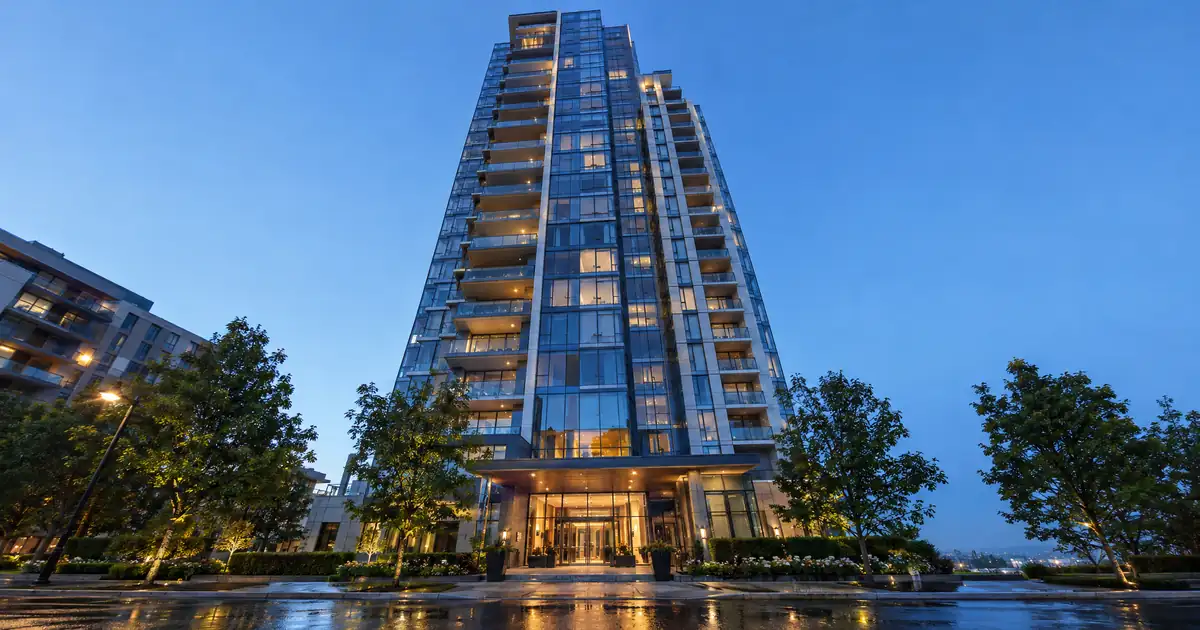
The Quick Read: It depends on how the tower classifies, because a $3M unit sits at the top of the standard ladder only when the building clears as a standard condo. If the project is treated as non-warrantable, the network caps the loan at $1,500,000, subject to underwriting, and the dollar cap binds before the percentage does.
- A $3M price is not a $3M loan. Price picks the rung on the ladder, and the building’s classification sets the cap.
- A standard condo can reach 75% leverage on a purchase between $1M and $3M, with 720+ credit, subject to underwriting.
- A non-warrantable tower tops out at 75% and $1,500,000, so a $3M unit needs roughly 50% down.
- Developer-held inventory, unfinished construction, and a developer-controlled HOA are the usual triggers.
- Two appraisals are required above $2M, and cash-out is not available above $3M. These specifics are subject to lender guidelines and a full review of property, leverage, and credit.
What Does a $3M Unit Mean in Loan Terms?
A $3M unit lands in the $2M-$3M tier when the loan is 75% or less of the price. Across Lendmire’s wholesale network, that tier allows up to 75% on a purchase or rate-and-term refinance, with credit typically at 720 or higher, subject to underwriting.
DSCR Calculator
Run the numbers in your market
Rate source: Freddie Mac 30-yr average via FRED® — Federal Reserve Bank of St. Louis · effective Oct 15, 2026
Prefilled with starting assumptions — enter your own rent or nightly figures, taxes, insurance, and HOA for a more accurate picture.
Program parameters update from Lendmire’s centralized guideline source. Taxes and insurance are editable estimates.
As of Oct 15, 2026 · General Freddie Mac market benchmark, not a Lendmire loan offer. Rent, nightly rate, occupancy, taxes, and insurance are editable estimates. Short-term rental figures are estimates only and vary significantly by season, property type, management approach, and local short-term-rental rules — confirm local regulations before relying on them. Qualifying income for short-term rentals varies by program — some use appraisal market rent, others use documented STR history or projections — and is confirmed in underwriting. Not a Loan Estimate, approval, or commitment to lend. Program availability and eligibility are subject to lender guidelines, credit approval, property review, and underwriting.
Push the price higher and the ladder tightens. Loans from $3M to $4M run to 65% on a purchase. From $4M to $6M and $6M to $10M, leverage runs to 60%, and every request above $4M is reviewed case by case before submission. Those figures are ceilings, not promises. The standard DSCR program itself stops at $3,000,000, and a separate ladder carries qualified investors past it.
Qualification rests primarily on property-level rental income covering the payment, subject to lender guidelines. Lendmire’s complete DSCR loans guide covers the basic mechanics. The rest of this piece deals with the one variable that guide can’t settle for you: the building.
Why Does a Developer-Heavy Tower Change the Answer?
Developer concentration is a project problem, not a borrower problem. A lender looks at the building before it looks at your unit. A tower where the developer still holds many unsold units, still controls the HOA, or hasn’t finished the project is the hardest category to clear.
Most programs in the network treat an established project, meaning one that is largely conveyed with HOA control turned over, as the lowest-friction category. New or converting projects draw more scrutiny. The same tower can be an easy file in year five and a difficult one in year one.
Here’s the catch. Developer-held units can push a project into non-warrantable territory. That label comes from agency standards. Fannie Mae’s project review rules govern loans sold to the agency, and DSCR loans that stay out of the agencies don’t follow them. The network applies its own guidelines instead. The label matters because it triggers a different cap in the network, not because an agency will ever buy the loan.
Warrantable or Non-Warrantable: The Cap That Decides It
The lender takes the lesser of the loan-size ladder and the condo-type ceiling. That sentence decides most $3M tower deals.
| Building status | Typical ceiling | What it means on a $3M price |
|---|---|---|
| Warrantable condo | Standard ladder, 75% on a purchase $1M-$3M | Fundable at the top of the ladder |
| Non-warrantable condo | 75% and $1,500,000 | Loan capped near 50% of price |
| Condotel | 75% purchase, 65% refinance, $1,500,000 | Same dollar cap, plus $250,000 cash-in-hand |
All figures are ceilings through select wholesale programs, subject to underwriting.
Run the arithmetic on a $3M non-warrantable unit. The percentage ceiling would allow far more than the cap, but the $1,500,000 limit binds first. The loan lands near half the price. An investor who planned on 25% down now plans on roughly 50% down. That gap is the real cost of a mislabeled or genuinely problematic tower. Terms depend on the lender’s guidelines, the property type, the leverage, and a full review of the credit profile.
Non-warrantable doesn’t mean unfinanceable. It means a lower cap. (Many investors assume the opposite, and some walk away from fundable deals.)
What Kills a Deal and What Doesn’t
Some building issues are manageable and some stop a file outright. The table below is a pre-screen, not a ruling.
| Issue | Usually manageable? | Why |
|---|---|---|
| High investor share of units | Often yes | Matters to agency-style loans more than DSCR programs |
| Developer owns a block of units | Sometimes | Can drive the non-warrantable cap |
| Developer still controls the HOA | Hard | Lowest-friction projects have turned over control |
| Project unfinished or under construction | Hard | No rent roll, no completed collateral |
| Active structural litigation | Hard | A lender can decline on the building alone |
| Reserve shortfall or special assessment | Case by case | Depends on severity and disclosure |
Most standard DSCR programs read the condo questionnaire closely. A few lenders in the network are more flexible on investor concentration, and the strictest overlays want more seasoned projects. The practical rule: ask for the questionnaire answers before you write an offer.
Pre-Sale Units and Construction-Phase Towers
A unit you’re buying before the tower is finished has no rent history and often no certificate of occupancy. A DSCR loan is reviewed on the property’s income, so a property with no income and no completed collateral is a poor fit. The usual path is to close the purchase another way and refinance into a DSCR loan once the building is complete and the unit is leased.
That sequence has its own risk. If the project is still developer-heavy at the refinance, the same classification question returns. Plan for it.
Appraisal and Rent in a Tower That’s Still Selling
Two appraisals are required above $2M. In a developer-heavy tower, that rule earns its keep.
Developers set prices, offer concessions, and sell in bulk. Those practices can distort comparable sales. When the appraisal comes in below contract, the leverage percentage applies to the lower value, and your cash requirement rises. A second appraisal reduces the chance that one outlier drives the file, though it can also confirm a lower number.
Rent is the other half. The appraiser’s rent schedule must support the payment on the full obligation, including HOA dues. In luxury towers, dues can run heavy and pull coverage down sharply. DSCR is monthly rent divided by the full monthly debt service: principal, interest, taxes, insurance, and HOA dues. Coverage of 1.00 earns full leverage. Coverage from 0.75 to 0.99 is a real select-program path to $2,000,000 at reduced leverage, with LTV and terms adjusting, subject to underwriting. Above $2,000,000, treat sub-1.00 as off the table for planning purposes.
Short-term rentals don’t rescue a $3M unit. Short-term-rental files stop at $2,000,000, and no-ratio files stop there too, so a $3M unit has to qualify on long-term rent. Short-term rental rules can vary by city, county, HOA, and property type, so investors should confirm local rules before relying on projected rental income.
Cash Needed: Down Payment, Reserves, and Vesting
Liquidity is often the real constraint. Picture an investor with a $3M price and a warrantable tower at 75% leverage. The down payment is 25% of price, plus six months of reserves on the subject property, or twelve for a first-time investor. Cash-out proceeds don’t satisfy reserves above $3M.
Now picture the same investor in a non-warrantable tower. The down payment rises toward 50% of price, and reserves still apply. The same unit needs far more cash, and nothing about the investor changed.
Above $3M the program also asks for 0x30x24 housing history, 48-month event seasoning, and citizens or permanent residents only. Entity vesting is welcome, subject to program terms, though layered entities are not. Interest-only is available for 120 months to a 75% maximum, with coverage of 0.75 or better, qualified on interest and escrow items.
Exit planning matters here too. Cash-out stops above $3M, and a non-warrantable unit follows the lesser-of rule. A refinance exit won’t pull equity back out the way the entry math might suggest.
A Worked Example
Run the numbers on a $3M unit, with the building status as the only variable. These are modeled assumptions, not market data.
- Scenario A, warrantable tower. Price $3,000,000. Leverage 75% on a purchase. Credit 720+. Coverage clears 1.00 after HOA dues. Two appraisals required. This fits the $2M-$3M rung, subject to underwriting.
- Scenario B, non-warrantable tower. Same price. The 75% and $1,500,000 ceiling applies, so the dollar cap binds near 50% of price. Same credit, same reserves, much more cash down.
- Scenario C, condotel-style operations. The $1,500,000 cap applies, with 75% on a purchase, 65% on a refinance, and $250,000 cash-in-hand. The exact numbers vary by lender and program and follow a full review of property, leverage, and credit.
Coverage is the second test. If rent barely covers the full obligation, leverage and terms adjust, and the number matters more than the label.
Diligence Before You Go Under Contract
Order matters. Request these before you make an offer:
1. The HOA budget, reserve study, and insurance summary.
2. Delinquency data and any special assessments.
3. Unit ownership counts, including how many units the developer still holds.
4. Confirmation of who controls the HOA and when turnover is scheduled.
5. Litigation disclosures, especially structural.
6. The condo questionnaire, completed.
A mislabeled project can sometimes be reclassified after a fresh review, and a project that cures a failing item may qualify under the standard non-warrantable path. A broker who sees many lenders’ overlays can often tell you which programs will read the file kindly. Lendmire’s piece Super Jumbo DSCR vs Regional Bank ARM on a Condotel Unit covers the hotel-style variant.
DSCR vs. conventional financing
There are two common ways to finance an investment property, and they qualify you differently — here’s how investors weigh them.
Why investors choose it
- Qualifies on the property’s rental income — no personal tax returns, W-2s, or pay stubs needed to document income.
- No personal debt-to-income ceiling to clear, so existing mortgages and obligations don’t cap your borrowing the same way.
- Can be closed in an LLC, keeping the property inside a business entity.
- Built for scaling — not held to the limit on number of financed properties that conventional financing applies.
- Underwriting centers on the deal: generally qualifies when the rent covers the payment, a 1.00x coverage ratio being a common baseline (confirmed in underwriting).
- Designed specifically for investment property, including long-term and, where the program allows, short-term rentals.
Where it’s strong
- Often the lowest ongoing financing cost for a buyer who fully qualifies on personal income — a fit for a first property or a cost-first purchase.
Trade-offs for investors
- Requires full personal income documentation and must fit within a debt-to-income limit — salary, existing debts, and other mortgages all count.
- Typically held in your personal name rather than a business entity.
- Caps how many financed properties you can carry, which can become a ceiling as a portfolio grows.
- Evaluates you as a borrower as much as the property, which usually means more paperwork.
How investors usually choose: a first or single property often optimizes for the lowest financing cost; portfolio builders often optimize for leverage, vesting in an LLC, and scaling past conventional caps. The right answer depends on your goals, the property, and current guidelines — both paths run through select lenders in Lendmire’s wholesale network, with eligibility and terms confirmed in underwriting.
When to Walk Away
Skip the deal if the developer controls the HOA, the project is unfinished, or active structural litigation is open. Re-examine it if the non-warrantable cap forces more cash than the unit’s return justifies. This isn’t for investors who need 75% leverage on a tower that clears only at $1,500,000. It also isn’t for anyone counting on a $3M short-term rental to carry the file. The better move is often a different unit, a seasoned building, or a smaller loan with a cleaner exit.
Key Terms Defined
Super jumbo: a lender-set loan-size tier above standard balances, with no official regulatory definition.
DSCR: the property’s monthly rent divided by its full monthly debt service, including HOA dues.
Warrantable condo: a project that passes agency-style standards for ownership mix, finances, and completion.
Non-warrantable condo: a project that fails one or more of those standards, which triggers a lower cap in the network.
Single-entity concentration: one owner, often the developer, holding a large share of the units.
Developer-controlled HOA: a homeowners’ association still run by the builder rather than unit owners.
Business-Purpose Treatment
DSCR loans are designed for non-owner-occupied investment properties. Because they are business-purpose investor loans, they are reviewed differently from a standard owner-occupied mortgage. The Federal Register’s ability-to-repay rule preamble treats investment-purpose credit as business-purpose. Tax treatment varies; consult a qualified professional.
Frequently Asked Questions
Is $3M a hard ceiling for a DSCR loan?
No. It is the ceiling of the standard program, and a separate ladder reaches $10,000,000 on a purchase or rate-and-term refinance. Leverage steps down as size rises, and every request above $4M is reviewed case by case, subject to underwriting.
Does a $3M unit require a $3M loan?
No. Price and loan are different. A 75% purchase on a $3M price produces a loan inside the top of the $2M-$3M tier. A non-warrantable tower’s $1,500,000 cap would shrink the loan well below that.
Can I use short-term rental income to qualify a $3M unit?
Not at that size. Short-term-rental files stop at $2,000,000, so a $3M unit is reviewed on long-term rent. Short-term rental rules can vary by city, county, HOA, and property type.
Can I hold the unit in an LLC?
Yes, subject to program terms. Entity vesting is generally welcome, though layered entities are not.
Can I pull cash out of a $3M unit later?
Not above $3M. Cash-out is unavailable above that size, and non-warrantable units follow the lesser-of rule, so plan the exit before you buy.
If you are buying or refinancing a high-balance rental property and want to see how the numbers work, Lendmire can help you compare super jumbo DSCR loan options based on the property income, the loan balance, credit profile, leverage, and investor goals. Reach the team at 828-256-2183 or request a quote.
Towers that finish selling and hand the HOA to owners tend to become easier files, so a building that fails today may be worth a second look once the developer steps back.
For current guidelines and terms, see Lendmire’s super jumbo DSCR loan programs page.
Lendmire’s self-employed mortgages page presents both super jumbo programs, bank statement and DSCR, side by side.
About Lendmire
Lendmire (NMLS# 2371349), a non-QM mortgage broker serving investors in 41 markets including Washington, D.C., helps structure DSCR scenarios commonly evaluated around a property’s rental income rather than personal income paperwork, subject to lender guidelines. A Scotsman Guide Top Mortgage Workplace in 2025 and 2026, Lendmire places loans through wholesale investor lenders and is not a direct lender.
Get Started
Ready to find the right loan for you?
In about 30 seconds you can review financing options available for your investment property. No commitment required.
Informational only. Not a Loan Estimate, approval, or commitment to lend. Program availability and eligibility are subject to lender guidelines, credit approval, property review, and underwriting.
References
1. Fannie Mae Selling Guide B4-2.1-02
2. Federal Register, CFPB ability-to-repay final rule
This article is part of Lendmire’s super jumbo DSCR loan program — full qualification details, guidelines, and scenarios live on the program page.
Related reading: How a Jumbo DSCR Loan Works · How to Qualify a Luxury Multi-Unit Building on a Super Jumbo DSCR Loan · Jumbo vs Super Jumbo STR DSCR Loan for a Luxury Airbnb
Brandon Miller
Founder & CEO, Mortgage Loan Originator, Lendmire LLC
- Mortgage Loan Originator · NMLS# 1129696 · Verify on NMLS Consumer Access
- North Carolina Real Estate Broker · License# 343312 · Verify on NCREC
- North Carolina Insurance Producer · License# 19053198 · Property, Casualty, Life, Health · Verify on NAIC SBS
- Lendmire LLC · Firm NMLS# 2371349 · Verify firm licensure
Disclosure information. Lendmire is a state-licensed mortgage brokerage under NMLS# 2371349. Lendmire is not a depository institution, direct lender, or financial advisor — all loans referenced are placed through wholesale lender partners and are subject to each lender's underwriting standards. This article is provided for general informational purposes and is not a commitment to lend, nor does it constitute financial, legal, or tax advice. Loan programs, terms, rates, and qualification standards change without notice and depend on borrower profile, property type, and the state in which the subject property is located. Equal Housing Opportunity provider. NMLS Consumer Access: nmlsconsumeraccess.org.