
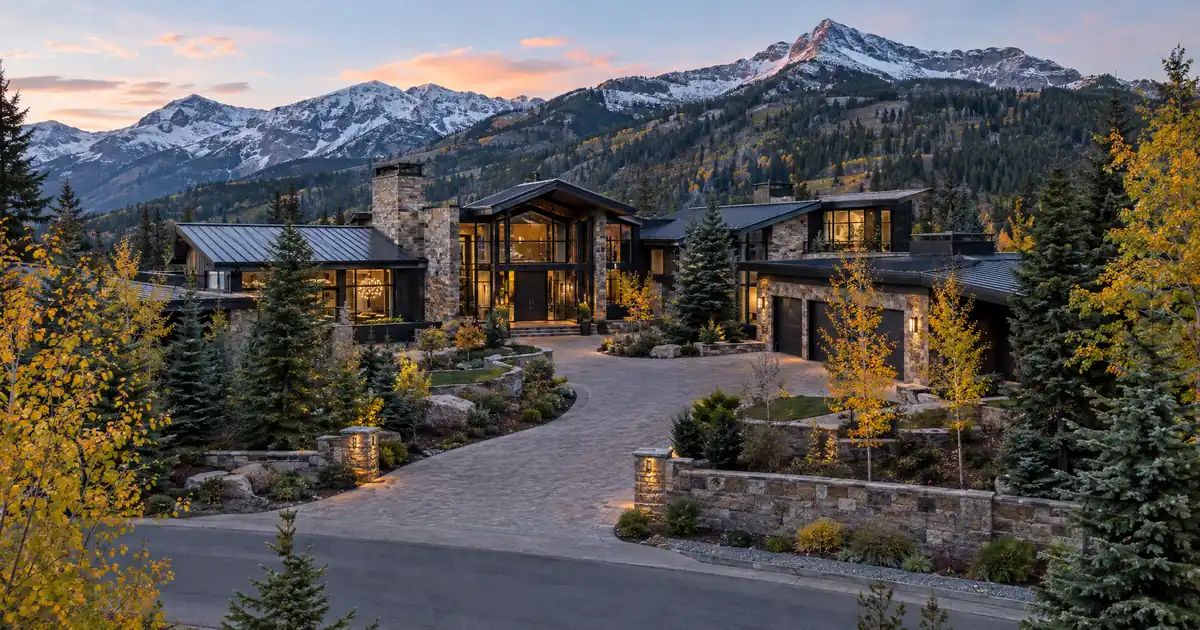
The Quick Read: Escalation means added layers of valuation review as a loan gets bigger, and acreage adds more layers, because lenders set these rules as collateral policy rather than law: a second appraisal is ordered above a size threshold, surplus land is carved out of the value, and the loan is sized on the lowest supported number. That is how the file actually moves through underwriting.
- Above $2,000,000, the programs we place files with require two appraisals. The lower value governs. Nothing gets averaged.
- Acreage limits are lender policy. Extra acres are usually carved out of value, not used to decline the file.
- A rural label usually changes leverage or routing. It rarely ends the file by itself.
- Every figure here is a ceiling through select wholesale programs, subject to underwriting.
Buying acreage with a rental house on it? Read the escalation rules before you sign the contract, not after the appraisal lands.
DSCR Calculator
Run the numbers in your market
Rate source: Freddie Mac 30-yr average via FRED® — Federal Reserve Bank of St. Louis · effective Oct 15, 2026
Prefilled with starting assumptions — enter your own rent or nightly figures, taxes, insurance, and HOA for a more accurate picture.
Program parameters update from Lendmire’s centralized guideline source. Taxes and insurance are editable estimates.
As of Oct 15, 2026 · General Freddie Mac market benchmark, not a Lendmire loan offer. Rent, nightly rate, occupancy, taxes, and insurance are editable estimates. Short-term rental figures are estimates only and vary significantly by season, property type, management approach, and local short-term-rental rules — confirm local regulations before relying on them. Qualifying income for short-term rentals varies by program — some use appraisal market rent, others use documented STR history or projections — and is confirmed in underwriting. Not a Loan Estimate, approval, or commitment to lend. Program availability and eligibility are subject to lender guidelines, credit approval, property review, and underwriting.
Key Terms Defined
Super jumbo: a loan balance above the size where ordinary jumbo programs stop. Here the ladder runs from $150,000 to $10,000,000, and the standard program stops at $3,000,000.
Escalation: the step-up in valuation scrutiny as loan size, property type, or land content raises the lender’s risk. (In some appraisal talk it means rising market values. That is not the meaning here.)
Excess land: acreage beyond what supports the house and its normal use. Lenders usually remove it from the value they lend against.
Desk review and field review: a second appraiser checks the first report from the office (desk) or with a site visit (field).
Lower-of-two rule: when two values exist, the loan is sized on the lower one.
Rural classification: a label that mostly comes from the appraisal, such as remote location, gravel road, or distant comps. It differs by lender.
Where Do Escalation Rules Come From?
They come from investor policy. No federal rule says a jumbo loan needs two appraisals. Each investor in a wholesale network sets its own size threshold, its own acreage cap, and its own definition of rural.
Across the network, the pattern is steady even when the details move. Bigger loan, more review. Land-heavy collateral, more review again. The two triggers can stack.
One more point. DSCR loans are designed for non-owner-occupied investment properties. Because they are business-purpose investor loans, they are reviewed differently from a standard owner-occupied mortgage. The property’s rent carries the file, so the appraisal carries even more weight: it sets the value and supports the rent.
The Escalation Ladder
The ladder runs from lighter checks to full duplication. A clean, well-comped rental may stop at a desk review. A unique property with thin comps often goes to a full second appraisal.
| Step | Typical trigger | What it adds |
|---|---|---|
| First appraisal | Every file | Value and market rent |
| Automated value check | Light-touch investor overlay | Quick sanity test |
| Desk review | Clean report, moderate size | Second appraiser reads the file |
| Field review | Doubts about comps or condition | Site visit, second opinion |
| Full second appraisal | Above $2,000,000 in the network | Independent value |
| Case-by-case review | Above $4,000,000 | Reviewed before submission |
The $2,000,000 line is the one that matters most for this topic. Above it, two appraisals are required across the programs we place files with, subject to underwriting. The rule applies the same way to a purchase, a rate-and-term refinance, and a cash-out.
Below that line, a lender can still order a review. Thin rent comps on a big property can do it. So can disputed short-term-rental comps.
How Acreage Changes Each Step
Acreage hits three places: eligibility, value, and leverage.
Eligibility. Rural property on five acres or less can reach 75% leverage through select wholesale programs. Up to twenty acres is possible on loans to $3,000,000, subject to underwriting. Above $3,000,000, rural property is off the table and acreage tops out at ten acres. Leverage, reserves, and pricing vary by lender and program; the final terms follow the full file review.
Value. The appraiser values the house site first, then values surplus land on its own. Anything above the lender’s cap is typically removed from the value used for the loan. It rarely kills the file.
Leverage. The ladder steps down with size, and the carve-out shrinks the value before the percentage is applied. You get hit twice. Once by the size tier, once by the smaller base.
How Does the Appraiser Value the Land?
In a set order. Site first, then comparable sales, then extraction if land sales are thin.
The appraiser estimates the site’s highest and best use. Then the appraiser separates the land that supports one house from the surplus. State valuation manuals describe the usual adjustment categories for comparable land sales: time, location, shape, size, and topography, as laid out in the Iowa Department of Revenue land valuation manual. The same manual describes extracting land value from improved sales when vacant land sales are scarce.
The Arizona Department of Revenue Land Manual describes using improved sales to find a minimum site value and a per-unit value for excess land. That is the logic behind a carve-out.
Rural comps get extra scrutiny. A mortgage-insurer training deck from Enact gives an example: a ranch home on 44 acres compared with 6–12 acre parcels sitting 8–18 miles away. Comps like that need reasonable justification and adjustment.
The same deck makes a point investors miss. Improvements count at what they contribute, not what they cost. A barn that cost $20,000 and added $10,000 of value gets a $10,000 adjustment.
Appraisal research backs the weighting. A Lincoln Institute land valuation report says comparables needing the fewest adjustments carry the most weight. It also notes that direct sales comparison is harder where sales are slow, as in rural areas.
What Happens When Two Values Disagree?
The lower one wins. Underwriting does not average them, and it does not pick the one closer to your contract price.
The gap then flows through the whole file. A lower value cuts the loan at any given leverage. On a purchase, it can leave an equity gap you cover with cash at closing. On a refinance, it can shrink cash-out or push the file out of a higher tier.
Cash-out has its own limits. Proceeds are unlimited at or below 60% LTV, with a $1,500,000 cap above 60%. There is no cash-out above $3,000,000. Those apply on investment property, subject to underwriting. Terms vary by lender guidelines, property type, leverage, credit profile, and full file review.
A Modeled Example (Index Units, Not Market Data)
Run the numbers on a purchase in the $2,000,000–$3,000,000 band, where 75% on a purchase is the ladder’s ceiling and two appraisals are required. Treat the inputs as assumptions. Set the contract price at 100 index units.
| Outcome | Value used | Loan at 75% purchase |
|---|---|---|
| Both values support price | 100 | 75.0 |
| Surplus land carved out | 92 | 69.0 |
| Carve-out plus lower second value | 86 | 64.5 |
Same contract. Same rent. Loan sizing falls by more than ten index units from the first row to the last. The buyer covers the difference in cash.
Coverage can also move. If the second report trims the rent opinion, the ratio drops with it. Coverage of 1.00 earns full leverage. Coverage from 0.75 to 0.99 is a real select-program path to $2,000,000, but LTV and terms adjust, subject to underwriting.
Rent Evidence on Rural Collateral
Rent comps get thin fast on acreage. Two or three usable comps on a large property can draw a desk review or a request for support before anyone questions the sales comps.
The appraiser documents rent on the rent schedule, Form 1007 for a single-family property and Form 1025 for two to four units. Strong rent evidence means leases, a local rent survey, and a note on why the comps are comparable.
Short-term rentals add another layer. Income comes from twelve months of operating history on a refinance, or the appraisal’s short-term-rent analysis on a purchase, counted at 80% of gross. Those files reach $2,000,000 and need coverage of 1.00 or higher. Short-term rental rules can vary by city, county, HOA, and property type, so investors should confirm local rules before relying on projected rental income.
DSCR vs. conventional financing
There are two common ways to finance an investment property, and they qualify you differently — here’s how investors weigh them.
Why investors choose it
- Qualifies on the property’s rental income — no personal tax returns, W-2s, or pay stubs needed to document income.
- No personal debt-to-income ceiling to clear, so existing mortgages and obligations don’t cap your borrowing the same way.
- Can be closed in an LLC, keeping the property inside a business entity.
- Built for scaling — not held to the limit on number of financed properties that conventional financing applies.
- Underwriting centers on the deal: generally qualifies when the rent covers the payment, a 1.00x coverage ratio being a common baseline (confirmed in underwriting).
- Designed specifically for investment property, including long-term and, where the program allows, short-term rentals.
Where it’s strong
- Often the lowest ongoing financing cost for a buyer who fully qualifies on personal income — a fit for a first property or a cost-first purchase.
Trade-offs for investors
- Requires full personal income documentation and must fit within a debt-to-income limit — salary, existing debts, and other mortgages all count.
- Typically held in your personal name rather than a business entity.
- Caps how many financed properties you can carry, which can become a ceiling as a portfolio grows.
- Evaluates you as a borrower as much as the property, which usually means more paperwork.
How investors usually choose: a first or single property often optimizes for the lowest financing cost; portfolio builders often optimize for leverage, vesting in an LLC, and scaling past conventional caps. The right answer depends on your goals, the property, and current guidelines — both paths run through select lenders in Lendmire’s wholesale network, with eligibility and terms confirmed in underwriting.
Where the General Rule Breaks
Five edge cases come up again and again.
A price padded with extra acres. A contract that bundles surplus land can appraise below what you paid. The loan shrinks, and the gap is yours.
Rural classification that differs by lender. There is no single definition. Some programs flag a rural location noted by the appraiser. Others want two conditions, like a gravel road and comps from far away. Appraiser availability can act as an unwritten ceiling.
A rural label that is not a decline. It more often lowers leverage or moves the file to another program. Strict overlays do exist, though. Above $3,000,000 they rule rural property out altogether.
Farm characteristics. A large parcel with agricultural outbuildings may be treated as farm property under state law. That can change which lenders will touch it. Many investors learn this after the contract is signed.
No-appraisal shortcuts. Automated valuation products rarely fit large acreage. Plan on a full appraisal.
Two misunderstandings are worth clearing up. First, the federal appraisal threshold for banks decides whether a licensed appraisal is needed at all. It does not trigger a duplicate appraisal. Second, a federal flip rule targets resale timing, not size.
What Should You Do Before You Sign?
Ask early. Ask whether your loan amount crosses the threshold, and whether the lender caps acreage.
Then work the file in this order:
1. Pull the county parcel record and confirm the acreage. 2. Ask how the lender defines rural and how it treats excess land. 3. Gather your own comps and a list of improvements for the appraiser. 4. Instruct the appraiser to separate house-site value from surplus land. 5. Confirm credit and reserves: a 660 floor (700 above $3,000,000) and six months of PITIA on the subject property, twelve for first-time investors.
If you want a package that holds up, Lendmire’s piece How to Prepare an Acreage Appraisal Package for a Super Jumbo DSCR Loan walks through what to hand the appraiser.
If the value comes in low, you still have options. Reconsideration with better comps, a restructured parcel, a lower-leverage tier, or a different program all get reviewed. The details are in Lendmire’s guide How to Challenge a Low Appraisal on a Super Jumbo DSCR Acreage Estate. Interest-only also helps coverage: the programs offer a 120-month interest-only period to 75%, qualified on the interest-only payment with coverage of 0.75 or better. Tax treatment can depend on how the funds are used and how the property is held; investors should keep clear records and speak with a qualified tax professional before relying on any deduction.
For the full picture of how these loans work, see Lendmire’s complete DSCR loans guide.
Frequently Asked Questions
Are two appraisals required on a jumbo DSCR loan?
Not by federal rule. It is investor policy. Across the programs we place files with, two appraisals are required above $2,000,000, subject to underwriting. Below that, a review product may still be ordered on a unique or thin-comp property.
Do the two values get averaged?
No. Underwriting uses the lower value. If the second appraisal comes in under the first, the loan is sized on the second.
Does excess acreage kill the loan?
Usually not. Acreage above the lender’s cap is typically carved out of the appraised value. The file proceeds on the house site and the allowed land. Above $3,000,000, though, rural property is not eligible, and acreage is capped at ten acres.
What leverage can acreage collateral reach?
Up to twenty acres is possible on loans to $3,000,000. All figures are ceilings, subject to underwriting. The loan-size ladder still applies on top. Exact terms depend on the lender’s guidelines, property type, leverage, and a full review of the borrower’s file.
Why do rural comps matter so much?
Land sales are thin and parcels differ. The more adjustments a comp needs, the less weight it carries.
Work Through the Numbers
If you are buying or refinancing a high-balance rental property and want to see how the numbers work, Lendmire can help you compare super jumbo DSCR loan options based on the property income, the loan balance, credit profile, leverage, and investor goals. Lendmire is a broker arranging business-purpose financing through select lenders in its wholesale network, across 41 markets including Washington, D.C. Nothing here is a commitment to lend.
Lendmire’s self-employed mortgages page presents both super jumbo programs, bank statement and DSCR, side by side.
About Lendmire
A DSCR-focused mortgage broker, Lendmire (NMLS# 2371349) places investor financing across 41 markets — 40 states plus Washington, D.C. — with DSCR eligibility generally reviewed by the lender on property cash flow instead of tax returns, subject to lender guidelines. Scotsman Guide named Lendmire a Top Mortgage Workplace in 2025 and 2026.
Get Started
Ready to find the right loan for you?
In about 30 seconds you can review financing options available for your investment property. No commitment required.
Informational only. Not a Loan Estimate, approval, or commitment to lend. Program availability and eligibility are subject to lender guidelines, credit approval, property review, and underwriting.
References
1. Iowa Department of Revenue, Land Valuation
2. Arizona Department of Revenue, Land Manual
3. Enact, Rural Appraisal Review Training
4. Lincoln Institute, Land Valuation Methods (hosted copy)
This article is part of Lendmire’s super jumbo DSCR loan program — full qualification details, guidelines, and scenarios live on the program page.
Related reading: Super Jumbo DSCR Cash-Out vs Purchase LTV and Seasoning Rules Compared · How to Challenge a Low Appraisal on a Super Jumbo DSCR Acreage Estate · How Much a Super Jumbo DSCR Cash-Out Releases on Acreage
Brandon Miller
Founder & CEO, Mortgage Loan Originator, Lendmire LLC
- Mortgage Loan Originator · NMLS# 1129696 · Verify on NMLS Consumer Access
- North Carolina Real Estate Broker · License# 343312 · Verify on NCREC
- North Carolina Insurance Producer · License# 19053198 · Property, Casualty, Life, Health · Verify on NAIC SBS
- Lendmire LLC · Firm NMLS# 2371349 · Verify firm licensure
Required disclosures. Lendmire (NMLS# 2371349) operates as a licensed mortgage broker, not a direct lender or depository. The discussion in this article is general in nature and should not be relied upon as financial, legal, or tax advice — every investment scenario is unique and should be reviewed by a qualified professional. Any loan inquiry is subject to lender underwriting, and this article is not a commitment to lend or a guarantee of approval. Mortgage rates, loan terms, and program guidelines vary by borrower, property, and state, and may change without notice. Equal Housing Opportunity. Verify licensure at NMLS Consumer Access.