
The Quick Read: Usually yes, but bank statements only prove your income, and the building has to pass its own review before any income method matters. Through select wholesale programs, condotels are typically financed on investment occupancy at 75% on a purchase and 65% on a refinance, up to $1,500,000, subject to underwriting.
- Bank statements test the borrower. A DSCR file tests the unit’s rent.
- The building is reviewed first, and no income file fixes a failing project.
- Part-time personal use can change how the lender classifies occupancy.
- Rental-pool income is often split with the operator, which can weaken coverage.
- On investment occupancy, DSCR is often the cleaner fit when the unit’s rent carries the payment.
Why Does the Building Decide First?
The building decides first because condotel eligibility is a project-level question. Income documentation answers a different one. A lender can believe your deposits and still decline the unit.
DSCR Calculator
Run the numbers in your market
Rate source: Freddie Mac 30-yr average via FRED® — Federal Reserve Bank of St. Louis · effective Oct 15, 2026
Prefilled with starting assumptions — enter your own rent or nightly figures, taxes, insurance, and HOA for a more accurate picture.
Program parameters update from Lendmire’s centralized guideline source. Taxes and insurance are editable estimates.
As of Oct 15, 2026 · General Freddie Mac market benchmark, not a Lendmire loan offer. Rent, nightly rate, occupancy, taxes, and insurance are editable estimates. Short-term rental figures are estimates only and vary significantly by season, property type, management approach, and local short-term-rental rules — confirm local regulations before relying on them. Qualifying income for short-term rentals varies by program — some use appraisal market rent, others use documented STR history or projections — and is confirmed in underwriting. Not a Loan Estimate, approval, or commitment to lend. Program availability and eligibility are subject to lender guidelines, credit approval, property review, and underwriting.
Agency financing is off the table for most of these buildings. Projects operating as a hotel or motel, or managing daily or short-term rentals, are ineligible even when units are individually owned. That rule attaches to the building. W-2s, traditional personal-income documentation, and bank deposits do not change it.
So the realistic path is non-QM or portfolio lending. Across the wholesale network Lendmire works with, those programs include bank statement, DSCR, asset-based, and full-documentation options. Each lender writes its own project rules, so a building one program declines may pass at another.
If you want the full picture of how these loans fit together, Lendmire’s complete DSCR loans guide covers the basics.
What Does “Part-Time” Mean to a Lender?
Part-time rental use matters for occupancy, not for the building’s character. A building’s operations drive its classification: a front desk, a rental desk, nightly booking, hospitality services. How many weeks you personally rent the unit does not turn a condotel into an ordinary condo.
Your own usage pattern does affect the loan track:
| Use pattern | Likely classification | Likely documentation path |
|---|---|---|
| Rented most of the year, little personal use | Investment | DSCR or bank statement |
| Mixed personal and rental use | Lender’s call | Varies by program |
| Mostly personal use, occasional rental | Second home | Bank statement more common |
The lender makes the classification, not the borrower. Heavy personal use can push a file toward second-home treatment, where DSCR is typically unavailable because DSCR programs are built for investment property.
Lendmire arranges business-purpose investment financing, so the rest of this article assumes investment occupancy. Because these are business-purpose investor loans, they are reviewed differently from a standard owner-occupied mortgage.
Two Approvals, Not One
A condotel purchase needs a borrower approval and a building approval. Treat them as separate files with separate stoppers.
| Item | Borrower review | Building review |
|---|---|---|
| What is checked | Credit, reserves, deposits or rent | Operations, rental program, HOA health |
| Who supplies it | You | HOA, management, operator |
| Typical stopper | Thin or uneven deposits | Hotel-style operations, litigation |
| Fix | Longer lookback, stronger reserves | Different lender, different building |
Underwriters typically ask for the HOA budget, the rental program terms, and litigation disclosures. Ask the HOA or operator for these before you write an offer. A building problem found after contract is expensive. One found before is just a pass.
How Do Deposits Become Qualifying Income?
A lender averages your deposits over a lookback period and applies an expense factor to business deposits. The result is a qualifying income figure. Scotsman Guide describes the standard version: 12 to 24 months of personal or business statements, with a 50% expense factor used as an example. Each lender sets its own factor by business type, so treat 50% as an illustration, not a rule. Your loan officer can walk through how your own deposits might translate, but any such estimate is not a quote or an approval.
In plain terms, the lender totals eligible deposits across the statements, strips out transfers between your own accounts, and discounts the remainder to reflect business costs. Uneven or falling deposits pull the average down, which is the main weakness of this method.
A few practical points follow:
- Commingled personal and business deposits create friction. A dedicated business account makes the file easier to read.
- Rental-desk or management payouts may or may not count as business deposits. Lenders differ, so confirm before relying on them.
- Projected rental income is not the same as documented income. A lender looking at a new unit with no history will not treat a projection as proof.
Across the network, bank statement loans are commonly written in a personal name, while DSCR loans are commonly vested in an LLC, subject to lender program requirements. Entity vesting is welcome on the DSCR side, with no layered entities.
Bank Statements or DSCR: Which Fits Your Condotel?
Choose the method by occupancy first, then by which side of your file is stronger. Self-employed investors can often pick either, and the better pick depends on the numbers.
| Factor | Bank statement | DSCR |
|---|---|---|
| What is tested | Borrower’s deposits | Unit’s rent vs. the payment |
| Personal income used | Yes, via deposits | No, property carries the file |
| Occupancy | Investment or second home | Investment only |
| Best when | Deposits strong, unit income thin or new | Rent clearly covers the payment |
Pick bank statements if your business deposits are strong and the unit has little rental history. Pick DSCR if the unit’s rent carries the payment. A DSCR file qualifies primarily on property-level rental income covering the full payment, subject to lender guidelines.
There is a catch with rental pools. Rent in a pool is typically split between the operator and the owner. Whether a lender counts gross room revenue or the owner’s net share is lender-specific. Coverage calculated on net owner income will look weaker than coverage on gross revenue, so run both before you commit.
For a deeper side-by-side on the two methods, see Lendmire’s piece DSCR Loan Vs Bank Statement Loan For Investors.
What Do Verified Condotel Parameters Look Like?
Through select wholesale programs, condotels typically reach 75% LTV on a purchase and 65% on a refinance, with loan amounts up to $1,500,000 and $250,000 cash-in-hand, subject to underwriting. Those are ceilings, not promises, and they apply to investment property.
Other typical DSCR file requirements across the network:
- Credit: a 660 floor on most files, with higher scores required at larger balances.
- Reserves: typically six months on the subject property, with twelve for first-time investors.
- Coverage: 1.00 earns full leverage. Coverage from 0.75 to 0.99 is a real path through select programs to $2,000,000, but LTV and terms adjust, subject to underwriting.
- Interest-only: a 120-month interest-only period is available on 30- and 40-year terms, up to 75% maximum leverage, subject to underwriting.
If you plan to run the unit as a nightly rental on its own, short-term-rental files typically need coverage of 1.00 or higher. Income is documented operating history on a refinance or the appraisal’s short-term-rent analysis on a purchase, counted at a discount to gross rent.
Where Do Condotel Files Stall?
Files usually stall in one of four places. Each has a fix.
1. The building fails review. Hotel-style operations or a mandatory rental program are the usual triggers. The fix is a different lender or a different building.
2. Occupancy is declared wrong. A unit used heavily by the owner but filed as an investment can unravel in review. Declare it accurately from the start.
3. Deposits are uneven. A strong year followed by a weak one drags the average down. A longer lookback or a DSCR route may help.
4. Pool income is misread. Net owner income and gross room revenue produce very different coverage numbers. Present the version the lender will accept.
Exit risk deserves a mention too. A BiggerPockets thread on condo-hotels reflects investor commentary that condotels often are not warrantable and that many banks will not lend on them. That is anecdotal, though it points the right way. Your own exit plan should assume a narrower buyer pool than a standard condo, and an exit through another non-QM loan or a sale rather than an agency refinance.
What Documents Should You Gather?
Gather these before you submit:
- Bank statement file: statements for the lookback period, ID, application, and the purchase contract or current mortgage statement.
- DSCR file: a lease or rent schedule, operating history for short-term rental, plus entity documents if vested in an LLC.
- Both: credit, reserves, an appraisal, and the condotel project documents. On rental income, the appraisal uses a rent schedule form on one unit and an operating income form on two to four units.
Key Terms Defined
Bank statement loan: a loan that qualifies the borrower on average bank deposits instead of traditional personal-income documentation.
Expense factor: the percentage a lender removes from business deposits to estimate usable income.
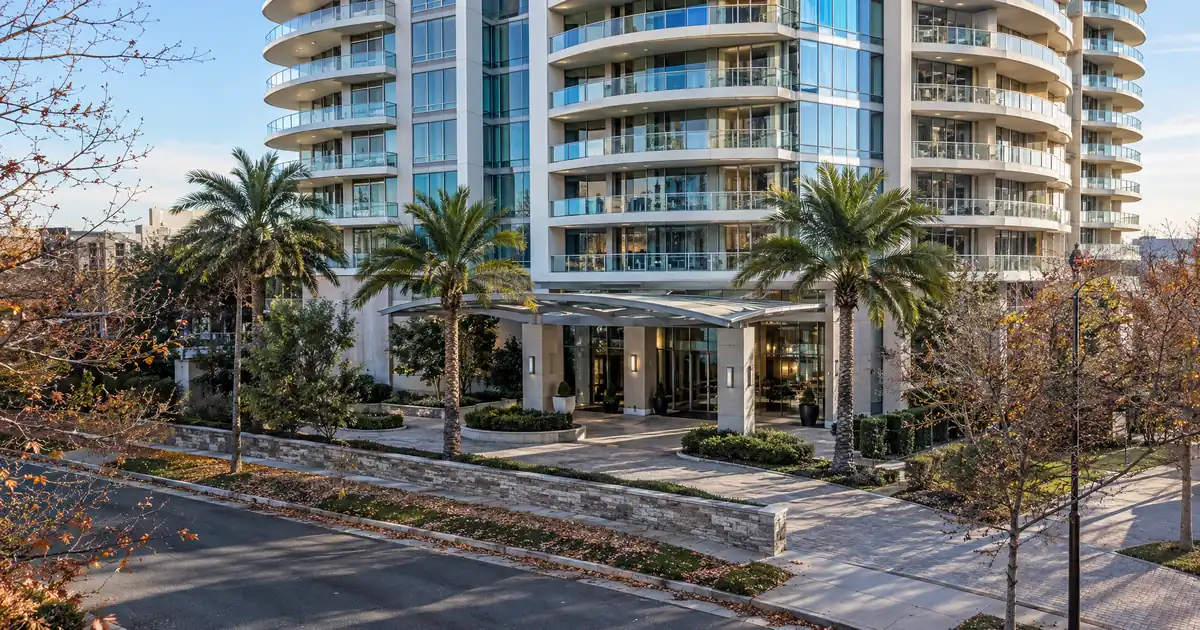
Condotel: a condo building that operates with hotel-style services, often with a rental program.
Rental pool: an arrangement where the operator rents units and splits revenue with owners.
DSCR: the unit’s monthly rent divided by its full monthly housing obligation, including principal, interest, taxes, insurance, and association dues.
Non-warrantable: a condo project that does not meet agency eligibility rules and is financed outside them.
Frequently Asked Questions
Can I use rental-desk payouts as income?
Sometimes. Some lenders accept payouts as business deposits, and others look only at your primary business or at the unit’s documented rent. Statements from a rental pool may or may not count as rental evidence, so ask before you build the file around them.
Does part-time personal use matter?
Yes. Heavy personal use can push occupancy toward second home, which changes the loan track. DSCR programs are generally for investment property, while bank statement programs are often available on second homes too. The lender decides the classification.
Can I buy a condotel in an LLC?
Often, on the DSCR side, subject to lender program eligibility. Bank statement loans are commonly written in a personal name instead. This is lender-specific, so confirm vesting before you choose a path.
Is this the same as a DSCR loan?
No. A bank statement loan tests the borrower’s deposits, and a DSCR loan tests the property’s rent against its payment. Many self-employed investors can use either on a condotel, and the stronger side of the file usually decides.
What happens if the building is declined?
The income file cannot rescue it. You can try another lender in the network, whose project rules may differ, or move to a different building. Bank statements prove income and nothing more.
Next Step
If you are buying or refinancing a high-balance rental property and want to see how the numbers work, Lendmire can help you compare super jumbo DSCR loan options based on the property income, the loan balance, credit profile, leverage, and investor goals. Lendmire is a broker arranging business-purpose financing through select lenders in a wholesale network across 41 markets, including Washington, D.C. Every file is underwritten individually, and nothing here is a commitment to lend. For a related look at documentation choices, see Lendmire’s article Can a First-Time Buyer Use Personal or Business Bank Statements?. Tax treatment varies; consult a qualified professional.
For current guidelines and terms, see Lendmire’s super jumbo DSCR loan programs page.
About Lendmire
Lendmire (NMLS# 2371349) is a mortgage brokerage focused on DSCR investor financing, helping arrange programs through wholesale and investor-lending channels in 41 markets, including Washington, D.C. DSCR loans are evaluated by the lender on property cash flow rather than personal income, subject to lender guidelines, supporting LLC closings and accommodating investors with four or more financed properties. Scotsman Guide Top Mortgage Workplace in both 2025 and 2026.
Get Started
Ready to find the right loan for you?
In about 30 seconds you can review financing options available for your investment property. No commitment required.
Informational only. Not a Loan Estimate, approval, or commitment to lend. Program availability and eligibility are subject to lender guidelines, credit approval, property review, and underwriting.
References
1. Scotsman Guide: Rev Up the Engine for Non-QM Lending
2. BiggerPockets: Condo Hotel (Condo-tel)
This article is part of Lendmire’s super jumbo DSCR loan program — full qualification details, guidelines, and scenarios live on the program page.
Related reading: DSCR vs Bank Statement Loan for a Business Owner With an LLC Rental · Full-Doc Jumbo vs Super Jumbo DSCR for a Second Home You Rent Out · DSCR Loan vs Bank Statement Loan for Self-Employed Investors
Brandon Miller
Founder & CEO, Mortgage Loan Originator, Lendmire LLC
- Mortgage Loan Originator · NMLS# 1129696 · Verify on NMLS Consumer Access
- North Carolina Real Estate Broker · License# 343312 · Verify on NCREC
- North Carolina Insurance Producer · License# 19053198 · Property, Casualty, Life, Health · Verify on NAIC SBS
- Lendmire LLC · Firm NMLS# 2371349 · Verify firm licensure
Legal disclosures. Lendmire (NMLS# 2371349) is a state-licensed mortgage brokerage that arranges financing through wholesale lender relationships. Lendmire is not a direct lender, depository institution, or registered financial advisor. The discussion above is general informational content about real estate financing — it is not financial, legal, or tax advice, and readers should consult licensed professionals for guidance on their individual circumstances. Loan inquiries are subject to lender underwriting; this article does not represent a commitment to lend. Loan terms, rates, and qualification standards vary by borrower, property, and state, and are subject to change at any time. Equal Housing Opportunity. NMLS Consumer Access: nmlsconsumeraccess.org.