
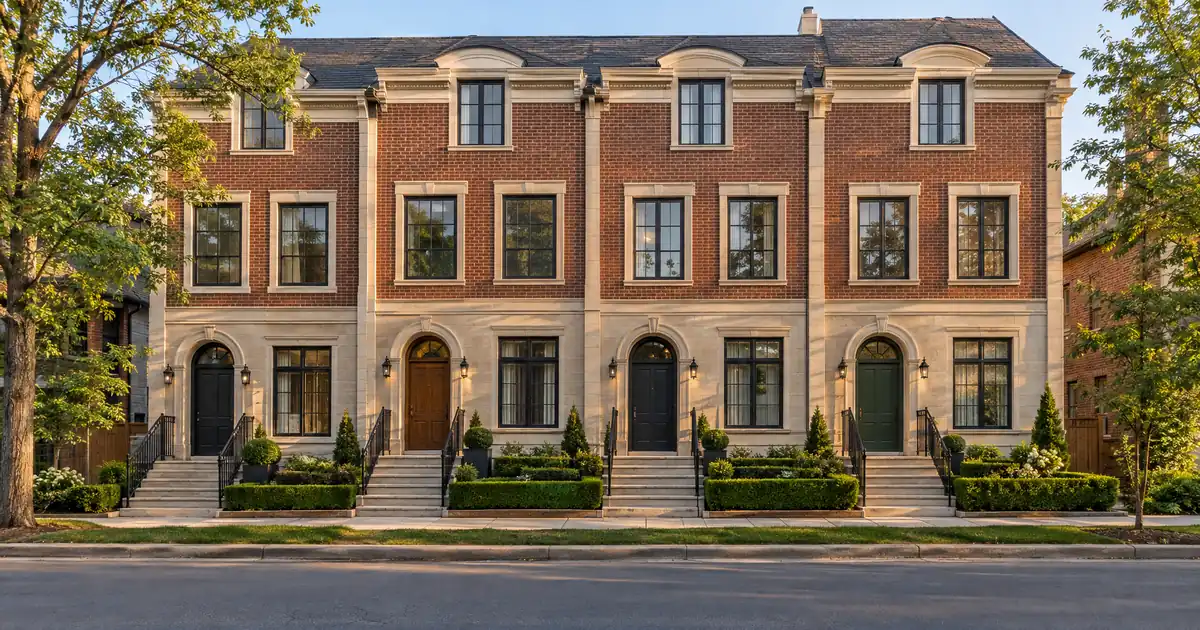
The Quick Read: For most investors, a super jumbo DSCR loan is the better default on a high-priced three- or four-unit building, because lenders treat one-to-four-unit properties as residential and qualify them primarily on the property’s rent, subject to lender guidelines. A commercial loan fits a narrower group: strong, liquid sponsors, mixed-use buildings, or borrowers who want a relationship lender and accept heavier documentation.
- Both are business-purpose loans for investment property, reviewed differently from an owner-occupied mortgage.
- Super jumbo DSCR qualifies primarily on property-level rental income covering the payment, subject to lender guidelines.
- Commercial underwriting adds expenses, vacancy, and a review of the borrower’s overall finances.
- Leverage steps down as the balance rises, and reserves and appraisal requirements step up.
- The same building can clear one test and miss the other, so run both before choosing.
That’s the short version. The longer one depends on who you are, how the building is leased, and what you want the loan to do over the next several years. Lendmire is a mortgage broker that arranges DSCR investor loans through select lenders in its wholesale network, across 40 states plus Washington, D.C. (41 markets). The commercial column below reflects published industry norms.
DSCR Calculator
Run the numbers in your market
Rate source: Freddie Mac 30-yr average via FRED® — Federal Reserve Bank of St. Louis · effective Oct 15, 2026
Prefilled with starting assumptions — enter your own rent or nightly figures, taxes, insurance, and HOA for a more accurate picture.
Program parameters update from Lendmire’s centralized guideline source. Taxes and insurance are editable estimates.
As of Oct 15, 2026 · General Freddie Mac market benchmark, not a Lendmire loan offer. Rent, nightly rate, occupancy, taxes, and insurance are editable estimates. Short-term rental figures are estimates only and vary significantly by season, property type, management approach, and local short-term-rental rules — confirm local regulations before relying on them. Qualifying income for short-term rentals varies by program — some use appraisal market rent, others use documented STR history or projections — and is confirmed in underwriting. Not a Loan Estimate, approval, or commitment to lend. Program availability and eligibility are subject to lender guidelines, credit approval, property review, and underwriting.
Side-by-Side
| Factor | Super Jumbo DSCR | Commercial Loan (industry norms) |
|---|---|---|
| Review basis | Rent vs. full housing payment | NOI after expenses vs. debt service |
| Borrower review | Credit, reserves, entity papers | Sponsor and guarantor finances |
| Documentation | Lease, appraisal, credit, assets | Rent roll, operating statements, financials |
| Property types | 1-4 units, residential | Any size; fits mixed-use and 5+ units |
| Entity vesting | LLC welcome, subject to program terms | Common, often with a personal guaranty |
| Appraisal | Rent and value on one report | Often income-approach |
| Reserves | Defined by program tier | Set by lender policy |
| Timeline | Described by the lender per file | Typically longer and more layered |
| Structure | Fully amortizing, optional interest-only | Policy-set term, amortization, covenants |
Pricing is deliberately absent.
Is a Luxury Triplex or Fourplex Residential or Commercial?
A triplex or fourplex is residential for lending purposes. Practitioners treat two to four units as the residential lane and five or more as commercial multifamily. That is why a DSCR program built for one-to-four-unit property can finance these buildings at all.
“Luxury” is not a loan category. It means a high balance and, usually, thin comparable sales. “Super jumbo” is a size label too. The Federal Housing Finance Agency sets conforming limits for loans Fannie Mae and Freddie Mac will buy, and loans above them are called jumbo. A DSCR loan isn’t an agency loan, so those limits give the label but not an eligibility cap. There is no neutral definition of where “super jumbo” starts, so it is lender-defined.
One business-purpose note. DSCR loans are designed for non-owner-occupied investment properties, and because they are business-purpose investor loans they are reviewed differently from a standard owner-occupied mortgage. Commercial loans on rental property sit in the same category. If you plan to live in a unit, a purpose and occupancy review should come before you pick either path.
How the Two Loans Underwrite
The core difference is what “coverage” means. Residential DSCR divides monthly rent by the full housing payment: principal, interest, taxes, insurance, and any association dues. No operating expenses are deducted. Commercial DSCR divides net operating income by debt service, and net operating income subtracts repairs, utilities, management, and vacancy first.
Across Lendmire’s wholesale network, most programs underwrite on the lower of the lease rent or the appraiser’s market rent. For a two-to-four-unit building, the appraiser typically delivers value and rent on a single small-income-property report. The borrower file stays property-focused: lease, appraisal, entity documents if an LLC holds title, credit, and asset documentation for reserves.
The commercial side looks wider. The OCC Comptroller’s Handbook on commercial real estate lending frames bank underwriting around property cash flow, borrower and guarantor cash flow, the borrower’s global financial condition, and minimum hard equity. It also says each bank sets its own policy on maximum leverage, term, and amortization. So no regulator hands down a required coverage number on either side. Each lender decides.
When a Super Jumbo DSCR Loan Is the Better Fit
DSCR is the stronger path when the property is the story and the borrower’s tax return is not. Picture an investor with several holdings, heavy depreciation, and write-offs that make personal income look smaller than the portfolio really is. Property-rent-based lender review sidesteps that mismatch. Up to 20 financed properties can sit on a file through select programs, and other financed properties don’t add reserve requirements beyond the subject property. The exact numbers vary by lender and program and follow a full review of property, leverage, and credit.
It also fits entity buyers. LLC vesting is welcome on most programs placed through the network, subject to lender program eligibility, though layered entities generally aren’t.
Size is where the ladder matters. Programs in the network run from $150,000 to $10,000,000, subject to underwriting, and the standard program stops at $3,000,000. Typical ceilings step down as the balance rises:
| Loan size | Purchase LTV | Cash-out LTV | Credit for this leverage |
|---|---|---|---|
| $150K-$1M | 80% | 75% | 660+ |
| $1M-$1.5M | 75% | 70% | 700+ |
| $1.5M-$3M | 75% | 60% | 720+ |
| $3M-$4M | 65% | — | 700+ |
| $4M-$10M | 60% on review | — | 700+ |
Every figure is a ceiling through select wholesale programs, subject to underwriting. Above $4,000,000, each request is reviewed case by case before submission, purchase or rate-and-term only. Above $2,000,000, expect two appraisals. Reserves typically run six months of the payment on the subject property, twelve for first-time investors, and cash-out proceeds can’t satisfy them.
Coverage at 1.00 or better earns full leverage. Coverage from 0.75 to 0.99 is a real path through select lenders to $2,000,000, but LTV and terms adjust, subject to underwriting. Interest-only for 120 months is available on 30- and 40-year terms up to 75% LTV, qualified on interest, taxes, and insurance alone. Final terms depend on the lender’s guidelines, the property type, and the borrower’s complete credit picture.
Here’s the catch with luxury product: rent rarely rises as fast as price. A building that sells for twice as much seldom rents for twice as much, so coverage tightens at the top of the market. That’s the reason leverage steps down and reserves go up. It isn’t arbitrary.
For readers weighing documentation paths instead, Lendmire’s comparison of a super jumbo DSCR loan versus a bank statement loan covers that fork. The complete DSCR loans guide covers the basics.
When a Commercial Loan Is the Better Fit
A commercial loan earns its place in a few situations. Say the building has a retail space on the ground floor. Mixed-use buildings aren’t the standard residential DSCR property, and they may only fit under commercial underwriting or a limited program. Eligibility is lender-specific.
It can also fit a sponsor with real liquidity and a clean balance sheet. Commercial lenders analyze the guarantor’s assets, contingent liabilities, and global cash flow. For a strong borrower, that wider lens can support a larger or more flexible structure. For a borrower with complicated personal finances, it can sink the file.
A third case is the borrower who already has a bank relationship and wants one lender across several holdings. Bank and credit-union portfolio products on small buildings sometimes use residential-style rent logic and sometimes full commercial analysis. Ask which test the file will actually get.
Now the tradeoffs. Commercial structures commonly add a shorter term with a balloon, covenants, personal guaranties, and heavier paperwork: operating statements, a rent roll, borrower financials, often an income-approach appraisal. Published norms put the timeline longer, and the OCC handbook confirms these terms are set by lender policy rather than any uniform standard. Compare term sheets line by line. A balloon maturity creates exit risk that a fully amortizing loan doesn’t carry.
Lendmire’s wholesale network places DSCR investor financing, so the question here is fit, not preference.
The Same Building, Two Tests
Run the numbers on a stabilized fourplex with rents that comfortably cover the full housing payment. Under the residential test, coverage could land comfortably above 1.00. Now take the same building and deduct management, repairs, utilities, and a vacancy allowance. Net operating income shrinks, and the commercial coverage ratio can come out meaningfully lower. The building didn’t change. The definition did.
The reverse happens too. A building with unusually low taxes and insurance, or one where the owner self-manages and expenses are light, can look stronger under an expense-based view. This is why a passing ratio on either side isn’t the same as positive cash flow. Coverage is a lender’s screen. Your actual return depends on vacancy, repairs, and what you pay in taxes and insurance, which vary by county.
DSCR vs. conventional financing
There are two common ways to finance an investment property, and they qualify you differently — here’s how investors weigh them.
Why investors choose it
- Qualifies on the property’s rental income — no personal tax returns, W-2s, or pay stubs needed to document income.
- No personal debt-to-income ceiling to clear, so existing mortgages and obligations don’t cap your borrowing the same way.
- Can be closed in an LLC, keeping the property inside a business entity.
- Built for scaling — not held to the limit on number of financed properties that conventional financing applies.
- Underwriting centers on the deal: generally qualifies when the rent covers the payment, a 1.00x coverage ratio being a common baseline (confirmed in underwriting).
- Designed specifically for investment property, including long-term and, where the program allows, short-term rentals.
Where it’s strong
- Often the lowest ongoing financing cost for a buyer who fully qualifies on personal income — a fit for a first property or a cost-first purchase.
Trade-offs for investors
- Requires full personal income documentation and must fit within a debt-to-income limit — salary, existing debts, and other mortgages all count.
- Typically held in your personal name rather than a business entity.
- Caps how many financed properties you can carry, which can become a ceiling as a portfolio grows.
- Evaluates you as a borrower as much as the property, which usually means more paperwork.
How investors usually choose: a first or single property often optimizes for the lowest financing cost; portfolio builders often optimize for leverage, vesting in an LLC, and scaling past conventional caps. The right answer depends on your goals, the property, and current guidelines — both paths run through select lenders in Lendmire’s wholesale network, with eligibility and terms confirmed in underwriting.
Which Borrower Belongs Where
| Scenario | Better fit | Why | Watch |
|---|---|---|---|
| Stabilized fourplex, LLC-held | Super jumbo DSCR | Rent-based, entity-friendly | Leverage ladder at high balance |
| Value-add triplex, below-market rents | Depends | Market rent vs. in-place lease | Lower of lease or appraisal rent |
| Personal-income documentation understates income | Super jumbo DSCR | No reliance on personal returns | Credit and reserve tiers |
| Mixed-use or ground-floor retail | Commercial | Not a standard residential property | Balloon, recourse, covenants |
| Liquid sponsor, relationship lender | Commercial may fit | Global-finance review helps | Heavier documentation |
The value-add row is the real toss-up. If the lease rents are below market, many programs use the lower figure, which can pull coverage under 1.00. Select lenders in the network will review sub-1.00 files at reduced leverage, with LTV and terms adjusting, subject to underwriting. A commercial lender looking at projected stabilized income might read the same building differently, though it will ask for more proof and more of your balance sheet.
Risks Outside the Ratio
Vacancy hits harder with fewer units. One empty unit in a triplex is a third of the rent roll; in a fourplex, a quarter. A fourplex diversifies slightly better, but luxury units can sit longer between tenants.
Appraisal risk is its own issue. High-end three- and four-unit buildings often have few true comparable sales, which is why a second appraisal appears above $2,000,000. Thin comps can move the value, and the value drives the leverage.
An LLC organizes ownership. It doesn’t automatically remove personal liability, particularly where a lender asks for a guaranty. Read the guaranty language before assuming the entity is a shield.
Consider refinancing risk too. Cash-out is scoped by size: unlimited proceeds at or below 60% LTV, a $1,500,000 cap above 60%, and none above $3,000,000, all subject to underwriting. If your plan depends on pulling equity later, check that ladder first. A related question for short-term operators appears in Lendmire’s comparison of portfolio loans and super jumbo DSCR for a luxury STR operator. Short-term rental rules vary by city, county, HOA, and property type, so confirm local rules before relying on projected rental income. Each figure is subject to lender guidelines and a complete review of property type, leverage, and credit.
Owner-Occupied Paths
Buying a fourplex to live in one unit is a different problem. Agency, FHA, and VA programs exist for that, but they carry loan limits that a luxury building often exceeds. The FHFA limits for most areas run $1,066,250, $1,288,800, and $1,601,750 for two-, three-, and four-unit properties. Above those, an owner-occupant is in jumbo territory with different rules.
Occupancy also decides whether the investor path is open. Under Regulation Z, credit for a non-owner-occupied rental is generally deemed business purpose, but an owner who expects to occupy the property more than 14 days in the coming year falls outside that safe path. A building bought partly for personal use needs a purpose review before DSCR is chosen. Likewise, a cash-out used for personal purposes can pull a 1-4 unit loan back under consumer rules.
Key Terms Defined
- Super jumbo: a lender-defined size label for loans well above the conforming limit, not a legal category.
- Residential DSCR: monthly rent divided by the full housing payment, with no expense deduction.
- Commercial DSCR: net operating income divided by debt service, after expenses and vacancy.
- Guarantor: a person who personally backs a loan made to an entity.
- Balloon: a large remaining balance due at the end of a shorter loan term.
A Balanced Verdict
Choose super jumbo DSCR if the building is a standard one-to-four-unit rental, you hold title in an entity, your personal-income documentation undersells your income, or you want a fully amortizing loan with an optional interest-only runway. Choose commercial if the building is mixed-use, you are a liquid sponsor who benefits from a global review, or an existing lender relationship outweighs the added paperwork and balloon exposure. If you’re unsure, price both. The numbers settle it faster than the labels do.
Programs change, and every file is underwritten individually. Nothing here is a commitment to lend. Tax treatment can depend on how the funds are used and how the property is held; investors should keep clear records and speak with a qualified tax professional before relying on any deduction.
If you are buying or refinancing a high-balance rental property and want to see how the numbers work, Lendmire can help you compare super jumbo DSCR loan options based on the property income, the loan balance, credit profile, leverage, and investor goals. Reach the team at 828-256-2183.
Frequently Asked Questions
Is a fourplex commercial or residential?
Residential, for lending purposes. Two to four units sit in the residential lane, and five or more units move to commercial multifamily. Some lenders still offer commercial products on smaller buildings, particularly mixed-use ones.
Can a DSCR loan finance a luxury fourplex?
Often, yes, through select programs in the network. Loan amounts run from $150,000 to $10,000,000, with leverage stepping down as the balance grows, subject to underwriting. Credit, reserves, and appraisal requirements rise with size.
What happens at five units?
The property becomes commercial multifamily, and the income test moves to net operating income. A triplex or fourplex doesn’t cross that line.
Does an LLC remove personal liability?
Not automatically. An LLC organizes ownership, but a lender may ask for a personal guaranty. Read the loan documents before assuming the entity protects you.
Does passing the coverage test mean positive cash flow?
No. Coverage compares rent to the payment, or income to debt service. It doesn’t capture repairs, vacancy, or turnover costs, so build your own cash-flow estimate alongside it.
Lendmire’s self-employed mortgages page presents both super jumbo programs, bank statement and DSCR, side by side.
About Lendmire
Lendmire, NMLS# 2371349, is a non-QM mortgage broker serving real estate investors in 41 markets, including Washington, D.C., through DSCR investor loan programs. Qualification is generally reviewed around the subject property’s rental income, not the borrower’s W-2 history, which suits LLC-titled portfolios and self-employed investors. All scenarios remain subject to lender review and program guidelines. Two consecutive Scotsman Guide Top Mortgage Workplace recognitions (2025, 2026).
Get Started
Ready to find the right loan for you?
In about 30 seconds you can review financing options available for your investment property. No commitment required.
Informational only. Not a Loan Estimate, approval, or commitment to lend. Program availability and eligibility are subject to lender guidelines, credit approval, property review, and underwriting.
References
1. FHFA: 2026 Conforming Loan Limit Values
2. OCC Comptroller’s Handbook: Commercial Real Estate Lending
This article is part of Lendmire’s super jumbo DSCR loan program — full qualification details, guidelines, and scenarios live on the program page.
Related reading: How to Document a 40-Year Super Jumbo DSCR Loan · Can a Retiree With No Job Qualify for a Super Jumbo DSCR Loan? · Super Jumbo DSCR vs Commercial Loan for New Construction Multifamily
Brandon Miller
Founder & CEO, Mortgage Loan Originator, Lendmire LLC
- Mortgage Loan Originator · NMLS# 1129696 · Verify on NMLS Consumer Access
- North Carolina Real Estate Broker · License# 343312 · Verify on NCREC
- North Carolina Insurance Producer · License# 19053198 · Property, Casualty, Life, Health · Verify on NAIC SBS
- Lendmire LLC · Firm NMLS# 2371349 · Verify firm licensure
Legal disclosures. Lendmire (NMLS# 2371349) is a state-licensed mortgage brokerage that arranges financing through wholesale lender relationships. Lendmire is not a direct lender, depository institution, or registered financial advisor. The discussion above is general informational content about real estate financing — it is not financial, legal, or tax advice, and readers should consult licensed professionals for guidance on their individual circumstances. Loan inquiries are subject to lender underwriting; this article does not represent a commitment to lend. Loan terms, rates, and qualification standards vary by borrower, property, and state, and are subject to change at any time. Equal Housing Opportunity. NMLS Consumer Access: nmlsconsumeraccess.org.