
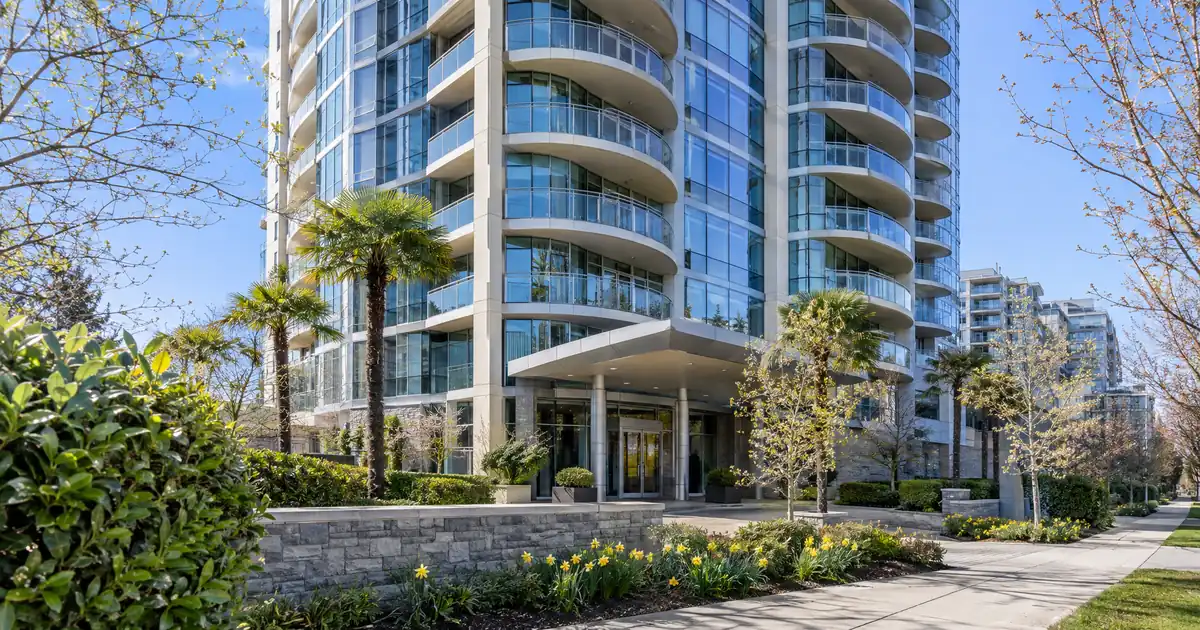
The Quick Read: An interest-only (IO) payment lifts the coverage ratio because it removes principal from the monthly obligation while the rent, taxes, insurance, and association dues stay exactly where they were. On a luxury condo, dues and taxes are large, so the lift is real but smaller than most investors expect. Interest-only also does nothing about the building problem that made the condo non-warrantable in the first place.
- IO shrinks only the principal piece, so rent coverage rises when the program tests the IO payment.
- Heavy dues, taxes, and insurance dilute the lift on a $3M unit.
- Non-warrantable condos are capped at 75% leverage and a $1,500,000 loan through the network programs, which shapes a $3M deal more than IO does.
- The payment steps up when the IO window ends, so the exit plan matters.
- Coverage is one gate. Credit, reserves, appraisal, and the building review are separate gates. Final terms depend on the lender’s guidelines, the property type, and the borrower’s complete credit picture.
What Does Interest-Only Change in the Coverage Test?
It changes one number: the monthly obligation in the denominator. Debt service coverage (DSCR) is the rent a lender accepts divided by the monthly cost of owning the loan. On a standard amortizing loan, that cost is PITIA: principal, interest, taxes, insurance, and association dues. On an eligible interest-only loan, the test uses ITIA, the same list without principal.
DSCR Calculator
Run the numbers in your market
Rate source: Freddie Mac 30-yr average via FRED® — Federal Reserve Bank of St. Louis · effective Oct 15, 2026
Prefilled with starting assumptions — enter your own rent or nightly figures, taxes, insurance, and HOA for a more accurate picture.
Program parameters update from Lendmire’s centralized guideline source. Taxes and insurance are editable estimates.
As of Oct 15, 2026 · General Freddie Mac market benchmark, not a Lendmire loan offer. Rent, nightly rate, occupancy, taxes, and insurance are editable estimates. Short-term rental figures are estimates only and vary significantly by season, property type, management approach, and local short-term-rental rules — confirm local regulations before relying on them. Qualifying income for short-term rentals varies by program — some use appraisal market rent, others use documented STR history or projections — and is confirmed in underwriting. Not a Loan Estimate, approval, or commitment to lend. Program availability and eligibility are subject to lender guidelines, credit approval, property review, and underwriting.
Rent doesn’t move. Taxes don’t move. Dues don’t move. Only principal drops out.
That is why the effect is mechanical rather than magical. A property that sits just under 1.00x on a full payment can clear it on an IO payment, because the same rent now sits over a smaller number. Across Lendmire’s wholesale network, the interest-only option runs for 120 months on 30- and 40-year terms, tops out at 75% leverage, and is qualified on ITIA. You can see the broader mechanics in the complete DSCR loans guide. Each figure is subject to lender guidelines and a complete review of property type, leverage, and credit.
One caution that matters more than the math. Not every lender tests the IO payment. Some qualify the file on a hypothetical fully amortizing payment even when the loan itself is interest-only. Practitioners in the network see this split constantly. Before you count on a lift, confirm which payment the program tests. If it tests the amortizing payment, IO changes your cash outflow but not your ratio.
DSCR loans are designed for non-owner-occupied investment properties. Because they are business-purpose investor loans, they are reviewed differently from a standard owner-occupied mortgage.
Key Terms Defined
ITIA: the monthly interest, taxes, insurance, and association dues on an interest-only loan, with no principal included.
PITIA: the same list on an amortizing loan, with principal added back.
Non-warrantable condo: a condo whose project fails the standard agency checklist for things like litigation, commercial space, or investor concentration, so it needs a non-agency lender.
Reset: the date the IO window ends and the loan begins paying down principal over the remaining term.
STR haircut: the discount a lender applies to short-term-rental income before testing coverage.
Super jumbo: a loan size above the standard program limit. There is no official regulatory definition, and Lendmire’s standard DSCR program stops at $3,000,000.
Why Is the Condo Non-Warrantable, and Does It Matter to DSCR?
The label describes the building, not you and not the unit. Agency project rules screen condos against a checklist, and a project that fails one item gets flagged. Freddie Mac’s Seller/Servicer Guide lists the ineligible categories, including condo hotels, excessive commercial space, projects in litigation, and heavy concentration of ownership in one investor.
DSCR loans are not agency loans. The agency list is only the reason your condo needs a different lender. Whether the project is reviewable is decided by the non-agency lender’s own project review.
A project-level questionnaire is typically pass or fail, as GoverningDocs explains. A luxury tower can fail for reasons that have nothing to do with quality: a developer still holding many units, a hotel-style rental program, a pending lawsuit over a defect. Status can also change. If the association fixes the failing item, the project can be reviewed again.
For you, the practical effect is simple. Non-warrantable status lowers the leverage ceiling and raises scrutiny on the building. It also narrows the lender pool, which brings us to the $3M problem.
Where Does a $3M Price Sit Against the Program Limits?
Squarely against a ceiling. Through select programs in Lendmire’s network, non-warrantable condos run to 75% leverage and a $1,500,000 loan, subject to underwriting. A $3M price against a $1,500,000 loan cap means leverage near 50%, not 75%. You bring roughly half the price. Leverage, reserves, and pricing vary by lender and program; the final terms follow the full file review.
Compare that with a warrantable unit at the same price. On a purchase it would land in the $2,000,000 to $3,000,000 loan band at 75%, with credit of 720+ at that leverage and two appraisals above $2,000,000. The non-warrantable label is what pulls the loan back to the cap.
Here is the thinking-out-loud part. Lower leverage helps coverage more than IO does. Going from 75% to 50% LTV cuts the loan by a third, and the principal-and-interest piece falls by the same third. So on this file, IO is the second lever, not the first. Equity is the first. Terms vary by lender guidelines, property type, leverage, credit profile, and full file review.
Two other network figures matter here. Credit has a 660 floor, and a loan in the $1,000,000 to $1,500,000 band needs 700+ for its top leverage. Reserves are six months of ITIA on the subject property, twelve for first-time investors, and cash-out proceeds don’t count toward them. Entity vesting is welcome, subject to program terms, though layered entities are not.
What Does the Math Look Like? A $3M Worked Example
Treat every input below as a modeled assumption, not market data. Dollar figures stay out on purpose. The calculator on this site can convert percentages to dollars as an illustrative estimate.
Run the numbers on a $3M non-warrantable condo, financed near 50% LTV to fit the cap. Index the numbers in “points” so only the proportions matter. Exact terms depend on the lender’s guidelines, property type, leverage, and a full review of the borrower’s file.
- Accepted monthly rent: 90 points.
- Taxes, insurance, and dues: 35 points.
- Principal and interest on a fully amortizing loan: 65 points.
- Full obligation (PITIA): 100 points.
- Amortizing coverage: 90 ÷ 100 = 0.90x.
Now suppose the IO structure trims the principal-and-interest piece by about a quarter, which is an assumption, since the true trim depends on the loan’s pricing and term.
- Trim: about 16 points, leaving principal-and-interest at 49 and the full obligation (ITIA) at 84.
- IO coverage: 90 ÷ 84 = about 1.07x.
Same rent. Same building. A file that missed 1.00x now clears it, if the program tests ITIA.
Below 1.00x, IO is not the only path. Select programs in the network review lower-coverage files at reduced leverage, where LTV and terms adjust, subject to underwriting. Every file is reviewed individually.
Why Do Dues Dilute the Lift?
Because dues, taxes, and insurance sit in both versions of the payment. The bigger they are as a share of the obligation, the less principal removal matters. This is arithmetic, not a market claim.
Take the same 0.90x amortizing starting point and the same assumed quarter trim to principal and interest. Change only how heavy the fixed costs are.
| Fixed costs share of full payment | IO coverage (from 0.90x) | Lift |
|---|---|---|
| 20% (light dues) | about 1.13x | +0.23 |
| 35% (mid) | about 1.07x | +0.17 |
| 50% (heavy dues and taxes) | about 1.03x | +0.13 |
Luxury buildings tend toward the bottom row. Amenity-heavy towers carry large dues, and a $3M assessment carries a large tax bill. A house with low carrying costs gets more from IO than a tower unit does.
Association master-policy costs flow through the dues line. If the building is underinsured or deferring maintenance, dues can rise, and IO can’t offset that. Ask for the budget before you write the offer.
What Rent Figure Does the Lender Actually Accept?
The lower of the in-place lease and the appraiser’s opinion of market rent is a common standard. The appraiser documents market rent on Fannie Mae’s Form 1007 rent schedule, a form that can also be used for condominium investment properties. That is a form name, not a program rule. DSCR program terms come from the lender, not the agency.
Luxury units are thin on rental comps. Few comparable condos at that price sit under lease, so the appraiser’s rent opinion is often the weakest link in the ratio. IO can’t repair a low rent opinion.
If you plan short-term rental income, the order of operations matters. Haircut first, then test against the payment. Through select programs in the network, short-term-rental files need 1.00x or higher coverage, run to $2,000,000 loans, and use 80% of gross income, either twelve months of operating history on a refinance or the appraisal’s short-term-rent analysis on a purchase. They are open to experienced investors only and are not on the no-ratio path. Short-term rental rules can vary by city, county, HOA, and property type, so investors should confirm local rules before relying on projected rental income. Hotel-style rental pooling is a classic non-warrantable trigger as well.
For the luxury STR angle in more depth, see Lendmire’s piece How IO Payments Lift DSCR for a Luxury Short-Term Rental at $3M.
What Happens at the Reset?
The payment steps up, and the ratio gives back its lift. When the 120-month window ends, the balance amortizes over the remaining term. That is a shorter runway than the original 30 or 40 years, so the new payment is materially higher than either the IO payment or a day-one amortizing payment.
Keep rent flat and run the same modeled file.
| Stage | Payment tested | Coverage (modeled) |
|---|---|---|
| Day one, IO | ITIA | about 1.07x |
| Day one, if amortizing | PITIA | 0.90x |
| After reset, remaining term shorter | PITIA, higher | at or below 0.90x |
Rents may rise over ten years, and the balance doesn’t fall during the IO window. Those are your two offsets, and neither is guaranteed. Think of IO as a runway, not a discount.
DSCR vs. conventional financing
There are two common ways to finance an investment property, and they qualify you differently — here’s how investors weigh them.
Why investors choose it
- Qualifies on the property’s rental income — no personal tax returns, W-2s, or pay stubs needed to document income.
- No personal debt-to-income ceiling to clear, so existing mortgages and obligations don’t cap your borrowing the same way.
- Can be closed in an LLC, keeping the property inside a business entity.
- Built for scaling — not held to the limit on number of financed properties that conventional financing applies.
- Underwriting centers on the deal: generally qualifies when the rent covers the payment, a 1.00x coverage ratio being a common baseline (confirmed in underwriting).
- Designed specifically for investment property, including long-term and, where the program allows, short-term rentals.
Where it’s strong
- Often the lowest ongoing financing cost for a buyer who fully qualifies on personal income — a fit for a first property or a cost-first purchase.
Trade-offs for investors
- Requires full personal income documentation and must fit within a debt-to-income limit — salary, existing debts, and other mortgages all count.
- Typically held in your personal name rather than a business entity.
- Caps how many financed properties you can carry, which can become a ceiling as a portfolio grows.
- Evaluates you as a borrower as much as the property, which usually means more paperwork.
How investors usually choose: a first or single property often optimizes for the lowest financing cost; portfolio builders often optimize for leverage, vesting in an LLC, and scaling past conventional caps. The right answer depends on your goals, the property, and current guidelines — both paths run through select lenders in Lendmire’s wholesale network, with eligibility and terms confirmed in underwriting.
When Does IO Help, and When Does It Hide a Weak Deal?
It helps when the deal is sound and the ratio is just short. It hides a problem when IO is the only reason the file passes.
| Situation | Read |
|---|---|
| Rent solid, ratio just under 1.00x on full payment | IO helps |
| Strong equity, plan to hold or refinance before reset | IO helps |
| Passes only on IO, rent opinion thin | Warning sign |
| Building has litigation or rental restrictions | IO can’t fix it |
| Plan depends on selling into a thin buyer pool | Skip or size down |
A practical test. Run the file on the full amortizing payment too. If it lands well below 1.00x, ask whether you would still buy it at that coverage with more equity. If the answer is no, IO is covering the gap rather than solving it.
Remember that clearing the ratio doesn’t mean positive cash flow. DSCR ignores repairs, vacancy, management, utilities, and capital costs. A unit can clear 1.07x on paper and still cost you each month once the real operating costs land.
What Can IO Never Fix?
Several things sit outside the ratio entirely.
- Building-level failures. A rental ban, active litigation, or mandatory rental pooling can end a deal regardless of coverage.
- Size-cap mismatches. A $3M non-warrantable unit that needs 75% leverage runs into the $1,500,000 loan cap. No payment structure changes that.
- Credit and reserves. The 660 floor, the higher credit needed at higher leverage, and six months of ITIA in reserves apply to every file.
- Cash-out. IO lifts coverage, not the equity test. Cash-out limits step down with size, and there is none above $3,000,000. Every figure here varies by lender and program — guidelines, property type, leverage, and credit profile all apply.
Lendmire’s non-warrantable condo requirements piece covers the building screen in more depth.
How Do You Plan an Exit From a Non-Warrantable Unit?
Plan it before you buy. A narrower buyer pool and a narrower refinance pool go together. Fewer buyers can finance this condo with agency-style loans, and fewer lenders will take it on. A future lender will judge both the property and your profile under conditions that don’t exist today.
You have four realistic exits at the reset:
1. Sell the unit, accepting a smaller buyer pool.
2. Refinance into a new IO or amortizing loan, if the building and the rent still support it.
3. Pay the balance down with other capital.
4. Hold through the reset on strong coverage.
Another path opens if the association fixes the failing criterion and the project becomes warrantable. That is the best outcome, and you can’t count on it.
What Should You Check Before You Make an Offer?
Get the building documents first. Your lender will, and a failed review costs more than a few phone calls.
- The association’s lender questionnaire and current budget.
- The reserve study and the status of any special assessment.
- Litigation disclosures, including anything pending over defects.
- The master insurance policy and its limits.
- The share of units owned by one entity or rented out.
- The association’s rules on rentals, minimum lease terms, and short stays.
- Delinquent dues as a share of the budget.
Condo status isn’t permanent, so ask whether a fix is in progress. One flagged item can sometimes be corrected, and that changes your leverage and exit options.
Frequently Asked Questions
Does every lender use the IO payment when testing coverage?
No. Each lender decides how the ratio is calculated, and some test a hypothetical amortizing payment even on an IO loan. Through the select programs Lendmire places files with, the IO option is qualified on ITIA. Confirm which payment is tested before you count on the lift.
Can IO make a sub-1.00x file work?
It can close part of the gap, though it isn’t the only path. Select programs in the network review coverage below 1.00x at reduced leverage, where LTV and terms adjust, subject to underwriting. A 1.00x or higher file earns full leverage on the ladder.
How much can I borrow on a $3M non-warrantable condo?
Through the network, non-warrantable condos run to 75% leverage and a $1,500,000 loan, subject to underwriting. On a $3M price, the dollar cap is the tighter limit, which puts leverage near 50%. A warrantable unit at the same price would follow the standard ladder for its band instead. Final terms depend on lender guidelines, property type, leverage, and the borrower’s complete credit picture.
Does IO help me build equity?
No. During the 120-month window your balance stays flat, so equity grows only through appreciation or paydowns you make yourself. After the reset the loan amortizes over the shorter remaining term.
Can I buy this condo in an LLC?
Entity vesting is welcome, subject to program terms, and layered entities are not accepted. The lender reviews the entity documents alongside your credit and reserves. The ratio, the appraisal, and the building review still apply.
Is IO coverage the same as cash flow?
No. A unit can clear the ratio on rent and still run tight on real monthly operating costs. Tax treatment varies; consult a qualified professional.
Next Step
If you are buying or refinancing a high-balance rental property and want to see how the numbers work, Lendmire can help you compare super jumbo DSCR loan options based on the property income, the loan balance, credit profile, leverage, and investor goals. Lendmire is a broker that arranges financing through select lenders in its wholesale network across 41 markets, including Washington, D.C. Programs change, every file is underwritten individually, and nothing here is a commitment to lend.
A $3M unit with a $1,500,000 loan cap rewards the buyer who treats equity as the main lever and interest-only as the finishing touch.
Lendmire’s self-employed mortgages page presents both super jumbo programs, bank statement and DSCR, side by side.
About Lendmire
A non-QM mortgage broker (NMLS# 2371349), Lendmire arranges DSCR financing for real estate investors in 41 markets — 40 states plus Washington, D.C. Because deals are underwritten primarily on property cash flow rather than personal income documentation, the structure suits self-employed buyers and entity-owned portfolios. Lendmire places loans through wholesale investor lenders; it is not a direct lender. Scotsman Guide named Lendmire a Top Mortgage Workplace in both 2025 and 2026.
Get Started
Ready to find the right loan for you?
In about 30 seconds you can review financing options available for your investment property. No commitment required.
Informational only. Not a Loan Estimate, approval, or commitment to lend. Program availability and eligibility are subject to lender guidelines, credit approval, property review, and underwriting.
References
1. Freddie Mac Seller/Servicer Guide, Section 5701.3
2. GoverningDocs: why a condo fails a lender questionnaire
3. Fannie Mae Selling and Servicing Guide Forms
This article is part of Lendmire’s super jumbo DSCR loan program — full qualification details, guidelines, and scenarios live on the program page.
Related reading: IO vs Fully Amortizing DSCR on a Luxury Rental · How to Qualify for a Luxury Investment Property DSCR Loan · How Much Down a Luxury Tower Condo Needs Under Non-QM vs. a Bank
Brandon Miller
Founder & CEO, Mortgage Loan Originator, Lendmire LLC
- Mortgage Loan Originator · NMLS# 1129696 · Verify on NMLS Consumer Access
- North Carolina Real Estate Broker · License# 343312 · Verify on NCREC
- North Carolina Insurance Producer · License# 19053198 · Property, Casualty, Life, Health · Verify on NAIC SBS
- Lendmire LLC · Firm NMLS# 2371349 · Verify firm licensure
Important disclosures. Lendmire (NMLS# 2371349) is a licensed mortgage brokerage. Lendmire is not a direct lender, depository institution, or financial advisor. All loan inquiries are subject to lender underwriting; this article does not constitute a commitment to lend. Rates, terms, and program guidelines are subject to change without notice and vary by borrower profile, property type, and state. Information in this article is general in nature and is not financial, legal, or tax advice. Equal Housing Opportunity. NMLS Consumer Access: nmlsconsumeraccess.org.