
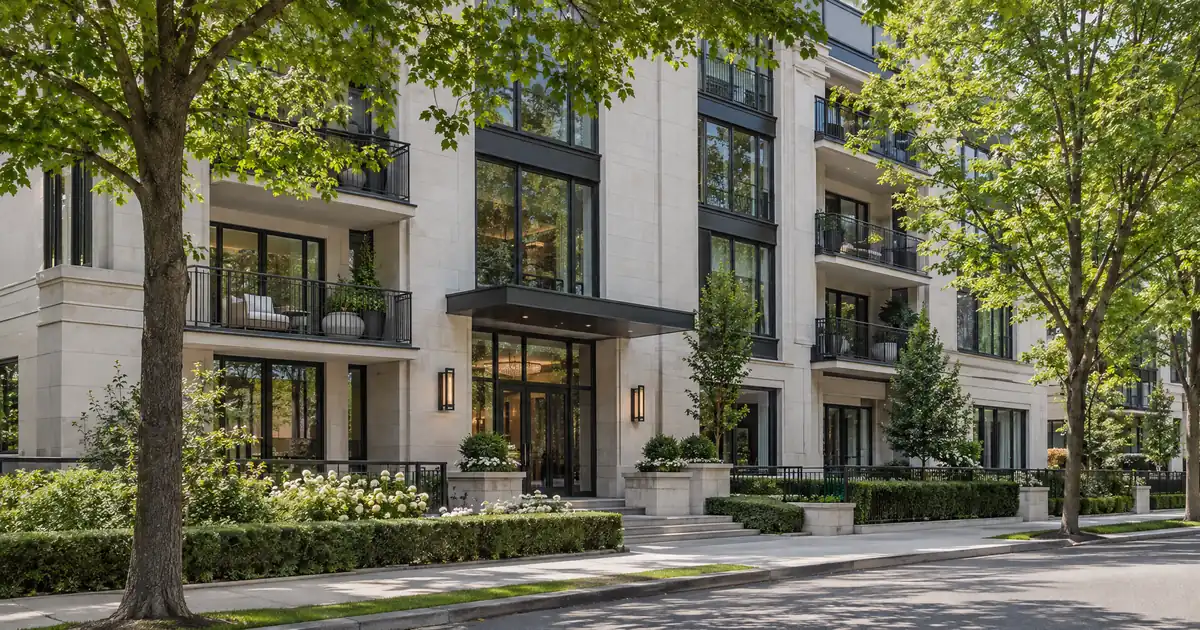
The Quick Read: It depends on whether the building itself runs like a hotel. A few owners listing units on a booking platform rarely trip the label, while a rental desk, a managed rental pool, or a hotel-style operator usually does. “Non-warrantable” is a label from the conventional mortgage agencies. DSCR lenders apply their own project rules instead, and what the HOA documents and local rules allow matters most.
- A hotel-style operation (rental desk, mandatory pooling, hotel licensing) makes a project ineligible for conventional loans.
- Scattered owner listings with no hotel traits are a different and milder question.
- A luxury finish level or amenity package does not decide warrantability. Management structure and services do.
- On a DSCR loan, an HOA ban on your planned rental term stops the deal no matter how good the math looks.
- Short-term rental files typically need coverage of 1.00 or higher, subject to lender guidelines and underwriting.
What “Non-Warrantable” Actually Means
Non-warrantable is a financing classification for a building. It means the condo project fails the conventional agencies’ eligibility checklist. It is not a defect, and it does not say the building is a bad investment. It also says nothing about you or your unit.
Short-Term Rental Calculator
Run the STR numbers in your market
Rate source: Freddie Mac 30-yr average via FRED® — Federal Reserve Bank of St. Louis · effective Oct 15, 2026
Prefilled with starting assumptions — enter your nightly rate, occupancy, taxes, and insurance for a more accurate picture.
Short-term rental income is documented with a 12-month history or a market data report. Program parameters update from Lendmire’s centralized guideline source.
As of Oct 15, 2026 · General Freddie Mac market benchmark, not a Lendmire loan offer. Nightly rate, occupancy, taxes, and insurance are editable estimates. Qualifying income for short-term rentals varies by program — some use appraisal market rent, others use documented STR history or projections — and is confirmed in underwriting. Not a Loan Estimate, approval, or commitment to lend. Program availability and eligibility are subject to lender guidelines, credit approval, property review, and underwriting.
Many luxury towers land in this bucket for technical reasons. Too many units owned by investors, commercial space on the ground floor, pending litigation, thin reserves, and hotel-style operation can all trigger it. STR activity is one possible trigger among several, and it is rarely the only one.
Here is the part that changes the question for you. A DSCR loan is a business-purpose investor loan that qualifies primarily on property-level rental income covering the payment, subject to lender guidelines. Those loans are not sold to the agencies, so the lenders behind them write their own project rules. Our complete DSCR loans guide covers the basics of how that works.
So the honest answer has two layers. STR activity can make a building non-warrantable in the agency sense. That label matters less to you than whether a DSCR lender will accept the building and your rental plan.
Is It Really About Airbnb, or About How the Building Runs?
The trigger is the building operating like a hotel, not an individual owner listing a unit. The HOA Guide lists hotel, resort, and rental-pooling operations among the answers that push a project out of agency eligibility.
In plain terms, the agencies will not finance a project run as a business rather than as homes. A building that operates as a hotel or motel, or that manages daily rentals for its owners, fails that test even when each unit is individually owned.
Reviewers look for these hotel traits:
1. Hotel services. A registration desk, a rental desk, daily housekeeping, or a central key system.
2. Rental pooling. Revenue sharing with the HOA or a manager.
3. Owner-use limits. Blackout dates that keep owners out of their own units.
4. Hotel licensing or naming. A hotel-type license held by the project or manager.
Notice what is missing from that list: the mere fact that individual owners may rent their own units short term. That distinction is the single most useful fact here. Some web pages flatten it into “STR allowed means non-warrantable.” Others treat STR concentration as a risk factor rather than an automatic trigger. The firmer trigger is hotel-style operation.
The STR Spectrum
STR activity runs from one owner with an occasional listing to a full hotel operation, and risk climbs along the way. This table shows the direction of travel. Where any building lands depends on a project review.
| Building scenario | What a reviewer checks | Direction of risk |
|---|---|---|
| A few owners list nightly, no services | HOA rental rules, investor share | Low to moderate |
| Many investor-owned units, rentals allowed | Owner-occupancy mix, HOA finances | Moderate |
| Concierge desk, no rental program | Whether the desk handles rentals | Review-dependent |
| HOA or manager runs a rental program | Pooling, revenue sharing, licensing | High |
| Hotel-branded, mandatory pool | Condotel characteristics | Very high |
The middle rows are where people get surprised. A concierge who signs for packages is a normal luxury amenity. A front desk that checks in nightly guests and hands out keys looks like a hotel. Same word, different operation.
Why Luxury Buildings Get Tangled Up in This
A luxury label changes nothing by itself. Amenities and finish level do not decide warrantability, but luxury buildings tend to have the features that do. Four patterns come up again and again:
- Branded residences. A tower carrying a hotel brand may share a management company, a lobby, or a rental program with a hotel.
- Hotel-adjacent towers. Residences above or beside a hotel are a different question from a condotel. The practical test is whether a registration desk and an association-managed rental pool exist.
- Service programs. Valet, housekeeping on request, and in-building dining are amenities. Housekeeping tied to a rental program is closer to a hotel service.
- New towers with heavy investor ownership. Developers often sell large blocks of units to investors. That can trip investor-concentration limits even with zero STR activity.
Agency rules on investor share have also loosened. Fannie Mae Lender Letter LL-2026-03 retires the 50% investment-property limit for established projects under full review, while the presale test for new projects still applies. Many older articles still say a building full of renters is automatically non-warrantable.
A building can fail on commercial space or on one owner holding many units while every resident follows a long-term lease. Diagnosing the wrong cause sends you down the wrong path.
Your Unit Versus the Building
Your own listing cannot usually change the building’s status, but other owners’ activity and the HOA’s structure can. Project review looks at the whole property. Your unit is one input.
That cuts two ways. If you run a quiet, permitted STR in a building with no hotel traits, your listing is unlikely to be why the project fails review. If the HOA itself runs or markets rentals, owning a unit in that building puts you inside a project that fails review, whatever you do with your own unit.
Status is also not permanent. A building can regain eligibility if the HOA fixes the failing item. It can also move the other way after you buy.
What a DSCR Lender Checks Instead
Across a wholesale network of investor lenders, the project review is real, but it is a different review. Most programs we place files with look at the HOA documents, the rental terms in the declaration, insurance, reserves, and how much of the building investors own. The strictest overlays want more documentation. A few lenders in the network are more flexible on unusual buildings.
The leverage picture for these properties, on select wholesale programs and subject to underwriting:
- Non-warrantable condo, business-purpose investment property: up to 75% LTV and up to $1,500,000.
- Condotel: up to 75% on a purchase and 65% on a refinance, up to $1,500,000, with $250,000 of cash-in-hand required.
- Short-term rental files: coverage of 1.00 or higher and loan amounts to $2,000,000, for experienced investors only (twelve months owning income property in the last thirty-six). Income is counted at 80% of gross.
- Where STR income comes from: twelve months of operating history on a refinance, or the appraisal’s short-term-rent analysis on a purchase. Leverage, reserves, and terms vary by lender and program.
A warrantable condo or other standard investment property can reach loan amounts up to $10,000,000 on the portfolio program. Leverage steps down as the balance grows: 80% on a purchase to $1,000,000, then 75% to $3,000,000, all subject to underwriting. Leverage, reserves, and pricing vary by lender and program; the final terms follow the full file review.
One more input deserves attention. Coverage is rent divided by the full monthly obligation, which includes HOA dues. Luxury buildings carry large dues, and those dues pull the ratio down. A unit that looks strong on gross rent can land much thinner once dues sit in the denominator.
Also watch the appraiser’s long-term rent schedule (Form 1007). It often comes in well below actual nightly income. A deal that fails on the 1007 can still work on documented STR income, so pick the income basis early.
The Local Rule Is Its Own Gate
Short-term rental rules can vary by city, county, HOA, and property type, so investors should confirm local rules before relying on projected rental income. Municipal permission is documented for the specific property, and no lender treats it as assumed.
Two permissions have to line up. The HOA documents must allow your rental term, and local rules must allow the activity. A lender will not finance a use the CC&Rs prohibit. That is a hard stop, and a strong ratio does not fix it. A DSCR loan measures rent against the payment. It does not create rental rights.
Mid-term rentals are one workaround. A building that bans nightly stays may allow stays of thirty days or more. Some HOAs set minimums of six or twelve months, which sends the unit back to long-term-rental underwriting. If your pro forma assumes nightly income, that is a different deal.
Three Scenarios, Described Without Dollars
A luxury tower with scattered nightly rentals. Say you are eyeing a unit in a tower where the declaration allows rentals and a handful of owners list nightly. There is no rental desk and no pooling. The project looks closer to an ordinary investor-heavy condo than a hotel. The open questions are the investor share, HOA finances, and whether dues leave coverage at 1.00 or higher on STR income.
A hotel-adjacent branded residence. Consider a residence tower that shares a lobby and brand with a hotel next door. If the HOA runs a rental program through the hotel, the project has hotel traits and a conventional loan is off the table. If residences are fully separate and rentals are owner-managed, it may be a plain non-warrantable condo. The diagnostic is the rental desk and the pool.
A new tower sold mostly to investors. Picture a new tower where a large share of units went to investor buyers. Few guests ever check in. It can still be non-warrantable on investor concentration alone. The STR question becomes secondary, because the label comes from ownership mix.
In all three, the underwriting question is the same: can the property’s income cover the full obligation, including dues, on a basis the lender will accept?
How to Find Out Before You Make an Offer
Do the diligence before your contingencies expire, not after. This sequence tends to save deals:
1. Request the declaration, rules, and recent HOA minutes. Read the rental clauses for minimum terms and caps.
2. Get the condo questionnaire completed. The management company usually fills it out. If it leaves questions unanswered, expect the reviewer to ask for more documents.
3. Ask the management office three things. Does the building offer check-in services? Is there any rental program or pooling? Does the HOA hold any hotel-type license?
4. Pull financial statements and any engineer’s reports. Reserves and pending repairs can matter as much as rentals.
5. Confirm local permission for the specific unit. Document it in writing.
6. Ask a broker to run the building early. A project review before you offer costs far less than one after.
If You Already Own
Your status can change after purchase. If the HOA adds a rental restriction, whether it binds an earlier owner varies by state and by your building’s documents, so a real estate attorney should answer that one. If you plan to refinance, the project gets reviewed again, and today’s answer may not match the one from your purchase.
Resale matters too. A non-warrantable building narrows your future buyer pool, because those buyers may find conventional financing a poor fit. That affects exit planning even when your own income is steady.
Personal use is a separate decision. A DSCR loan is a business-purpose investment loan, so owners who plan to live in the unit usually need a different loan type.
Common Misreads
- “Any Airbnb activity makes a building non-warrantable.” The test is operation of the project, not one owner’s listing.
- “Non-warrantable means unfinanceable.” It means the conventional route is closed. Investor programs exist for these buildings.
- “DSCR ignores the building.” Lenders still review the HOA, insurance, and reserves. They just use their own rules.
- “If the ratio works, the loan closes.” An HOA ban on your planned term ends the deal.
- “Luxury means warrantable.” Hotel-style management can sink a luxury project.
On files like these, the surprises come from the documents, not the numbers. Investors who read the CC&Rs and the questionnaire first rarely get blindsided. Investors who build a pro forma first sometimes find a rental-term minimum afterward.
Tax treatment varies; consult a qualified professional.
Key Terms Defined
Warrantable condo: A condo project that meets the conventional agencies’ eligibility checklist.
Non-warrantable condo: A condo project that fails that checklist for any reason, such as hotel-style operation, investor concentration, or litigation.
Condotel: A condo project operated like a hotel, often with a rental desk, a rental pool, or a hotel brand.
Investor concentration: The share of units in a building owned by investors rather than occupants.
Project review: The lender’s check of the building (HOA documents, questionnaire, finances) as distinct from your credit and income.
DSCR (debt service coverage ratio): Property rent divided by the full monthly obligation, including taxes, insurance, and HOA dues.
Frequently Asked Questions
Can my Airbnb make the whole building non-warrantable?
Usually not on its own. One owner listing a unit does not turn a building into a hotel. The label comes from how the project is run, such as a rental desk, a pooling arrangement, or hotel licensing. High investor concentration across many units can add to it.
Is a hotel-branded luxury building a condotel?
Not automatically. A condotel typically has a registration desk and an association-managed rental pool. A residence tower sharing a brand or building with a hotel may be a regular non-warrantable condo if rentals are owner-managed and separate. A project review settles it.
Can I still get a DSCR loan on a non-warrantable luxury condo?
Often yes, through select wholesale programs. On a non-warrantable condo investment property, leverage typically tops out at 75% and $1,500,000, subject to underwriting. Short-term rental files need coverage of 1.00 or higher. The lender still reviews the HOA documents and rental terms.
What if the HOA bans nightly rentals?
Then a nightly-rental plan does not work, and the lender will not finance a use the documents prohibit. Some buildings allow stays of thirty days or more, and others set six- or twelve-month minimums. A longer minimum moves the unit to long-term-rental underwriting.
Does the building’s status ever change?
Yes. A building can regain eligibility if the HOA fixes the failing item, and it can lose eligibility if something changes. Each new loan triggers a fresh review.
Next Step
If you are buying or refinancing a high-balance rental property and want to see how the numbers work, Lendmire can help you compare super jumbo DSCR loan options based on the property income, the loan balance, credit profile, leverage, and investor goals. Lendmire is a broker that arranges business-purpose financing through select lenders in its wholesale network across 41 markets, including Washington, D.C. Qualification is subject to lender guidelines and underwriting, and nothing here is a commitment to lend.
Lendmire’s self-employed mortgages page presents both super jumbo programs, bank statement and DSCR, side by side.
About Lendmire
Lendmire is a non-QM mortgage brokerage (NMLS# 2371349) arranging DSCR investor loans in 41 markets, including Washington, D.C. DSCR eligibility is generally reviewed around property-level rental income rather than personal income, subject to lender and program guidelines, a fit for self-employed investors and LLC-owned portfolios. Lendmire was recognized as a Scotsman Guide Top Mortgage Workplace in 2025 and 2026.
Investors focused on short-term rentals can review DSCR loans for Airbnb and short-term rentals.
Get Started
Ready to find the right loan for you?
In about 30 seconds you can review financing options available for your investment property. No commitment required.
Informational only. Not a Loan Estimate, approval, or commitment to lend. Program availability and eligibility are subject to lender guidelines, credit approval, property review, and underwriting.
References
1. The HOA Guide: Fannie Mae Condo Questionnaire
2. Fannie Mae Lender Letter LL-2026-03
This article is part of Lendmire’s super jumbo DSCR loan program — full qualification details, guidelines, and scenarios live on the program page.
Related reading: How to Qualify for a Super Jumbo DSCR Loan for Tower Buyers in Non-Warrantable Buildings · IO vs Amortizing DSCR on a Non-Warrantable Luxury Condo · Desk vs Field vs Second Appraisal on a Non-Warrantable Condo DSCR
Brandon Miller
Founder & CEO, Mortgage Loan Originator, Lendmire LLC
- Mortgage Loan Originator · NMLS# 1129696 · Verify on NMLS Consumer Access
- North Carolina Real Estate Broker · License# 343312 · Verify on NCREC
- North Carolina Insurance Producer · License# 19053198 · Property, Casualty, Life, Health · Verify on NAIC SBS
- Lendmire LLC · Firm NMLS# 2371349 · Verify firm licensure
Compliance and disclosures. Lendmire (NMLS# 2371349) is a licensed mortgage broker and is not a direct lender, depository institution, financial advisor, or tax professional. Content in this article is general market analysis and educational information — not financial, legal, or tax advice for any specific situation. Lendmire does not guarantee loan approval; every transaction is subject to underwriting by the funding lender. Mortgage pricing and loan program guidelines are subject to change at any time without notice and vary by borrower characteristics, property type, and state regulations. Lendmire complies with Equal Housing Opportunity. Licensure verification: NMLS Consumer Access.