
The Quick Read: Often yes, but only through select non-agency DSCR lenders, and where you live is not the barrier. The building’s rental structure, the lender’s review of the project, and how the lender counts the income decide the outcome, subject to lender guidelines.
- Conventional financing is off the table for hotel-style buildings, so the file goes to a DSCR lender.
- Your home state does not drive eligibility. Distance mostly creates logistics.
- Short-term rental purchases typically top out at 75% LTV, with a 640+ score and a 1.00 coverage floor on most files.
- Lenders expect about 12 months of hosting history, though that varies by program.
- Clearing the coverage ratio does not mean the unit makes money.
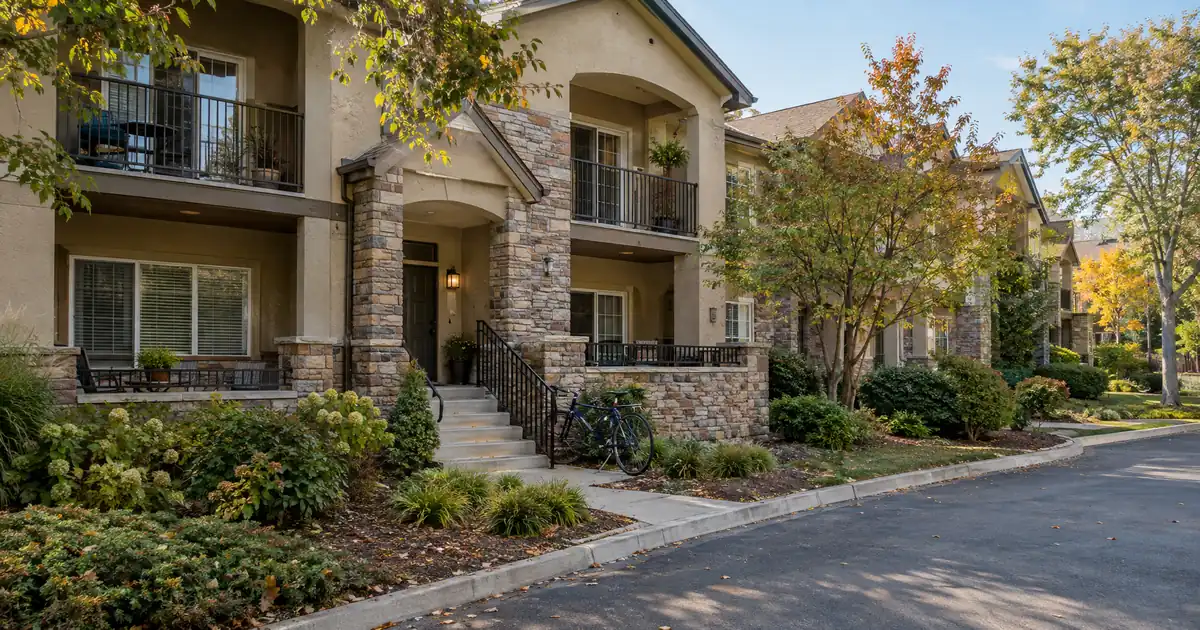
A condotel is a condo unit in a building run like a hotel. Think front desk, in-house rental program, and housekeeping. You own the unit. The building behaves like a resort. That mix is why this loan type gets its own set of rules.
Short-Term Rental Calculator
Run the STR numbers in your market
Rate source: Freddie Mac 30-yr average via FRED® — Federal Reserve Bank of St. Louis · effective Oct 15, 2026
Prefilled with starting assumptions — enter your nightly rate, occupancy, taxes, and insurance for a more accurate picture.
Short-term rental income is documented with a 12-month history or a market data report. Program parameters update from Lendmire’s centralized guideline source.
As of Oct 15, 2026 · General Freddie Mac market benchmark, not a Lendmire loan offer. Nightly rate, occupancy, taxes, and insurance are editable estimates. Qualifying income for short-term rentals varies by program — some use appraisal market rent, others use documented STR history or projections — and is confirmed in underwriting. Not a Loan Estimate, approval, or commitment to lend. Program availability and eligibility are subject to lender guidelines, credit approval, property review, and underwriting.
Why Is a Condotel Financed Differently?
A condotel sits outside the conventional mortgage system because the building operates like a hotel. Agency lenders exclude it. DSCR loans are not agency products, so a select group of non-agency lenders in the network write their own condotel rules.
Fannie Mae’s Selling Guide lists projects that operate as hotels or motels as ineligible. Its criteria include primarily transient use, hotel-type services, and management by a company that also facilitates short-term rentals. Its Condo Status Finder says the same in plainer terms: projects that manage daily or short-term rentals cannot be financed, even when units are individually owned.
That is the end of the agency story. Those rules do not govern a DSCR loan. They simply explain why you will not get a conventional loan here.
Here is how three condo types differ:
| Factor | Standard condo | STR-friendly condo | Condotel |
|---|---|---|---|
| Building operation | Residential | Residential | Hotel-style |
| Front desk / services | Rare | Rare | Common |
| Rental program | None | None | Often in-house |
| Lender pool | Widest | Narrower | Narrowest |
Does Being Out-of-State Change Anything?
No, not for eligibility. A DSCR loan is a business-purpose loan underwritten mainly to the property’s income, so your home state does not set the terms. That is the brokerage’s own read of how these files work. Distance changes the logistics.
Here is where remote ownership actually bites:
- Management. You cannot flip a key or fix a leak from three states away. A condotel’s hands-off operation can help here. The trade-off is revenue splits and fees.
- Local rules. Short-term rental rules can vary by city, county, HOA, and property type, so confirm local rules before relying on projected rental income.
- Closing from a distance. Remote notaries and powers of attorney are common tools. Ask the title company what it accepts.
- Entity. Many investors hold title in an LLC, subject to lender program eligibility.
Notice what is missing: a penalty for living elsewhere. The lender cares about the building, the income, and your file.
What Are the Three Gates?
Three separate parties can each say no, and passing one does not override the others. The building, the local jurisdiction, and the lender all have a vote.
| Gate | What it controls | What to request |
|---|---|---|
| Building / HOA | Whether short-term rental is allowed and how | Governing documents, rental program terms |
| City or county | Permits and licensing | Written confirmation from the local office |
| Lender | Project eligibility and income method | Condotel guidelines in writing |
A city permit does not beat a building ban. A friendly building does not beat a lender that excludes condotels. Check all three before you pay for an appraisal.
How Does a Lender Review the Building?
The lender reviews the whole project, not just your unit. DSCR skips your personal income tests. It does not skip the building. A weak project can sink a strong borrower.
Across our wholesale network, condotel files tend to draw the same project-level questions. Expect questions about:
- HOA litigation and delinquent dues
- Master insurance coverage
- Critical repairs and special assessments
- The share of units in rental programs
Not every non-warrantable condo is a condotel. Many lenders that accept a condo with high investor concentration still refuse condotels. Confirm in writing that the lender takes condotels before ordering anything.
A self-managed Airbnb condo is also not a condotel. If the building has no front desk, no hotel program, and no mandatory rental pool, it may just be a standard or non-warrantable condo with its own overlays.
How Is Condotel Income Counted?
Lenders count either documented history or a projection, depending on the program. DSCR divides rent by the full monthly housing obligation: principal, interest, taxes, insurance, and HOA dues. That obligation is called PITIA. Higher dues lower the ratio directly.
For short-term rentals, most programs in the network expect about 12 months of hosting history. Some select lenders accept market projections on a new unit. Ask which method applies before you write an offer.
A few distinctions matter in a condotel:
- Gross versus owner share. If a rental program takes a cut, the lender may count what you keep, not what guests pay.
- Appraisal rent schedules. Appraisers use Form 1007 for single-family rent and Form 1025 for 2-4 units. These estimate traditional long-term rent and often land below true short-term income. Lenders may lean on the 1007, a data-service projection, or both, and the outcome depends on the appraisal.
- Appraisal scope. The appraiser values the real estate, not the business income or the furnishings.
On a modeled basis, picture a unit whose income comfortably covers the full obligation, clearing roughly 1.2x. Now add a special assessment that lifts HOA dues. Coverage slides toward 1.0x without the rent changing. That is why dues deserve as much attention as rent.
Does a Mandatory Rental Program Break the Deal?
It can. Some buildings require owners to join an in-house rental pool. Some programs exclude mandatory pooling entirely, while others treat optional pooling differently. The same unit can land on either side of the line depending on that one clause.
A mandatory pool also collides with the “Airbnb” plan. If the building controls pricing, bookings, and owner-use limits, you are not running a self-managed Airbnb. You are an owner in a hotel program. That may be fine for a remote investor, but price the revenue split into the ratio.
Other things that narrow or end eligibility:
- Timeshare or fractional ownership structures
- Units without kitchens
- Motel conversions
- Buildings in financial or insurance distress
What Does the Loan Itself Look Like?
Loan terms on a condotel are typically the short-term rental terms, with condotel-specific tightening from the lender. Treat these as typical ranges from select wholesale-network guidelines, never guarantees.
- Purchase: up to 75% LTV on the strongest files, which is the ceiling for short-term rental purchases.
- Refinance and cash-out: around 70% LTV on short-term rental collateral. Cash-out is case by case, and seasoning varies.
- Credit: 640 minimum on short-term rental files, with stronger scores opening better terms.
- Coverage: a 1.00 floor on both purchase and refinance for select programs. Select lenders in the network also review coverage below 1.00, with leverage and terms adjusted.
- Loan size: up to $3,000,000 on standard programs.
- Reserves: vary by lender, leverage, and loan size, commonly around 6 months of PITIA.
Condotels narrow the lender pool, and lenders typically price and leverage them more conservatively than a standard condo or house. Qualification is subject to credit approval, property review, and lender guidelines. For the full picture of how these loans are built, see the complete DSCR loans guide.
Passing the Ratio Is Not Positive Cash Flow
Here is the catch most new investors miss. DSCR compares rent to PITIA only. Repairs, vacancy, management fees, utilities, furnishings, and capital costs sit outside the calculation.
A condotel unit can clear 1.00 and still lose money after the operator’s share and the building’s fees. Investor discussions of condotels are often skeptical on this point. There is a real upside, though: condotel buildings are typically zoned and permitted for short-term rental, which lowers ban risk compared with an ordinary residential condo.
Honestly, it is a toss-up for many remote buyers. The regulatory comfort and hands-off operation are real. So are the fees. Run the numbers on what you keep, not what guests pay.
Common Misconceptions
“Any Airbnb condo is a condotel.” No. The lender classifies the building, and many Airbnb condos are plain condos.
“A conventional loan works if the building allows rentals.” Not when the building manages short-term rentals or operates like a hotel.
“DSCR ignores the building.” It ignores your personal income tests. The project review still applies.
“The 1007 will capture my Airbnb income.” It estimates long-term rent and often lands well below short-term income.
“Out-of-state is a red flag.” It is a logistics question, not an eligibility one.
DSCR vs. conventional financing
There are two common ways to finance an investment property, and they qualify you differently — here’s how investors weigh them.
Why investors choose it
- Qualifies on the property’s rental income — no personal tax returns, W-2s, or pay stubs needed to document income.
- No personal debt-to-income ceiling to clear, so existing mortgages and obligations don’t cap your borrowing the same way.
- Can be closed in an LLC, keeping the property inside a business entity.
- Built for scaling — not held to the limit on number of financed properties that conventional financing applies.
- Underwriting centers on the deal: generally qualifies when the rent covers the payment, a 1.00x coverage ratio being a common baseline (confirmed in underwriting).
- Designed specifically for investment property, including long-term and, where the program allows, short-term rentals.
Where it’s strong
- Often the lowest ongoing financing cost for a buyer who fully qualifies on personal income — a fit for a first property or a cost-first purchase.
Trade-offs for investors
- Requires full personal income documentation and must fit within a debt-to-income limit — salary, existing debts, and other mortgages all count.
- Typically held in your personal name rather than a business entity.
- Caps how many financed properties you can carry, which can become a ceiling as a portfolio grows.
- Evaluates you as a borrower as much as the property, which usually means more paperwork.
How investors usually choose: a first or single property often optimizes for the lowest financing cost; portfolio builders often optimize for leverage, vesting in an LLC, and scaling past conventional caps. The right answer depends on your goals, the property, and current guidelines — both paths run through select lenders in Lendmire’s wholesale network, with eligibility and terms confirmed in underwriting.
Alternatives If the Condotel Does Not Work
| Option | Management | Lender pool | Ban risk |
|---|---|---|---|
| Condotel | Hotel-style | Narrow | Lower |
| STR-friendly condo | Self or hired | Wider | Depends on HOA |
| Standalone house | Self or hired | Widest | Depends on city |
If a lender declines the condotel, a condo in a building that allows self-managed rentals or a standalone property may fit the same strategy. Lendmire’s piece Suburban vs Resort Airbnb DSCR Loan for an Out-of-State Buyer walks through that tradeoff.
Your Pre-Application Checklist
Ask these before you spend money on an appraisal:
1. Does the lender accept condotels in writing, not just non-warrantable condos?
2. Is the rental program mandatory or optional?
3. What income method applies: history, operator statements, or projection?
4. What do the HOA budget, master insurance, and litigation disclosures show?
5. Does the local jurisdiction allow your use?
6. What are the current dues, and any pending assessments?
7. Can you show enough reserves and a score that fits the program?
If you are buying or refinancing a rental property and want to see how the numbers work, Lendmire can help you compare DSCR loan options based on the property income, credit profile, leverage, and investor goals. Reach the team at 828-256-2183 or request a quote.
Key Terms Defined
DSCR: the debt service coverage ratio, which divides a property’s rent by its full monthly housing obligation.
PITIA: principal, interest, taxes, insurance, and association dues, the full monthly payment the ratio uses.
Condotel: a condo unit in a building run with hotel-style operations.
Non-warrantable condo: a condo that falls outside standard agency rules, often because of investor concentration or building issues.
Rental pool: a building program that collects owners’ units into a shared rental operation and splits the revenue.
Seasoning: the waiting period a lender wants between a purchase and a refinance.
Frequently Asked Questions
Can I use an LLC to buy an out-of-state condotel?
Often yes, subject to lender program eligibility. Business-purpose DSCR loans commonly allow LLC vesting, though the lender may ask for a personal guarantee. Confirm the entity rules with the lender before you form the LLC.
Do I need hosting experience for a condotel?
Most short-term rental programs expect about 12 months of host or landlord experience. Some select lenders accept a projection when the unit has no operating history. Expect leverage and terms to adjust when history is thin.
Can I get cash out of a condotel I already own?
Sometimes. Cash-out on short-term rental collateral typically tops out around 70% LTV, and seasoning varies by program. Condotel cash-out is reviewed case by case.
Will a larger down payment fix a weak ratio?
It helps, since less borrowed lowers the monthly obligation and can lift coverage. It does not erase leverage caps, credit floors, reserve rules, or property eligibility. The strongest files clear both tests: enough equity and enough rental coverage.
What if the building has a high number of Airbnb units?
That is not automatically a problem in a condotel, since the building is designed for it. It matters more for a standard condo, where high investor concentration can trigger non-warrantable overlays. The lender’s project review decides.
About Lendmire
As a non-QM mortgage broker (NMLS# 2371349), Lendmire facilitates DSCR investor loans across 41 markets, including Washington, D.C. DSCR eligibility is generally reviewed around property-level rental income instead of personal income documentation, subject to lender guidelines, serving LLC-structured portfolios and self-employed borrowers who don’t fit conventional boxes. A two-time Scotsman Guide Top Mortgage Workplace (2025, 2026).
Get Started
Ready to find the right loan for you?
In about 30 seconds you can review financing options available for your investment property. No commitment required.
Informational only. Not a Loan Estimate, approval, or commitment to lend. Program availability and eligibility are subject to lender guidelines, credit approval, property review, and underwriting.
References
1. Fannie Mae Selling Guide B4-2.1-03, Ineligible Projects
2. Fannie Mae Condo Status Finder
This article is part of Lendmire’s short-term rental loan program — full qualification details, guidelines, and scenarios live on the program page.
Related reading: Can a Private-Bank Luxury Rental Cash Out Into a Super Jumbo DSCR Loan? · How a Luxury Rental DSCR Loan Works in Dallas · How an Airbnb Host Qualifies for a DSCR Loan With Declining Deposits
Brandon Miller
Founder & CEO, Mortgage Loan Originator, Lendmire LLC
- Mortgage Loan Originator · NMLS# 1129696 · Verify on NMLS Consumer Access
- North Carolina Real Estate Broker · License# 343312 · Verify on NCREC
- North Carolina Insurance Producer · License# 19053198 · Property, Casualty, Life, Health · Verify on NAIC SBS
- Lendmire LLC · Firm NMLS# 2371349 · Verify firm licensure
Important disclosures. Lendmire (NMLS# 2371349) is a licensed mortgage brokerage. Lendmire is not a direct lender, depository institution, or financial advisor. All loan inquiries are subject to lender underwriting; this article does not constitute a commitment to lend. Rates, terms, and program guidelines are subject to change without notice and vary by borrower profile, property type, and state. Information in this article is general in nature and is not financial, legal, or tax advice. Equal Housing Opportunity. NMLS Consumer Access: nmlsconsumeraccess.org.