
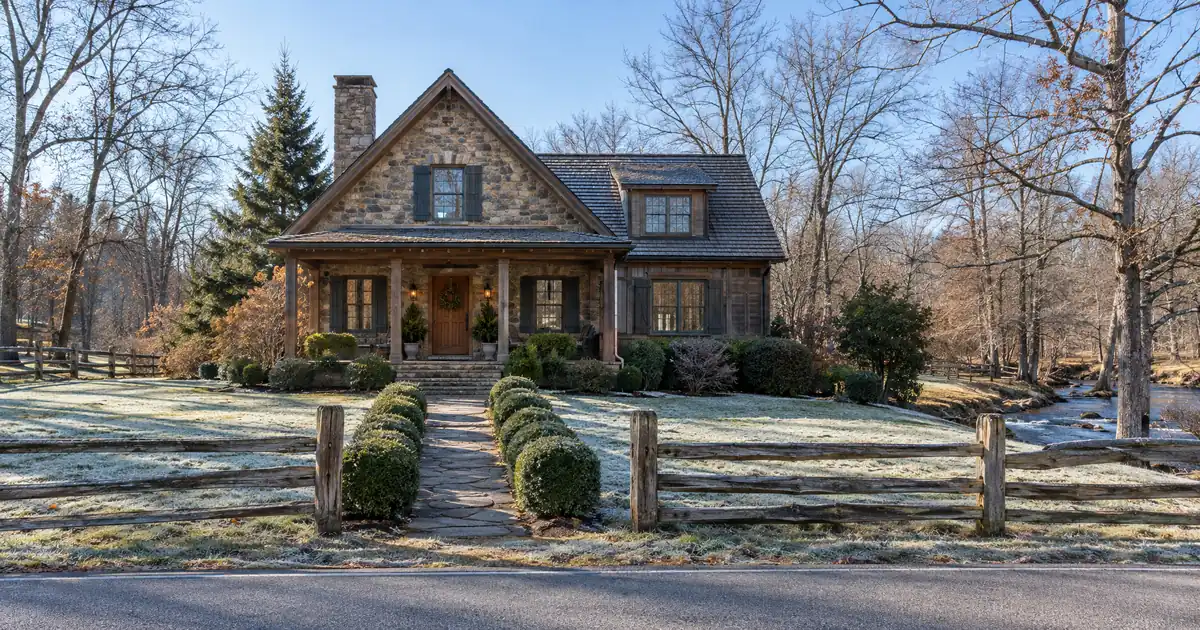
The Quick Read: Start with how you will use the cabin, then check the property itself (acreage, structure type and rural flags), and only then compare products, because a DSCR (debt service coverage ratio) loan tests whether the property’s rent covers the payment while a second-home or conventional loan tests you as a borrower, and the property often decides the file first.
- A cabin run as a rental business usually points to a DSCR loan, which qualifies primarily on property-level rental income covering the payment, subject to lender guidelines.
- Short-term rental files typically run up to 75% LTV on a purchase and around 70% on a refinance or cash-out, with a 640+ credit score and about 12 months of hosting history expected.
- Log homes, manufactured homes and barndominiums are not offered through these DSCR programs, so structure type can end the conversation early.
- Acreage and rural flags change leverage and eligibility more than the loan label does.
- Clearing 1.00 coverage does not mean the cabin makes money, because repairs, vacancy, management and utilities sit outside the ratio.
Which Loan Products Apply to a Cabin Rented by the Night?
Four product families can touch a cabin: DSCR loans, second-home loans, conventional investment loans and bank-statement loans. Which one fits depends on whether the cabin is a business or a getaway. The property then has to pass that lender’s screen on top of that.
Short-Term Rental Calculator
Run the STR numbers in your market
Rate source: Freddie Mac 30-yr average via FRED® — Federal Reserve Bank of St. Louis · effective Oct 15, 2026
Prefilled with starting assumptions — enter your nightly rate, occupancy, taxes, and insurance for a more accurate picture.
Short-term rental income is documented with a 12-month history or a market data report. Program parameters update from Lendmire’s centralized guideline source.
As of Oct 15, 2026 · General Freddie Mac market benchmark, not a Lendmire loan offer. Nightly rate, occupancy, taxes, and insurance are editable estimates. Qualifying income for short-term rentals varies by program — some use appraisal market rent, others use documented STR history or projections — and is confirmed in underwriting. Not a Loan Estimate, approval, or commitment to lend. Program availability and eligibility are subject to lender guidelines, credit approval, property review, and underwriting.
DSCR loans are designed for non-owner-occupied investment properties. Because they are business-purpose investor loans, they are reviewed differently from a standard owner-occupied mortgage. That difference is why the income, not your paycheck, drives the file.
| Product | is reviewed around | Fit for a nightly-rental cabin |
|---|---|---|
| DSCR loan | Property rental income vs. payment | Strong, when the cabin is run as a business |
| Second-home loan | Your income, debts, traditional personal-income documentation | Weak, built for mostly personal use |
| Conventional investment loan | Your global income and debt load | Possible, but STR income treatment varies |
| Bank-statement loan | Deposits in your own accounts | Works for self-employed owners, with property limits |
A second-home loan generally limits how much you can rent the place and often rules out a property manager. That makes it an awkward match for a cabin booked every weekend. It suits a cabin you mostly use yourself.
A conventional investment loan looks at your whole financial picture. Investors with several properties or complicated income often hit a wall there. DSCR loans were built to avoid that wall, since the file rests on the property rather than on your traditional personal-income documentation. Qualification still runs through lender guidelines, credit, reserves and property review.
Bank-statement loans are a different lane. They test your deposits instead of the cabin’s rent, and rural and acreage limits still apply in that lane. Strong deposits do not override a property the lender will not take.
Hard-money or bridge loans are a fifth option. They fit a cabin that needs work before it can host guests, and investors usually refinance out of them once the property is ready.
Step 1: How Will You Use the Cabin?
Use decides the lane before anything else. A cabin you mostly use yourself and rent now and then points toward a second-home or bank-statement path. A cabin you hold to rent, with guests most of the year, points toward DSCR.
The gray zone is a cabin with heavy personal use. Putting it in an LLC does not turn it into a business-purpose loan. Lenders look at how the property is actually used, so an honest answer here saves a failed file later.
Step 2: How Does Underwriting Screen the Property?
The screen comes before the income math. Three things get checked first: acreage, structure type and whether short-term renting is legal at that address.
Structure type. Log homes, manufactured homes (single- and double-wide) and barndominiums are not offered through the DSCR programs in Lendmire’s wholesale network. A cabin built from logs can look perfect on paper and still be out. Frame-built cabins, including A-frames, are a different matter and are reviewed on their own facts.
Acreage and rural flags. Programs differ on how much land they accept and on what counts as rural. Some lenders use a metro-area test, and others make a judgment about distance to a town. On excess acreage, some programs carve the extra land out of the appraised value and others decline the property. Lendmire’s piece How to Qualify a Rural Cabin for a Short-Term Rental DSCR Loan goes deeper on that screen.
Legality. Short-term rental rules can vary by city, county, HOA, and property type, so investors should confirm local rules before relying on projected rental income. Permits, HOA approval and deed restrictions all need to be settled before guest revenue counts for much.
Across the network, rural properties more often land at lower leverage. Some lenders cut leverage, adjust pricing or decline when an appraisal comes back flagged rural. So ask early whether the offer changes if the appraisal says rural.
Step 3: How Is the Income Documented?
Income evidence depends on the transaction. On a purchase, the lender usually looks at an appraiser’s short-term rental analysis or a third-party projection. On a refinance, it usually wants about 12 months of booking-platform or manager statements. Lenders often discount projections before they enter the ratio.
This is where rural cabins get stuck. Thin comparable data makes a projection weak, and some lenders reject projections built on too few similar listings. A cabin with no hosting history and no nearby comps is a harder file than an established listing in a busy area.
The appraisal form matters too. The standard rent schedule, Form 1007, documents monthly market rent, not nightly or business income. McKissock, an appraiser-education provider, says the form captures monthly rent, that short-term use does not change appraised value, and that deciding what income counts belongs to the lender. Fannie Mae’s appraiser update adds that the form is required only when rental income is used to qualify on a one-unit investment property, and that the agency’s own guide is silent on whether short-term rental income counts as rental income.
An appraisal vendor, Class Valuation, goes further and argues the form cannot support short-term rental income at all. Treat that as an industry viewpoint. The practical point is the same either way: the income view the program uses decides the result.
Hosting history also counts. About 12 months of experience is the usual expectation on short-term rental files. Lendmire’s article How Short-Term Rental DSCR Experience Rules Work for Rural Cabin Loans covers what to do if you are new to hosting.
Step 4: What Does the Coverage Test Actually Measure?
The coverage test divides rent used for lender review by the full monthly obligation: principal, interest, taxes, insurance and any HOA dues, together known as PITIA. Clear the program’s floor and the income side of the file works. Floors differ by program, which the complete DSCR loans guide walks through in detail.
For short-term rental files in the network, purchases start at 1.00 coverage, and refinances start at 1.00 as well. Lenders set the floor program by program, so treat it as a starting point and not a rule for every lender. A separate select-lender path takes coverage below 1.00, with leverage and terms adjusted. Stronger ratios generally open better pricing and leverage.
Here is what the ratio leaves out: cleaning, management, utilities, furnishing, repairs and vacancy. A cabin can clear 1.00 and still lose money after those costs. Run your own net cash flow before you rely on the ratio.
A bigger down payment lowers the payment and can lift coverage. It does not erase leverage caps, credit floors, reserve rules or property eligibility. The strongest files clear both tests: enough equity and enough rental coverage.
What Structures and Variations Exist?
Most short-term rental files in the network follow the same frame, with variation inside it.
- Purchase: up to 75% LTV on the strongest files, which means 25% down at that ceiling.
- Refinance: around 70% LTV on short-term rental collateral.
- Cash-out refinance: 70% LTV on short-term rental collateral, while standard long-term rentals reach 75%. Lenders commonly expect about six months of seasoning.
- Credit: a 640 minimum for short-term rentals, with stronger tiers above that.
- Loan size: up to $3,000,000 on standard programs. Above $2,500,000 the network generally holds to 30-year fixed structures.
- Reserves: commonly around six months of PITIA, though they vary by lender, leverage, loan size and transaction type.
- Terms: the 30-year fixed is the spine. Select lenders add 40-year terms and interest-only periods, and adjustable structures exist for investors who want them.
These are typical ranges from select lenders in the network, not promises. Every file is underwritten individually, and programs change.
Where Does the General Rule Break?
The rule says a cabin run as a rental business fits DSCR. These edge cases bend it.
Rural designation. A cabin that looks fine on income can lose leverage or eligibility when the appraisal flags it rural. Definitions vary, so one lender’s rural is another’s routine.
Thin comps. Rural markets may lack the monthly rental comps the appraisal needs. Short-term data can also be thin, and some lenders will not accept it.
Long-term view versus nightly view. A cabin can clear the ratio on nightly income and miss it on long-term rent. Which view the program uses decides the outcome.
Seasonality. Averaging across 12 months means a slow winter counts against a strong summer. Mountain and lake cabins feel this most.
Excess acreage. Land beyond the program’s limit may be carved out of value or may make the property ineligible.
Super-jumbo sizes. Larger loans add overlays, and rural property can be excluded at the top end.
Part-time personal use. A cabin the owner mostly uses personally belongs in the second-home or bank-statement lane, whatever title it holds.
Two Cabins, Same Price, Different Paths
Picture two cabins listed at the same price. These are modeled scenarios, not market data.
The first is a frame-built cabin near a busy recreation area, with an active listing and more than a year of booking history. Its statements support a strong ratio, and the lot is modest. On a purchase it could be reviewed at up to 75% LTV, and on a refinance around 70%, subject to credit, reserves and property review. This is the file the DSCR lane was built for. Final terms depend on lender guidelines, property type, leverage, and the borrower’s complete credit picture.
The second is a remote cabin on a large parcel with no hosting history and few comparable listings. The projection is thin, the appraisal may flag it rural, and the excess land may be carved out. The coverage ratio might look close to 1.00 on a projection, but lenders may discount that projection or ignore it. That file may need a larger down payment, a different lender in the network or a different product. If the cabin is mostly for personal use, a second-home or bank-statement path may be the honest answer.
The loan label did not decide either file. The property did.
What Should You Ask Any Lender Before You Apply?
Rural rules vary by lender, so questions beat assumptions. Ask these:
1. Which income view does the program use: nightly income, long-term rent or a blend?
2. What is the acreage limit, and what happens to the excess?
3. Is the structure type eligible?
4. How does the program define rural, and does the quote change if the appraisal says rural?
5. How much hosting history does a refinance need?
6. Is a projection accepted on a purchase, and how is it discounted?
7. Do reserves change with the loan size?
A broker who sees many lenders can usually tell you which programs answer these questions in your favor.
Which Product Fits Which Investor?
- You rent the cabin most of the year and want it to stand on its own income: DSCR.
- You mostly use the cabin yourself: a second-home or bank-statement path.
- You have strong, documentable personal income and one or two properties: a conventional investment loan may work.
- You are self-employed with big deposits and a cabin that fits rural limits: a bank-statement loan is worth comparing.
- The cabin needs work before guests can book: a bridge or hard-money loan, then a refinance.
Tax treatment can depend on how the funds are used and how the property is held; investors should keep clear records and speak with a qualified tax professional before relying on any deduction.
Key Terms Defined
DSCR: the debt service coverage ratio, which compares a property’s rent to its monthly obligation.
PITIA: principal, interest, taxes, insurance and association dues, the full monthly cost used in the ratio.
LTV: loan-to-value, the loan amount as a percentage of the property’s value.
Seasoning: the waiting period a lender wants between owning a property and refinancing it.
Form 1007: the appraisal rent schedule that documents monthly market rent for a single-family property.
Rural: a label with no single definition, set differently by each lender’s geography and distance rules.
Frequently Asked Questions
Can a second-home loan finance a cabin I rent on Airbnb?
Only if the rental use stays modest. Second-home loans generally limit how much you can rent and often bar a property manager. A cabin booked as a business usually belongs in the DSCR lane instead.
Will the appraisal capture my nightly rental income?
Not directly. The standard rent schedule documents monthly market rent, and the lender decides what income counts. Platform or manager statements usually carry the income case on a refinance.
Do rural cabins get lower leverage?
Often, yes. Rural properties more often land at lower leverage, and some lenders adjust terms or decline when the appraisal flags the property rural. Short-term rental purchases top out at 75% LTV on the strongest files, and rural files frequently sit below that.
Can I use a DSCR loan on a log cabin?
No. Log homes, manufactured homes and barndominiums are not offered through the DSCR programs in Lendmire’s network. Frame-built cabins are reviewed on their own facts.
Does clearing 1.00 coverage mean the cabin makes money?
No. The ratio compares rent to the monthly payment only. Cleaning, management, utilities, repairs and vacancy sit outside it, so run your own net cash flow.
Next Step
If you are buying or refinancing a rental property and want to see how the numbers work, Lendmire, a mortgage broker arranging DSCR financing through select lenders across 41 markets including Washington, D.C., can help you compare DSCR loan options based on the property income, credit profile, leverage, and investor goals. Programs are subject to lender guidelines and credit approval. This is not a commitment to lend. Any calculator on the site gives an illustrative estimate only.
The cabins that finance cleanly tend to be the ones that look like businesses on paper: a legal listing, a documented booking history and a structure and parcel that fit the program.
About Lendmire
Lendmire — NMLS# 2371349 — is a DSCR and non-QM mortgage brokerage with investor loan programs in 41 markets, including Washington, D.C. DSCR eligibility is commonly reviewed by the lender around property-level rent rather than personal income documentation, subject to lender guidelines, and the brokerage helps arrange financing for LLC-owned portfolios beyond conventional financed-property limits. Recognized by Scotsman Guide as a Top Mortgage Workplace in 2025 and 2026.
Get Started
Ready to find the right loan for you?
In about 30 seconds you can review financing options available for your investment property. No commitment required.
Informational only. Not a Loan Estimate, approval, or commitment to lend. Program availability and eligibility are subject to lender guidelines, credit approval, property review, and underwriting.
References
1. McKissock Learning – Form 1007 and short-term rentals
2. Fannie Mae – Appraiser Update
3. Class Valuation – Form 1007 and short-term rentals
This article is part of Lendmire’s short-term rental loan program — full qualification details, guidelines, and scenarios live on the program page.
Related reading: How a Luxury Rental DSCR Loan Works in Whitefish · How a Lake Tahoe Luxury Rental DSCR Loan Works · How Much You Can Borrow for a No-Ratio DSCR Loan on Short-Term Rental Properties
Brandon Miller
Founder & CEO, Mortgage Loan Originator, Lendmire LLC
- Mortgage Loan Originator · NMLS# 1129696 · Verify on NMLS Consumer Access
- North Carolina Real Estate Broker · License# 343312 · Verify on NCREC
- North Carolina Insurance Producer · License# 19053198 · Property, Casualty, Life, Health · Verify on NAIC SBS
- Lendmire LLC · Firm NMLS# 2371349 · Verify firm licensure
Compliance and disclosures. Lendmire (NMLS# 2371349) is a licensed mortgage broker and is not a direct lender, depository institution, financial advisor, or tax professional. Content in this article is general market analysis and educational information — not financial, legal, or tax advice for any specific situation. Lendmire does not guarantee loan approval; every transaction is subject to underwriting by the funding lender. Mortgage pricing and loan program guidelines are subject to change at any time without notice and vary by borrower characteristics, property type, and state regulations. Lendmire complies with Equal Housing Opportunity. Licensure verification: NMLS Consumer Access.