
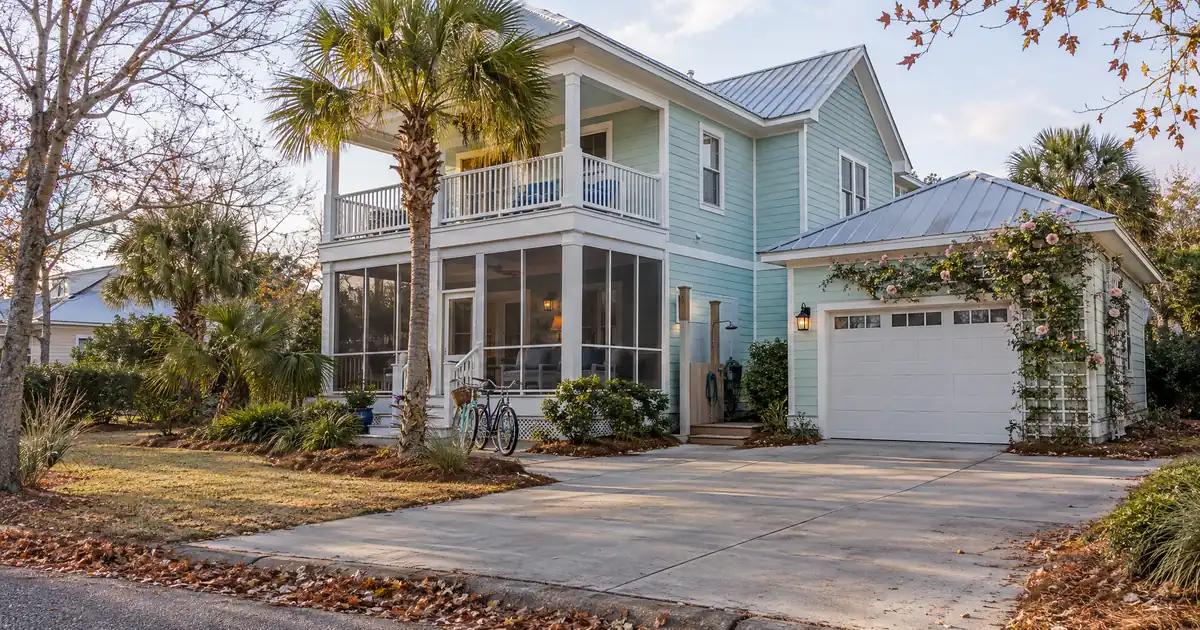
The Quick Read: The drawbacks are real, but most are manageable if the host plans ahead. A bank statement loan reads only the deposits that land in the host’s own accounts, so the expense factor, deposit history and personal debts shape the result more than Airbnb’s booking totals ever will. The loan also cannot credit income the new home has not yet earned.
- The lender averages 12 months of statements, removes transfers and one-time deposits, then applies an expense factor that varies by lender.
- Messy, mixed or seasonal deposits lower the qualifying income, even when the host’s true earnings are strong.
- Personal debt-to-income stays in the file, so each financed property makes the next loan harder.
- Occupancy decides the product: a home the host will live in fits bank statements, while a pure rental usually fits DSCR better.
- Pricing, down payment and reserves can run heavier than conventional, so the conventional route deserves a look first.
A host’s tax return often shows far less income than the host really earns, because of depreciation, supplies, cleaning and platform fees. That gap is why bank statement programs exist. It is also where most of the drawbacks come from.
What your deposits qualify you for.
Alt-doc programs read 12 months of business or personal bank deposits instead of tax returns. Enter your average monthly deposits and see the income a lender would credit you.
The expense factor is set by the lender from your business type and profit-and-loss statement; it is not a number you choose. This widget quotes no rate and no payment.
Program parameters shown update from Lendmire’s centralized guideline source.
Estimate
Illustrative estimate only — not a quote, Loan Estimate, approval, or commitment to lend. Deposit average, expense factor, and housing ratio are editable assumptions; the expense factor a lender applies is set from your business type and documentation. No interest rate or monthly payment is quoted here. Purchase capacity is a simplified illustration and does not account for taxes, insurance, HOA dues, or other debts. Alt-doc income documentation is available on consumer mortgages in the states where Lendmire is licensed for consumer lending; actual terms vary by lender, borrower, and property.
What a Bank Statement Loan Actually Reads for a Host
A bank statement loan measures income from deposits rather than traditional personal-income documentation. On the programs Lendmire places files with, the borrower provides 12 months of business or personal statements. The lender averages the eligible deposits, applies an expense factor, and treats the result as qualifying income. The borrower is reviewed on documented income under the applicable program, subject to lender guidelines.
Scotsman Guide describes the same basic setup for self-employed borrowers, with statement windows that commonly run 12 to 24 months and a standard expense factor as the default example. Across Lendmire’s wholesale network, the window and the factor both depend on the individual lender program.
For a host, the flow has three steps:
1. Payouts become deposits. Airbnb pays hosts net of its fees. The underwriter ties those payouts to deposits that actually land in an account the borrower owns. Gross bookings do not count. Only deposits do.
2. Deposits get screened. Transfers between the host’s own accounts, borrowed money, one-time windfalls and undocumented cash come out.
3. The average meets the expense factor. Eligible deposits are averaged over the months reviewed, then reduced by the factor. What remains is the income the lender tests against the new housing payment and the host’s other debts.
Non-QM changes how income is measured, not whether it is measured. The lender still has to confirm the borrower can repay, a point the CFPB’s small-entity compliance guide makes about verifying debts with reasonably reliable third-party records. Underwriting here is full underwriting. It just uses a different yardstick.
Key Terms Defined
Expense factor: the percentage of business deposits a lender treats as operating cost, leaving the remainder as qualifying income.
Deposit averaging: adding up eligible deposits across the statement window and dividing by the number of months.
Non-QM: a mortgage that falls outside the standard Qualified Mortgage box, which is why lenders can use alternative income documentation.
DTI (debt-to-income): the share of qualifying income that goes to the new housing payment plus the borrower’s other monthly debts.
Reserves: liquid funds left after closing, commonly around six months of the housing payment on the programs Lendmire sees.
Asset depletion: an alternative that qualifies the borrower from liquid assets instead of deposits.
Drawback One: The Expense Factor Takes a Bite
The expense factor is the drawback that surprises hosts most. A lender applying a flat factor to business deposits is treating a large share of every payout as cost, whether or not the host’s real costs are that high. Scotsman Guide cites 50% as an example default, but that is a trade-press illustration, not a rule. Each lender sets its own number, and the factor can move with the type of business and how it operates.
Here is how it shows up in a host’s file. Picture two hosts with identical deposits. One runs a lean, self-managed unit with low costs. The other pays a co-host and a cleaning crew. A flat factor treats them the same unless the program allows a different approach. Some programs accept a profit-and-loss statement prepared by a third-party tax professional, and that can support a lower factor. It usually supports the statements rather than replacing them.
Nobody can promise a specific factor before a lender reviews the file. Across the network, the range is wide enough that the same deposits can produce meaningfully different qualifying income from one program to the next. This is the strongest argument for having a broker compare several programs rather than approaching a single lender.
Drawback Two: Seasonal Deposits Drag the Average
A strong summer and a thin winter average out to something lower than the host’s best months. With a 12-month window, a weak stretch inside it still lowers the result, and the lender cannot ignore the slow months because they happen to be inconvenient.
Say a host on a coastal or ski-town property books most revenue in a few peak months. The average across the full window will understate how comfortably that host carries the property in season. The reverse also holds. A host whose bookings rose sharply in recent months will see the older, weaker months pull the average down.
The practical response is timing. If bookings are climbing, a host may be better off waiting until the weaker months roll out of the window. If bookings are falling, applying sooner can help. Neither choice is free, because waiting carries its own cost.
Drawback Three: Deposit Hygiene and Mixed Accounts
Clean deposits are the single biggest lever a host controls. Overdrafts, returned items, unexplained large deposits and circular transfers all draw questions. Large unexplained cash deposits in particular invite scrutiny about where the money came from.
The mixed-account problem is the classic host trap. When Airbnb payouts, a paycheck from another job, grocery spending and loan payments all share one personal account, the underwriter has to sort out which deposits are hosting income. Transfers between the host’s personal and business accounts can look like income that is not. Each unexplained item costs time and sometimes qualifying income.
A host who runs hosting through an LLC or dedicated business account from the start gives the underwriter a clean story. That structure may be subject to lender program eligibility when the entity is the borrower, but even a sole proprietor benefits from a dedicated account. Start the separation long before applying. A few clean months do not undo a messy year.
Drawback Four: Personal Debt-to-Income Never Leaves
A bank statement loan on a home the host will live in tests the host’s personal DTI. The new housing payment joins the host’s other debts, and each financed property adds to that load. For a host planning to keep buying, this is the structural limit. The loan looks at the borrower, not at what any property earns.
This is where the product stops scaling. A host who finances a home with bank statements and then wants a string of rentals will find each personal-income loan eats the room for the next one. DSCR files test the property’s rent against its own payment instead, which is why most investors who keep buying move to that lane for rentals. For more on the second half of that decision, Lendmire’s piece Bank Statement Loan vs DSCR for an Airbnb Host Buying a Rental walks through it.
Drawback Five: Nothing Counts That Has Not Happened Yet
A bank statement loan looks backward. It credits deposits that already landed, and it says nothing about what the new property will earn. A host who plans to run the new home as a short-term rental cannot count that projected income. A host with a thin hosting history has little to average in the first place.
That makes the product a poor fit for a first-time host. If the point of the purchase is to start hosting, the file has no track record to read. DSCR programs may rely on an appraiser’s rental analysis or a market projection for a rental property, though only some lenders accept projections. That is an investment-property lane, not a home-you-live-in lane, which brings up occupancy.
Occupancy Decides Everything
An owner-occupied purchase is a consumer mortgage, and TRID disclosure rules apply. A bank statement loan on a non-owner-occupied rental, including a short-term rental, is business-purpose and exempt from TRID. Which one applies depends on how the property will actually be used, and occupancy can never be misstated on an application.
The mixed case is the gray zone. A host who plans to live in the home part of the year and rent it the rest has to describe the intended use honestly. Lenders review that intent, and an application that does not match reality creates serious problems later.
Here is how the three common products line up for a host:
| Factor | Bank statement loan | DSCR loan | Conventional |
|---|---|---|---|
| What is qualified | Deposit averages | Property rent vs. payment | Tax-return income |
| Best-fit occupancy | Home the host lives in | Investment property | Home the host lives in |
| Personal DTI | In the test | Generally outside it | In the test |
| Main watch-out | Expense factor, deposit history | Property must cover itself | Write-offs shrink income |
Madsen CPA notes that most short-term rentals report on Schedule E, while Schedule C generally applies when substantial hotel-like services are provided. That matters here only as paperwork context. A host on Schedule C is plainly self-employed, which fits the bank statement profile, while a host on Schedule E has rental income on the return that a lender may also look at.
Cost, Down Payment and Reserves
Non-QM is risk-priced, and lower-documentation loans can carry higher costs, larger down payments or heavier reserve requirements than conventional. Specific pricing is not covered here. The structural points are fair to state, though. Terms depend on the lender’s guidelines, the property type, the leverage, and a full review of the credit profile.
On a primary residence, select lenders in Lendmire’s network go up to 90% LTV on a purchase or rate-and-term refinance, with stronger files earning the top of that range. An asset-depletion alternative, which qualifies the borrower from liquid assets, runs to about 80% LTV on a primary residence. Loan sizes run roughly $125,000 to $3,500,000, and reserves commonly sit around six months of the housing payment. These are typical ranges, subject to lender guidelines, and every file is underwritten individually.
Leverage and reserves are where lower-documentation loans tend to ask more of the borrower. A host who qualifies conventionally will usually find that route cheaper. That is worth ruling out first.
Three Hosts, Three Different Outcomes
The established host with a clean account. Eighteen months of hosting runs through a dedicated business account. Payouts match deposits, there are no overdrafts, and bookings are steady. The expense factor still trims income, but the file reads cleanly. The drawback that bites is the factor itself, and a CPA-prepared P&L may help where the program allows it.
The host with mixed accounts. Real earnings are strong, but payouts, a spouse’s transfers and personal spending share one account. The underwriter spends the file sorting deposits, and some are excluded. The qualifying average comes out lower than the host expected. The fix is separation and a written explanation of large deposits, ideally done before applying.
The new host with thin history. A few months of bookings, mostly in a busy season. The average has little to work with, and the new home’s future income cannot be counted. A bank statement loan is a weak fit here. Waiting to build history, or looking at other documentation routes, may serve better.
Is It Worth It? The Flip Points
A bank statement loan makes sense when the host’s traditional personal-income documents materially understate real earnings, the deposits are clean, and the property is a home the host will live in. It becomes the wrong choice in a few situations:
- The host qualifies conventionally. That route is likely the cheaper one, which is sound practice for any lower-doc product.
- The purchase is a pure rental. DSCR usually fits better because it tests the property, not the person.
- The hosting history is too short to average.
- The deposit trail cannot be cleaned up in time.
Hosts who plan to scale should think about the sequence. Many end up using both products at different moments: bank statements for the home they live in, DSCR for rentals. Lendmire’s piece Is a Bank Statement Loan Risky for an Airbnb Host Buying a Home? covers the risk side of that choice in more depth.
A Pre-Application Checklist
- Route hosting income through one dedicated account well before applying.
- Gather every page of every statement, with no gaps.
- Reconcile platform payout reports to the deposits that landed.
- Write a short explanation for any large or unusual deposit.
- Ask whether a CPA-prepared P&L is accepted and whether it can support a lower expense factor.
- Compare several programs, since the expense factor and deposit rules vary by lender.
- Confirm local short-term rental rules before relying on projected rental income, since they can vary by city, county, HOA, and property type.
For a deeper walk-through of the product family, the complete DSCR loans guide explains where investor-focused programs fit next to alt-doc options.
Frequently Asked Questions
What are the main drawbacks of a bank statement loan for a host?
The expense factor, seasonal deposit swings, deposit hygiene and personal DTI do most of the damage. Pricing, down payment and reserves can also run heavier than conventional. Most of these are manageable with a clean, dedicated account and a lender comparison.
Do Airbnb payouts count as income?
Only the deposits that land in the borrower’s own account count, and only after the lender screens out transfers and one-time items. Airbnb pays net of platform fees, so gross bookings never enter the math. The underwriter ties payout records to what actually deposited.
Can a host with no hosting history use a bank statement loan?
Rarely. The loan averages past deposits and cannot credit income a new property has not yet produced. A host starting fresh generally needs history first, or a different documentation route.
Does it matter whether I live in the home?
Yes, it decides the product. A home the host will live in is a consumer mortgage where bank statements fit naturally. A pure rental usually fits DSCR better, and occupancy can never be misstated on an application.
Can I keep scaling with bank statement loans?
Not easily. Each financed property adds to personal DTI, and the same personal deposits get re-underwritten every time. Hosts who keep buying usually move rentals to DSCR files that test the property instead.
If you are self-employed and want to see how the numbers work, reach the team at 828-256-2183 and Lendmire can help you compare bank statement loan options based on your deposits, the property, credit profile, leverage, and your goals. This is general information, not a commitment to lend, and tax treatment varies, so consult a qualified professional.
About Lendmire
Lendmire (NMLS# 2371349) is a mortgage broker licensed for consumer lending in 16 states. Scotsman Guide named Lendmire a Top Mortgage Workplace in both 2025 and 2026.
Get Started
Ready to find the right loan for you?
In about 30 seconds you can review financing options available for your home or investment property. No commitment required.
Informational only. Not a Loan Estimate, approval, or commitment to lend. Program availability and eligibility are subject to lender guidelines, credit approval, property review, and underwriting.
References
1. Scotsman Guide, “Rev Up the Engine for Non-QM Lending”
2. CFPB ATR/QM Small Entity Compliance Guide
3. Madsen CPA, Schedule E vs C for STRs
This article is part of Lendmire’s bank statement loan program — full qualification details, guidelines, and scenarios live on the program page.
Related reading: How Much Can Founders Borrow With a Bank Statement Loan? · Can a Primary Home on a Bank Statement Loan Run as a Full-Time Airbnb? · Can a Jumbo Bank Statement Loan Work for a Second Home Purchase?
Brandon Miller
Founder & CEO, Mortgage Loan Originator, Lendmire LLC
- Mortgage Loan Originator · NMLS# 1129696 · Verify on NMLS Consumer Access
- North Carolina Real Estate Broker · License# 343312 · Verify on NCREC
- North Carolina Insurance Producer · License# 19053198 · Property, Casualty, Life, Health · Verify on NAIC SBS
- Lendmire LLC · Firm NMLS# 2371349 · Verify firm licensure
Legal disclosures. Lendmire (NMLS# 2371349) is a state-licensed mortgage brokerage that arranges financing through wholesale lender relationships. Lendmire is not a direct lender, depository institution, or registered financial advisor. The discussion above is general informational content about real estate financing — it is not financial, legal, or tax advice, and readers should consult licensed professionals for guidance on their individual circumstances. Loan inquiries are subject to lender underwriting; this article does not represent a commitment to lend. Loan terms, rates, and qualification standards vary by borrower, property, and state, and are subject to change at any time. Equal Housing Opportunity. NMLS Consumer Access: nmlsconsumeraccess.org.