
The Quick Read: Usually, up to a point: a pooled DSCR loan, which tests the total rent of all your doors against their total payment, lets stronger doors carry a few vacant or underperforming ones, provided the pool still clears its coverage floor and the file’s leverage and reserve tests. Vacancy is never forgiven, and a pooled pass is not the same as positive cash flow. The same structure that lets strong doors help weak ones also ties every door and every LLC together.
- A vacant door is generally counted at the appraiser’s market rent, not at zero.
- Coverage is tested on the pool, so one weak door can ride along with strong ones.
- Passing the pooled test does not mean the portfolio cash-flows after repairs, turnover, and management.
- Cross-collateralization means trouble on one door can reach all of them.
How Pooled Coverage Treats a Vacant Door
DSCR stands for debt service coverage ratio. It divides rent by PITIA, which is principal, interest, taxes, insurance, and any association dues. On a single rental, that is one rent over one payment. On a pooled loan, the lender adds up the rent on every door and divides by the combined payment.
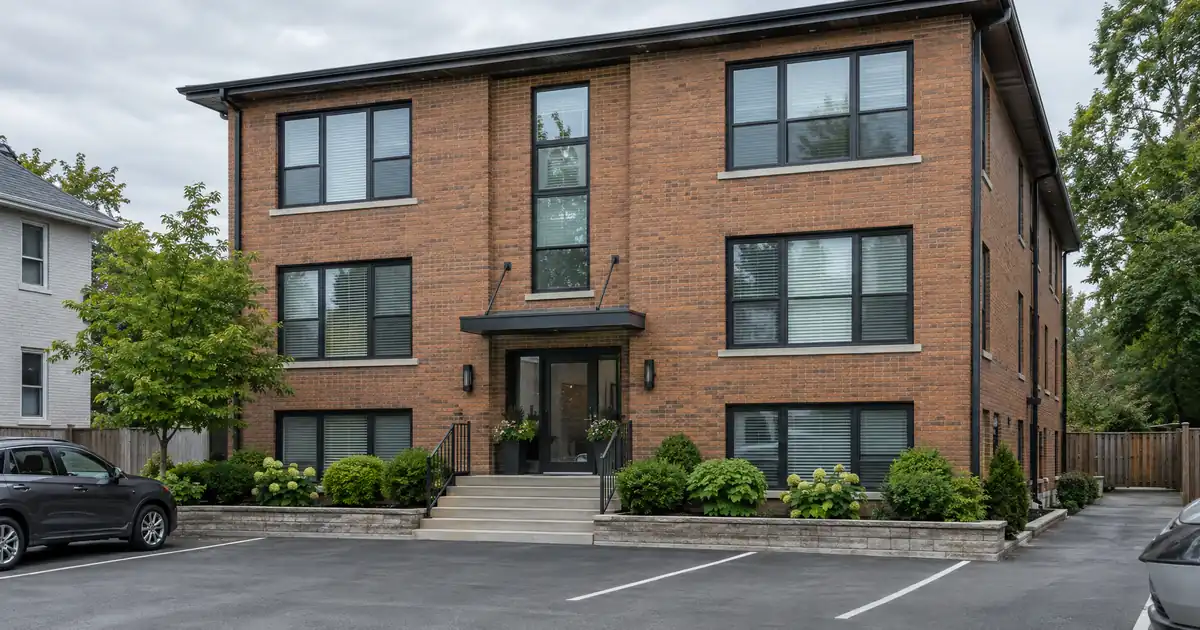
A word on “doors.” In these pools a door is usually a single-family home, a unit in a two-to-four unit building, a condo, or a townhome. Buildings with five or more units are eligible only under the rental portfolio term loan, covered below.
Across the wholesale network where Lendmire places these files, the 30-year portfolio DSCR loan takes 2 to 20 properties under one note, with a 1.00 coverage floor measured on the pool. Loan sizes run roughly $300,000 to $5,000,000, with larger balances reviewed case by case. Leverage goes up to 80% of value on a purchase or rate-and-term refinance. These are program ceilings and floors, not quotes, and every file is subject to lender guidelines.
Here is the part most investors miss. Every door needs a lease or an appraiser-supported market rent. An occupied door usually counts at the lower of the signed lease and the appraiser’s market rent. A vacant door counts at the appraiser’s market rent alone. A vacant door is not a zero.
That means vacancy at the moment of application often barely moves the pooled number. The lender is asking whether the door could rent, not whether it is renting today. A door that cannot show a supportable market rent is a different problem, and the later sections cover it.
How Many Doors in LLCs Absorb Vacancies Before the Pool Cracks?
The honest answer comes from cushion and door count. A bigger pool dilutes any single empty door, and a thicker starting cushion buys more room. A stress test is a separate exercise that treats vacant doors as zero, and it shows you where the break point sits.
The table below uses equal-rent doors and treats vacant doors as zero rent. It is an illustrative stress test, not how an underwriter counts, and it is not a quote.
| Pool | Start | 1 door empty | 2 empty | 3 empty |
|---|---|---|---|---|
| 10 doors | 1.25x | 1.13x | 1.00x | 0.88x |
| 10 doors | 1.10x | 0.99x | 0.88x | 0.77x |
| 20 doors | 1.25x | 1.19x | 1.13x | 1.06x |
| 20 doors | 1.10x | 1.05x | 0.99x | 0.94x |
Read it two ways. A 10-door pool that starts at a comfortable cushion tolerates two fully dark doors before reaching break-even coverage. A 10-door pool that starts with a thinner cushion slips under after one. Doubling the doors roughly doubles the number of empty doors the pool can take at the same cushion.
Pooled coverage below the 1.00 floor is a different path from the 30-year portfolio structure. A pooled ratio that slips under the floor after a stress test is a problem to cure, not a tolerated condition. Sub-1.00 coverage is available through select lenders in the network on single-property files, with leverage and terms adjusted, and that is a separate path from this pooled loan.
Rents are rarely equal in real life. If your three weakest doors are also your biggest rents, the table is too kind. Run the stress with your actual rent roll before you submit.
Experience note: across files like these, the pools that hold up are the ones built with a cushion well above the floor. A pool that clears 1.00x by a hair on day one has nothing left for the first bad winter.
Vacancy at Closing vs. Vacancy After Closing
Investors blur these two together, and they are different problems.
| Factor | Vacant at application | Vacant after closing |
|---|---|---|
| Rent counted | Appraiser’s market rent | Actual rent collected |
| Who tests it | Underwriting, once | You, every month |
| Main risk | Unsupported rent opinion | Payment shortfall |
| Buffer | Pooled cushion | Reserves and cash |
At application, the appraisal drives the answer. Each door gets its own appraisal. That appraisal sets the value for the leverage test and the rent for the coverage test. The standard form for single-family rent is a rent schedule, listed as Form 1007 in Fannie Mae’s forms list. A companion form covers two-to-four unit buildings. This is a form-name reference only. DSCR loans are not agency products, and agency rules do not govern them.
After closing, the lender’s math is frozen in the past and your bank account is not. An empty door still carries its share of the payment. The pooled ratio at origination does not pay it.
The national picture is a useful reminder. The Census Bureau’s Housing Vacancy Survey puts the national rental vacancy rate at 7.3% in the latest quarter, against 7.0% a year earlier, a change Census calls not statistically different. Treat that as a broad benchmark for all rental housing, not a forecast for your doors. Still, at that level, a 10-door pool should expect some vacancy in a typical year.
Where the Pool Stops Absorbing
The pooled test is generous, but it has edges.
Per-door checks. Some programs layer a stand-alone test on each property on top of the pooled test. A door can pass the pool and still fail a door-level check. This depends on the lender and the structure, so ask before you submit.
Non-turnover vacancy. A door in major rehab, one with a legal or insurance problem, or one with no supportable rent is not ordinary turnover vacancy. Underwriters do not treat those as rent-ready. Pull them out of the pool or finish the work first.
Property type. The pool takes single-family homes, two-to-four unit buildings, condos, and townhomes, and the rental portfolio term loan adds small multifamily. Owner-occupied homes, mixed-use, commercial, and co-ops are out. Manufactured homes, log homes, and barndominiums are not offered through the network’s DSCR programs.
Leverage and credit. A strong ratio does not erase the leverage cap. On a cash-out, leverage never goes above 75% of the pooled value, and a seasoning rule caps proceeds inside the first six months of ownership. Credit floors on portfolio structures typically start around 640, with 680 or 720 on some. Reserves on most files run about six months of PITIA, with higher requirements on larger loans. Subject to lender guidelines.
Door count. The 30-year structure stops at 20 properties. Larger sets move to the rental portfolio term loan, which starts at five properties or units and runs to much larger balances.
Short-term rentals. The rent schedule documents monthly long-term rent, not nightly rates, so short-term rentals use a different income method. Short-term rental rules can vary by city, county, HOA, and property type, so investors should confirm local rules before relying on projected rental income.
What the LLC Does and Doesn’t Change
Several LLCs can share one note when the same people own them, subject to lender program eligibility. Each LLC that pledges a property has to authorize the pledge. Layered entities, such as an LLC owned by another LLC owned by a third, tend to slow files and are best settled before submission. Some structures also require a special-purpose entity, which is typically an LLC.
The LLC does not change the coverage test. The lender still adds up rents and payments across the pool, whatever entities hold title.
It also does not change the guarantor. On recourse structures, a personal guarantee sits behind the LLC, and it stays after a door leaves the lien. The rental portfolio term loan also offers non-recourse structures, where the loan looks to the real estate and recourse is limited to carve-outs such as fraud and bankruptcy.
Where the LLC loses ground is liability separation. Many investors hold one LLC per door so a problem on one door stays on that door. A blanket note pulls them back together. Every pledged door secures the whole balance, and a default on the loan can reach all of the collateral. Cross-collateralizing across series of a series LLC can undercut the separation the series was meant to give, so raise that with the lender early.
Cross-Default, Reserves, and Release
Cross-default means a problem on the loan is a problem on every door. If the pool slips, the lender looks at the whole collateral package. Cure terms and reporting covenants vary by structure, so read them before you sign.
Reserves are the pool’s shock absorber. They are commonly tested at the pool level, on most files around six months of PITIA, stepping up around nine months above $1,500,000. The rental portfolio term loan holds reserves for taxes, insurance, and capital expenditures. Vacancy pressure eats reserves first, and that is the real reason a bigger cushion matters more than the minimum.
Release is where vacancy comes back for a second round. A release lets one door leave the lien, usually after paying down more than that door’s allocated balance. The release price runs above the allocated amount, and the remaining pool must still cover its debt service. A vacant or delinquent door can complicate that retest. A pooled pass at origination does not promise an easy exit. Structures without a partial release can put the whole note in play when you sell one door.
Prepayment terms matter here too. The rental portfolio term loan uses yield maintenance, which makes early payoff costly, so exit planning belongs in the original decision.
Pool or Separate Notes?
A pool makes sense when several doors would fail alone but pass together, or when one underwriting and one closing beats ten.
| Factor | Pooled note | Separate notes |
|---|---|---|
| Coverage test | Pool total | Each door alone |
| Weak door | Can ride the pool | Must qualify alone |
| Default reach | Whole collateral | One door |
| Selling one door | Release terms apply | Simple payoff |
| Appraisals | One per door | One per door |
A batch of separate loans closed together is not a blanket. Each loan stands alone, with no cross-collateralization. For the full picture of how these programs fit together, see the complete DSCR loans guide.
A quick decision checklist:
1. Does any single door fail the coverage test on its own?
2. How many doors could go dark at once before the pool drops under the floor?
3. Are any doors in rehab, or lacking a supportable market rent?
4. Would you want to sell one door within the first few years?
5. Can your liquidity cover the empty-door months?
6. Do you want your LLCs bound together by cross-default?
DSCR also does not equal cash flow. It compares rent to PITIA only. Repairs, turnover costs, management, utilities, and capital expenditures sit outside the number. Tax treatment varies; consult a qualified professional.
Key Terms Defined
Pooled coverage: total rent on all doors divided by total PITIA across the pool.
PITIA: principal, interest, taxes, insurance, and association dues, the full monthly obligation on a property.
Market-rent opinion: the appraiser’s estimate of what a door should rent for, used for vacant doors.
Allocated loan amount: the share of the total balance the lender assigns to each door.
Cross-collateralization: every pledged door secures the entire loan, not just its own share.
Cross-default: a default on the loan puts all the pledged doors at risk together.
Release clause: the term that lets one door leave the lien after a paydown above its allocated balance.
Frequently Asked Questions
Can a vacant door stay in the loan?
Often yes, if it is rent-ready and the appraiser supports a market rent. The door counts at that market rent rather than zero. A door in major rehab, or one that cannot show a supportable rent, generally is not treated as ordinary turnover vacancy.
Does one vacancy trigger a default?
A vacancy alone does not. Default comes from the loan documents, usually missed payments or breached covenants. But an empty door still carries its share of the payment, so sustained vacancy can drain reserves and put you at risk of missing one.
Is a pooled DSCR pass the same as positive cash flow?
No. The ratio compares rent to PITIA only. Repairs, vacancy, management, utilities, and capital expenditures are outside it, so a pool that clears the floor can still run short in a bad stretch.
Do separate LLCs protect me if the blanket loan defaults?
Less than you might expect. Cross-default and cross-collateralization bind the pledged doors together, and a personal guarantee stays in place on recourse structures. Non-recourse structures exist on the term loan, with carve-outs.
How many doors can one pooled loan hold?
The 30-year portfolio DSCR loan takes 2 to 20 properties. The rental portfolio term loan starts at five or more properties or units and scales to much larger balances. Both are subject to lender guidelines and underwriting.
Next Step
If you are buying or refinancing a rental property and want to see how the numbers work, Lendmire can help you compare DSCR loan options based on the property income, credit profile, leverage, and investor goals. Lendmire is a broker arranging financing through select lenders in its wholesale network, covering 41 markets including Washington, D.C. Programs change, every file is underwritten individually, and nothing here is a commitment to lend.
A pool that only clears the floor on day one has already used up its margin, so build your cushion before the first door goes dark.
About Lendmire
Lendmire — NMLS# 2371349 — is a DSCR and non-QM mortgage brokerage with investor loan programs in 41 markets, including Washington, D.C. DSCR eligibility is commonly reviewed by the lender around property-level rent rather than personal income documentation, subject to lender guidelines, and the brokerage helps arrange financing for LLC-owned portfolios beyond conventional financed-property limits. Recognized by Scotsman Guide as a Top Mortgage Workplace in 2025 and 2026.
Get Started
Ready to find the right loan for you?
In about 30 seconds you can review financing options available for your investment property. No commitment required.
Informational only. Not a Loan Estimate, approval, or commitment to lend. Program availability and eligibility are subject to lender guidelines, credit approval, property review, and underwriting.
References
1. Fannie Mae – Selling & Servicing Guide Forms
2. US Census Bureau – Quarterly Residential Vacancies and Homeownership
This article is part of Lendmire’s DSCR loan program — full qualification details, guidelines, and scenarios live on the program page.
Related reading: Can Partners in LLCs With 10+ Doors Use One Portfolio DSCR Loan? · How to Show a Portfolio DSCR Lender 10+ Scattered Doors Held in LLCs · How a DSCR Portfolio Loan Works When You Sell the Pool
Brandon Miller
Founder & CEO, Mortgage Loan Originator, Lendmire LLC
- Mortgage Loan Originator · NMLS# 1129696 · Verify on NMLS Consumer Access
- North Carolina Real Estate Broker · License# 343312 · Verify on NCREC
- North Carolina Insurance Producer · License# 19053198 · Property, Casualty, Life, Health · Verify on NAIC SBS
- Lendmire LLC · Firm NMLS# 2371349 · Verify firm licensure
Important disclosures. Lendmire (NMLS# 2371349) is a licensed mortgage brokerage. Lendmire is not a direct lender, depository institution, or financial advisor. All loan inquiries are subject to lender underwriting; this article does not constitute a commitment to lend. Rates, terms, and program guidelines are subject to change without notice and vary by borrower profile, property type, and state. Information in this article is general in nature and is not financial, legal, or tax advice. Equal Housing Opportunity. NMLS Consumer Access: nmlsconsumeraccess.org.