
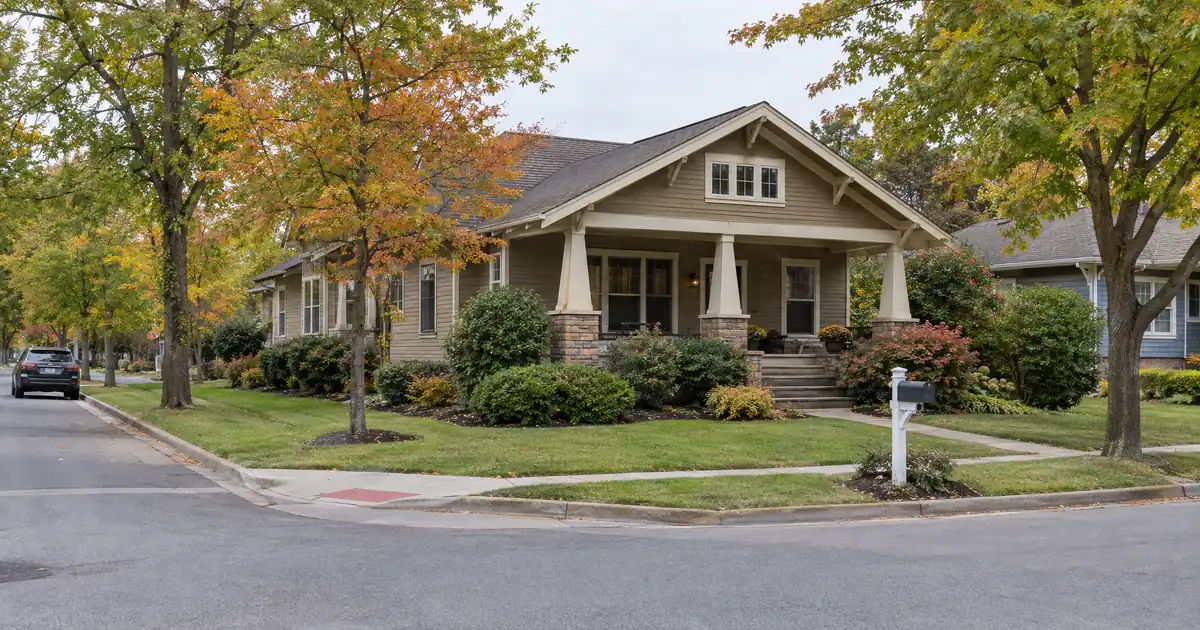
The Quick Read: A DSCR lender underwrites the rental property, not the state where the borrower lives, so buying out of state does not change the basic test. The lender compares the property’s rent used for lender review to its full monthly obligation, then reviews value, credit, reserves and entity paperwork. What changes is the property’s state, because taxes, insurance, rents, appraisal comps and lender availability are all local.
- Your home address is not a qualifying factor. The property’s income is.
- The appraiser, ordered by the lender, sets both the value and the market rent.
- A leased property generally is reviewed on the lower of the lease and market rent.
- Taxes and insurance in the property’s state can swing the ratio more than the rent does.
- Leverage and coverage are two separate tests, and a file has to clear both.
Distance changes logistics, not eligibility. The investor who is ready early with a lease, an insurance quote and entity documents has a smoother file than one who assumes the lender will sort it out.
What Does “Underwriting the Property” Actually Mean?
Underwriting the property means the lender asks one question first: does this rental’s income cover its own payment? The borrower’s wages, traditional personal-income documentation and zip code are not the center of that question. A DSCR loan qualifies primarily on property-level rental income covering the payment, subject to lender guidelines.
DSCR loans are designed for non-owner-occupied investment properties. Because they are business-purpose investor loans, they are reviewed differently from a standard owner-occupied mortgage.
Across a wholesale network of DSCR lenders, the pattern is consistent. A borrower in one state buying in another is a routine file. The lender wants to know the property’s state is eligible under the program, the property type is allowed, and the numbers work. Nobody asks whether you can drive there.
For the full picture of how these loans work, see Lendmire’s complete DSCR loans guide.
Key Terms Defined
DSCR (debt service coverage ratio): The property’s monthly rent used for lender review divided by its monthly PITIA.
PITIA: Principal, interest, taxes, insurance and any HOA dues, which together make up the full monthly obligation.
Market rent: The appraiser’s opinion of what the property would rent for, based on local rental comps.
Form 1007 and Form 1025: Standard appraisal rent schedules, 1007 for single-family and 1025 for two-to-four-unit properties.
LTV (loan-to-value): The loan amount as a share of the appraised value or price, depending on the transaction.
Guarantor: The individual who signs personally for a loan when an LLC is the borrower.
How Does the Underwriting Sequence Work, Step by Step?
The sequence runs from program fit to clear-to-close, and almost every step is the same for a local or remote owner. Here is the order a file typically moves through, with the one thing that changes for a remote investor.
1. Scenario and program fit. The lender confirms the property type, loan purpose and property state are eligible. For an out-of-state investor, “state” means where the rental sits. Remote twist: none, as long as the property’s state is in the program’s footprint.
2. Entity and guarantor. Most investors take title in an LLC. The entity signs the note and the individual guarantor signs separately. Entity vesting is subject to lender program eligibility. Remote twist: entity documents should be ready early.
3. Appraisal. The lender orders it, and the investor does not choose the appraiser. It does two jobs: it sets the value, which drives LTV, and it gives a market-rent opinion, which drives coverage. Remote twist: you probably will not attend, so access and lease details need to be arranged in advance.
4. Rent selection. The lender decides which rent counts. More on that below.
5. Ratio calculation. Monthly rent divided by monthly PITIA. A result above 1.00 means rent covers the payment on paper.
6. Tax, insurance and HOA verification. The denominator uses the property’s actual or estimated figures. This is where “another state” bites hardest.
7. Documents and third-party items. Expect the lease, rent payment history, entity documents, an insurance binder, title work, proof of reserves, and sometimes a property-management agreement.
8. Conditions and funding. Any discrepancy between the lease, the appraisal and the application gets resolved before the loan can proceed.
In rough order of importance, the outcome turns on the appraised market rent, the full PITIA, the appraised value, credit, reserves and entity documents, and finally the property type and state rules.
What Changes Across State Lines, and What Doesn’t?
Borrower location does not matter, but property location does. The table separates the two.
| Factor | Effect on eligibility | Effect on logistics |
|---|---|---|
| Borrower’s home state | None | None |
| Property’s state | Must be eligible for the program | Drives comps, taxes, insurance |
| LLC formation state | Subject to program terms | May need foreign registration |
| Appraisal | Sets value and market rent | Owner usually absent |
| Insurance | Binder required | Local insurer and premiums |
| Prepayment rules | Some states restrict them | Check before choosing terms |
Some states also layer their own requirements onto business-purpose lending, and certain states restrict prepayment penalties. Those details are dated and uneven, so confirm them for the specific property state before you commit to a structure.
How Is the Rent Number Set?
The rent that counts is usually the lower of the signed lease and the appraiser’s market rent, when the property is leased. That is a lender convention rather than a federal rule, and most programs in a wholesale network follow some version of it.
- Leased property: lower of lease and market rent. A lease above market does not raise the ratio. A lease below market can pull it down.
- Vacant or just-renovated property: the appraiser’s market rent stands alone. Some lenders also haircut vacant-unit rent for vacancy, which varies by program.
- Single-family: the appraiser documents market rent on a rent schedule.
- Two-to-four units: the schedule shifts to Form 1025 with unit-level rents.
One point deserves precision. Form 1007 is an agency appraisal form, not a DSCR form. The Fannie Mae Selling Guide requires it on one-unit investment properties when rental income is used to qualify, which is a conventional-lending rule. The same form is published as Freddie Mac Form 1000, where the appraiser supplies market rent for the lender. DSCR files simply borrow it because it is standardized. Agency rules do not govern DSCR programs.
A worked example with a rent gap
Run the numbers on an investor who buys a leased single-family rental at 75% LTV. The tenant’s lease sits comfortably above what the appraiser finds in local comps. Say the lease alone would have produced a ratio near 1.25x, but the appraiser’s market rent produces roughly 1.05x. The lender uses the lower figure, so the file is reviewed at about 1.05x. Final terms depend on lender guidelines, property type, leverage, and the borrower’s complete credit picture.
That is still above 1.00, which is where many select programs start. But stronger ratios open better pricing and leverage, so the gap matters. A generous lease does not buy a larger loan. If the same market rent had come in just under 1.00, a separate select-lender path would take coverage below 1.00, with leverage and terms adjusted. That is a different structure, not a lowered floor on the same program, and eligibility remains subject to lender guidelines, credit approval and property review.
Why Taxes and Insurance Move the Ratio More Than People Expect
The same rent and loan can produce different ratios in different states, because taxes and insurance sit in the denominator and both are local. The Tax Foundation’s state data shows effective property tax rates on owner-occupied homes ranging from very low in some states to quite high in others. Those are owner-occupied rates. Rentals often lose homestead exemptions, so an investor’s real bill can run higher.
Insurance varies as widely, and each property needs its own policy from an insurer licensed in that state. A high rent-to-price market can fail the ratio if taxes or insurance are heavy. A lower-rent market can pass if the stack is light. Pull a real insurance quote and a tax estimate before you fall in love with a market, not after.
Here is the counterintuitive part: a clear 1.00 is not positive cash flow. The ratio compares rent to PITIA only. Repairs, vacancy, management, utilities and capital expenses sit outside it. A remote owner paying a property manager should budget for those separately.
Entity Structure Across States
Most out-of-state DSCR borrowers close in an LLC, subject to lender program eligibility. The entity signs the note and the guarantor signs personally, and recourse to the guarantor is common.
- Articles of organization and operating agreement
- Certificate of good standing
- Foreign registration in the property’s state, where the state requires it
- EIN and guarantor identification
- Evidence the entity’s ownership matches the application
Whether to form the LLC in your home state or the property’s state is a legal and tax question, not a lending one. A qualified attorney is the right person to answer it. What the lender cares about is that the documents are complete and consistent.
Remote-Owner Logistics
Distance changes who does the legwork. You cannot pick the appraiser or attend the visit, so the practical mitigations are a local property manager, a lease and payment history ready to upload, and an insurance quote in hand early. Some lenders ask for a property-management agreement on remote properties, and that varies lender by lender.
Thin rental comps are the real remote-owner risk. In a rural or low-volume submarket, the appraiser may have little to work with, and a shaky rent opinion is hard to counter from a distance. Documents carry more weight there. A signed lease, rent receipts and a manager’s rent analysis give the underwriter something to reconcile.
Where Out-of-State Files Stall
Most stalls trace to a short list of preventable problems.
- Stale rent assumptions. Fix: rely on the appraiser’s market rent, not listing-site guesses.
- Underestimated taxes and insurance. Fix: get the quote before the offer.
- Entity paperwork gaps. Fix: assemble good standing and foreign registration early.
- Lease-versus-appraisal mismatch. Fix: reconcile any discrepancy before the file goes forward.
- Leverage surprise from a low appraisal. Fix: remember a low value can change proceeds or pricing even when the ratio is fine.
That last one catches people. Value drives LTV and rent drives coverage, and the strongest files clear both tests: enough equity and enough rental coverage.
Which Program Numbers Matter on an Out-of-State Purchase?
Across the network, most purchases land at 75%-80% LTV on an investment property, with select high-leverage programs reaching 85% LTV at roughly a 700+ score. Credit tiers run from a 620 floor in parts of the network, with most programs wanting around 660 and 700+ unlocking the strongest leverage. Reserves commonly run about 6 months of PITIA, stepping up toward 9 months on loans above $1,500,000, and they vary by lender, leverage, loan size and transaction type. Standard programs run roughly up to $3,000,000. All of this is subject to lender guidelines and every file is underwritten individually.
A larger down payment can lower the monthly obligation and lift the ratio, but it never erases leverage caps, credit floors, reserve rules or property eligibility. Manufactured homes, log homes and barndominiums are not offered in these programs.
Short-term rentals work differently. The Fannie Mae appraiser update notes that Form 1007 documents monthly market rent, was not designed for short-term rentals, and that multiplying a nightly rate by 30 is incorrect. STR programs usually use hosting history or a market-data projection instead. Typically that means purchase leverage up to 75% LTV and a 640+ score with about 12 months of hosting history. Lendmire’s piece How to Present Income on a Short-Term Rental in Another State covers that in detail. Short-term rental rules can vary by city, county, HOA and property type, so investors should confirm local rules before relying on projected rental income.
DSCR or Conventional: The Flip Point
DSCR is not automatically the better choice. If you can qualify conventionally and the pricing tradeoff matters to you, conventional may cost less. DSCR becomes the practical lane when you have hit the conventional property-count limit, when your traditional personal-income documentation does not cleanly show your income, or when the property’s own rent is the cleaner story. For a self-employed investor with an LLC, DSCR is often the natural fit. For a W-2 borrower with one rental, conventional may win. Tax treatment varies; consult a qualified professional.
A Pre-Offer Checklist for a Market You Don’t Live In
1. Confirm the property type is eligible and the state is in the program footprint.
2. Get a real insurance quote and a tax estimate for that specific property.
3. Ask a local manager for a market-rent opinion and compare it to listings.
4. Assemble entity documents, including foreign registration if needed.
5. Decide the leverage you want, then check it against the likely appraised value.
6. Confirm any state-specific prepayment or lender restrictions.
Frequently Asked Questions
Does my home state affect DSCR approval?
No. The property’s rent, value, location and the entity are what get underwritten. Your residence is not a qualifying factor, though your credit, reserves and documents still matter, all subject to lender guidelines.
Do I need a local property manager?
Not as a universal rule, but it is the usual mitigation for a remote owner. Some lenders ask for a management agreement on remote properties, and that varies by lender. Practically, a manager also supplies rent analysis and lease verification.
Who chooses the appraiser?
The lender orders the appraisal, and the investor does not pick the appraiser or typically attend. Prepare the lease, rent history and access details ahead of time so the appraisal reflects the property accurately.
Does clearing 1.00 mean the property cash flows?
No. The ratio compares rent to PITIA only. Repairs, vacancy, management, utilities and capital expenses sit outside it, so a property can clear 1.00 and still run thin after real operating costs.
Does this work on a vacant property?
Yes, in many programs. The appraiser’s market rent stands alone, and some lenders apply a vacancy adjustment.
If you are buying or refinancing a rental property and want to see how the numbers work, Lendmire can help you compare DSCR loan options based on the property income, credit profile, leverage, and investor goals. Reach the team at 828-256-2183 or request a quote at Lendmire’s quote page.
About Lendmire
Lendmire is a non-QM mortgage brokerage (NMLS# 2371349) arranging DSCR investor loans in 41 markets, including Washington, D.C., through wholesale and investor-lending channels. DSCR loans are evaluated by the lender on rental income rather than personal income, subject to lender guidelines — a fit for LLC-owned portfolios, self-employed investors, and operators scaling beyond conventional loan caps. Recognized as a Scotsman Guide Top Mortgage Workplace in 2025 and 2026.
Get Started
Ready to find the right loan for you?
In about 30 seconds you can review financing options available for your investment property. No commitment required.
Informational only. Not a Loan Estimate, approval, or commitment to lend. Program availability and eligibility are subject to lender guidelines, credit approval, property review, and underwriting.
References
1. Fannie Mae Selling Guide B4-1.2-01
This article is part of Lendmire’s DSCR loan program — full qualification details, guidelines, and scenarios live on the program page.
Related reading: How a DSCR Lender Underwrites a Pool in One Subdivision · How to Present Section 8 Rentals to a DSCR Lender · How a DSCR Lender Reads Condo Master Policies in a Portfolio
Brandon Miller
Founder & CEO, Mortgage Loan Originator, Lendmire LLC
- Mortgage Loan Originator · NMLS# 1129696 · Verify on NMLS Consumer Access
- North Carolina Real Estate Broker · License# 343312 · Verify on NCREC
- North Carolina Insurance Producer · License# 19053198 · Property, Casualty, Life, Health · Verify on NAIC SBS
- Lendmire LLC · Firm NMLS# 2371349 · Verify firm licensure
Disclosures. The information presented in this article is general market commentary, not financial, legal, or tax advice. Lendmire is a mortgage brokerage (NMLS# 2371349) — not a direct lender or depository institution — and loan placement is subject to lender underwriting. Nothing in this content represents a commitment to lend. Loan terms, pricing, and program availability vary based on borrower qualifications, property characteristics, and state of subject property, and are subject to change at any time. Lendmire complies with Equal Housing Opportunity requirements. Consumer access: nmlsconsumeraccess.org.