
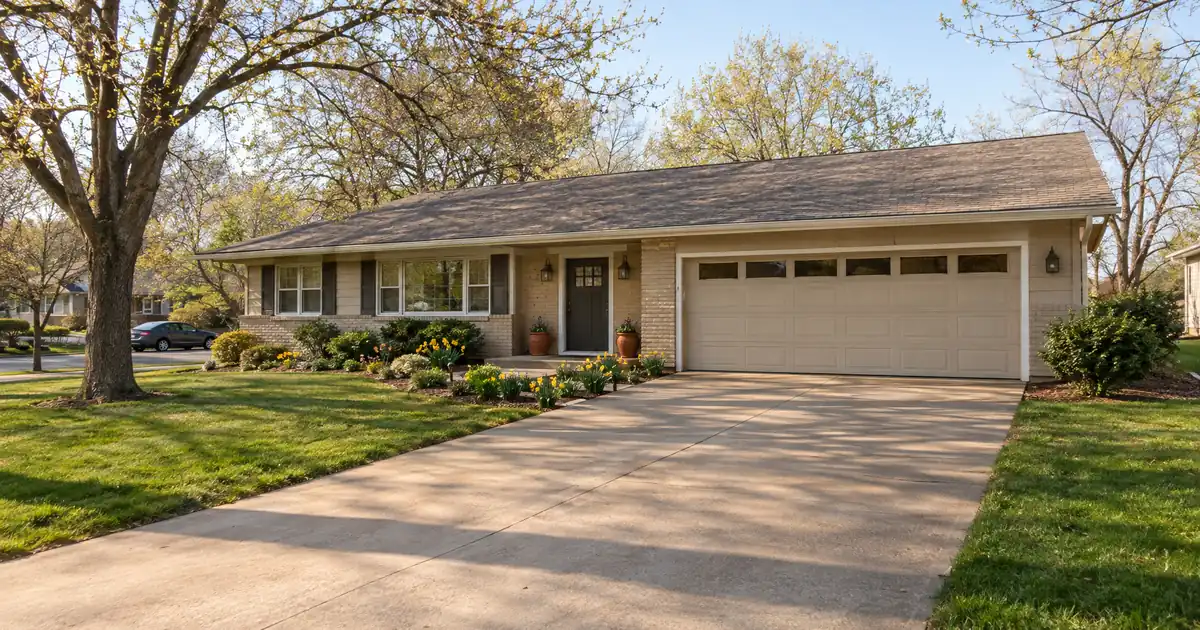
The Quick Read: A portfolio lender sizes one loan against the whole pool, then assigns each property its own slice of the debt, and that slice sets what it costs to sell or release the property later. Value and rent do different jobs in this process: value caps the loan, rent tests whether the pool can carry it, and the allocation schedule follows from both.
- The smaller of the value test and the rent test controls the loan size. The program’s maximum leverage is a ceiling, not a promise.
- On a portfolio DSCR loan, coverage is measured on the pool: pooled rent against pooled debt service, so strong properties can offset weaker ones.
- The allocated amount on each property is a separate document-level step, and it drives the release price.
- Release prices typically run above a property’s allocated balance, so selling one asset can cost more than the debt tied to it.
What does it mean to split a loan across properties?
Splitting a loan means the lender writes one note for the pool, then records how much of that debt belongs to each property. That per-property figure is the allocated loan amount. Everything that happens later, including partial releases and paydowns, is measured against it.
The “split” is not a regulated or standardized term. Each lender’s documents define it. In practice it combines three connected steps: sizing the loan with a value test and a rent test, testing coverage across the pool, and allocating the debt property by property.
Vocabulary causes real confusion here. Nav explains that a blanket mortgage lets multiple properties secure a single loan, and that a blanket lien and cross-collateralization overlap but are not identical. ConsumerAffairs describes a blanket mortgage as the real-estate form of a cross-collateral loan. Meanwhile, “portfolio loan” is used loosely in the market. Sometimes it means a lender holding the loan on its own books, and sometimes it means one note covering many properties. Read the loan documents for what is actually pledged, not the label.
For the broader picture of how these loans are built, Lendmire’s complete DSCR loans guide covers the single-property basics this article builds on.
How does the two-test sizing work?
The lender runs two tests and the lower result controls. The value test caps the loan as a percentage of appraised value. The rent test caps it at what the documented rent can carry against the full monthly obligation: principal, interest, taxes, insurance and any HOA dues.
Many investors assume the advertised leverage is their loan. It is not. If rent is the binding test, extra equity will not raise the loan amount. Higher documented rent, or a different payment structure such as an interest-only period, can.
Across the wholesale network, the portfolio program that sizes a pool of 2 to 20 properties under one note typically allows leverage up to 80% of value on a purchase or a rate-and-term refinance, with loan sizes from $300,000 to $5,000,000 and larger balances on review. Cash-out on a portfolio loan stays at or below 75% of pooled value. These are program ceilings, subject to lender guidelines, and not quotes. By contrast, a loan on one rental typically lands at 75% to 80% LTV on a purchase and tops out around 75% LTV on a cash-out refinance.
One appraisal does two jobs. It sets the value for the leverage test, and it produces a rent opinion for the coverage test. That rent opinion is documented on Form 1007 for single-family homes and Form 1025 for two-to-four-unit properties. Where a lease exists, lenders generally lean toward the lower of the in-place lease and the appraiser’s market rent. An above-market lease does not help.
Value and rent are also not independent. An appraisal miss hits both tests at once: a lower value shrinks the leverage cap, and a lower rent opinion shrinks the coverage cap.
Pooled testing versus allocation: two different steps
The pooled test and the allocation are separate steps, and mixing them up is a common source of confusion. The pooled test decides whether the loan works. The allocation decides how the loan is divided once it does.
Here is the sequence:
1. Each property gets an appraisal and a rent figure, from a lease or an appraiser-supported market rent.
2. The lender adds up the rent across the pool and divides it by the total monthly obligation. That is the pooled coverage number.
3. The lender compares aggregate loan to aggregate appraised value for the leverage test.
4. If the pool passes both, the lender assigns each property an allocated share of the debt, which is recorded in the loan documents.
5. A release clause then ties each property’s exit to that allocated share.
Pooled coverage is total rent divided by total monthly obligation, not an average of individual ratios. Because both totals come from the whole pool, how the debt is labeled across properties does not change that number. The allocation changes what each property costs to release, not whether the pool clears its floor.
On the 30-year portfolio structure, the coverage floor is 1.00 measured on the pool, which is why stronger properties can offset weaker ones. Every property still needs a lease or an appraiser-supported rent. Credit floors for portfolio programs typically start around 640, with 680 or 720 on some structures. Some structures require a special-purpose entity, typically an LLC, depending on program terms.
Which allocation basis do lenders use?
Lenders typically allocate by appraised value, though rent-weighted and hybrid splits exist, and the choice changes who carries more debt. Each basis favors a different kind of property, so ask which one your documents use before you close.
| Basis | How it works | Carries more debt | Typical effect |
|---|---|---|---|
| Appraised value | Share of loan follows share of pooled value | High-value properties | Cheaper to release low-value assets |
| Rent | Share follows share of pooled rent | High-rent properties | Penalizes rent-strong assets on release |
| Purchase price | Share follows what was paid | Recently bought assets | Ignores later appreciation |
| Hybrid | Blend of value and rent | Varies by weighting | Middle path, less predictable |
Value-based allocation is common because the appraisal is the cleanest evidence in the file. Purchase price is weaker evidence because it ignores changes since closing. Whichever basis is used, ask whether the schedule can be adjusted after closing. Some documents allow it with the lender’s consent, and many do not.
One pool, two splits: a worked example
Take a pool of four rentals. All figures here are modeled assumptions, expressed as shares and ratios, not market data.
Run the allocation both ways:
| Property | Share of value | Share of rent | Loan share (value basis) | Loan share (rent basis) |
|---|---|---|---|---|
| A | 40% | 25% | 40% | 25% |
| B | 30% | 30% | 30% | 30% |
| C | 20% | 25% | 20% | 25% |
| D | 10% | 20% | 10% | 20% |
Property A is the value leader. Under a value split it carries 40% of the debt, and releasing it means paying down the largest slice. Under a rent split it carries only 25%, so it is cheaper to sell. Property D is the opposite: rent-strong and value-weak. A value split leaves it with a small slice that is easy to release, while a rent split doubles its allocated debt.
Now add coverage. Suppose the pool as a whole covers its total monthly obligation at roughly 1.07x, which clears the 1.00 floor. Switching from the value split to the rent split would not move that pooled figure, because total rent and total obligation stay the same. What moves is each property’s release cost.
A single property under 1.00x can sit inside a pool, but when it does, underwriting tests the pooled coverage, the leverage and the terms. The weak asset is not judged alone, but it still costs the pool something. Some pooled programs add their own tests for weak assets, so ask whether a property-level test applies alongside the pool test.
What changes after one property leaves?
When a property leaves, the remaining pool is retested, and that is where releases get expensive. A release clause lets a property exit once the borrower pays a stated release price. Nav notes that securing a release clause matters because selling a property is much harder without one.
The release price runs above the property’s allocated balance. The lender is protecting the remaining collateral, since the strongest or highest-value assets usually leave first and the pool left behind is weaker. The remaining portfolio must still cover its debt service after any release, substitution or sale.
Order of sale matters. Run the example again:
- Selling Property A first removes the largest value share and a quarter of the rent, so the leftover pool leans on lower-value assets.
- Selling Property D first removes the smallest value share but a fifth of the rent, so the leftover pool’s coverage thins. The release price may also be steep if D’s allocation is rent-based.
Sequence your exits on paper before signing, not after.
Where does the general rule break?
The general rule is that value, rent and allocation all follow the pooled math. These edge cases are where it stops working.
Rent-strong, value-weak properties. A property that rents well but appraises low gets a small slice under a value split and a large one under a rent split. The same asset can be cheap or expensive to release depending only on the basis. Neither is wrong, but you should know which one you signed.
Short-term rentals. Form 1007 was built around a traditional 12-month lease and often understates nightly-rental income. Short-term-rental collateral follows its own leverage rules. On a standard rental the cash-out ceiling is 75%, while on short-term-rental collateral it is 70%. STR files typically need a 640+ score and about 12 months of hosting history. Because these programs measure income differently, many investors keep STR assets out of a long-term-rental pool. Short-term rental rules can vary by city, county, HOA, and property type, so investors should confirm local rules before relying on projected rental income.
Ineligible property. Owner-occupied homes, co-ops, mixed-use property and commercial property are not eligible in the pool. Manufactured and mobile homes are not reviewable on these programs, and neither are log homes or barndominiums. One ineligible asset can force a restructure, not just a swap.
Cross-default. In a pooled loan, one default exposes every pledged property. Dragnet and cross-default language can also tie separate loans from the same lender together, so check the documents even when you think the loans are independent.
Balloon structures. The larger rental portfolio term loan for five or more rentals or units, sized from $500,000 to $50,000,000 with leverage up to 75% of value, uses fixed terms of 3, 5, 7 or 10 years with a balloon at maturity. Check the amortization and the maturity, not just the payment. Each figure is subject to lender guidelines and a complete review of property type, leverage, and credit.
Pool, separate loans, or two smaller pools?
The right structure depends on how much you value one closing against independent exits. A pool trades flexibility for convenience. Separate loans keep each property on its own lien and avoid cross-default. A pool accepts cross-default in exchange for one closing and one payment.
| Factor | Single pooled loan | Separate loans | Two smaller pools |
|---|---|---|---|
| Closings | One | One per property | Two |
| Coverage test | Pooled | Per property | Per pool |
| Default exposure | Whole pool | One property | One pool |
| Exit flexibility | Release terms apply | Sell freely | Release within each pool |
| Weak asset | Offset by strong ones | Judged alone | Contained in one pool |
If your portfolio has one or two properties that cover tightly, separate loans may be cleaner because a weak asset does not drag down a strong one. If every property clears 1.00x on its own and you want one payment and one closing, a pool starts to make sense. If you expect to sell assets within a few years, favor separate loans or two smaller pools, because release costs and retesting can eat the convenience.
A pooled structure also does not work for every portfolio. The 30-year portfolio program is built for 2 to 20 properties, and the term loan starts at five properties or units. Very small portfolios and very large balances fall outside those bands or go on review.
The tradeoff is not always obvious. A pool can look cheaper at closing and cost more at exit. For an investor who plans to hold every asset long term, that exit cost may never matter. For one who might sell the strongest property in three years, it matters a lot.
A practical pre-signing checklist
Before you sign a pooled loan, get these in writing:
- The allocation basis (value, rent, purchase price or hybrid) and the schedule itself.
- Whether the schedule can be adjusted after closing.
- The release price for each property, stated plainly.
- Whether the remaining pool is retested after a release, and what happens if it fails.
- Whether a property-level test applies alongside the pooled test.
- Whether the loan is recourse or non-recourse. Non-recourse structures exist on the term loan, with carve-outs such as fraud and bankruptcy, while recourse loans carry a personal guarantee.
- Prepayment terms, including any yield maintenance on the term loan.
Also decide whether the weakest asset belongs in the pool at all. Leaving it out can raise pooled coverage and simplify the allocation.
One caution on reading the pooled number: clearing 1.00x is not the same as positive cash flow. Coverage compares rent to the full monthly obligation only. Repairs, vacancy, management, utilities and capex sit outside the calculation.
Key Terms Defined
Allocated loan amount: The share of the single loan assigned to one property, which sets its release price.
Release clause: A loan term that lets one property leave the pool after the borrower pays a stated release price.
Pooled DSCR: Total rent across all properties divided by total monthly debt service, not an average of each property’s ratio.
PITIA: Principal, interest, taxes, insurance and any HOA dues, the full monthly obligation used in the coverage test.
Cross-collateralization: Pledging several properties as security for the same debt, so each backs the whole balance.
Frequently Asked Questions
Can I negotiate how the loan is split?
Sometimes. The allocation basis and schedule are drafted by the lender, but on a larger pool there may be room to ask for a different basis or an adjustment clause. Raise it before the documents are final, since few lenders reopen the schedule after closing.
Does the allocation change my DSCR?
No. Coverage is tested on the pool as a whole, using pooled rent against pooled debt service. The allocation does not change that ratio. It changes what each property costs to release and how the remaining pool is retested after an exit.
Is a portfolio loan always one note?
No. The term is used loosely. It can mean a lender holding the loan on its own books or a single note secured by several properties. Check whether there is one security instrument per property and one note, and what the cross-default language says.
Can a weak property block a release?
It can complicate one. The lender retests the remaining collateral after a release, and the pool must still cover its debt service. If selling a strong asset would leave the pool too thin, the lender may require a larger paydown or decline the release, depending on the loan documents.
Does a larger down payment fix a thin rent test?
Only partly. More equity lowers the loan and can lift coverage, but it never erases leverage caps, credit floors, reserve rules or property eligibility. The strongest files clear both tests: enough equity and enough rental coverage.
Next Steps
If you are buying or refinancing a rental property and want to see how the numbers work, Lendmire can help you compare DSCR loan options based on the property income, credit profile, leverage, and investor goals. Program terms are subject to lender guidelines, and nothing here is a commitment to lend. Whether one pooled loan beats several separate ones usually comes down to the exit plan, so decide how you would sell the first property before you pledge the last.
About Lendmire
Lendmire, NMLS# 2371349, is a mortgage brokerage focused on investor financing, arranging DSCR loans in 40 states plus Washington, D.C. — 41 markets total. Qualification is based on the property’s income rather than personal income documentation, subject to lender guidelines, making it a fit for LLC-held rentals and scaling portfolios. Scotsman Guide named Lendmire a Top Mortgage Workplace in both 2025 and 2026.
Get Started
Ready to find the right loan for you?
In about 30 seconds you can review financing options available for your investment property. No commitment required.
Informational only. Not a Loan Estimate, approval, or commitment to lend. Program availability and eligibility are subject to lender guidelines, credit approval, property review, and underwriting.
References
1. Nav – Cross-collateralization
2. ConsumerAffairs – What Is Cross-Collateralization
This article is part of Lendmire’s DSCR loan program — full qualification details, guidelines, and scenarios live on the program page.
Related reading: How a Portfolio DSCR Loan Escrows Rentals in Two States · How a Portfolio DSCR Loan Consolidates Scattered Rentals · How a DSCR Portfolio Loan Works When You Sell the Pool
Brandon Miller
Founder & CEO, Mortgage Loan Originator, Lendmire LLC
- Mortgage Loan Originator · NMLS# 1129696 · Verify on NMLS Consumer Access
- North Carolina Real Estate Broker · License# 343312 · Verify on NCREC
- North Carolina Insurance Producer · License# 19053198 · Property, Casualty, Life, Health · Verify on NAIC SBS
- Lendmire LLC · Firm NMLS# 2371349 · Verify firm licensure
Legal disclosures. Lendmire (NMLS# 2371349) is a state-licensed mortgage brokerage that arranges financing through wholesale lender relationships. Lendmire is not a direct lender, depository institution, or registered financial advisor. The discussion above is general informational content about real estate financing — it is not financial, legal, or tax advice, and readers should consult licensed professionals for guidance on their individual circumstances. Loan inquiries are subject to lender underwriting; this article does not represent a commitment to lend. Loan terms, rates, and qualification standards vary by borrower, property, and state, and are subject to change at any time. Equal Housing Opportunity. NMLS Consumer Access: nmlsconsumeraccess.org.