
The Quick Read: You refinance a leased infill house into a DSCR loan by passing two tests. Appraised value must support the loan size, and rent must cover the new payment. A signed lease helps the rent test but does not start the seasoning clock.
- Seasoning is lender policy. Across the wholesale network Lendmire works with, about 6 months is the common expectation on a cash-out refinance.
- Cash-out on a standard investment rental tops out around 75% LTV across most of the network. The lower of the value limit and the rent limit sets your proceeds.
- The appraiser’s market rent, not your own after-repair estimate, drives the coverage number.
- Clearing 1.00 coverage does not mean positive cash flow.
- Test the new, larger payment before you commit to the exit. Final terms depend on the lender’s guidelines, the property type, and the borrower’s complete credit picture.
Key Terms Defined
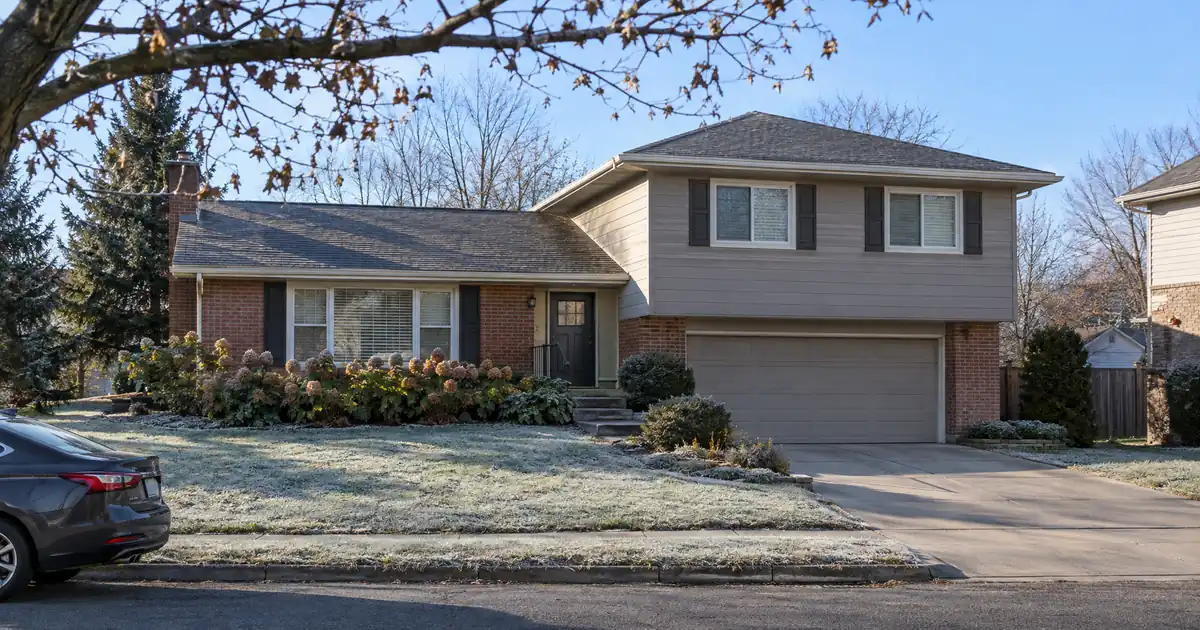
Infill rental house: an ordinary single-family house, or a small 2-4 unit building, on a previously developed lot. No separate infill loan category exists. Lenders underwrite it like any other single-family or small multifamily rental.
Lease-up: the stretch between finishing the house and having a paying tenant under a signed lease.
DSCR (debt service coverage ratio): monthly rent divided by the full monthly housing payment. Residential programs compare rent to the payment only. They do not subtract repairs or vacancy.
PITIA: principal, interest, taxes, insurance, and any association dues. It is the payment the rent has to cover.
Seasoning: the waiting period a lender wants after you take title before it will refinance on your terms.
LTV (loan-to-value): the loan amount as a percentage of the property’s value.
Rate-and-term vs. cash-out: a rate-and-term refinance pays off the old loan and little else. A cash-out refinance also puts extra money in your pocket.
ARV (after-repair value): your own estimate of what the house is worth once the work is done. It is a planning number only.
Where the Refinance Sits in the Lifecycle
Most infill investors fund the purchase and construction or rehab with a bridge loan, hard money, or cash. A DSCR loan is not usually the construction loan. It is the long-term exit that replaces the short-term debt once the house is finished and rented.
The sequence runs in order. You finish the work, lease the house, order the appraisal, and close the new loan. The new loan pays off the bridge. Whatever is left is yours, if anything is.
That last sentence matters. The refinance can release cash, break even, or require cash from you. Which one depends on the value the lender recognizes and the rent it counts.
How Underwriting Treats It, Step by Step
Here is the order a lender works through on a finished infill house.
1. Title and seasoning check. The lender looks at the recorded deed and when you took title. Seasoning typically runs from that date. Not from the lease date. Not from the day the rehab wrapped.
2. Property eligibility. The house needs to be a legal, insurable rental in finished condition. Manufactured homes, log homes, and barndominiums are not offered in the network’s DSCR programs.
3. Appraisal. The appraiser sets value for the LTV cap and market rent for the coverage ratio. One report does both jobs.
4. Rent test. The lender divides rent used for lender review by the new payment. Because a cash-out raises the balance, coverage falls compared with the old loan.
5. Credit and reserves. A 620 score is the floor in parts of the network. Most programs want around 660, and 700 or higher opens the strongest leverage tiers. Reserves vary by lender, leverage, loan size, and transaction type. About 6 months of PITIA is common. Conservative rate-and-term files at modest leverage under $1,500,000 can see reserves waived. Larger loans typically step up to about 9 months.
6. Sizing. The loan is the lower of what value allows and what rent supports.
DSCR loans are designed for non-owner-occupied investment properties. Because they are business-purpose investor loans, they are reviewed differently from a standard owner-occupied mortgage. The loan is reviewed primarily on property-level rental income covering the payment, subject to lender guidelines.
Two Clocks, and They Do Not Run Together
Title seasoning and value recognition are separate. Passing one does not guarantee the other.
Title seasoning is how long you have held the property. Value recognition is whether the lender sizes the loan on appraised value or on your cost basis, meaning purchase price plus documented rehab. Early in ownership, many programs lean toward cost basis. Later, appraised value takes over.
This is why refinancing early can leave you short of your bridge payoff. The house may be worth far more than you paid, and the lender may still lend against something closer to what you spent. Waiting until appraised-value sizing applies usually returns more cash. It also costs more in bridge interest and fees, so the wait has a price.
Lenders also differ. A few in the network treat a documented rehab with a lease in place more flexibly. Do not build your plan on that. Treat 6 months as the planning number for a cash-out, and treat anything shorter as a pleasant surprise.
How the Lender Counts Rent on a Newly Leased House
On a new lease, the lender usually weighs two rent figures. The signed lease is one. The appraiser’s market rent is the other. On many files the lender credits the lower of the two.
| Situation | What the lender typically uses |
|---|---|
| Lease above market rent | Often the lower, market figure |
| Lease below market rent | Often the lease figure |
| No lease yet | Appraiser’s market rent schedule |
The appraiser documents market rent on a rent schedule. Fannie Mae’s appraiser guidance describes Form 1007 as the tool for estimating monthly market rent on a single-family investment property. It can also be used for condominium investment properties. Freddie Mac publishes the same form as Form 1000, and its instructions say the lender uses it to get market rent from the appraiser.
For 2-4 units, appraisers use Form 1025, which builds the rent analysis into the income-property report. These are appraisal tools only. DSCR loans are not agency products, so the agencies’ selling rules do not govern them.
The appraiser works from comparable rentals. Per the form itself, adjustments should be made only for significant differences between the comparables and the subject. New infill houses can have few close comps. A thin comp set is a reason to expect some conservatism.
Two practical points follow. First, if you gave a move-in concession to fill the house, the lender may count the lease at its stated rent or at a lower figure. Know how your lease reads before the appraiser visits. Second, if your first lease came in well under market, a renewal or a corrected lease before the appraisal can lift the figure the lender sees.
Worked Example: Does the Payoff Fit?
These are modeled assumptions, not market data. Run the numbers this way before you commit.
Say your bridge payoff plus closing costs equals about 62% of the value you expect. The cash-out ceiling on a standard investment rental is around 75% LTV. You would have roughly 13 points of value left as cash. That is a clean exit. Each figure is subject to lender guidelines and a complete review of property type, leverage, and credit.
Now suppose the appraisal comes in 10% below your ARV. The same payoff and costs now sit near 69% of appraised value. Only about 6 points of value remain, and the proceeds shrink fast.
Take a tighter case. Your payoff and costs equal 72% of the value you expect. A modest appraisal miss pushes the total past 75% of the lender’s value. The refinance then needs cash from you at the table. You did not lose the deal. The exit simply cost more than planned.
Now add the rent test. Imagine the house covers its payment at about 1.30x on a smaller balance. Sizing up to the leverage ceiling can pull coverage toward 1.05x, because the payment rises with the loan. If market rent comes in lower than your lease, coverage can slip under 1.00. At that point the rent limit, not equity, caps the loan.
One more correction. Clearing 1.00 is not positive cash flow. Repairs, vacancy, management, utilities, and capital expenses all sit outside the calculation. DSCR compares rent to PITIA and nothing else.
For readers coming from commercial lending: there, the ratio uses net operating income over debt service. Residential DSCR programs commonly use rent over PITIA and subtract no expenses. Same name, different math.
One House, a Few Houses, or Many?
Infill investors often finish houses in batches. You can refinance each house on its own, or place several under one note. Here, a portfolio DSCR loan, a blanket loan, and a cross-collateralized loan all mean the same thing: one note secured by several rentals.
| Structure | Properties | Leverage cap | Coverage test |
|---|---|---|---|
| Single-property DSCR loan | One | Cash-out around 75% LTV | That property |
| 30-year portfolio DSCR loan | 2 to 20 | Up to 80% on rate-and-term | Pooled, 1.00 floor |
| Rental portfolio term loan | 5 or more | Up to 75% | Pooled |
On the 30-year portfolio DSCR loan, loan sizes run from $300,000 to $5,000,000, with larger balances on review. Coverage is measured on the pool. Pooled rent against pooled payment lets a strong house offset a weaker one. A single rental under 1.00 can sit in the pool. Underwriting tests the pooled coverage, the leverage, and the terms.
The rental portfolio term loan starts at five properties or units. Loan sizes run from $500,000 to $50,000,000, with larger balances on review. Terms are fixed at 3, 5, 7, or 10 years with a balloon at maturity. Non-recourse structures exist here, with carve-outs for items like fraud and bankruptcy. Small multifamily of five or more units is eligible only on this term structure.
Cash-out on any portfolio loan never goes above 75% of pooled value. Inside the first six months, the loan is also capped at 90% of total cost (purchase price plus documented improvements). From six to twelve months the cap is 100% of total cost. The leverage ceiling still applies, and the loan is the lower of the two. After twelve months, appraised value alone is the basis. A rate-and-term refinance is not subject to the cost-basis cap.
Credit on the portfolio programs starts at a 640 floor, with some structures asking for 680 or 720. Some want a special-purpose entity, typically an LLC, subject to program terms. Every house still needs a lease or an appraiser-supported market rent. Partial releases and the sale of one house follow the loan documents, and the remaining pool must still cover its debt service.
If you are still deciding between standalone and pooled, the complete DSCR loans guide lays out the product family.
Where the General Rule Breaks
Cash buyers. If you bought with cash, delayed financing can allow a cash-out sooner than normal seasoning. It waives the waiting period, not the other tests. Value is generally not based on the higher as-repaired figure, so do not assume your ARV carries over.
Short-term rentals. The 1007 is built for monthly market rent. A nightly rate times thirty is not market rent. Short-term rental programs generally use a different income method, such as booking history. On this collateral, cash-out tops out around 70% LTV, versus 75% on standard rentals. Expect a 640 or higher score and about 12 months of hosting history. Coverage floors are 1.00 on purchases and refinances. Short-term rental rules can vary by city, county, HOA, and property type, so investors should confirm local rules before relying on projected rental income.
Coverage below 1.00. A floor of 1.00 is where many select programs start. A separate select-lender path takes coverage below 1.00, with leverage and terms adjusted. No-ratio qualification is available only through select lenders, generally for borrowers who already own a primary residence.
Entity vesting. If you move a deed into an LLC after purchase, seasoning or due-on-sale questions can come up. Confirm treatment with the program first. Entity-titled loans are subject to lender program eligibility. A related question is whether a DSCR rental can move into a trust after closing, which Lendmire covers in its piece on transferring a DSCR rental into a trust.
Post-completion costs. Taxes and insurance often change once the house is finished. Builder’s-risk coverage gives way to landlord insurance. Both feed PITIA, so reprice the payment with fresh quotes before you trust your coverage estimate.
What If It Doesn’t Pencil?
Start with the least costly fix first. This order works on most files.
1. Check the rent evidence. A corrected lease, a renewal at market, or support for the appraiser can lift coverage without touching the loan.
2. Lower the loan amount. Less leverage cuts the payment and lifts the ratio. A bigger down payment or paydown helps coverage, but it never erases leverage caps, credit floors, reserve rules, or property eligibility.
3. Look at structure. Extended terms (40-year) and interest-only periods are available through select lenders in the network. ARM structures also exist. Each lowers the payment the rent must cover.
4. Use a sub-1.00 path. Select lenders in the network offer coverage below 1.00 with leverage and terms adjusted.
5. Ask the bridge lender for a short extension. Sometimes waiting for the seasoning clock costs less than a forced early exit.
Refinance Now, Wait, or Extend?
This one is a genuine judgment call. Refinancing right at the earliest date locks in the long-term debt and stops bridge interest. Waiting often returns more cash because appraised-value sizing applies. The right answer depends on how much each month of bridge cost eats the extra proceeds.
Start lender review before your target date. Appraisal and title work can slip, and you want slack before the bridge matures. Match the bridge term to the seasoning timeline when you take the bridge in the first place. A bridge that ends before seasoning does is how most forced early exits begin.
If the tests are tight, extending the bridge is often the stronger play than a refinance that leaves you bringing cash. If the tests are clear and the payoff fits, go now.
The Document File
Gather these early. They are typical, and requirements vary by lender.
- Recorded deed and settlement statement from the purchase
- Proof of purchase funds
- Title report
- Lease or rent support, plus insurance for a rented house
- Entity records, if an LLC holds title
- Payoff statement from the bridge or construction lender
Frequently Asked Questions
Does the lease or finished rehab start the seasoning clock?
Typically no. Seasoning generally runs from the recorded deed. The lease supports the rent test and the finished work supports eligibility, but neither shortens the title clock. A few lenders treat documented rehab differently, so ask before assuming.
Will the lender use my after-repair value?
No. The lender’s appraisal sets both value and market rent. Your ARV is a planning number. Plan the payoff-fit test against a conservative appraisal, not your best case.
What if the appraiser’s rent is lower than my lease?
Many lenders credit the lower of the lease and market rent. A lower market rent can pull coverage down and cap the loan. The fixes are lower leverage, a payment-reducing structure, or a select-lender path below 1.00 with adjusted terms.
Can I refinance several infill houses together?
Yes, in the right structure. The 30-year portfolio DSCR loan covers 2 to 20 properties with pooled coverage. Each house still needs a lease or appraiser-supported market rent, subject to lender guidelines.
Does passing the DSCR test mean the house cash flows?
No. The ratio compares rent to PITIA only. Repairs, vacancy, management, utilities, and capital expenses sit outside it, so a house can clear 1.00 and still run thin. Budget those items separately. Tax treatment varies; consult a qualified professional.
Next Steps
If you are buying or refinancing a rental property and want to see how the numbers work, Lendmire can help you compare DSCR loan options based on the property income, credit profile, leverage, and investor goals. Programs change and every file is underwritten individually, subject to lender guidelines and not a commitment to lend. You can reach the team at 828-256-2183.
About Lendmire
Lendmire is a DSCR-focused mortgage brokerage, NMLS# 2371349, placing investor loans across 41 markets, including Washington, D.C. DSCR eligibility is generally reviewed by the lender around a property’s rental income rather than personal income documentation, which fits LLC-held rentals, self-employed investors, and portfolios scaling past conventional financed-property limits. Scotsman Guide named Lendmire a Top Mortgage Workplace in both 2025 and 2026.
Get Started
Ready to find the right loan for you?
In about 30 seconds you can review financing options available for your investment property. No commitment required.
Informational only. Not a Loan Estimate, approval, or commitment to lend. Program availability and eligibility are subject to lender guidelines, credit approval, property review, and underwriting.
References
1. Fannie Mae Appraiser Update
This article is part of Lendmire’s DSCR loan program — full qualification details, guidelines, and scenarios live on the program page.
Related reading: Portfolio DSCR Loan vs Per-Rental Loans for a W-2 Investor Scaling Up · How Lease Problems Sink a Portfolio DSCR Loan Package · Does a Portfolio DSCR Loan Save Money Over One Loan per Rental?
Brandon Miller
Founder & CEO, Mortgage Loan Originator, Lendmire LLC
- Mortgage Loan Originator · NMLS# 1129696 · Verify on NMLS Consumer Access
- North Carolina Real Estate Broker · License# 343312 · Verify on NCREC
- North Carolina Insurance Producer · License# 19053198 · Property, Casualty, Life, Health · Verify on NAIC SBS
- Lendmire LLC · Firm NMLS# 2371349 · Verify firm licensure
Legal disclosures. Lendmire (NMLS# 2371349) is a state-licensed mortgage brokerage that arranges financing through wholesale lender relationships. Lendmire is not a direct lender, depository institution, or registered financial advisor. The discussion above is general informational content about real estate financing — it is not financial, legal, or tax advice, and readers should consult licensed professionals for guidance on their individual circumstances. Loan inquiries are subject to lender underwriting; this article does not represent a commitment to lend. Loan terms, rates, and qualification standards vary by borrower, property, and state, and are subject to change at any time. Equal Housing Opportunity. NMLS Consumer Access: nmlsconsumeraccess.org.