
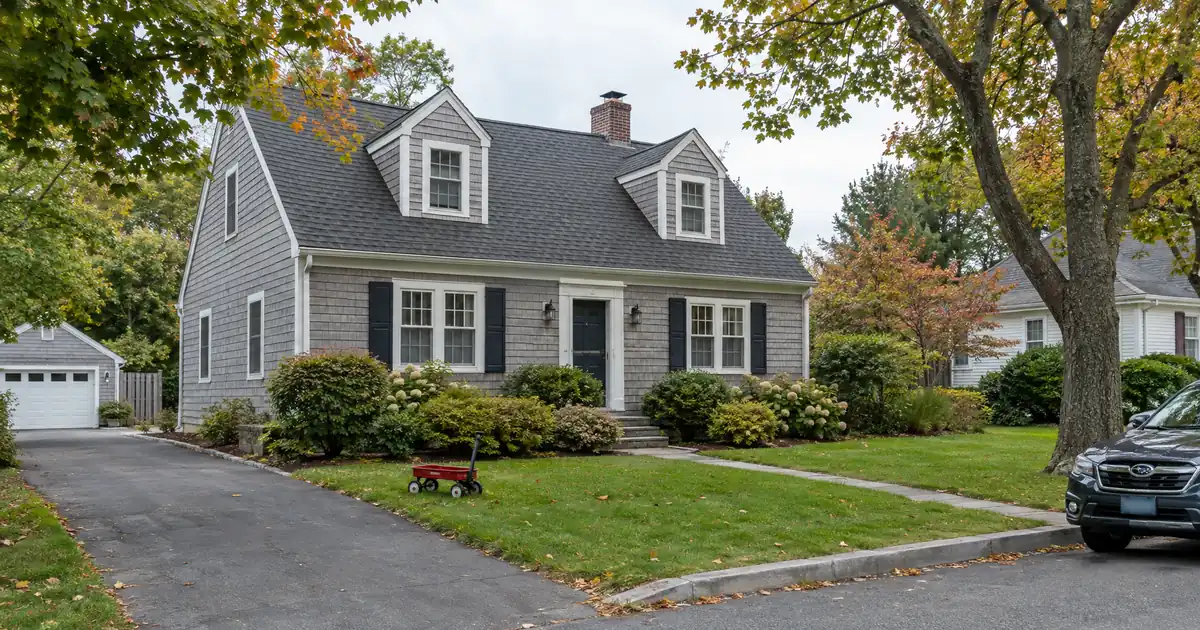
The Quick Read: No lender publishes a fixed percentage haircut for older houses, because year built is not what shrinks the proceeds. Condition, the appraised value, the leverage ceiling, and the pooled coverage test do the work, and they stack on top of each other. Cash is whatever is left after the loan is sized and the deductions come off.
- Age matters through condition. An appraiser rates what the house looks like today, not when it was built.
- A cash-out on a portfolio loan tops out at 75% of the pooled value on seasoned properties, subject to lender guidelines.
- Roughly 6 months of ownership, counted from title recording, is the usual seasoning expectation.
- Proceeds are a residual: new loan minus payoffs, closing costs, reserves, and any repair escrow or release price.
- A property that fails the condition screen can hold up an entire blanket loan, not only its own share.
What “Holds Back” Actually Means
Investors use the phrase to mean five different things, and the fix depends on which one applies. Most of the confusion comes from lumping them together.
| Mechanism | What triggers it | What it reduces |
|---|---|---|
| Leverage ceiling | Cash-out cap sits below purchase leverage | Loan amount |
| Low appraisal | Value comes in under expectations | Loan amount |
| Repair escrow or cure | Condition problems in the report | Cash at closing |
| Coverage shortfall | Rent too thin against PITIA | Loan amount |
| Ineligibility | Severe condition or unsupported property type | The whole file |
On an older house, several of these can fire at once. A dated roof lowers the condition rating, a conservative appraisal trims value, and a higher insurance quote lowers the coverage ratio. None of them is an “age penalty.” Each is a separate test the property either passes or doesn’t.
Does Age Itself Matter?
Not directly. The appraisal scale rates condition from C1 (best) to C6 (worst), and it comes from the Uniform Appraisal Dataset, a reporting standard set by Fannie Mae and Freddie Mac. DSCR loans are not agency products, but non-QM lenders borrow the vocabulary. Restb.ai walks through the scale and reports, citing Amherst data, that roughly 42% of homes bought by large institutional investors fell in the C4 range. Minor deferred maintenance is normal in rentals.
Here is how the middle and bottom of the scale read, per a market source:
| Rating | Plain meaning |
|---|---|
| C4 | Some minor deferred maintenance from normal wear |
| C5 | Obvious deferred maintenance and some significant repairs needed |
| C6 | Defects severe enough to affect safety, soundness or structure |
One rule catches investors off guard. McKissock, an appraiser-education provider, explains that if any part of a dwelling warrants a C6, the entire dwelling is rated C6. One failing system can sink the whole house.
A well-kept 1950s rental can outrate a neglected newer one. Age raises the odds of a problem, since older roofs and systems reach end of life more often. It does not set the outcome.
How Underwriting Treats the Property, Step by Step
Across the wholesale network, the sequence is consistent even where lender details differ.
1. Title seasoning. The lender checks how long the borrower has owned each property. About 6 months, measured from title recording, is the common expectation for a cash-out.
2. Structure choice. Separate notes test each house on its own. A blanket loan (also called a portfolio DSCR loan or cross-collateralized loan: one note secured by several rentals) tests the pool, so stronger rentals can carry weaker ones.
3. Appraisal on every house. Each property gets its own report with an as-is value, a market rent opinion, and a condition rating. A blanket does not eliminate per-property appraisals. Single-family rentals use the 1007 rent schedule and 2-4 unit properties use the 1025.
4. Condition screen. Light wear, dated finishes, and minor deferred maintenance generally fund as-is, with the practical cutoff at or around C4. Anything approaching C5 or C6 generally cannot fund until repaired. An aging roof with life left, or an HVAC unit still running, sits in a gray zone that varies by lender.
5. Coverage test on the new loan. Rent used for lender review is measured against the new PITIA: principal, interest, taxes, insurance, and association dues. Older roofs and systems can raise or complicate the insurance quote, which lowers the ratio.
6. Leverage test. A cash-out is capped at 75% of value. The leverage cap can say yes while the coverage test says no, and the reverse is equally true.
7. Deductions. The existing loan payoff, closing costs, and any escrows or reserves come off the top. This is the literal holdback on most files.
On the 30-year portfolio DSCR loan, which covers 2 to 20 properties under one note, the coverage floor of 1.00 is measured on the pool, subject to lender guidelines. The new lender’s appraisal sizes the loan, not the borrower’s projected after-repair value.
Where Repair Conditions Enter
An appraisal can come back made subject to repairs. A roof near the end of its life, safety items, water intrusion, or an unpermitted addition are the usual triggers, and older housing stock draws more of them. Programs handle it one of two ways: some close with a repair escrow, and others require the work completed and reinspected before funding.
An escrow does not remove the repair problem. It adds documentation, a contractor scope, and a reinspection step. Treat it as program-specific, because the guidelines of the lender in your file govern.
For a property too rough to fund, a two-loan path exists. Short-term bridge or hard money pays for the work, then a DSCR cash-out takes it out once the condition clears. Lendmire’s piece Can You Use a DSCR Loan on a Property That Needs Repairs? covers that handoff.
One sizing point deserves honesty. Lenders do not publish a standard multiple of the repair estimate that they hold. Sizing varies by lender and by the scope of work, so ask for it in writing before relying on a cash figure.
Portfolio-Specific Effects
A blanket loan changes the risk. One weak or newly bought property can hold up the entire pool, because the lender is underwriting one note, not several.
Pooling cuts both ways. A rental with coverage below 1.00 can sit in the pool, but underwriting tests the pooled coverage, the leverage, and the terms together.
Mixed-age pools raise three practical questions:
- Does one old house drag the group? It can, through a low appraisal, a repair condition, or an insurance quote that cuts pooled coverage.
- Can it leave? Partial releases, substitutions, and sales follow the loan documents. The release price runs above the property’s allocated balance, so cash from an exit is smaller than the share suggests.
- What happens to the leftover pool? If the best performer leaves, weaker properties carry the note, and the lender may retest coverage and leverage on what remains.
The rental portfolio term loan, built for five or more rentals under one loan, is a different structure with its own terms. It carries a leverage ceiling of up to 75% of value and reserves held for taxes, insurance, and capital expenditures.
One property type note, stated plainly: manufactured and mobile homes are not reviewable on these programs.
How the Cash Shrinks: Three Versions of the Same House
Take one older rental and run it three ways. These are qualitative illustrations, with no dollar figures.
Clean condition (C3 territory). The appraisal supports value, the roof and systems have life left, and the insurance quote is ordinary. The 75% ceiling is the main constraint. The investor nets what remains after payoff, costs, and reserves.
Minor deferred maintenance (C4). Worn floors and dated finishes pass as-is. The appraiser may select cautious comps, and the value lands lower than hoped. The loan ceiling drops directly with it, and cash falls by the same amount.
Significant repairs (C5 or worse). The report is made subject to repairs. Cash is delayed behind an escrow or a cure, or the property comes out of the pool. If the investor leaves it in a blanket, every other house waits too.
Value, not age, is the lever that moves the most. A weaker appraisal feeds straight into both the loan ceiling and the leftover cash.
Where the General Rule Breaks
- Short-term rentals. The cash-out ceiling on short-term-rental collateral is 70%, against 75% on standard rentals. Expect a 640+ score and about 12 months of hosting history, subject to lender guidelines.
- A BRRRR exit with a low appraisal. This is the most common way cash stays trapped in a deal. The break-even appraisal is the payoff plus exit costs, divided by the leverage cap.
- Old leases versus market rent. The appraiser’s market rent often differs from the leases in place, and rent used for lender review follows the appraiser’s schedule.
- A new purchase in the pool. Inside the first six months the loan is also capped at 90% of total cost (purchase price plus documented improvements), 100% of total cost from six to twelve months, and the leverage ceiling still applies. The loan is the lower of the two. After twelve months, appraised value alone is the basis.
- Clearing 1.00 coverage is not positive cash flow. DSCR compares rent to PITIA only. Repairs, vacancy, management, and capex sit outside the calculation, so an older house can pass the test and still be a poor cash-out candidate.
The Investor Decision Path
Work through these in order.
1. Screen each house for C5 or C6 risks first. Roof, HVAC, plumbing, electrical, water intrusion, and unpermitted work.
2. Fix before you order the appraisal. Curing these items can lift the condition rating and reduce conditions. An improvement may support a higher appraised value, depending on comps and underwriter review.
3. Get a fresh insurance quote. On older homes it can move the coverage ratio more than expected.
4. Pick the structure. Separate notes if one house is weak. A blanket if stronger rents can carry the pool and you accept the tie between properties.
5. Weigh the alternative. If a house is too rough, consider bridge financing first, then the cash-out.
On files with older housing stock, the insurance line and the appraiser’s rent opinion are the two items that most often move the coverage number between the first look and the final file. Getting both in hand before the structure is chosen avoids surprises on a pooled note.
For the full picture of how these programs fit together, see the complete DSCR loans guide.
Common Misconceptions
“Lenders haircut older houses by a fixed percentage.” No published age-based haircut exists. Treatment runs through condition, appraised value, conditions, and insurance.
“A blanket loan means one appraisal.” Each property is still appraised.
“My after-repair value sizes the loan.” The new lender’s appraisal does, not your projection.
“A strong DSCR lets me borrow past the cap.” Coverage and leverage are separate tests. Both must clear.
“A release clause lets me sell any house and keep the full proceeds.” The release price runs above the property’s allocated balance.
Key Terms Defined
Condition rating. The appraiser’s C1-to-C6 grade of a home’s physical state today.
Subject-to-repairs. An appraisal result that requires named repairs be finished before funding.
Blanket loan. One note secured by several rentals, also called a portfolio DSCR loan or cross-collateralized loan.
Pooled coverage. Combined rent measured against combined PITIA across the whole portfolio.
Release price. The payoff required to remove one property from a blanket, which runs above its allocated balance.
Seasoning. The ownership period, counted from title recording, before cash-out is allowed.
Frequently Asked Questions
Does a 1960s house get less cash-out than a 2015 house?
Not because of its age. Two houses with the same condition, value, rent, and insurance cost are treated alike. The older one simply faces more risk of roof, system, or insurance issues that lower value or coverage.
Can a cash-out close with repairs still needed?
Sometimes. Some programs allow a repair escrow, and others require completed, reinspected work first. A C5 or C6 property generally cannot fund as-is, so program fit decides the answer.
Does one bad house block a whole blanket loan?
It can. The lender underwrites one note, so a failed condition screen or low appraisal on one property can delay or reshape the entire pool. Separate notes avoid that tie.
How much do lenders hold for repairs?
It varies by lender and the scope of work, and no standard multiple is published. Ask for the escrow terms in writing before you plan around a cash figure.
What is the maximum cash-out leverage on a portfolio loan?
Up to 75% of the pooled value on seasoned properties, subject to lender guidelines, and never above the structure’s own ceiling. Short-term-rental collateral is capped at 70%.
If you are buying or refinancing a rental property and want to see how the numbers work, Lendmire can help you compare DSCR loan options based on the property income, credit profile, leverage, and investor goals. Reach the team at 828-256-2183 or request a quote. Tax treatment varies, so consult a qualified professional before relying on any deduction.
A deeper walk-through of investment-property equity extraction lives in Lendmire’s guide to cash-out refinance on an investment property.
About Lendmire
A non-QM mortgage broker (NMLS# 2371349), Lendmire arranges DSCR financing for real estate investors in 41 markets — 40 states plus Washington, D.C. Because deals are underwritten primarily on property cash flow rather than personal income documentation, the structure suits self-employed buyers and entity-owned portfolios. Lendmire places loans through wholesale investor lenders; it is not a direct lender. Scotsman Guide named Lendmire a Top Mortgage Workplace in both 2025 and 2026.
Get Started
Ready to find the right loan for you?
In about 30 seconds you can review financing options available for your investment property. No commitment required.
Informational only. Not a Loan Estimate, approval, or commitment to lend. Program availability and eligibility are subject to lender guidelines, credit approval, property review, and underwriting.
References
1. Restb.ai – UAD Condition Ratings
2. McKissock – Appraisal Condition Ratings C1–C6
This article is part of Lendmire’s investment property cash-out refinance program — full qualification details, guidelines, and scenarios live on the program page.
Related reading: Can a DSCR Portfolio Cash-Out Fund Your Next Rental Down Payments? · How to Consolidate Rental Loans Into One DSCR Loan Without Cash Out · How a DSCR Lender Sizes a Small Multifamily Plus Houses Portfolio
Brandon Miller
Founder & CEO, Mortgage Loan Originator, Lendmire LLC
- Mortgage Loan Originator · NMLS# 1129696 · Verify on NMLS Consumer Access
- North Carolina Real Estate Broker · License# 343312 · Verify on NCREC
- North Carolina Insurance Producer · License# 19053198 · Property, Casualty, Life, Health · Verify on NAIC SBS
- Lendmire LLC · Firm NMLS# 2371349 · Verify firm licensure
Required disclosures. Lendmire (NMLS# 2371349) operates as a licensed mortgage broker, not a direct lender or depository. The discussion in this article is general in nature and should not be relied upon as financial, legal, or tax advice — every investment scenario is unique and should be reviewed by a qualified professional. Any loan inquiry is subject to lender underwriting, and this article is not a commitment to lend or a guarantee of approval. Mortgage rates, loan terms, and program guidelines vary by borrower, property, and state, and may change without notice. Equal Housing Opportunity. Verify licensure at NMLS Consumer Access.