
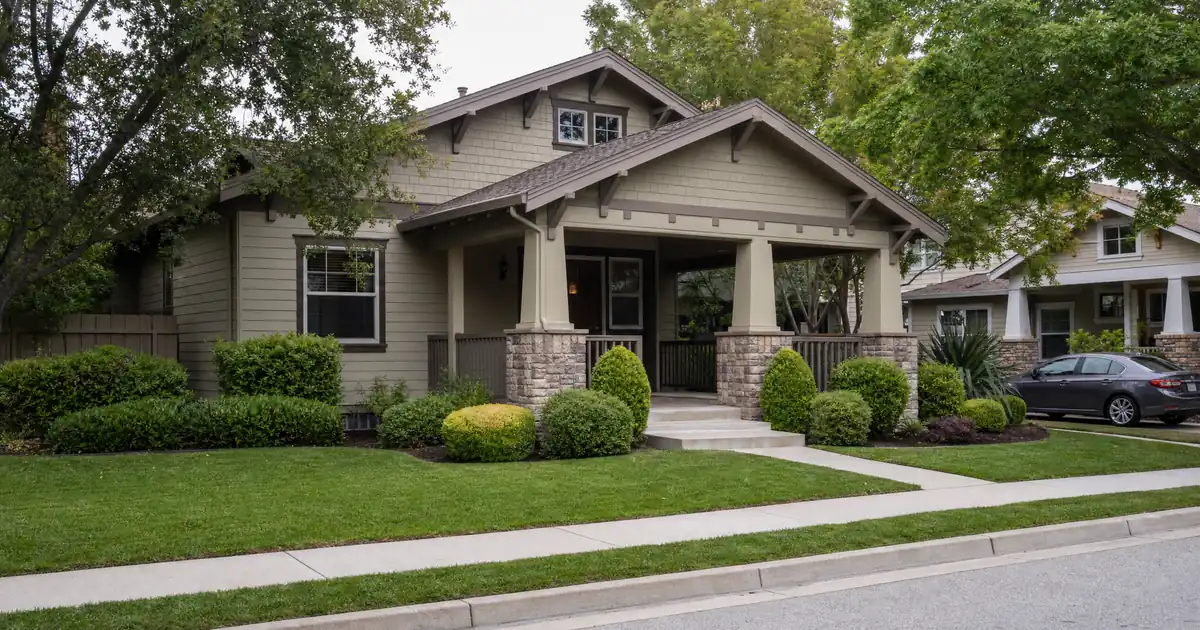
The Quick Read: Generally, no. A DSCR loan on a property qualifies based on its ability to earn rent right now. So most lenders in this space want the home rent-ready at closing. That means habitable, safe, and free of major deferred maintenance. Light cosmetic wear is usually fine — think old paint, worn flooring, or dated fixtures. But missing systems, structural damage, or anything that stops a tenant from moving in? That’s a problem. The standard fix is a short-term bridge or rehab loan first. Then you refinance into a DSCR loan once the property is stabilized.
DSCR Calculator
Run the numbers in your market
Rate source: Freddie Mac 30-yr average via FRED® — Federal Reserve Bank of St. Louis · effective Jul 30, 2026
Prefilled with starting assumptions — enter your own rent or nightly figures, taxes, insurance, and HOA for a more accurate picture.
Program parameters update from Lendmire’s centralized guideline source. Taxes and insurance are editable estimates.
As of Jul 30, 2026 · General Freddie Mac market benchmark, not a Lendmire loan offer. Rent, nightly rate, occupancy, taxes, and insurance are editable estimates. Short-term rental figures are estimates only and vary significantly by season, property type, management approach, and local short-term-rental rules — confirm local regulations before relying on them. Qualifying income for short-term rentals varies by program — some use appraisal market rent, others use documented STR history or projections — and is confirmed in underwriting. Not a Loan Estimate, approval, or commitment to lend. Program availability and eligibility are subject to lender guidelines, credit approval, property review, and underwriting.
That’s the direct answer. The rest of this piece covers where the line actually sits, why lenders draw it there, and how the two-loan sequence works in practice.
Key Terms Defined
DSCR (debt service coverage ratio): Lenders divide the property’s gross monthly rent by its full monthly housing obligation. That obligation includes principal, interest, taxes, insurance, and any HOA dues (PITIA). A ratio at or above 1.00 means the rent covers that payment. Below 1.00 means it doesn’t.
PITIA: This is shorthand for the full monthly housing payment used in the DSCR calculation. It includes principal, interest, taxes, insurance, and association dues, if any.
UAD condition rating (C1–C6): This is the appraisal industry’s scale for describing a property’s physical condition. C1 means like-new. C6 means major structural or safety problems. Most DSCR lenders use this same scale, even though DSCR is a non-agency product.
Bridge loan (or rehab/hard money loan): This is short-term, asset-based financing. Investors use it to buy and repair a property before it’s rent-ready. It’s built around an exit strategy, not a long-term hold.
Seasoning period: This is how long a lender wants you to hold, stabilize, and often re-appraise a property before refinancing it into a new loan. This matters most for a cash-out refinance.
Why Lenders Require Rent-Ready Condition at Closing
Here’s the core reason: a DSCR loan doesn’t qualify you based on your income. It qualifies the property based on its income. If a tenant can’t move in, there’s no rental income to point to. The coverage math only works when there’s a rent figure the appraiser can actually support. And an appraiser can’t defend a market rent estimate on a home with a missing HVAC system, an active leak, or exposed wiring.
Appraisers give every property an overall condition rating, from C1 to C6. Under the guidelines behind that scale, one failing system can drag the whole report down. As McKissock Learning, an appraiser continuing-education provider, explains it: a C6 rating means major damage or serious deferred maintenance that could affect structural safety. And if any part of the home warrants a C6, the entire property gets rated C6. That’s a much stricter standard than “needs some updating.” It’s closer to “not currently livable.”
Across the DSCR programs Lendmire places files with, the practical cutoff usually sits at or below C4. That means ordinary wear, dated finishes, and minor deferred maintenance can be funded as-is. Anything approaching C5 or C6 generally can’t be funded until it’s repaired. For comparison, agency guidelines under Fannie Mae’s Selling Guide draw their own line at C5/C6 for conforming loans. DSCR programs aren’t agency products, and they don’t get sold to Fannie Mae or Freddie Mac. But the industry borrowed the same condition language anyway. It gives appraisers and lenders a shared way to talk about “how bad is too bad.”
DSCR loans are built for non-owner-occupied investment properties. Because they’re business-purpose loans, not owner-occupied consumer mortgages, they get reviewed under a different framework than a standard purchase mortgage. That’s part of why individual lenders set the condition cutoff — not one single regulator.
Light Repairs vs. Disqualifying Repairs — Where’s the Line?
Cosmetic wear rarely disqualifies a property. Missing systems or structural issues almost always do. The table below shows how most DSCR lenders in Lendmire’s network draw that line in practice.
| Condition Level | Typical DSCR Treatment | Examples |
|---|---|---|
| Light / cosmetic (roughly C1–C4) | Usually fundable as-is | Worn paint, dated flooring, older fixtures, minor plumbing drips |
| Functional but tired | Case-by-case, lender-dependent | Aging roof with life left, older HVAC still running, cracked window glass |
| Major / structural (roughly C5–C6) | Generally not eligible until repaired | Missing kitchen or bath, no working HVAC, active roof leak, foundation issues |
| Uninhabitable | Not eligible for DSCR at acquisition | Fire/water damage, condemned status, no utilities connected |
Worth separating condition from property type here, since people mix the two up. Manufactured homes (single- and double-wide), log homes, and barndominiums fall outside these DSCR programs entirely. That’s true no matter how good their condition is. It’s a property-eligibility rule, not a repair issue. No amount of renovation changes it.
The Two-Loan Strategy: Bridge First, Then DSCR Refinance
When a property needs repairs, the standard fix isn’t a workaround inside DSCR. It’s a different loan for the repair phase, followed by a DSCR refinance once the work is done. Investors already know this structure as BRRRR: buy, rehab, rent, refinance, repeat.
Phase one uses a short-term bridge or hard-money loan to fund the purchase and the renovation. This loan runs on a different basis than DSCR — it’s built around the collateral and the exit plan, not the rent, because there’s no rent yet to underwrite against. Phase two starts once the property is repaired, leased or lease-ready, and reappraised. At that point, it can move into a DSCR loan. This is usually a rate-term or cash-out refinance, with leverage on most cash-out files capping around 75% loan-to-value across Lendmire’s network.
Seasoning matters here. Most DSCR lenders in Lendmire’s network want roughly six months of ownership or completed-repair history before they’ll refinance. That exact window shifts based on the lender, the loan size, and how much value the rehab added. If you’re trying to move faster than your lender’s seasoning window allows, take a close look at “Refinancing a Rental Property Without a Seasoning Period” first. Don’t assume a quick turnaround is available — seasoning is set by the lender and the program. DSCR doesn’t eliminate it the way some marketing suggests.
Weighing whether a bridge-to-DSCR sequence still makes sense, versus just buying a fully rent-ready property? Lendmire’s guide to using an investment property loan to buy a fixer-upper covers the broader trade-offs of financing a value-add purchase. The same logic applies when deciding whether a refinance makes sense for a rental property versus holding the bridge loan longer.
What Happens After Repairs Are Complete
Once the rehab is done and the property can support a lease, lenders usually run the DSCR math twice. First against the pre-repair rent estimate. Then against the post-repair market rent. After the rehab, both the value and the achievable rent typically go up. That’s why the refinance often clears coverage more comfortably than the acquisition math ever did.
Here’s a hypothetical example — the numbers below are illustrative assumptions, not sourced market data. Picture an investor buying a duplex that needs a new roof, updated electrical, and cosmetic work throughout. On a pre-repair basis, using the rent the unit could fetch in its current condition, the file might model out somewhere near 0.85x coverage. That’s below the 1.00 floor most standard DSCR programs are built around. It’s exactly why this deal wouldn’t clear as a straight DSCR purchase. Now, after repairs — once the roof and electrical work are done and the units are leased at market rent for a renovated property — that same file might model closer to 1.20x–1.25x coverage on a refinance. The property didn’t change identity. The condition and the achievable rent did. That’s what moved the ratio.
This is also where the non-QM market’s growth matters, especially for investors running this playbook at scale. DSCR and investor products now make up roughly half of all non-QM collateral. And non-QM origination volume is projected to climb from about $108 billion to $175 billion, according to HousingWire. That’s a large enough pool of lender capacity that bridge-to-DSCR sequencing isn’t a niche strategy. It’s a well-worn path.
Lendmire has placed DSCR files across a wide range of property conditions. Here’s the pattern worth knowing: the files that stall usually aren’t the ones with obvious major damage — those get screened out before an appraisal is even ordered. The files that stall are the ones where the seller or investor assumed a moderately dated property would clear as-is. Then the appraiser flags a system issue that pushes the rating past the lender’s cutoff. Getting a rough condition read before ordering the appraisal — roof, HVAC, electrical panel, plumbing — saves a wasted appraisal fee and a stalled closing.
Exceptions and Edge Cases Worth Knowing
No standard escrow holdback exists on most DSCR programs. Unlike an FHA 203(k) or a conventional renovation loan, most DSCR products don’t come with a post-closing repair-holdback option. The DSCR calculation assumes the rent is already achievable. So there’s no built-in placeholder for “finish this later.” A handful of lenders may consider very minor holdbacks case by case. But it’s the exception, not a standard feature. Don’t plan a deal around expecting one.
Vacant properties aren’t automatically disqualified — unrentable condition is the disqualifier. A property sitting empty at acquisition can still work for a DSCR purchase. This holds true as long as the appraiser can support market rent and the physical condition allows a tenant to move in without repairs. Vacancy and poor condition often travel together. But they’re not the same problem.
DSCR vs. conventional financing
Two common ways to finance an investment property in this market. They qualify you differently — here’s how investors weigh them.
Why investors choose it
- Qualifies on the property’s rental income — no personal tax returns, W-2s, or pay stubs needed to document income.
- No personal debt-to-income ceiling to clear, so existing mortgages and obligations don’t cap your borrowing the same way.
- Can be closed in an LLC, keeping the property inside a business entity.
- Built for scaling — not held to the limit on number of financed properties that conventional financing applies.
- Underwriting centers on the deal: generally qualifies when the rent covers the payment, a 1.00x coverage ratio being a common baseline (confirmed in underwriting).
- Designed specifically for investment property, including long-term and, where the program allows, short-term rentals.
Where it’s strong
- Often the lowest ongoing financing cost for a buyer who fully qualifies on personal income — a fit for a first property or a cost-first purchase.
Trade-offs for investors
- Requires full personal income documentation and must fit within a debt-to-income limit — salary, existing debts, and other mortgages all count.
- Typically held in your personal name rather than a business entity.
- Caps how many financed properties you can carry, which can become a ceiling as a portfolio grows.
- Evaluates you as a borrower as much as the property, which usually means more paperwork.
How investors usually choose: a first or single property often optimizes for the lowest financing cost; portfolio builders often optimize for leverage, vesting in an LLC, and scaling past conventional caps. The right answer depends on your goals, the property, and current guidelines — both paths run through select lenders in Lendmire’s wholesale network, with eligibility and terms confirmed in underwriting.
Short-term rental conversions add a wrinkle on top of condition. For STR-focused files, most lenders in Lendmire’s network look for purchase leverage up to roughly 75% loan-to-value, refinance around 70%, and cash-out around 70%. They generally want a 640+ credit score, about 12 months of hosting history, and a 1.00 coverage floor. Appraisers evaluating an STR conversion can’t simply multiply a nightly rate by 30 days to estimate monthly rent. That approach ignores furnishing costs, platform fees, and vacancy patterns unique to short-term rentals, according to Marketwise Valuation Services. Short-term rental rules also vary by city, county, HOA, and property type. So confirm local rules before relying on any projected rental income — on top of confirming the property clears condition review.
A larger down payment doesn’t override a condition problem. More equity can improve a coverage ratio and open better leverage. But it doesn’t erase an appraiser’s condition rating. The strongest files clear both tests — enough equity and rent-ready condition — not one in place of the other.
Is Your Property DSCR-Ready? A Quick Self-Check
Before ordering an appraisal on a DSCR purchase or refinance, run through this short mental checklist:
- Is the roof, HVAC system, electrical panel, and plumbing all functional right now, not “functional after a repair”?
- Could a tenant move in within a couple of weeks without you doing anything further?
- Are the kitchen and bathrooms complete and usable — not gutted, not mid-renovation?
- Is the property free of any active water intrusion, fire damage, or condemned status?
- If any of your answers to the above fell short of rent-ready, do you already have a bridge or rehab loan lined up for the repair phase?
If your answers point to “rent-ready now,” a DSCR purchase or refinance is the more direct path. If they don’t, the bridge-then-refinance sequence is the realistic route — not a workaround inside DSCR itself. It’s worth comparing this against refinancing versus selling a rental property outright once the rehab math is on the table. Not every distressed property is worth carrying through a full renovation cycle.
For investors who want the fuller mechanics of how DSCR underwriting works before running this playbook, Lendmire’s complete DSCR loans guide covers the underwriting basics this article builds on.
Lendmire, NMLS# 2371349, arranges DSCR investor loans across 40 states plus Washington, D.C. — 41 markets total — through a wholesale network of lenders. Purchase leverage on most files runs 75%–80% loan-to-value. Select high-leverage programs reach 85% for stronger credit profiles. Typical credit floors sit around 620–660, depending on the program. Review details are subject to lender overlays and can shift from file to file. So none of the figures above should be read as guaranteed terms for any specific property. Tax treatment on rehab costs, capitalized improvements, or refinance proceeds can depend on how you use the funds and how you hold the property. Keep clear records and speak with a qualified tax professional before relying on any deduction.
Loan approval is never guaranteed, and nothing here is a commitment to lend. All scenarios described are hypothetical and subject to lender approval, underwriting, and borrower, property, and program guidelines that can vary by lender and change over time. This article is provided for general informational purposes only and is not financial, legal, or tax advice.
Frequently Asked Questions
How Do I Use a DSCR Loan?
A DSCR loan works like most investment-property mortgages on the surface. The difference is qualification. Instead of verifying your traditional employment income and personal debt-to-income ratio, the lender compares the property’s rent to its full monthly housing payment. If that ratio clears the lender’s minimum — typically a 1.00x floor on standard programs — the file can move forward on the strength of the property’s income rather than your paystubs.
What Can I Use a DSCR Loan For?
Rental-property purchases, cash-out and rate-term refinances, and portfolio growth are the core uses. This works as long as the property is already rent-ready or close to it. It’s not designed to fund the rehab phase of a distressed property. That’s what bridge or hard-money financing is for. The DSCR loan comes in afterward, once the property can produce rent.
Are There Online Lenders That Finance Airbnb Rental Properties?
Yes. A number of lenders in the non-QM space, including those in Lendmire’s wholesale network, offer DSCR programs built specifically around short-term rental income rather than long-term lease income. These typically require a track record of hosting history, a stronger credit profile, and condition that supports immediate booking. That’s the same rent-ready logic that applies to long-term rentals — just measured against nightly income instead of a monthly lease.
Can a DSCR Loan Include an Escrow Holdback for Repairs?
Not on most standard programs. Unlike government-backed renovation loans, DSCR products generally don’t build in a post-closing repair-holdback structure. That’s because the rent used to qualify the loan is assumed to be achievable at closing. A small number of lenders may consider minor holdbacks on a case-by-case basis. But it’s not something to plan a purchase around.
Can You Refinance a Rehab or Bridge Loan Into a DSCR Loan?
Yes — this is the standard exit for a bridge or rehab loan once the property is repaired and rent-ready. The property gets reappraised at its post-repair condition and value. The achievable rent gets re-established. Then the DSCR refinance gets underwritten against that new number. This is often stronger than the pre-repair math, since both value and rent typically improve together.
About Lendmire
Lendmire (NMLS# 2371349) is a mortgage brokerage built around DSCR investor lending, with programs available in 41 markets, including Washington, D.C. DSCR lenders commonly evaluate rental-income coverage instead of personal income paperwork — a practical fit for LLC-owned and multi-property investors. Terms vary by lender, property, leverage, and program. Scotsman Guide named Lendmire a Top Mortgage Workplace in both 2025 and 2026.
Get Started
Ready to find the right loan for you?
In about 30 seconds you can review financing options available for your investment property. No commitment required.
Informational only. Not a Loan Estimate, approval, or commitment to lend. Program availability and eligibility are subject to lender guidelines, credit approval, property review, and underwriting.
References
1. McKissock Learning – Understanding Appraisal Condition Ratings C1 to C6
2. Fannie Mae Selling Guide B4-1.3-06 – Property Condition and Quality of Construction
3. HousingWire – Non-QM Originations Set to Reach $175B in 2026
4. Marketwise Valuation Services – Understanding Short-Term Rentals and Form 1007
This article is part of Lendmire’s DSCR loan program — full qualification details, guidelines, and scenarios live on the program page.
Related reading: Hard Money Loan Denied Because The Property Is Not Habitable · Bridge Loan Complete Guide · What Happens If Your DSCR Drops After Closing?
Brandon Miller
Founder & CEO, Mortgage Loan Originator, Lendmire LLC
- Mortgage Loan Originator · NMLS# 1129696 · Verify on NMLS Consumer Access
- North Carolina Real Estate Broker · License# 343312 · Verify on NCREC
- North Carolina Insurance Producer · License# 19053198 · Property, Casualty, Life, Health · Verify on NAIC SBS
- Lendmire LLC · Firm NMLS# 2371349 · Verify firm licensure
Legal disclosures. Lendmire (NMLS# 2371349) is a state-licensed mortgage brokerage that arranges financing through wholesale lender relationships. Lendmire is not a direct lender, depository institution, or registered financial advisor. The discussion above is general informational content about real estate financing — it is not financial, legal, or tax advice, and readers should consult licensed professionals for guidance on their individual circumstances. Loan inquiries are subject to lender underwriting; this article does not represent a commitment to lend. Loan terms, rates, and qualification standards vary by borrower, property, and state, and are subject to change at any time. Equal Housing Opportunity. NMLS Consumer Access: nmlsconsumeraccess.org.