
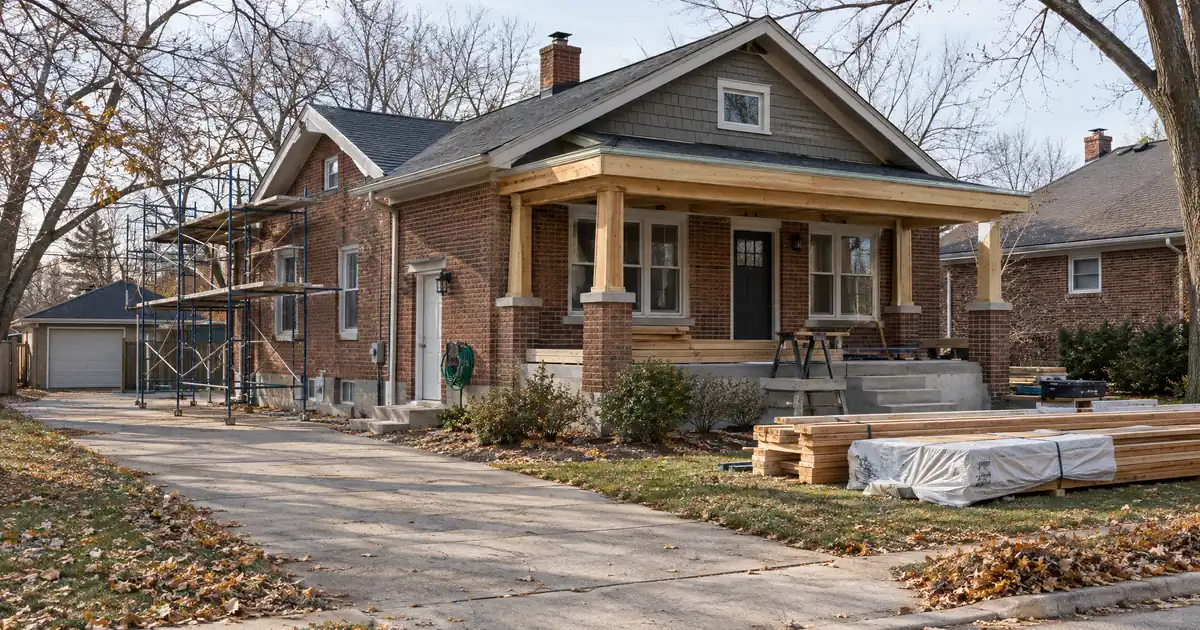
The Quick Read: A vacant or under-rented rental can often exit hard money into a DSCR loan, because many programs count the appraiser’s market rent in place of a lease, subject to lender guidelines. Two tests size the new loan: the appraised value sets leverage, and the market rent sets coverage. The lower result controls the loan amount, so a thin rent can leave the new loan smaller than the hard money payoff. The rehab has to be finished first, because DSCR lenders generally will not take a property that is not rent-ready.
- Vacant and rent-ready usually works on appraiser-supported market rent. Some lenders still ask for a lease.
- Under-rented units can pull coverage down when a program uses the lower of lease or market rent.
- The new lender’s appraisal sets value, not the after-repair value in your pro forma.
- A 1.00 coverage ratio is where select DSCR programs start. It does not mean the property cash flows.
- Plan from the hard money maturity date, not from the day the rehab ends.
Lendmire is a mortgage broker that arranges these exits through select lenders in a wholesale network covering 41 markets, including Washington, D.C. Everything below is how those files get read inside the network. Program terms vary by lender, property, and borrower, and nothing here is a commitment to lend.
Key Terms Defined
Market rent is the monthly rent an appraiser estimates a property would command, based on comparable rentals. It is an opinion of value, not a lease.
In-place rent is what a tenant actually pays under a lease today.
Lower-of rule is a common treatment where the lender uses the smaller of in-place rent and market rent for coverage.
PITIA is principal, interest, taxes, insurance, and association dues. It is the denominator in the coverage ratio.
Seasoning is the minimum ownership period a lender requires before it treats a refinance as cash-out. It is measured from title recording.
Payoff statement is the written figure from the hard money lender showing what it takes to clear the loan on a given date, including per diem interest and any exit fee.
How Does a DSCR Lender Count Rent on a Vacant Property?
A vacant property is counted on the appraiser’s market rent. The appraiser documents it on a rent schedule, and the lender divides that figure by the new loan’s PITIA. The investor’s asking rent and pro forma do not enter the calculation.
Fannie Mae’s appraiser guidance describes the Single-Family Comparable Rent Schedule, Form 1007, as the document that estimates monthly market rent for a single-family investment property, and it can be used for condos too. That is a conventional-lending form. DSCR loans have no agency rulebook. Each lender sets its own program. The industry borrows the form because it is a familiar way to document rent. HUD Mortgagee Letter 2023-17 shows the same idea on the agency side: an appraisal plus Form 1007 documents proposed rental income on a one-unit property. It is precedent for market rent standing in for a tenant not yet in place, not a DSCR rule.
McKissock, an appraiser education provider, explains that the appraiser pulls comparable one-unit rentals and adjusts for location, condition, and size, and that how income is used is ultimately the lender’s call. On 2-4 unit buildings, the rent analysis is built into the small residential income appraisal report instead.
The catch is that programs differ. Across the wholesale network, many lenders will underwrite a vacant, rent-ready property on market rent. Some attach a lease condition on a refinance, before or after closing. Ask each program in writing.
How Does Underwriting Treat Each Rent Situation?
The rent figure depends on whether a lease exists and how it compares to market. Most files fall into four buckets, and the treatment below is common, not universal.
| Situation | Rent typically used | Effect on coverage |
|---|---|---|
| Vacant, rent-ready | Appraiser’s market rent | Neutral |
| Leased at market | Lease or market rent | Neutral |
| Leased below market | Often the lower figure | Pulls ratio down |
| Leased above market | Usually capped at market | No lift |
| Month-to-month or expired | Varies, market often governs | Depends on lender |
The lower-of rule is the one that surprises investors. A lease above market does not raise the ratio, and a lease below market can lower it. So an under-rented unit is not just a missed income opportunity. On some programs it is a coverage penalty.
How Is the New Loan Sized? (Two Tests, One Payoff)
The new loan is the lower of what value allows and what rent allows. The old loan’s payment is irrelevant, because the new loan’s PITIA is the denominator. DSCR is monthly rent divided by the full monthly housing obligation: principal, interest, taxes, insurance, and association dues.
Value test first. On a rate-and-term exit, where no cash comes back at closing, the DSCR program allows up to 85% LTV, subject to lender guidelines. If the exit returns cash, it becomes a cash-out refinance, capped at 75% LTV on standard rentals, with about 6 months of seasoning measured from title recording. Hard money itself is different. It is sized on project cost and after-repair value, runs 6-18 months interest-only, and refinances up to 65% of value. Those are different ladders, and the exit lender uses its own.
Coverage test second. Most standard DSCR programs start at 1.00, where rent covers PITIA. Higher ratios open better pricing and leverage. A separate path through select lenders in the network goes below 1.00, with leverage and terms adjusted.
Now the payoff gap. Run the numbers on a fourplex, using modeled assumptions, not market facts. Say the appraisal supports full leverage on value, but two units are vacant and one is leased well under market. Market rent on the vacant units lifts coverage to a workable level. If the program counts only leased units, or caps each lease at the lower figure, coverage falls and the rent test, not the value test, caps the loan. If the capped loan is smaller than the hard money payoff, the investor has a gap to cover with cash, a bridge extension, or a different structure.
Work it in three passes: market rent on vacant units, leased units only, and leases capped at market. If all three clear 1.00 with room, the file is clean. If only the first does, the file depends on how the program counts vacancy, and that is the question to settle before the appraisal is ordered.
What Is the Step-by-Step Exit Sequence?
Start from the hard money maturity date and work backward. The bridge term has to outlast the rehab, lease-up or rent-schedule prep, any seasoning clock, and appraisal and underwriting.
1. Get program wording in writing. Ask how each lender counts vacant units, whether it applies the lower-of rule, and whether it wants a lease on a refinance. Seasoning is lender policy, so get that wording too.
2. Request a written payoff statement. It should show the per diem, the valid-through date, and any exit fee or minimum interest. The payoff is a growing number, not a fixed one.
3. Order the appraisal with both jobs in mind. Value drives leverage. Market rent drives coverage. Give the appraiser nothing that hurts the rent opinion: finished work, working utilities, and clean listing history.
4. Settle the rent figure. Check rent comps before the appraisal, not after. If a lease is below market, ask early whether the lender will count a renewed or new lease at market.
5. Run the ratio and the leverage. Both limits apply. The lower one controls.
6. Classify the transaction. A payoff-only refinance returns no cash. Any cash back at closing makes it a cash-out, with its seasoning clock and lower cap. Classification is lender-defined.
7. Close and reconcile. Title pays off the hard money lender, the lien is released, and any surplus goes to the borrower after settlement reconciliation.
Where Does the General Rule Break?
The rule that market rent substitutes for a lease holds until one of these edge cases hits.
Rehab unfinished. A property that is not rent-ready generally will not qualify. The usual remedy is a hard money extension. Hard money terms run 6-18 months, so extension is a conversation to have early, subject to the hard money lender’s terms.
Low appraisal. The new lender’s value governs, not the investor’s after-repair value or rehab spend. The options are bringing cash, taking a smaller loan, or extending the bridge.
Seasoning against maturity. If the bridge matures before the cash-out clock clears, the choices are an extension, a payoff-only refinance sized to the payoff, or a sale.
Delayed financing. It is a conventional exception for cash purchases and rarely applies after hard money, since a hard money lien generally means the purchase was financed. Treat it as a contrast, not a plan.
Short-term rentals. Form 1007 documents monthly market rent, not nightly income, per both Fannie Mae and McKissock. Multiplying a nightly rate by 30 is not valid support. STR files need other documentation, such as platform history. Across the network, STR programs run lower leverage (purchase to 75% LTV, refinance around 70%, cash-out 70% on short-term-rental collateral), and borrowers should expect a 640+ score and about 12 months of hosting history. Short-term rental rules can vary by city, county, HOA, and property type, so investors should confirm local rules before relying on projected rental income. Each figure is subject to lender guidelines and a complete review of property type, leverage, and credit.
Mixed buildings. A fourplex with vacant and under-rented units combines both effects. Ask whether the lender counts units one by one or on a total rent schedule, and whether it caps the number of vacant units at closing.
Property types. Manufactured homes, log homes, and barndominiums fall outside these programs.
What Does the Decision Look Like in Practice?
Match the property’s state to a first move.
| Property state | Likely path | First move |
|---|---|---|
| Finished, vacant | Exit on market rent | Confirm lease condition |
| Finished, partly leased | Exit, check lower-of | Compare lease to comps |
| Mid-rehab | Stay in bridge | Request extension |
| Matured note, thin rent | Extend, smaller loan, or sale | Size payoff gap |
When the ratio comes up short, the levers run roughly in this order: a smaller loan, more cash to close, stronger rent evidence, a select-lender path below 1.00 with leverage and terms adjusted, a bridge extension, or a sale. Lendmire’s piece Exiting Hard Money Into a No-Ratio DSCR Loan When the Rent Is Still Thin covers the thin-rent end of that list. For the rehab-to-refinance sequence, see the hard money exit into a DSCR refinance on a BRRRR rehab article. The program page for the hard money exit refinance shows the path itself.
Leasing first is a real choice. A signed lease can widen the program list, since some lenders want one. But a lease below market can also drag the ratio down under the lower-of rule. A fresh lease helps only if it lands at or near market and the lender counts it.
One caution. Clearing 1.00 is not positive cash flow. DSCR compares rent to PITIA only. Repairs, vacancy, management, utilities, and capital costs sit outside the calculation. Stress-test the deal below its paper ratio.
What Documents Does the File Need?
Clean documentation gives the lender fewer preventable gaps. Expect to provide:
- The rent roll and any current leases, including expired or month-to-month terms.
- The appraisal rent schedule, ordered early.
- Listing history, comps, and photos showing the property is rent-ready.
- Proof of utilities and insurance.
- The entity documents if the property sits in an LLC, subject to lender program eligibility.
- Reserves documentation. Reserves vary by lender, leverage, and loan size, commonly around 6 months of PITIA, and about 9 months above $1,500,000.
- Credit that meets the program tier. The floor is 620, with 660 and 700+ opening more leverage.
Credit, reserves, appraisal, and property condition are all still reviewed. The loan is reviewed primarily on property-level rental income covering the payment, subject to lender guidelines. For a deeper read on how these programs fit together, see the complete DSCR loans guide.
Where Do Investors Get This Wrong?
Using asking rent instead of the appraiser’s figure. Assuming after-repair value sets the loan. Treating seasoning as starting when the rehab ends or the tenant signs, when it runs from recorded title. Assuming delayed financing skips seasoning after hard money. And assuming a bigger down payment erases every limit. It lowers the payment and can lift coverage, but it does not remove leverage caps, credit floors, reserve rules, or property eligibility. The strongest files clear both tests: enough equity and enough rental coverage.
Tax treatment varies; investors should consult a qualified professional.
Frequently Asked Questions
Can a vacant property get a DSCR loan to pay off hard money?
Often yes, when it is finished and rent-ready. Many programs use the appraiser’s market rent in place of a lease. Some lenders still require a lease before or after closing on a refinance, so ask each program, subject to lender guidelines.
Does my after-repair value set the new loan amount?
No. The new lender’s appraisal sets value. If it comes in below your projection, the loan shrinks, and you either bring cash, extend the bridge, or sell.
What happens if one unit is leased below market?
On programs that apply a lower-of rule, the lower figure can pull coverage down. A lease above market usually does not raise the ratio. Whether a renewed or new lease at market counts depends on the lender.
How does a payoff-only exit differ from a cash-out?
A payoff-only refinance returns no cash and is a rate-and-term transaction, up to 85% LTV. Any cash back makes it cash-out, capped at 75% LTV on standard rentals with about 6 months of seasoning. Leverage, reserves, and pricing vary by lender and program; the final terms follow the full file review.
Can I use nightly rates to support a vacant short-term rental?
No. Form 1007 documents monthly market rent, not nightly income. STR files need other documentation, such as hosting history, and run on lower leverage.
For current guidelines and terms, see Lendmire’s DSCR loan programs page.
About Lendmire
A non-QM mortgage broker (NMLS# 2371349), Lendmire arranges DSCR financing for real estate investors in 41 markets — 40 states plus Washington, D.C. Because deals are underwritten primarily on property cash flow rather than personal income documentation, the structure suits self-employed buyers and entity-owned portfolios. Lendmire places loans through wholesale investor lenders; it is not a direct lender. Scotsman Guide named Lendmire a Top Mortgage Workplace in both 2025 and 2026.
Get Started
Ready to find the right loan for you?
In about 30 seconds you can review financing options available for your investment property. No commitment required.
Informational only. Not a Loan Estimate, approval, or commitment to lend. Program availability and eligibility are subject to lender guidelines, credit approval, property review, and underwriting.
References
1. Fannie Mae Appraiser Update
2. HUD Mortgagee Letter 2023-17
3. McKissock: Form 1007 and short-term rental appraisals
This article is part of Lendmire’s hard money loan program — full qualification details, guidelines, and scenarios live on the program page.
Related reading: How a Portfolio DSCR Lender Trades a Condo for a House · Can 25 Scattered Houses Go Under One 30-Year DSCR Loan? · How a Portfolio DSCR Lender Underwrites a Small Partnership
Brandon Miller
Founder & CEO, Mortgage Loan Originator, Lendmire LLC
- Mortgage Loan Originator · NMLS# 1129696 · Verify on NMLS Consumer Access
- North Carolina Real Estate Broker · License# 343312 · Verify on NCREC
- North Carolina Insurance Producer · License# 19053198 · Property, Casualty, Life, Health · Verify on NAIC SBS
- Lendmire LLC · Firm NMLS# 2371349 · Verify firm licensure
Compliance and disclosures. Lendmire (NMLS# 2371349) is a licensed mortgage broker and is not a direct lender, depository institution, financial advisor, or tax professional. Content in this article is general market analysis and educational information — not financial, legal, or tax advice for any specific situation. Lendmire does not guarantee loan approval; every transaction is subject to underwriting by the funding lender. Mortgage pricing and loan program guidelines are subject to change at any time without notice and vary by borrower characteristics, property type, and state regulations. Lendmire complies with Equal Housing Opportunity. Licensure verification: NMLS Consumer Access.