
The Quick Read: The pool and gate do not get their own line in the coverage math. They show up as association dues, which sit in the debt side of the ratio with principal, interest, taxes, and insurance. Rent has to cover that full total, and a pool or gate only lifts rent when comparable rentals prove it.
- Mandatory dues go into the monthly obligation. They are never netted out of rent.
- Rent comes from the lease or the appraiser’s market-rent estimate, and amenities add rent only when comps show it.
- The HOA must allow the rental, and short-term rental bans are common in amenity communities.
- Special assessments, reserve health, and the master policy drive most stalled files.
- Most purchase files sit at 75%-80% LTV on investment property, subject to lender guidelines.
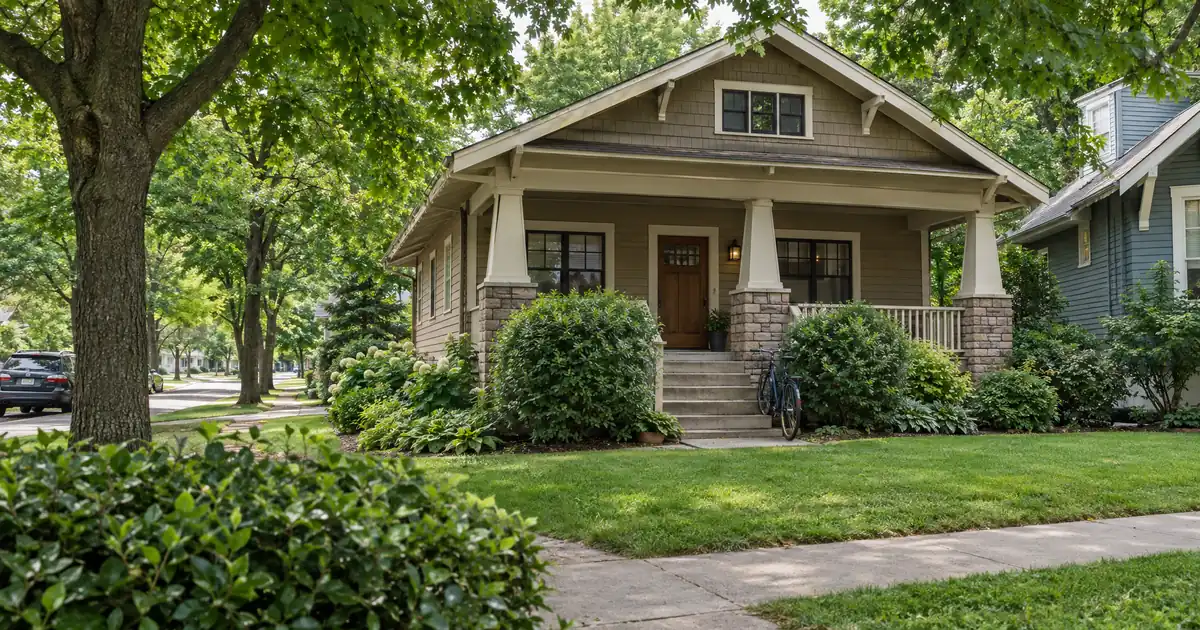
A planned unit development with a community pool and a guard or keypad gate looks like an easy rental on paper. On a DSCR file it is two underwriting subjects, the property and the association. Lendmire arranges DSCR financing through select lenders in its wholesale network across 41 markets, including Washington, D.C. The same file questions come up again and again on PUDs, so this walks through them in order. The complete DSCR loans guide covers the basics of the product itself.
DSCR Calculator
Run the numbers in your market
Rate source: Freddie Mac 30-yr average via FRED® — Federal Reserve Bank of St. Louis · effective Oct 15, 2026
Prefilled with starting assumptions — enter your own rent or nightly figures, taxes, insurance, and HOA for a more accurate picture.
Program parameters update from Lendmire’s centralized guideline source. Taxes and insurance are editable estimates.
As of Oct 15, 2026 · General Freddie Mac market benchmark, not a Lendmire loan offer. Rent, nightly rate, occupancy, taxes, and insurance are editable estimates. Short-term rental figures are estimates only and vary significantly by season, property type, management approach, and local short-term-rental rules — confirm local regulations before relying on them. Qualifying income for short-term rentals varies by program — some use appraisal market rent, others use documented STR history or projections — and is confirmed in underwriting. Not a Loan Estimate, approval, or commitment to lend. Program availability and eligibility are subject to lender guidelines, credit approval, property review, and underwriting.
What Is a PUD, and Why Does the Label Matter?
A PUD is a community of homes where each owner holds title to the structure and the lot, and every owner belongs to an HOA that owns and maintains the common areas. The National Association of Realtors describes a PUD as single-family homes, condos, or townhouses whose owners all belong to an HOA, with membership mandatory.
Forbes Advisor lists the same traits: the owner holds the structure and the lot, the HOA owns the amenities, and owners pay dues and assessments. Redfin adds a trap. A PUD is often listed as a condo even when it looks like a house. Read the recorded documents, not the listing label.
The label matters because a condo and a PUD take different paperwork. Different documents, a different appraisal form, and a different project review follow from it. Across the wholesale network, most programs treat a PUD close to a single-family home with extra association paperwork. A condo project gets a deeper review. The detail is covered in Lendmire’s piece How to Underwrite Condos Alongside Houses and Duplexes in a DSCR Pool.
How Does Underwriting Treat the Pool and the Gate?
Underwriting treats them as costs and risks, not as value. The HOA owns both, funds them through dues, and carries the upkeep and liability. The effect on the file is indirect: higher dues in the denominator, more capital items in the reserve study, and more assessment risk.
| Feature | Who owns it | Dues effect | File effect |
|---|---|---|---|
| Community pool | HOA | Raises monthly dues | Liability, resurfacing, reserve study |
| Private pool on the lot | Borrower | None to dues | Own insurance, condition, appraisal |
| Guard or keypad gate | HOA | Raises dues if staffed | Hardware and roads in reserves |
| Private roads | HOA | Funded through dues | Repair is a capital item |
| Clubhouse or gym | HOA | Raises dues | Reserves, possible optional fees |
Two points sit under that table. First, the community pool and a pool on the lot are different problems. A lot pool is a property item: condition, insurance, and what the appraiser makes of it. A community pool belongs to the association, and the lender looks at the association’s finances instead.
Second, the gate itself has no special DSCR rule. A gate means the HOA probably owns private roads and access hardware, and those are capital items that the reserve study should cover. The practical effect is higher dues and reserve exposure.
How Do HOA Dues Change the Coverage Number?
Dues sit in the denominator. Coverage is monthly rent divided by the full monthly obligation: principal, interest, taxes, insurance, and association dues. Rent is never reduced by dues first. Every dollar of dues cuts coverage dollar for dollar against the same rent.
Run the numbers on a mechanical example, using ratios only. Say a house in a no-HOA subdivision clears about 1.15x. Put an identical house in a pool-and-gate PUD at the same price and rent. The dues land on the debt side, and the ratio can slide toward 1.00x or below. An amenity-heavy PUD can fail a floor that a plain house at the same price would clear.
Three habits keep the number honest:
- Convert quarterly or annual dues to a monthly figure.
- Include mandatory gate and pool fees in dues. Optional amenity or club fees may be treated differently by some programs, so confirm per program.
- Add flood insurance if it applies.
Here is the part that catches people. Clearing 1.00x is not positive cash flow. Repairs, vacancy, management, and utilities sit outside the calculation. High dues cut real cash flow even on a file that passes, a point investors raise in BiggerPockets discussions of high HOA fees on rentals.
Most programs in the network start at 1.00 coverage. Stronger ratios open better pricing and leverage. A separate select-lender path takes coverage below 1.00, with leverage and terms adjusted. That path is a different program, not a lower floor on the same one.
Does a Pool or Gate Raise the Rent?
Only market evidence raises rent. The numerator comes from the lease or from the appraiser’s market-rent estimate, depending on the program. A pool and gate add rent only when rental comparables in similar amenity communities show a premium.
So the comps matter. Pull rentals from communities with matching amenities, not from the next subdivision over. An appraiser who finds no premium will not credit one, and a rent figure built on an assumed premium will not hold at review.
On the appraisal side, the agency forms are a useful contrast only. Fannie Mae’s Selling Guide says the one-unit form covers units in PUDs, while a condo unit uses a different form. Fannie Mae’s appraiser resources name the single-family comparable rent schedule and the small residential income form for 2-4 units. DSCR programs are non-agency. Each program names its own form and rent method.
What Rental Rules Can Stop the File?
A rule in the HOA documents can kill the loan before the numbers matter. The HOA must permit rentals at all, and the rules vary widely.
- Rental caps. A community may limit how many homes can be leased. A full cap can mean a waitlist.
- Owner-occupancy periods. Some associations require a period of owner occupancy before renting.
- Lease minimums and tenant registration. Common in gated communities.
- Approval and fines. BiggerPockets members describe annual rental approvals and fines for unapproved leases.
- Short-term rental bans. Forbes Advisor notes HOA rules may bar short-term rentals.
Short-term rental rules can vary by city, county, HOA, and property type, so investors should confirm local rules before relying on projected rental income. A short-term rental has to be allowed before its income can be underwritten. Where it is allowed, select programs in the network look for about 12 months of hosting history and a 640+ score.
Confirm rental rules before the offer, not after. A written answer from the management company beats a reading of the bylaws.
Where Do Special Assessments and Reserves Come In?
Special assessments are the main hidden risk on pool-and-gate PUDs. Pool resurfacing, pump and plumbing work, and gate system or road replacement are the capital items that trigger them. An underfunded reserve study makes a one-time charge or a dues increase more likely.
Treatment varies by program. Some convert a recurring assessment to a monthly amount and add it to the obligation. Others treat a lump sum as a liquidity question and look at it through the borrower’s reserves. Either way, assessments can stay out of the ratio and still show up in project review.
Read these in the HOA package:
1. Current dues statement, with any pending increase.
2. Adopted annual budget and the reserve study.
3. Special-assessment ledger, past and approved.
4. Governing documents: declaration, CC&Rs, and bylaws.
5. Master insurance policy and what it covers.
6. Any litigation disclosure.
The master policy usually covers common areas only, so the borrower carries a separate policy on the home. Typical document requests run along these lines, and a questionnaire may carry a fee. Programs differ on what they ask for.
Borrower reserves matter here too. On most files they run about 6 months of PITIA, stepping up to about 9 months above $1,500,000, and some conservative rate-and-term files can see them waived. That varies by lender, leverage, and loan size.
Where Does the General Rule Break?
Some PUDs do not behave like a house with an HOA. These are the named edge cases.
- Detached condo projects. Fannie Mae’s guide notes that detached-unit condo projects can be documented on the one-unit form. The structure looks like a house and the legal form is a condo. That puts it back in project review.
- Mixed-use PUDs. Associa, an HOA management firm, notes a PUD can include commercial elements. Expect questions on investor concentration, litigation, insurance, and association finances.
- Separate club or amenity memberships. If the pool or gate access is billed outside the HOA, programs differ on whether that cost counts. Ask per program.
- Active assessments. A pool or gate project already under assessment changes the file.
- Manufactured homes, log homes, and barndominiums. These are not offered in the network’s DSCR programs, PUD or not.
The agency approach is a contrast, not a rule set. Agency programs document rental income with appraisal forms for one-unit and 2-4 unit rentals. On a DSCR file, the property’s rent drives qualification, and program guidelines decide the method.
The File Walkthrough, Step by Step
This is the order that keeps a pool-and-gate file clean.
1. Classify the property. Confirm fee-simple lot plus mandatory HOA. Do not trust the listing label.
2. Order the HOA package at contract. Dues can move between offer and submission, and a stale statement is a known friction point.
3. Confirm rental rules in writing. Caps, waitlists, lease minimums, and short-term bans.
4. Build the denominator. Principal, interest, taxes, insurance, and full monthly dues, with flood insurance if it applies.
5. Set the rent. Use the lease or the market-rent estimate, backed by comps from similar amenity communities.
6. Stress the ratio. Test higher dues, lower rent, and vacancy. If a modest dues increase pushes coverage under the program floor, the file is thin.
7. Check leverage and credit. Purchases typically land at 75%-80% LTV on investment property, with credit tiers from 620 up to 700+, subject to lender guidelines.
8. Reconcile before submission. Re-verify the dues statement and the insurance quotes.
DSCR vs. conventional financing
There are two common ways to finance an investment property, and they qualify you differently — here’s how investors weigh them.
Why investors choose it
- Qualifies on the property’s rental income — no personal tax returns, W-2s, or pay stubs needed to document income.
- No personal debt-to-income ceiling to clear, so existing mortgages and obligations don’t cap your borrowing the same way.
- Can be closed in an LLC, keeping the property inside a business entity.
- Built for scaling — not held to the limit on number of financed properties that conventional financing applies.
- Underwriting centers on the deal: generally qualifies when the rent covers the payment, a 1.00x coverage ratio being a common baseline (confirmed in underwriting).
- Designed specifically for investment property, including long-term and, where the program allows, short-term rentals.
Where it’s strong
- Often the lowest ongoing financing cost for a buyer who fully qualifies on personal income — a fit for a first property or a cost-first purchase.
Trade-offs for investors
- Requires full personal income documentation and must fit within a debt-to-income limit — salary, existing debts, and other mortgages all count.
- Typically held in your personal name rather than a business entity.
- Caps how many financed properties you can carry, which can become a ceiling as a portfolio grows.
- Evaluates you as a borrower as much as the property, which usually means more paperwork.
How investors usually choose: a first or single property often optimizes for the lowest financing cost; portfolio builders often optimize for leverage, vesting in an LLC, and scaling past conventional caps. The right answer depends on your goals, the property, and current guidelines — both paths run through select lenders in Lendmire’s wholesale network, with eligibility and terms confirmed in underwriting.
Hard Stops Versus Fixable Problems
| Finding | Hard stop? | Typical remedy |
|---|---|---|
| Rental ban or full cap | Usually yes | Walk or wait |
| Short-term ban with STR plan | Yes for STR income | Underwrite as long-term |
| Thin coverage from dues | No | More down, price change, lower leverage |
| Underfunded reserves | Depends | More borrower reserves, other property |
| Active large assessment | Depends | Seller credit, or wait |
| Stale dues statement | No | Refresh documents |
A larger down payment lowers the payment and can lift coverage. It never removes leverage caps, credit floors, reserve rules, or property eligibility. The strongest files clear both tests: enough equity and enough rental coverage. If coverage lands below 1.00, a select-lender path exists with leverage and terms adjusted. Interest-only periods and extended terms are available through select lenders too.
Key Terms Defined
PUD: A community where owners hold their home and lot and belong to a mandatory HOA that owns the common areas.
Common elements: The pool, gate, roads, and clubhouse the HOA owns and maintains.
Master policy: The association’s insurance, which usually covers common areas and not the individual home.
PITIA: Principal, interest, taxes, insurance, and association dues, the monthly obligation rent has to cover.
Special assessment: A one-time charge to owners, often for a capital repair such as pool resurfacing or gate replacement.
Reserve study: The association’s plan and funding level for major repairs.
Frequently Asked Questions
Do HOA dues count against rent on a DSCR loan?
Yes. Dues go into the monthly obligation along with principal, interest, taxes, and insurance. They are not subtracted from rent. Each extra dollar of dues lowers coverage against the same rent.
Does a community pool raise the rent I can use?
Only if rental comps in similar amenity communities show a premium. The lease or the appraiser’s market-rent estimate sets the number, and the amenity alone adds nothing automatically.
Does the gate affect the loan?
Not through a specific rule. A gate raises dues, especially if guards staff it, and it adds private roads and hardware to the reserve study. Those flow into the coverage ratio and project review.
Can a PUD with an HOA rental cap still be financed?
Not if the cap blocks the rental. Caps, waitlists, and owner-occupancy periods can stop a file outright, so confirm them in writing before making an offer.
Are special assessments part of the coverage calculation?
It depends on the program. Some convert a recurring assessment to a monthly amount in the obligation. Others treat a lump sum as a reserves question. Either way, they affect project review.
How are HOA dues treated for taxes?
Tax treatment varies; consult a qualified professional.
If you are buying or refinancing a rental property and want to see how the numbers work, Lendmire can help you compare DSCR loan options based on the property income, credit profile, leverage, and investor goals. Qualification is subject to lender guidelines and is not a commitment to lend.
About Lendmire
Lendmire (NMLS# 2371349) is a DSCR-focused mortgage broker that helps arrange investor financing across 41 markets, including Washington, D.C., through wholesale and investor-lending channels. DSCR eligibility is generally reviewed by the lender around the property’s rental income rather than personal income documentation, subject to lender guidelines — which works for self-employed investors, LLC operators, and portfolios above four financed properties. Scotsman Guide named Lendmire a Top Mortgage Workplace in both 2025 and 2026.
Get Started
Ready to find the right loan for you?
In about 30 seconds you can review financing options available for your investment property. No commitment required.
Informational only. Not a Loan Estimate, approval, or commitment to lend. Program availability and eligibility are subject to lender guidelines, credit approval, property review, and underwriting.
References
1. National Association of Realtors – Planned Unit Developments
2. Forbes Advisor – What Is a Planned Unit Development
3. Redfin – What Is a Planned Unit Development
4. BiggerPockets discussions of high HOA fees on rentals
5. Fannie Mae Selling Guide B4-1.2-01
6. Fannie Mae – Appraisers and Property Underwriting
7. BiggerPockets – HOA Assessments thread
This article is part of Lendmire’s DSCR loan program — full qualification details, guidelines, and scenarios live on the program page.
Related reading: Can Apartment Buildings and Rentals Go on One Portfolio DSCR Loan? · Rental HELOC vs Portfolio Loan Rules for a DSCR-Financed Pool · How to Choose a DSCR Loan or Bank Commercial Loan on a Rental
Brandon Miller
Founder & CEO, Mortgage Loan Originator, Lendmire LLC
- Mortgage Loan Originator · NMLS# 1129696 · Verify on NMLS Consumer Access
- North Carolina Real Estate Broker · License# 343312 · Verify on NCREC
- North Carolina Insurance Producer · License# 19053198 · Property, Casualty, Life, Health · Verify on NAIC SBS
- Lendmire LLC · Firm NMLS# 2371349 · Verify firm licensure
Legal disclosures. Lendmire (NMLS# 2371349) is a state-licensed mortgage brokerage that arranges financing through wholesale lender relationships. Lendmire is not a direct lender, depository institution, or registered financial advisor. The discussion above is general informational content about real estate financing — it is not financial, legal, or tax advice, and readers should consult licensed professionals for guidance on their individual circumstances. Loan inquiries are subject to lender underwriting; this article does not represent a commitment to lend. Loan terms, rates, and qualification standards vary by borrower, property, and state, and are subject to change at any time. Equal Housing Opportunity. NMLS Consumer Access: nmlsconsumeraccess.org.