
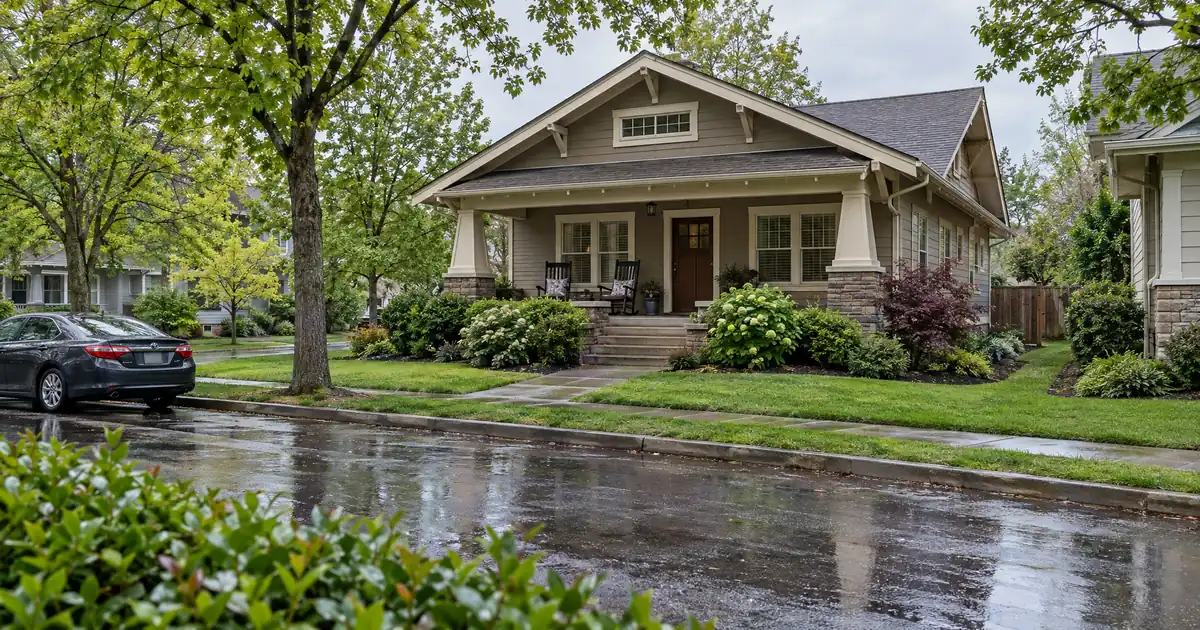
The Quick Read: Yes, it can, though rarely because of age alone: the damage usually arrives as a higher premium that lowers your coverage ratio, roof terms the lender will not accept, or a carrier that declines to renew, which leaves no hazard policy in place at closing. A roof is not a pass/fail item on a DSCR file. The insurance quote is.
- The annual premium sits inside the monthly payment, so a renewal increase lowers the ratio directly.
- Roof-specific terms (actual cash value settlement, roof payment schedules, big wind or hail deductibles) can be rejected even when the premium looks fine.
- If no carrier will bind coverage, the loan cannot fund.
- You can usually fix all three if you find out early. The trouble starts when a renewal notice lands mid-file.
A DSCR loan is a business-purpose investor loan that qualifies primarily on property-level rental income covering the payment, subject to lender guidelines. Insurance is part of that payment. For the big picture on how these loans work, see Lendmire’s complete DSCR loans guide.
DSCR Cash-Out Calculator
Run the cash-out numbers in your market
Rate source: Freddie Mac 30-yr average via FRED® — Federal Reserve Bank of St. Louis · effective Oct 15, 2026
Prefilled with starting assumptions — enter your property’s value, balance, taxes, and insurance for a more accurate picture.
Program parameters update from Lendmire’s centralized guideline source. Taxes and insurance are editable estimates.
As of Oct 15, 2026 · General Freddie Mac market benchmark, not a Lendmire loan offer. Property value, balance, taxes, and insurance are editable estimates. Maximum loan-to-value varies by lender, program, property type, and seasoning. Not a Loan Estimate, approval, or commitment to lend. Program availability and eligibility are subject to lender guidelines, credit approval, property review, and underwriting.
Key Terms Defined
DSCR (debt service coverage ratio): Monthly rent divided by the monthly payment. A ratio of 1.00 means rent equals the payment.
PITIA: Principal, interest, taxes, insurance, and association dues. It is the payment the rent has to cover.
Hazard insurance: The policy that covers physical damage to the building, such as fire, wind, and hail. Lenders require an active, bound policy.
Bound policy: Coverage that a carrier has formally agreed to and put in force.
ACV (actual cash value): A claim settlement that pays the roof’s depreciated value, not the cost to replace it.
Replacement cost (RC): A claim settlement that pays the cost of a new roof, with no deduction for age.
Roof payment schedule: An endorsement that pays a fixed percentage of replacement cost based on how old the roof is.
Non-renewal: The carrier declines to renew at the end of the policy term. It is different from a mid-term cancellation.
Seasoning: The waiting period a lender wants between buying a property and refinancing it. Across most of the wholesale network, about 6 months is the common expectation on a cash-out.
How Does an Older Roof Reach a DSCR File?
An older roof reaches the file through the insurance carrier. The carrier reacts to roof age, the lender reviews the resulting policy, and the ratio is recalculated on the final bound premium. Roof age never appears as its own line in the ratio.
Think of it as a chain:
1. Roof ages. The carrier’s appetite tightens.
2. Carrier acts. It raises the premium, changes the roof terms, asks for an inspection, or declines to renew.
3. Policy changes. The new policy has a different cost, deductible, or settlement basis.
4. Lender reviews. The premium goes into PITIA, and the terms are checked against program limits.
5. Outcome. The ratio holds, drops, or the file stalls for lack of acceptable coverage.
The Roofing Brief describes three typical insurer responses to an aging roof: non-renewal at the policy anniversary, an inspection or replacement required as a condition of renewal, or a downgrade from replacement cost to actual cash value. The same source says the exact ages vary by carrier, state filing, and roof condition. Better Choice Insurance says much the same: there is no universal cutoff, and appetite swings widely by carrier, roof material, and state.
That matters because investors hear a number (15 years, 20 years) and treat it as a rule. Those are commonly cited trigger points, not laws. One carrier may look hard at a 15-year-old asphalt roof while another writes it without comment.
Five Ways It Breaks the Deal
Five triggers do most of the damage: a non-renewal notice, a premium spike, a roof-specific deductible, a settlement downgrade, and a lapse or late binder. Each one hits a different part of the file, and each has a different fix.
| Trigger | What the lender sees | Typical fix |
|---|---|---|
| Non-renewal | No coverage after term end | New carrier or inspection |
| Premium spike | Higher PITIA, lower ratio | Re-shop or lower loan amount |
| Roof deductible | Coverage terms outside program limits | Different policy form |
| ACV or payment schedule | Settlement basis the lender may reject | Ask for RC terms or replace roof |
| Lapse or late binder | No bound policy at closing | Bind coverage before the deadline |
Here is the part that surprises people: only the premium spike is a pure math problem. The other four are acceptability problems. The ratio could look fine while the file still stalls.
What Happens When the Premium Goes Up?
The ratio drops by however much the premium moves the full payment. The lender divides the annual hazard premium by 12 and adds it to the monthly payment. If that payment rises while rent stays flat, the coverage number falls.
Run the numbers on a modeled example. These are assumptions for illustration, not market data:
- Starting point. A rental clears about 1.20x. Insurance is roughly 10% of the full monthly payment.
- Renewal hits. The premium doubles after the roof crosses a carrier’s age line. The full payment rises about 10%.
- Result. Coverage slides to roughly 1.09x.
That file survives if the program starts at 1.00. Now try a harsher version:
- Starting point. Same rental at about 1.20x, but insurance is closer to 15% of the payment.
- Renewal hits. The premium triples, as it can when a standard carrier walks away and a surplus-lines or state-backed carrier steps in. The payment rises about 30%.
- Result. Coverage falls to roughly 0.92x.
Below 1.00, the options narrow. Programs below 1.00 coverage are available through select lenders in the network, with leverage and terms adjusted. Another path is a smaller loan amount, which restores the ratio. A third is a bigger down payment. None of these is automatic. Qualification stays subject to lender guidelines, credit approval, and property review.
Most programs in the network start at 1.00 on standard rentals, and stronger ratios open better pricing and leverage. So a premium that nudges you from 1.25 to 1.10 can matter even if you still clear the floor.
Two more things move with the premium:
- Cash-out sizing. On a cash-out refinance, leverage tops out around 75% LTV (loan-to-value, the loan as a share of the property’s value) across most of the network. If the ratio drops, the lender may size the loan lower than that ceiling. The same quote that hurts the ratio can shrink your proceeds.
- Reserves. Reserves are commonly about 6 months of PITIA, and about 9 months on loans above $1,500,000. A higher premium raises PITIA, so it raises the reserve target too.
(Clearing 1.00 also does not mean the property cash-flows. DSCR compares rent to PITIA only. Repairs, vacancy, management, and utilities sit outside the calculation, and so does the cost of the roof itself.)
When the Premium Is Fine but the Terms Are Not
A policy can look cheap and still fail the lender’s test. Roof-specific terms are the usual culprit. The premium may not move at all, so the ratio is unchanged, but the file still stalls.
ACV roof settlement. Many carriers shift older roofs to actual cash value even when the rest of the building keeps replacement-cost coverage. Live Insurance News advises asking your agent to confirm in writing whether the roof is covered at replacement cost or actual cash value. Do that before you assume anything.
Roof payment schedules. According to LegalClarity, these endorsements override the standard RC/ACV methods and set a fixed percentage of replacement cost by roof age. A schedule on a 20-year-old roof can leave the owner paying a large share of any claim.
Percentage wind and hail deductibles. Premier Mountain Insurance notes that payment schedules often arrive alongside a percentage wind and hail deductible. So read the deductible as carefully as the roof clause.
Different lenders in the network draw these lines in different places. Some accept an ACV roof clause. That is why the same policy can work on one file and stall on another.
What If the Carrier Won’t Renew?
Then you need a replacement policy before the old one ends. Non-renewal itself is not a lender problem. A gap in coverage is.
Realtor writing on this point is blunt: mortgage lenders cannot fund a loan without an active, bound hazard policy. That matches what we see across files. No bound policy means no funding. Full stop.
Your options after a non-renewal notice:
1. Read the notice. Find the stated reason. Roof age, condition, and data errors are three different problems.
2. Check the data. Roof-age records are sometimes wrong, and Live Insurance News reports that errors in that data can trigger non-renewals. A corrected record can reverse the notice.
3. Order an inspection or certification. If the carrier objects to condition, a licensed roofer’s report on remaining life may satisfy it.
4. Re-shop. Get quotes from other carriers with the true roof age, material, and loss history.
5. Try fallback markets. Surplus-lines and state-backed carriers often write roofs the standard market declines. They typically cost more, which feeds straight back into the ratio.
6. Replace the roof. It is the most expensive fix and the cleanest.
State rules on non-renewal notice and roof-age protections differ, so look up the rules for the state where the property sits. Don’t assume the rules from another state apply.
One more wrinkle: a policy that satisfies the carrier does not automatically satisfy the lender. An inspection may keep you insured while the lender still objects to the deductible or the settlement basis. Ask each side separately.
DSCR vs. conventional financing
There are two common ways to finance an investment property, and they qualify you differently — here’s how investors weigh them.
Why investors choose it
- Qualifies on the property’s rental income — no personal tax returns, W-2s, or pay stubs needed to document income.
- No personal debt-to-income ceiling to clear, so existing mortgages and obligations don’t cap your borrowing the same way.
- Can be closed in an LLC, keeping the property inside a business entity.
- Built for scaling — not held to the limit on number of financed properties that conventional financing applies.
- Underwriting centers on the deal: generally qualifies when the rent covers the payment, a 1.00x coverage ratio being a common baseline (confirmed in underwriting).
- Designed specifically for investment property, including long-term and, where the program allows, short-term rentals.
Where it’s strong
- Often the lowest ongoing financing cost for a buyer who fully qualifies on personal income — a fit for a first property or a cost-first purchase.
Trade-offs for investors
- Requires full personal income documentation and must fit within a debt-to-income limit — salary, existing debts, and other mortgages all count.
- Typically held in your personal name rather than a business entity.
- Caps how many financed properties you can carry, which can become a ceiling as a portfolio grows.
- Evaluates you as a borrower as much as the property, which usually means more paperwork.
How investors usually choose: a first or single property often optimizes for the lowest financing cost; portfolio builders often optimize for leverage, vesting in an LLC, and scaling past conventional caps. The right answer depends on your goals, the property, and current guidelines — both paths run through select lenders in Lendmire’s wholesale network, with eligibility and terms confirmed in underwriting.
When the Renewal Lands in the Middle of the Refinance
The lender underwrites the policy that will be in force at closing, so a renewal during the process changes what gets reviewed. Walk it in three stages:
Before you apply. Check the renewal date on your current policy. If it falls near your planned refinance, ask the agent now what the renewal will look like. Get the declarations page, not a verbal summary. A coverage downgrade often shows up only there.
During underwriting. If the policy renews with a surcharge or a new roof endorsement, the ratio is recalculated on the new premium. Tell your broker the moment a renewal notice arrives. A quote used in underwriting that has gone stale is a common source of surprises.
Before closing. The lender wants a bound policy that matches the file: the right named insured, the right address, rental-use coverage, and the lender clause. If the property is held in an LLC, the policy has to name the entity, subject to lender program eligibility. Name mismatches are easy to create during a carrier scramble and annoying to fix.
Pausing the file is sometimes the right call. If the premium is still moving, finishing the insurance picture before the lender finishes its review beats locking in a ratio you cannot defend.
Fix, Certify, Switch, or Wait?
There is no single right answer. The decision turns on how much of the problem is price, how much is insurability, and how much cushion the deal has.
| Option | Best when | Trade-off |
|---|---|---|
| Re-shop carriers | Premium or terms are the issue | Takes effort, no cost to try |
| Certification | Roof is sound, age triggered the flag | Carrier may still say no |
| Replace roof | Nobody will bind or terms fail | Large cash outlay |
| Smaller loan | Ratio is thin | Less cash-out |
| Wait and renew | Renewal is imminent | Delays the refinance |
The stronger play is often to re-shop first and replace last. Honestly, though, it is a genuine toss-up on a roof that is clearly at end of life. Putting money into a replacement you will need soon anyway can beat paying a surcharge for another year. Investors with a long hold tend to lean toward replacing. Investors planning a sale tend to lean toward patching the premium problem.
Spreading roof cost over its life is a sensible way to think about it. A roof that lasts 30 years costs one-thirtieth of its price each year, which Lendmire’s page on super jumbo DSCR loans with capex needs walks through. Tax treatment varies; consult a qualified professional before relying on any deduction for a roof replacement.
What Most Investors Get Wrong About Roofs and DSCR
DSCR files tend to surface the same misunderstandings, and each one is worth correcting before it costs you.
“DSCR ignores insurance.” It doesn’t. Insurance is in the payment, so the premium moves the ratio.
“There is one roof-age cutoff.” There isn’t. Cutoffs vary by carrier, material, and state.
“Replacement cost always applies.” Many policies move older roofs to ACV or a payment schedule.
“A homeowners policy is fine for a rental.” Often it is not. Standard homeowners forms commonly exclude business activity and carry lower liability limits, so a landlord policy is the right form.
“A roof that looks fine is insurable.” Appearance doesn’t decide it. Age and carrier appetite do.
“Insurance is a closing formality.” It is an underwriting input. Quote it early, not at the finish line.
Don’t confuse hazard insurance with the other insurance products that show up in a refinance either. Title insurance is a separate cost with its own rules, and Lendmire’s piece Do You Have to Pay for Title Insurance on a Cash-Out Refinance? covers it.
Practitioner Notes: What the Files Show
Across the wholesale network, the pattern is consistent. The files that survive an older roof are the ones that get insurance quotes in early, with the true roof age and loss history, and run the ratio on a range of premiums instead of one number. The files that stumble are the ones where the quote that worked in the first conversation is stale by the time underwriting picks it up.
A habit worth copying: get two quotes. One assumes the carrier is comfortable with the roof. The other assumes it asks for more. If the deal still works on the worse number, you have a cushion. If it only works on the better one, you have a risk you should price before you commit.
A Pre-Submission Checklist
Gather these before the file goes in:
- The current declarations page, with the roof settlement basis and deductibles visible.
- A written confirmation of RC versus ACV on the roof.
- A quote on a policy written for rental use, with the right named insured.
- Roof age, material, and repair history, plus any inspection report.
- Evidence of any roof replacement or certification.
- The renewal date for the current policy.
- A premium range for your own stress test.
The aim is to enter underwriting with no insurance surprises left.
Frequently Asked Questions
Can my insurer drop me mid-term because of roof age?
Generally not on roof age alone. Carriers typically act at renewal, which is why the renewal date matters so much. State rules on notice and permitted reasons vary, so check the rules where the property sits, and ask your agent what your policy says.
Will a roof inspection or certification be enough?
Sometimes. It can satisfy a carrier that objects to condition, but the lender reviews the policy separately. A certification that keeps you insured does not guarantee the lender accepts the deductible or settlement terms.
What if my coverage is only available at a much higher premium?
The ratio takes the hit, since the premium flows into PITIA. Check whether the file still clears the program’s coverage floor, which is 1.00 for select programs, and whether a smaller loan or larger down payment restores it. A sub-1.00 path through select lenders in the network, with leverage and terms adjusted, is another option.
Can I refinance with an ACV roof policy?
Possibly, depending on the program. Some lenders in the network accept it. Ask your broker which terms the target lender accepts before you buy the policy.
What if the premium rises after I’ve been approved?
The lender recalculates on the final bound premium, so a late increase can still change the outcome. That is why modeling insurance as a range and keeping a cushion matters. Every file is underwritten individually.
If you are buying or refinancing a rental property and want to see how the numbers work, Lendmire can help you compare DSCR loan options based on the property income, credit profile, leverage, and investor goals. The roof itself is rarely the deal-breaker; the renewal quote you haven’t requested yet usually is.
About Lendmire
Lendmire is a non-QM mortgage brokerage (NMLS# 2371349) arranging DSCR investor loans in 41 markets, including Washington, D.C., through wholesale and investor-lending channels. DSCR loans are evaluated by the lender on rental income rather than personal income, subject to lender guidelines — a fit for LLC-owned portfolios, self-employed investors, and operators scaling beyond conventional loan caps. Recognized as a Scotsman Guide Top Mortgage Workplace in 2025 and 2026.
Get Started
Ready to find the right loan for you?
In about 30 seconds you can review financing options available for your investment property. No commitment required.
Informational only. Not a Loan Estimate, approval, or commitment to lend. Program availability and eligibility are subject to lender guidelines, credit approval, property review, and underwriting.
References
4. LegalClarity
This article is part of Lendmire’s DSCR loan program — full qualification details, guidelines, and scenarios live on the program page.
Related reading: How to Refinance a Family Office Rental Portfolio on Super Jumbo DSCR · Can a Higher Insurance Renewal Push a Rental Below the DSCR Floor? · How to Refinance Eight to Twelve Hard Money Rentals Into DSCR
Brandon Miller
Founder & CEO, Mortgage Loan Originator, Lendmire LLC
- Mortgage Loan Originator · NMLS# 1129696 · Verify on NMLS Consumer Access
- North Carolina Real Estate Broker · License# 343312 · Verify on NCREC
- North Carolina Insurance Producer · License# 19053198 · Property, Casualty, Life, Health · Verify on NAIC SBS
- Lendmire LLC · Firm NMLS# 2371349 · Verify firm licensure
Required disclosures. Lendmire (NMLS# 2371349) operates as a licensed mortgage broker, not a direct lender or depository. The discussion in this article is general in nature and should not be relied upon as financial, legal, or tax advice — every investment scenario is unique and should be reviewed by a qualified professional. Any loan inquiry is subject to lender underwriting, and this article is not a commitment to lend or a guarantee of approval. Mortgage rates, loan terms, and program guidelines vary by borrower, property, and state, and may change without notice. Equal Housing Opportunity. Verify licensure at NMLS Consumer Access.