
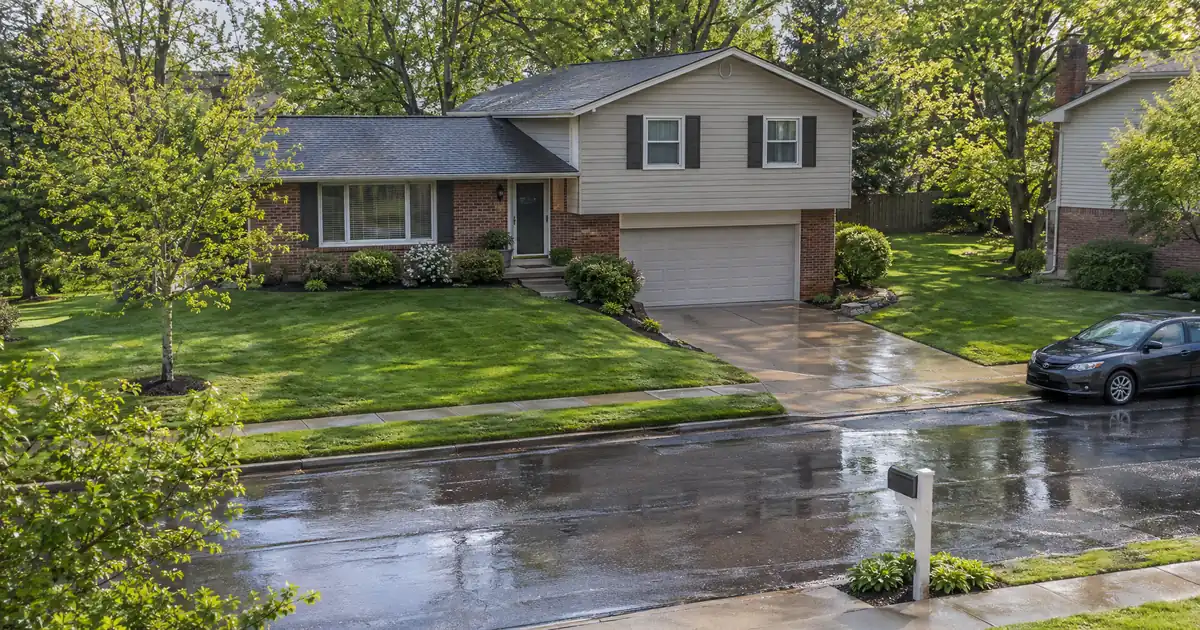
The Quick Read: Yes, usually. Three friends can buy one rental on a single DSCR loan, most often through a multi-member LLC that takes title and signs the note, with the owners above the lender’s ownership line signing personal guaranties, subject to lender guidelines.
- The property qualifies primarily on its rental income covering the payment, not on three blended personal incomes.
- Each guarantor is still reviewed for credit, ID, and reserves.
- Most purchase files land at 75%-80% LTV on an investment property, depending on the program.
- Select-lender paths exist for coverage below 1.00 with leverage and terms adjusted.
- The operating agreement matters as much as the loan. Each figure is subject to lender guidelines and a complete review of property type, leverage, and credit.
Here is how these files work from the inside, where they stall, and who should skip the structure.
How Does DSCR Work When Three People Are Involved?
The loan tests the property, not the people. Monthly rent is divided by the full monthly housing obligation: principal, interest, taxes, insurance, and any HOA dues. A rent schedule from an appraisal or a signed lease supports the rent figure. The test stays the same no matter how the ownership splits.
Across the wholesale network, 1.00 is where select programs start. Stronger coverage opens better pricing and leverage. A separate select-lender path takes coverage below 1.00 with leverage and terms adjusted. Ownership percentages do not move the coverage number.
Picture a rental that clears roughly 1.2x on its documented rent. Whether one owner or three hold it, that number is identical. What changes is who signs, whose credit is pulled, and whose reserves get documented.
Clearing 1.00 is also not the same as positive cash flow. Repairs, vacancy, management, utilities, and capital expenses sit outside the calculation. Three friends who read a passing ratio as profit are the ones who run short in month seven when a roof or HVAC unit fails.
For the full program picture, see Lendmire’s complete DSCR loans guide.
Three Ways to Hold Title and Borrow
An LLC is the common route. It is a state-law entity, and its members are generally not personally liable for its debts, per the IRS. Rocket Lawyer notes that friends buying a rental typically register an LLC to own it and become co-owners of the LLC. Lending to an LLC is subject to lender program eligibility, and the entity documents drive the file.
The alternatives are individuals on title together, or one friend borrowing while the others invest privately. Here is how they compare.
| Structure | Who is on the note | Who guarantees | Exit flexibility |
|---|---|---|---|
| Multi-member LLC | The LLC | Owners above the lender’s line | Moderate; partner exit usually means refinance |
| Co-owners on title | All three individually | Each is a borrower | Limited; a partner exit usually means refinancing the loan |
| One borrower, private partners | One friend or their entity | That one friend | Weak; side deals bind no one but you |
Individuals on title carry joint and several liability. Nolo explains that co-owners who sign a mortgage together can each be pursued for the whole debt. Whether a given program lends to individuals co-owning as tenants in common is program-specific, so confirm before you contract.
Tenants in common can hold unequal shares with no survivorship. Joint tenancy needs equal shares and carries survivorship, per Hemlane. Either way, each owner can sell or encumber their own share unless agreements and the lender restrict it. That complicates every later decision.
One Property Is Not a Portfolio Loan
Group buyers often mix these up. A portfolio DSCR loan, also called a blanket or cross-collateralized loan, is one note secured by several rentals. Three friends buying one house are not in that product.
The 30-year portfolio DSCR loan covers 2 to 20 properties under one note. The rental portfolio term loan is for five or more rental properties or units. Both are separate structures from a loan on a single rental, with their own credit floors and entity rules, all subject to lender guidelines. If the friends later grow to several rentals under one ownership group, that route opens. One house does not need it.
Who Signs and Who Gets Reviewed
The LLC signs the note and mortgage. Qualifying owners sign a separate guaranty. Where the guarantor line sits is a lender-by-lender call, not a federal rule. Many programs look at owners holding roughly a fifth or more of the entity, and some also want the signers to hold a combined majority. Treat those as patterns, not promises.
| Scenario | Likely result |
|---|---|
| Equal thirds (33/33/33) | All three usually sit above any common line and all guarantee |
| 50/25/25 | All three likely guarantee; the 50% owner is the anchor |
| Two active owners plus a small silent investor | Silent investor may fall under the line and not sign |
Whose credit sets the pricing tier varies. Some programs use the lower middle score of the guarantors, others the higher. A 620 floor exists in parts of the network, most programs want around 660, and 700+ unlocks the strongest leverage tiers. If the program uses the lower score, one friend’s credit can raise the cost for all three. Some structures cap a weak-credit owner at a low ownership share so that person’s credit is not pulled. That is a real tool when the ownership is genuine.
Here is where files go wrong. Adding someone with good credit who has no real stake, just to improve the file, is a straw-borrower problem. It risks a cancelled loan and fraud exposure. The owner has to be a genuine owner, documented in the operating agreement and in the capital they contributed.
Each guarantor also gets ID verification and a credit authorization. Reserves vary by lender, leverage, loan size, and transaction type, commonly around 6 months of PITIA, with about 9 months on larger loans above $1,500,000. Conservative rate-and-term files at modest leverage can see reserves waived. Reserve statements need to show the funds are actually held, and by whom.
The Risk the Loan Pages Don’t Explain
An LLC does not make the loan non-recourse. A personal guaranty usually sits behind it. A guarantor can be pursued for the full balance, as accounting guidance on joint and several obligations explains: the obligation is enforceable in full against any one obligor.
Say one friend stops contributing after a bad year. The lender does not care that the side agreement splits the payment three ways. The lender recognizes the note and the guaranty. The two friends who keep paying can find themselves covering the whole obligation and chasing the third for reimbursement. That is a legal dispute between friends, not a loan problem.
The LLC does protect against tenant and property claims, which is the point of using one. It does not protect friends from each other.
Operating Agreement Checklist
Settle these before any capital moves. Changing percentages after a lender has set its guarantor line means amending documents and possibly the loan.
- Ownership percentages and capital contributed by each member
- Capital calls: who funds a surprise repair, and what happens if someone can’t
- Decision rights: who signs leases, approves repairs, picks the manager
- Distribution rules and a reserve policy that holds back cash before profits go out
- Buy-sell terms, including how a buyout is priced
- Death, divorce, and bankruptcy provisions
- A deadlock rule for a 1-1-1 disagreement
- Who manages day to day and whether they’re paid
The file will also need the operating agreement, an EIN letter, a certificate of good standing, ID and credit authorization for each guarantor, and reserve statements. Exact requirements vary by program.
When One Friend Wants Out
Removing a partner after closing generally means a refinance. The lender recognizes the note, not your private buyout. Selling a member’s interest to the other two may also trip the guarantor line or change who must sign.
Plan the exit on day one. If a partner leaves, the remaining owners have to qualify again, on the property’s rent and on their own credit and reserves. A cash-out refinance tops out around 75% LTV across most of the network, with about 6 months of seasoning as the common expectation, so a buyout funded by a refinance has leverage limits too. For a related exit scenario, Lendmire’s piece How to Sell One Rental and Buy Another Inside a DSCR Portfolio Loan covers how a sale inside a pool works. Leverage, reserves, and pricing vary by lender and program; the final terms follow the full file review.
Moving an existing property into a new LLC is a separate trap. It can raise due-on-sale questions on an existing loan, so confirm with the lender and counsel first.
Taxes, Reporting, and the Business-Purpose Frame
DSCR loans are designed for non-owner-occupied investment properties. Because they are business-purpose investor loans, they are reviewed differently from a standard owner-occupied mortgage. Credit extended primarily for business purposes, or to someone other than a natural person, is outside the consumer rules in Regulation Z.
On entity reporting, FinCEN exempted U.S. companies from beneficial ownership reporting, so a new friends’ LLC generally has no federal filing there. State rules vary, so check yours.
Tax treatment can depend on how the funds are used and how the property is held; investors should keep clear records and speak with a qualified tax professional before relying on any deduction.
Who Should Not Do This
Skip the structure if any of these are true:
- One friend won’t sign a guaranty but expects an equal share
- The group has no written operating agreement and doesn’t want one
- Someone’s credit is weak and the program uses the lower score
- Nobody can fund a reserve for vacancy and repairs
- The property is a manufactured home, log home, or barndominium. Those are not offered in the network’s DSCR programs.
- A friend plans to live in the property. DSCR loans are for non-owner-occupied rentals.
The cleanest groups have similar credit, genuine capital from each member, and an agreement that already answers the question nobody wants to ask.
Step by Step: From Agreement to Closing
1. Agree on terms first. Settle percentages, contributions, management, and exit rules in writing.
2. Form the LLC. Get the EIN and confirm the entity is in good standing.
3. Pull credit on each likely guarantor. Find out whose score sets the tier before you pick a program.
4. Document reserves. Statements should show who holds the funds and how they reach the LLC.
5. Document the rent. An appraisal rent schedule or a signed lease supports the coverage number.
6. Match leverage to coverage. Most purchases run 75%-80% LTV on an investment property; select high-leverage programs reach 85% with roughly a 700+ score. A larger down payment can lift coverage, but it never erases credit floors, reserve rules, or property eligibility. Terms vary by lender guidelines, property type, leverage, credit profile, and full file review.
7. Submit the entity package and guarantor documents together. Missing operating agreements and unsigned pages are the common reasons these files stall.
Key Terms Defined
Guarantor: an owner who signs a personal promise to repay if the LLC does not.
Joint and several liability: each signer can be pursued for the entire debt, whatever the internal split.
Tenants in common: co-ownership where each owner holds a separate share, equal or not, with no survivorship.
Cross-collateralized loan: one note secured by several properties, also called a blanket or portfolio DSCR loan.
Straw borrower: a person added to a file for their credit without a real ownership stake.
Frequently Asked Questions
Can three people be on one DSCR loan?
Yes. Either all three sign as individual borrowers, or an LLC borrows and the qualifying owners guarantee. The LLC route is more common for investors, subject to lender guidelines.
Does every friend need good credit?
Every guarantor is reviewed. Some programs use the lower middle score and some the higher, so a weak score can affect the whole file. Across the network, a 620 floor exists in parts, most programs want around 660, and 700+ opens the strongest leverage.
What if one friend stops paying?
The lender looks to the note and the guaranties, not your side agreement. Each guarantor can be pursued for the full balance. Your operating agreement should say how the others recover costs.
Can we pool different incomes to qualify?
Not in the way a conventional joint mortgage works. The loan is reviewed primarily on property-level rental income covering the payment, subject to lender guidelines. Personal incomes are not blended.
Can we add or remove a friend later?
Adding or removing a borrower or guarantor usually means a refinance, because the lender recognizes the original note. Settle exit terms in the operating agreement before closing.
If you are buying or refinancing a rental property and want to see how the numbers work, Lendmire can help you compare DSCR loan options based on the property income, credit profile, leverage, and investor goals. Lendmire is a broker arranging financing through select lenders in its wholesale network, and nothing here is a commitment to lend or legal advice. Talk to an attorney about your ownership structure.
About Lendmire
Lendmire — NMLS# 2371349 — is a DSCR and non-QM mortgage brokerage with investor loan programs in 41 markets, including Washington, D.C. DSCR eligibility is commonly reviewed by the lender around property-level rent rather than personal income documentation, subject to lender guidelines, and the brokerage helps arrange financing for LLC-owned portfolios beyond conventional financed-property limits. Recognized by Scotsman Guide as a Top Mortgage Workplace in 2025 and 2026.
Get Started
Ready to find the right loan for you?
In about 30 seconds you can review financing options available for your investment property. No commitment required.
Informational only. Not a Loan Estimate, approval, or commitment to lend. Program availability and eligibility are subject to lender guidelines, credit approval, property review, and underwriting.
References
4. Hemlane: Joint Tenants vs. Tenants in Common
5. PwC Viewpoint – joint and several
6. CFPB: Regulation Z § 1026.3
This article is part of Lendmire’s DSCR loan program — full qualification details, guidelines, and scenarios live on the program page.
Related reading: Can a Short-Term Rental Near a Hospital Qualify for a DSCR Loan? · Tenants-in-Common vs. an LLC for Friends Buying a Rental on a DSCR Loan · How to Finance a Short-Term Rental as a Retiree With a DSCR Loan
Brandon Miller
Founder & CEO, Mortgage Loan Originator, Lendmire LLC
- Mortgage Loan Originator · NMLS# 1129696 · Verify on NMLS Consumer Access
- North Carolina Real Estate Broker · License# 343312 · Verify on NCREC
- North Carolina Insurance Producer · License# 19053198 · Property, Casualty, Life, Health · Verify on NAIC SBS
- Lendmire LLC · Firm NMLS# 2371349 · Verify firm licensure
Required disclosures. Lendmire (NMLS# 2371349) operates as a licensed mortgage broker, not a direct lender or depository. The discussion in this article is general in nature and should not be relied upon as financial, legal, or tax advice — every investment scenario is unique and should be reviewed by a qualified professional. Any loan inquiry is subject to lender underwriting, and this article is not a commitment to lend or a guarantee of approval. Mortgage rates, loan terms, and program guidelines vary by borrower, property, and state, and may change without notice. Equal Housing Opportunity. Verify licensure at NMLS Consumer Access.