
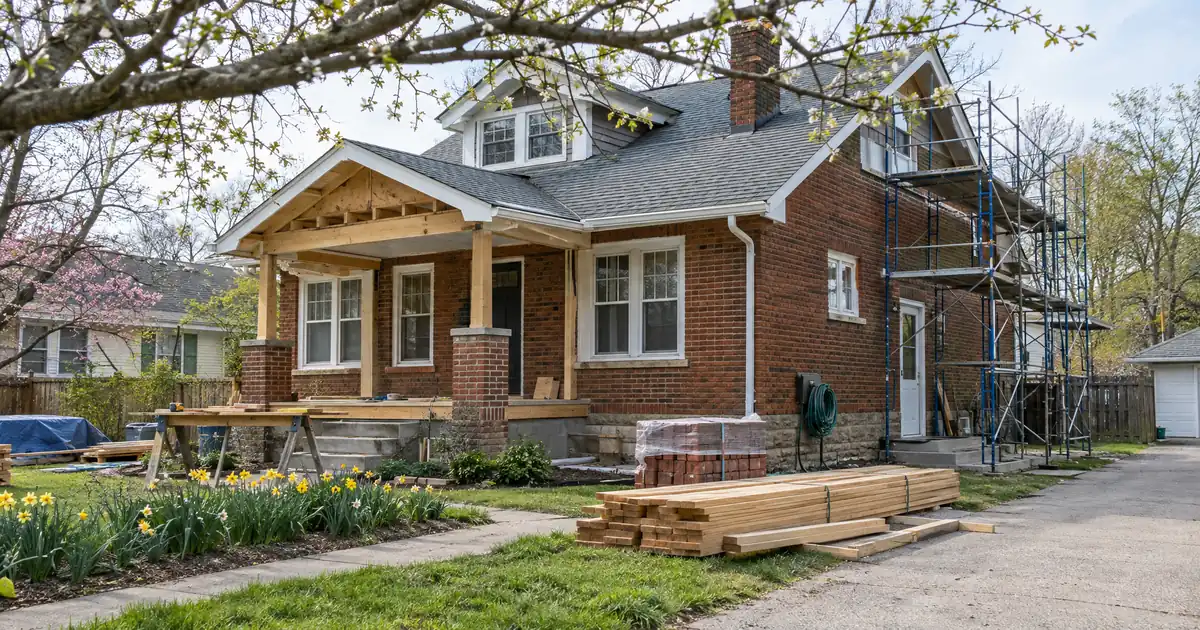
The Quick Read: Usually, yes: a DSCR cash-out refinance can pay off hard money still owed on a flip, as long as you have owned the property long enough, it appraises high enough for the new loan to cover the payoff plus closing costs, and its rent covers the full monthly payment, all subject to lender guidelines. The new lender pays the old lender directly through the title company. Any cash back to you is whatever is left after payoff and costs.
- Seasoning: a DSCR cash-out generally wants about 6 months of ownership, measured from the recorded deed.
- Leverage: a DSCR cash-out on a standard rental tops out at 75% LTV, which is loan-to-value.
- Coverage: the DSCR loan is sized on rent versus the full payment, and 1.00 is where select programs start.
- Payoff-only: a refinance that returns no cash is treated differently and is not held to the cash-out waiting period.
- Reality check: on a tight flip, the cash-out may return little or nothing beyond the payoff.
Why the Answer Is Usually Yes
A DSCR loan is underwritten on the property, not on the old loan’s terms. DSCR stands for debt service coverage ratio. It compares the rent the property earns to the full monthly housing payment. That payment is called PITIA: principal, interest, taxes, insurance, and association dues.
DSCR Cash-Out Calculator
Run the cash-out numbers in your market
Rate source: Freddie Mac 30-yr average via FRED® — Federal Reserve Bank of St. Louis · effective Oct 15, 2026
Prefilled with starting assumptions — enter your property’s value, balance, taxes, and insurance for a more accurate picture.
Program parameters update from Lendmire’s centralized guideline source. Taxes and insurance are editable estimates.
As of Oct 15, 2026 · General Freddie Mac market benchmark, not a Lendmire loan offer. Property value, balance, taxes, and insurance are editable estimates. Maximum loan-to-value varies by lender, program, property type, and seasoning. Not a Loan Estimate, approval, or commitment to lend. Program availability and eligibility are subject to lender guidelines, credit approval, property review, and underwriting.
A DSCR lender does not care how the hard money was structured. It cares about three things: what the property appraises for, whether the rent covers the new payment, and whether you have owned it long enough. If all three pass, the payoff is simply a use of the loan proceeds.
Hard money is a short-term loan secured by the property and made by private lenders, as Corporate Finance Institute describes it. It usually ends in a balloon, which means the whole balance comes due at maturity. The investor repays it by selling or by refinancing into longer debt. A DSCR loan is the long-term exit. Our complete DSCR loans guide covers the basics if the product is new to you.
What “Still Owed” Really Includes
The number that matters is the figure on the payoff statement, not the loan amount you remember. It grows while the clock runs. Ask the hard money lender for an updated statement before you apply.
| Payoff line | What it is | Why it matters |
|---|---|---|
| Drawn principal | Funds actually released | Undrawn rehab money is not owed |
| Accrued interest | Interest-only charges to payoff date | Grows every month you wait |
| Extension or exit fees | Charges your note may carry | Easy to forget |
| New loan closing costs | Title, appraisal, lender fees | Must fit inside the new loan |
Hard money programs typically run 6 to 18 months, interest-only, and the terms vary by lender, property, and experience. The maturity date sets your calendar. The seasoning clock on the new loan has to fit inside it.
How the Payoff Works at Closing
You never handle the payoff money. The title company does. This is standard closing practice.
1. The hard money lender issues a payoff statement with a per-day figure.
2. The DSCR lender’s appraisal and rent schedule set the maximum new loan.
3. At closing, title wires the payoff to the hard money lender from the new loan’s proceeds.
4. The old lien is released and the new lien is recorded.
5. If anything is left after payoff and costs, that is your cash back.
The borrower on the new loan generally has to match the owner on title. If you bought in an LLC, the new loan is made to that entity, subject to lender program eligibility. Check this with the title company before you apply, because a mismatch can force a deed change and restart conversations about seasoning.
Payoff-Only or Cash-Out?
The line is simple: does cash come back to you after payoff and costs? A refinance that only pays off the old loan and closing costs is a rate-and-term refinance. Cash back above that makes it a cash-out. The CFPB draws the same distinction between cash-out and non-cash-out refinances. Exactly where a lender draws the line is policy, so get the treatment in writing before the appraisal.
| Factor | Payoff-only (rate-and-term) | Cash-out |
|---|---|---|
| Cash back | None | Yes, after payoff and costs |
| Waiting period | Generally lighter | About 6 months from recording |
| LTV ceiling (DSCR loan) | Up to 85% | Up to 75% on standard rentals |
| Best fit | Bridge is maturing | Equity is real and the cash has a job |
The ceilings above describe the DSCR loan, and they are guidance, not promises. Many investors ask how big the cash check can get, and Lendmire’s article, How Much Cash Can You Take Out When Refinancing Hard Money?, goes deeper on that.
The Four Gates a Lender Checks
Every DSCR cash-out that pays off hard money has to clear four tests. Passing three does not make up for failing one.
| Gate | What the lender checks | What you bring |
|---|---|---|
| Time owned | Recorded deed date | Deed and settlement statement |
| Value | The new appraisal, not your ARV estimate | A realistic exit plan |
| Rent coverage | Rent against the full payment | Lease, deposit proof, rent schedule |
| Reserves and credit | Cash left after closing; score tier | Bank statements; credit review |
Time owned. Across most programs in our wholesale network, cash-out on current value wants about 6 months of ownership. The clock runs from the recorded deed. Finishing the rehab or signing a lease does not shorten it. Inside that window, a lender generally sizes the loan on your cost basis, meaning the purchase price plus documented rehab, rather than on appraised value.
Value. ARV, or after-repair value, is your projection of what the property is worth when finished. The new loan is sized on the lender’s appraisal. If your ARV was optimistic, the loan shrinks to match.
Rent coverage. The loan must also clear the rent test. Many select programs start at 1.00 coverage. A separate select-lender path goes below 1.00, with leverage and terms adjusted. Stronger ratios generally open better leverage. A larger loan means a larger payment, so the rent can fail even when the value passes. The lower of the two limits governs.
Reserves and credit. Reserves are the cash you keep after closing, commonly around 6 months of PITIA, and they vary by lender, leverage, and loan size. Above $1,500,000 they typically step up to about 9 months. Credit tiers run from a 620 floor in parts of the network, with most programs wanting about 660 and the strongest leverage reserved for 700 and up.
Worked Example: When the Appraisal Slips
Run the numbers as a modeled example, not a market fact. Say the hard money payoff equals 68% of the value you expect. Assume the new loan’s closing costs run about 3 percentage points of that value. The DSCR cash-out caps at 75% LTV on a standard rental, so the loan you need to break even is 71% of expected value. Terms depend on the lender’s guidelines, the property type, the leverage, and a full review of the credit profile.
| Appraisal vs. your expectation | Max loan (% of expected value) | Cash back or cash to close |
|---|---|---|
| Hits expectation (100%) | 75.0 | About 4 points back |
| Misses by 5% (95%) | 71.25 | Roughly zero |
| Misses by 10% (90%) | 67.5 | About 3.5 points to bring |
Notice how little room there is. A 5% miss on value erased nearly all the cash back. A 10% miss flipped the file from cash back to cash due at closing. The swing is much larger than the miss, because the payoff is a fixed amount while the cap moves with value.
Now the structural trap. A flip financed near the top of the hard money range sits at the edge before you even refinance. Hard money on a flip typically funds up to 93% of project cost at the top experience tier, and every tier is capped at 75% of after-repair value, with all of it varying by lender, property, and experience. The DSCR cash-out also caps at 75% of its own appraised value. Two caps at the same level, with exit costs on top, leave no cushion. This is why a maxed-out bridge often lands at payoff-only.
The same logic runs backward when you plan. Start from a conservative ARV, apply the 75% cash-out cap, subtract exit costs, and the remainder is the most your bridge payoff can be. Lendmire’s piece How to Budget a First Flip So the DSCR Cash-Out Still Clears Hard Money walks through that planning.
Passing the rent test is also not the same as making money. DSCR looks only at rent against PITIA. Repairs, vacancy, management, utilities, and capital expenses sit outside it. A file can clear 1.00 with thin real cash flow, so some investors choose to sell instead of pulling the maximum cash.
DSCR vs. conventional financing
There are two common ways to finance an investment property, and they qualify you differently — here’s how investors weigh them.
Why investors choose it
- Qualifies on the property’s rental income — no personal tax returns, W-2s, or pay stubs needed to document income.
- No personal debt-to-income ceiling to clear, so existing mortgages and obligations don’t cap your borrowing the same way.
- Can be closed in an LLC, keeping the property inside a business entity.
- Built for scaling — not held to the limit on number of financed properties that conventional financing applies.
- Underwriting centers on the deal: generally qualifies when the rent covers the payment, a 1.00x coverage ratio being a common baseline (confirmed in underwriting).
- Designed specifically for investment property, including long-term and, where the program allows, short-term rentals.
Where it’s strong
- Often the lowest ongoing financing cost for a buyer who fully qualifies on personal income — a fit for a first property or a cost-first purchase.
Trade-offs for investors
- Requires full personal income documentation and must fit within a debt-to-income limit — salary, existing debts, and other mortgages all count.
- Typically held in your personal name rather than a business entity.
- Caps how many financed properties you can carry, which can become a ceiling as a portfolio grows.
- Evaluates you as a borrower as much as the property, which usually means more paperwork.
How investors usually choose: a first or single property often optimizes for the lowest financing cost; portfolio builders often optimize for leverage, vesting in an LLC, and scaling past conventional caps. The right answer depends on your goals, the property, and current guidelines — both paths run through select lenders in Lendmire’s wholesale network, with eligibility and terms confirmed in underwriting.
What If the Hard Money Matures Before Seasoning Ends?
This is the common squeeze. The note comes due at month five, and the cash-out wants six. You have options, and each has a cost.
| Option | How it works | Trade-off |
|---|---|---|
| Extend the bridge | Ask the hard money lender for more time | Extension charges and more interest |
| Payoff-only now, cash-out later | Two closings | Two sets of closing costs |
| Cost-basis cash-out | Size on price plus documented rehab | Less cash than appraised value would give |
| Bring cash to closing | Pay down to fit the loan | Ties up your capital |
| Sell | Exit the flip | Gives up the rental hold |
Many investors refinance out of hard money into long-term DSCR financing once the property is stabilized, which Lendmire arranges through its hard money exit refinance program, subject to lender guidelines. Stabilized means finished, leased, and collecting rent. An unleased property cannot pass the rent test, so finish lease-up first or extend the bridge.
Plan backward from the maturity date. Line up a lease, deposit proof, and reserves early, and request a payoff statement before you apply. Hard money typically carries no prepayment penalty, which gives you flexibility on the old loan’s side.
One more broker-level observation. When these files stall, it is rarely the rent. It is usually the appraisal, the calendar, or a missing document. A lease, bank deposit verification, and proof of the first month’s rent and security deposit are the paperwork gaps that most often hold files up.
Does Delayed Financing Fix This?
Usually not. Delayed financing is an agency concept, and DSCR loans are not agency products. Fannie Mae’s Selling Guide describes an exception to its ownership waiting period for borrowers who bought with cash. A hard money lien on the purchase generally breaks that fit, because the financing shows on the settlement statement. It also returns documented cost, not your ARV.
That is the only agency contrast worth making here. Do not borrow agency seasoning rules to predict what a DSCR lender will do. The programs we place files with set their own waiting periods, and those come from lender policy, not from law.
Key Terms Defined
- DSCR: the ratio of a property’s monthly rent to its full monthly payment.
- PITIA: principal, interest, taxes, insurance, and association dues, the full monthly housing payment.
- LTV: loan-to-value, the loan amount as a percentage of appraised value.
- Seasoning: the time you must own a property before a lender will cash out on its current value.
- ARV: after-repair value, your projection of the finished property’s worth.
- Payoff-only refinance: a new loan that repays the old one and closing costs but returns no cash.
- Cash-out refinance: a new loan that repays the old one and returns the leftover as cash to you.
- Payoff statement: the hard money lender’s document showing the exact amount owed on a given date.
Common Mistakes
- Assuming a payoff is automatically rate-and-term. Any cash back makes it a cash-out.
- Starting the seasoning clock at the end of the rehab. It runs from the recorded deed.
- Sizing the exit on your ARV. The new appraisal sets the loan.
- Assuming a strong DSCR waives seasoning. Rent coverage and time owned are separate tests.
- Paying rehab costs on cards or a credit line. Reimbursing those from loan proceeds generally turns the file into a cash-out.
- Spending the cash before it exists. Tax treatment can depend on how the funds are used and how the property is held; investors should keep clear records and speak with a qualified tax professional before relying on any deduction.
Frequently Asked Questions
Does paying off hard money count as a cash-out refinance?
Only if cash comes back to you after payoff and closing costs. A loan that just covers the payoff and costs is generally treated as rate-and-term. Lenders set that line by policy, so confirm the treatment in writing before the appraisal.
Can I refinance right after buying the property?
A payoff-only refinance generally does not carry the cash-out waiting period. A cash-out on current value typically wants about 6 months from the recorded deed. Inside that window, some programs size on cost basis, which usually returns less cash.
Does a DSCR above 1.00 mean the flip cash flows?
No. DSCR compares rent to PITIA only. Repairs, vacancy, management, utilities, and capital spending sit outside the calculation, so a passing ratio can still leave thin real cash flow.
Can a first-time flipper use a DSCR loan as the exit?
Experience matters most at the bridge stage, where hard money leverage is tiered by completed projects. The exit is reviewed on the property’s value, rent coverage, reserves, and credit. Subject to lender guidelines, a first-timer who built the file well can qualify.
What if the new loan is smaller than the payoff?
You bring the difference, negotiate an extension, or sell. This happens when the bridge was sized near its ceiling and the new appraisal lands below your ARV. Run the break-even math before you buy, not after.
Next Step
If you are buying, rehabbing, or refinancing an investment property on a short timeline and want to see how the numbers work, Lendmire can help you compare hard money options based on the project, the exit plan, leverage, and your goals. Call 828-256-2183 to talk it through.
About Lendmire
As a DSCR and non-QM mortgage broker, Lendmire — NMLS# 2371349 — connects investors with wholesale lending channels across 41 markets, including Washington, D.C. The property’s rental income, not the borrower’s tax returns, is central to lender review, which works for self-employed operators and portfolios beyond four financed properties. Scotsman Guide named Lendmire a Top Mortgage Workplace in both 2025 and 2026.
Get Started
Ready to find the right loan for you?
In about 30 seconds you can review financing options available for your investment property. No commitment required.
Informational only. Not a Loan Estimate, approval, or commitment to lend. Program availability and eligibility are subject to lender guidelines, credit approval, property review, and underwriting.
References
1. Corporate Finance Institute: Hard Money Loan
2. CFPB: A Look at Cash-Out Refinance Mortgages and Their Borrowers
3. Fannie Mae Selling Guide B2-1.3-03: Cash Out Refinance Transactions
This article is part of Lendmire’s hard money loan program — full qualification details, guidelines, and scenarios live on the program page.
Related reading: Hard Money vs Portfolio DSCR Loan for a Rental Package With Repairs · How to Choose a DSCR Cash-Out or HELOCs on Paid-Off Rentals · How to Size a DSCR Cash-Out Before the Rehab Is Finished
Brandon Miller
Founder & CEO, Mortgage Loan Originator, Lendmire LLC
- Mortgage Loan Originator · NMLS# 1129696 · Verify on NMLS Consumer Access
- North Carolina Real Estate Broker · License# 343312 · Verify on NCREC
- North Carolina Insurance Producer · License# 19053198 · Property, Casualty, Life, Health · Verify on NAIC SBS
- Lendmire LLC · Firm NMLS# 2371349 · Verify firm licensure
Important disclosures. Lendmire (NMLS# 2371349) is a licensed mortgage brokerage. Lendmire is not a direct lender, depository institution, or financial advisor. All loan inquiries are subject to lender underwriting; this article does not constitute a commitment to lend. Rates, terms, and program guidelines are subject to change without notice and vary by borrower profile, property type, and state. Information in this article is general in nature and is not financial, legal, or tax advice. Equal Housing Opportunity. NMLS Consumer Access: nmlsconsumeraccess.org.