
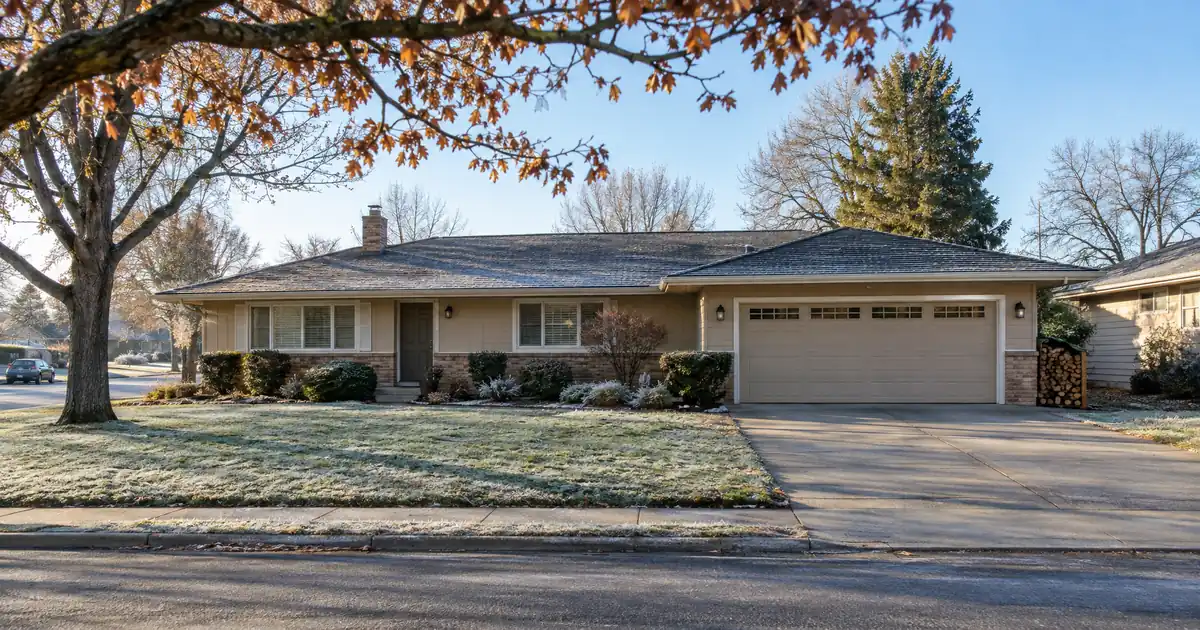
The Quick Read: Yes, but only through the lender and only with documented evidence, and a challenge does not guarantee a higher number. A reconsideration of value asks the appraiser to reassess the report based on errors or omissions, not on a difference of opinion. Better terms follow only if the corrected value or rent crosses a threshold on the program’s grid.
- Route every challenge through the lender or broker, never to the appraiser directly.
- Provable errors (wrong square footage, wrong bed or bath count, unreflected renovations) can move a report. Opinion rarely does.
- Value sets the loan ceiling. Market rent sets the coverage ratio. Each needs different evidence.
- The review can hold the value or, in rare cases, lower it.
- If the number holds, restructuring often beats a second fight.
A low appraisal on a DSCR refinance stings because it hits twice. A lower value shrinks the maximum loan under the leverage cap. A lower market rent can drag the coverage ratio down or push the file into a weaker pricing tier. Investors who treat it as one problem usually waste their evidence on the wrong number.
DSCR Cash-Out Calculator
Run the cash-out numbers in your market
Rate source: Freddie Mac 30-yr average via FRED® — Federal Reserve Bank of St. Louis · effective Oct 15, 2026
Prefilled with starting assumptions — enter your property’s value, balance, taxes, and insurance for a more accurate picture.
Program parameters update from Lendmire’s centralized guideline source. Taxes and insurance are editable estimates.
As of Oct 15, 2026 · General Freddie Mac market benchmark, not a Lendmire loan offer. Property value, balance, taxes, and insurance are editable estimates. Maximum loan-to-value varies by lender, program, property type, and seasoning. Not a Loan Estimate, approval, or commitment to lend. Program availability and eligibility are subject to lender guidelines, credit approval, property review, and underwriting.
What Did the Appraisal Actually Miss?
Start by working out which number came in low: value, rent, or both. The two outputs drive different parts of the loan, so they need different proof.
| What missed | What it changes | Evidence that helps |
|---|---|---|
| Value | Maximum loan under the leverage cap | Closer closed comps, documented improvements |
| Market rent | Coverage ratio and pricing tier | Rent comps, corrected unit details |
| Both | Loan size and coverage together | A packet that addresses each separately |
Across the wholesale network, most programs compare rent to the full monthly obligation (principal, interest, taxes, insurance, and any HOA dues). That ratio is the coverage number. A refinance on a standard rental tops out around 75% LTV on a cash-out and sits higher on a rate-and-term refinance, with a ceiling of 85% on the strongest rate-and-term files. Those caps apply to the appraised value, not to your estimate of it. So a value miss shrinks proceeds, and a rent miss squeezes coverage. Lendmire’s complete DSCR loans guide explains how those two tests fit together.
Is a Challenge Worth the Effort?
It is worth it when a documented error, not a disagreement, explains the gap. If the report misstates the property or ignores finished work, you have a real case. If the appraiser simply chose different comps than you would, expect little movement.
Think in three outcomes:
- Full win. The corrected value or rent lifts the file over a leverage or coverage threshold. Terms improve because the grid says so.
- Partial win. The number moves but stays under the threshold. Proceeds improve a little, and the tier does not change.
- Loss. The appraiser holds the value. You have lost some time and gained information.
Here is the catch that surprises people. A value win can lower coverage. A higher appraised value allows a larger loan, and a larger loan raises the monthly obligation. Say a refinance sits at roughly 1.2x coverage on the original value. If a successful challenge lifts the loan amount, the same rent now covers a bigger obligation, and the ratio can slide toward 1.0x. Run both numbers before you decide which one you are fighting for.
Remember also that clearing 1.00 on coverage is not the same as positive cash flow. The ratio compares rent to the housing payment only. Repairs, vacancy, management, utilities, and capital reserves sit outside it.
Audit the Report Before You Argue
Get the full report and check the facts first. Fact errors are the only category that reliably moves a value.
The Federal Register’s ECOA Valuations Rule requires free copies of appraisals on first-lien dwelling loans. Whether that rule reaches a business-purpose investor loan is a scope question the rule itself does not settle, so do not assume a legal right. Ask your broker for the report and any rent schedule as a matter of process. Most lenders in the network provide them.
Then check, line by line:
- Square footage, bedroom count, and bathroom count against public records and your own documents.
- Whether completed renovations appear in the condition rating and the comp adjustments.
- Whether the comps match your property in living area, age, condition, and location.
- Whether the rent schedule reflects the right unit count and layout.
- Whether the appraiser priced comps on a different area basis (living area versus gross area) than the subject.
Investor communities report these exact slips. One common story is a report that priced the subject on living area while the comparables carried gross area. Another is a rehab that never made it into the condition rating. Both are fixable because both are provable.
What Evidence Wins and What Loses
Provable error beats persuasion every time. Rank your evidence before you submit it.
| Challenge type | Proof that works | Relative strength |
|---|---|---|
| Wrong square footage or room count | Public record, floor plan, survey | Strong |
| Unreflected renovation | Invoices, dated photos, scope list | Strong |
| Closer or more recent comparable sale | Closed sale with a line on why it fits better | Moderate |
| Wrong rent schedule inputs | Corrected unit details, rent comps | Moderate |
| “My after-repair estimate was higher” | Nothing documentary | Weak |
| Active listings or distant, dissimilar comps | Nothing the appraiser can use | Weak |
An agent’s pre-appraisal estimate is not evidence. Neither is a signed lease with an above-market rent. On many programs, the lender works from the lower of the signed lease and the appraiser’s market rent, so a high lease adds nothing. Confirm that convention against the specific program before you build an argument on it.
How to Submit the Request
Send it through your broker to the lender, in writing, as a short factual packet. The Federal Reserve’s interagency guidance defines a reconsideration of value as a request from the financial institution to the appraiser to reassess based on deficiencies or information that may affect the value conclusion. Deficiencies can surface from the lender’s own review or from information the borrower supplies. That guidance is aimed at supervised institutions, so treat it as the model the industry follows rather than a right that binds every private lender. Whether a given DSCR lender offers a reconsideration process, and how it runs, is that lender’s program decision.
Build the packet this way:
1. A brief, non-accusatory cover note stating what you are asking the appraiser to reconsider.
2. A numbered list of errors, each tied to a document.
3. One or two strong comparable sales, each with a sentence on why it is closer than the appraiser’s choice.
4. For refinances after renovation, an itemized scope with invoices and dated photos.
5. Rent comparables, if the rent figure is the problem.
Over-document rather than send a generic dispute. A short, evidence-first packet gives the lender a reasonable basis to forward it.
Never contact the appraiser yourself. The ABA Banking Journal notes that reaching out without a reasonable basis can look like value shopping, and appraiser independence is the reason requests run through the lender.
Then three things can happen. The appraiser revises. The appraiser holds. Or the lender orders a review by another qualified appraiser or a second appraisal, if that program allows it. The value can also come back lower, so do not submit a challenge you could not defend line by line.
If the Value Holds
Restructure the deal around the number you have. Fighting a held value a second time rarely pays.
| Option | Tradeoff | Best fit |
|---|---|---|
| Take a smaller loan or less cash-out | Less proceeds, same property | Files near a leverage cap |
| Bring cash to close the gap | Ties up capital | Investors who want to finish the payoff |
| Wait out seasoning and reappraise | Delay, carrying costs continue | Recent purchases or unfinished work |
| Second appraisal (where permitted) | Added cost, no guarantee | Clear documented errors that were ignored |
| Move to another program in the network | New pricing grid and overlays | Rent-side misses or tier-sensitive files |
Switching programs can matter more than the dispute itself. Investors report cases where one channel accepted only the appraiser’s rent figure while another allowed a lease variance, which avoided a new appraisal. That is anecdotal, but the lesson holds. Different lenders in the network apply different rules on rent, seasoning, and leverage, so a rent miss on one grid may be a non-issue on another.
For bridge or hard-money payoffs, a low appraisal can leave proceeds short of the payoff. Plan the gap before you commit to a timeline. Lendmire’s piece How to Refinance Out of Hard Money After a Low Appraisal covers that scenario.
DSCR vs. conventional financing
There are two common ways to finance an investment property, and they qualify you differently — here’s how investors weigh them.
Why investors choose it
- Qualifies on the property’s rental income — no personal tax returns, W-2s, or pay stubs needed to document income.
- No personal debt-to-income ceiling to clear, so existing mortgages and obligations don’t cap your borrowing the same way.
- Can be closed in an LLC, keeping the property inside a business entity.
- Built for scaling — not held to the limit on number of financed properties that conventional financing applies.
- Underwriting centers on the deal: generally qualifies when the rent covers the payment, a 1.00x coverage ratio being a common baseline (confirmed in underwriting).
- Designed specifically for investment property, including long-term and, where the program allows, short-term rentals.
Where it’s strong
- Often the lowest ongoing financing cost for a buyer who fully qualifies on personal income — a fit for a first property or a cost-first purchase.
Trade-offs for investors
- Requires full personal income documentation and must fit within a debt-to-income limit — salary, existing debts, and other mortgages all count.
- Typically held in your personal name rather than a business entity.
- Caps how many financed properties you can carry, which can become a ceiling as a portfolio grows.
- Evaluates you as a borrower as much as the property, which usually means more paperwork.
How investors usually choose: a first or single property often optimizes for the lowest financing cost; portfolio builders often optimize for leverage, vesting in an LLC, and scaling past conventional caps. The right answer depends on your goals, the property, and current guidelines — both paths run through select lenders in Lendmire’s wholesale network, with eligibility and terms confirmed in underwriting.
Does a Challenge Actually Get You Better Terms?
Only indirectly. A successful challenge changes the number on the report. Terms follow the program’s grid, so they improve only when the corrected figure crosses a threshold.
Three links connect the number to the terms:
- Loan size. Corrected value times the LTV cap sets the ceiling. A higher value raises it.
- Coverage. Corrected rent against the full monthly obligation sets the ratio. Stronger ratios open better pricing and leverage tiers. Coverage below 1.00 is available through select lenders in the network, with leverage and terms adjusted, so a rent miss does not always end the conversation.
- Credit and reserves. These do not move with the appraisal. A 620 score floor exists in parts of the network, most programs want around 660, and 700 or higher unlocks the strongest leverage. Reserves commonly run about 6 months of PITIA and step up to about 9 months on loans above $1,500,000.
An investor who skips the evidence step and argues on principle changes none of these. An investor who finds a missed bathroom or an unreflected renovation may change the first two.
What About Short-Term Rentals?
A nightly-rate projection cannot be challenged up through a standard rent schedule. Those forms document monthly market rent. Short-term rental files on the network typically look at hosting history instead. Purchase leverage tops out at 75%, refinance sits around 70%, and cash-out is 70% on short-term-rental collateral. Expect a 640 or higher score and about 12 months of hosting history, with a 1.00 coverage floor. Short-term rental rules can vary by city, county, HOA, and property type, so investors should confirm local rules before relying on projected rental income.
Common Mistakes, and How to Prevent a Low Appraisal
The most affordable challenge is the one you never need. Prepare before the appraiser visits.
- Keep renovation invoices, dated before-and-after photos, and a written scope ready on day one.
- Pull your own closed comps, with notes on condition and finish level.
- Make sure unit details, room counts, and square footage match public records.
- Ask your broker how the lender handles a reconsideration before you order, not after.
- Avoid estimating value from a pre-appraisal agent opinion and building your payoff plan on it.
- Do not send comps to the appraiser directly, and do not pay for a private appraisal the lender will not accept.
Refinance appraisals also tend to run more conservative than sale appraisals, since there is no seller price anchoring the number. Plan proceeds with some cushion rather than at the edge of the leverage cap.
Key Terms Defined
Reconsideration of value: a written request, routed through the lender, asking the appraiser to reassess a report based on errors, omissions, or better evidence.
Market rent schedule: the appraiser’s estimate of what the property would rent for, used to calculate coverage on most programs.
Coverage ratio: monthly rent divided by the full monthly housing obligation, which on many programs starts at 1.00.
Leverage cap: the maximum loan-to-value percentage a program allows on a given transaction and property type.
Seasoning: the period you must hold a property or loan before certain refinance terms apply, commonly about six months for a cash-out.
Frequently Asked Questions
Can I contact the appraiser myself?
No. Requests go through the lender or broker. Direct contact can look like value shopping and can damage appraiser independence, which puts your file at risk rather than helping it.
Do I pay for a second appraisal?
Usually the borrower pays, and not every program permits one. Some lenders order a review by another qualified appraiser instead. Ask your broker whether the program allows either option before you spend money.
Does a high lease rescue a low rent figure?
Rarely. Many programs use the lower of the signed lease and the appraiser’s market rent, so an above-market lease adds nothing. A lease below market rent can instead pull the coverage figure down.
Can I switch lenders after a low appraisal?
Often yes, and it can reset the grid you are measured against. A new lender may still order its own appraisal, and seasoning rules can apply. A broker with access to multiple programs can compare how each one treats rent and leverage.
Does a successful challenge guarantee better terms?
No. It changes the number on the report only. Terms improve if the corrected value or rent crosses a leverage or coverage threshold, and qualification remains subject to lender guidelines, credit review, and property review.
If you are buying or refinancing a rental property and want to see how the numbers work, Lendmire can help you compare DSCR loan options based on the property income, credit profile, leverage, and investor goals. Tax treatment varies; consult a qualified professional.
About Lendmire
Lendmire is a DSCR-focused mortgage brokerage, NMLS# 2371349, placing investor loans across 41 markets, including Washington, D.C. DSCR eligibility is generally reviewed by the lender around a property’s rental income rather than personal income documentation, which fits LLC-held rentals, self-employed investors, and portfolios scaling past conventional financed-property limits. Scotsman Guide named Lendmire a Top Mortgage Workplace in both 2025 and 2026.
Get Started
Ready to find the right loan for you?
In about 30 seconds you can review financing options available for your investment property. No commitment required.
Informational only. Not a Loan Estimate, approval, or commitment to lend. Program availability and eligibility are subject to lender guidelines, credit approval, property review, and underwriting.
References
1. Federal Register – ECOA Valuations Rule
2. Federal Reserve – Interagency Guidance on Reconsiderations of Value
3. ABA Banking Journal – Reconsideration of Value
This article is part of Lendmire’s DSCR loan program — full qualification details, guidelines, and scenarios live on the program page.
Related reading: How to Refinance the Home You Moved Out of With a DSCR Loan · DSCR Refinance Now vs Seasoning for a Higher BRRRR Appraisal · Can a Cash Buyer Get a Second Appraisal Before a DSCR Cash-Out?
Brandon Miller
Founder & CEO, Mortgage Loan Originator, Lendmire LLC
- Mortgage Loan Originator · NMLS# 1129696 · Verify on NMLS Consumer Access
- North Carolina Real Estate Broker · License# 343312 · Verify on NCREC
- North Carolina Insurance Producer · License# 19053198 · Property, Casualty, Life, Health · Verify on NAIC SBS
- Lendmire LLC · Firm NMLS# 2371349 · Verify firm licensure
Compliance and disclosures. Lendmire (NMLS# 2371349) is a licensed mortgage broker and is not a direct lender, depository institution, financial advisor, or tax professional. Content in this article is general market analysis and educational information — not financial, legal, or tax advice for any specific situation. Lendmire does not guarantee loan approval; every transaction is subject to underwriting by the funding lender. Mortgage pricing and loan program guidelines are subject to change at any time without notice and vary by borrower characteristics, property type, and state regulations. Lendmire complies with Equal Housing Opportunity. Licensure verification: NMLS Consumer Access.