
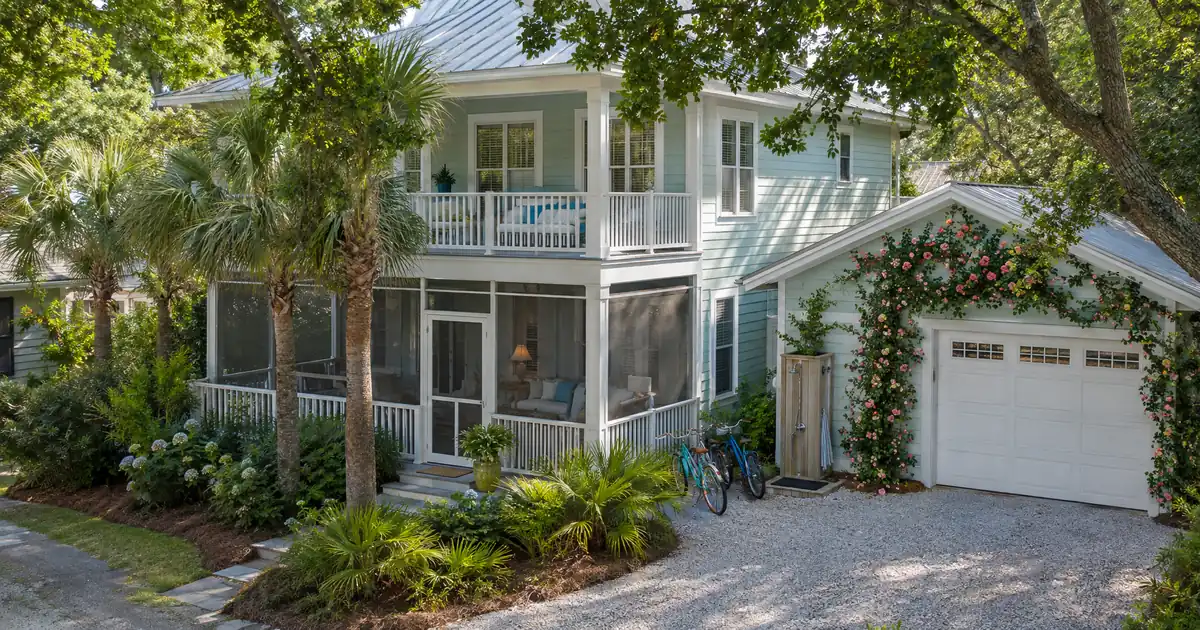
The Quick Read: DSCR qualifies the property, and asset depletion qualifies the person, so the right choice turns on how much you will personally use the home. A retiree who plans to run it mainly as a rental is usually a DSCR borrower. A retiree who wants regular personal stays is usually an asset-depletion borrower, on a personal-residence or second-home file.
- DSCR qualifies primarily on property-level rental income covering the payment, subject to lender guidelines.
- Asset depletion converts verified liquid assets into imputed monthly income for a personal mortgage.
- On a DSCR file, the retiree’s portfolio shows up as reserves, not income.
- Short-term rental purchases on select programs reach up to 75% LTV, with a 640 score and about 12 months of hosting history expected.
- Occupancy is the first test. Income comes second.
Side-by-Side
The table shows published industry norms for asset depletion. The DSCR column reflects select lenders in Lendmire’s wholesale network. Lendmire’s network places both kinds of files, and programs change, so every file is reviewed individually.
Short-Term Rental Calculator
Run the STR numbers in your market
Rate source: Freddie Mac 30-yr average via FRED® — Federal Reserve Bank of St. Louis · effective Oct 15, 2026
Prefilled with starting assumptions — enter your nightly rate, occupancy, taxes, and insurance for a more accurate picture.
Short-term rental income is documented with a 12-month history or a market data report. Program parameters update from Lendmire’s centralized guideline source.
As of Oct 15, 2026 · General Freddie Mac market benchmark, not a Lendmire loan offer. Nightly rate, occupancy, taxes, and insurance are editable estimates. Qualifying income for short-term rentals varies by program — some use appraisal market rent, others use documented STR history or projections — and is confirmed in underwriting. Not a Loan Estimate, approval, or commitment to lend. Program availability and eligibility are subject to lender guidelines, credit approval, property review, and underwriting.
| Factor | DSCR (short-term rental) | Asset depletion (industry norms) |
|---|---|---|
| What is tested | Property rent vs. full monthly obligation | Borrower’s assets turned into income |
| Occupancy | Non-owner-occupied, business purpose | Primary or second home |
| Role of portfolio | Reserves and source of funds | Qualifying income engine |
| Personal income docs | Generally not the basis | Account statements, plus debt-to-income review |
| Rental income | Central to qualifying | Usually not counted on a second home |
| Entity vesting | LLC possible, subject to program terms | Typically individual names |
| Reserves | Commonly around 6 months of PITIA | Set by the individual program |
| Short-term rental history | About 12 months of hosting expected | Not a factor |
When DSCR Is the Better Fit
DSCR fits the retiree who will treat the house as a business. Coverage is the ratio of monthly rent to the full monthly obligation: principal, interest, taxes, insurance and any HOA dues. On short-term rental purchases, the network’s select programs generally start at a 1.00 floor, with leverage up to 75% on the strongest files. Refinances run around 70% on short-term rental collateral, and cash-out is also capped at 70%. Expect a 640 minimum score and about 12 months of hosting history. A separate select-lender path takes coverage below 1.00, with leverage and terms adjusted.
Retirees often like this lane for three reasons. There is no debt-to-income test, and no pension or Social Security documentation drives the file. The portfolio stays invested, because it is reserves rather than income. And the loan can sit in an LLC, subject to program terms.
Short-term income is the friction point. There is no single national rulebook for counting it. Lenders may use projected income from market data, trailing history, or an appraiser’s rent schedule, which was built for monthly leases and often comes in lower than real nightly income. Published industry commentary on tax use is a different matter, covered below. On the lending side, lenders also commonly haircut gross rent before running the ratio, so a headline revenue estimate overstates what qualifies.
One more point. Clearing 1.00 does not mean the property makes money. The ratio compares rent to PITIA only. Repairs, vacancy, management, utilities and capex sit outside it.
When Asset Depletion Is the Better Fit
Asset depletion fits the retiree who wants the home for real personal use. The lender takes eligible accounts such as checking, savings, brokerage and retirement funds, usually haircuts the volatile ones, subtracts what the purchase will consume, and divides the remainder over a set number of months. That imputed income then goes into a debt-to-income test with the new housing payment included.
The method suits a large portfolio with thin or irregular income. Nothing is sold or pledged. It is a calculation, not a liquidation.
Verification is documentary. The CFPB’s ability-to-repay guide lists current or reasonably expected income or assets, other than the value of the property securing the loan, as the first of the eight repayment-ability factors. Statements from financial institutions are the usual proof. The rule does not prescribe a divisor or haircut. Those are program choices, so two lenders can reach different income numbers from the same portfolio.
Here is the catch. A bigger down payment shrinks the pool that produces income. And the part-time rental income is mostly irrelevant on this path, since rental income is generally not counted toward qualifying on a second home.
The Part-Time Problem
The deciding question is what “part-time” means. DSCR is a business-purpose, non-owner-occupied product. If you expect to stay regularly, the occupancy certification you sign may not match your plan. That is a misrepresentation risk, and an LLC or an “investment” label does not change who actually uses the home.
Federal rules look at loan purpose. A creditor must decide case by case whether the primary purpose of a loan is business. Verify any specific day-count threshold directly in the regulation itself rather than relying on paraphrases.
Do not confuse this with the tax test. IRS Publication 527 says a unit counts as used as a home when personal use exceeds the greater of 14 days or 10% of the days rented at a fair price. Family stays count as personal use. That test governs deductions. The lender’s occupancy certification governs loan type. Tax treatment varies; consult a qualified professional.
A practical sorting:
| Planned use | Likely lane |
|---|---|
| Pure rental, owner rarely or never stays | DSCR |
| Occasional personal stays, near the line | Talk to the broker before choosing |
| Regular personal use | Asset depletion, second-home file |
Short-term rental rules can vary by city, county, HOA, and property type, so investors should confirm local rules before relying on projected rental income.
Three Retiree Profiles
Picture a retiree with a modest portfolio and a strong-renting beach property. Rent covers the full monthly obligation with room, and personal stays are minimal. DSCR fits, and the portfolio carries reserves.
Now take a retiree with a large portfolio and a lake house the family uses most of the summer. Rent would be thin and the occupancy would be personal. Asset depletion fits, and rental income barely matters.
The middle case is the hard one. A retiree plans a few weeks of personal use and wants the rest rented. The honest answer depends on actual use, how the lender treats occupancy, and whether the coverage ratio clears without help. Some retirees split the strategy: asset depletion on the personal-use residence, DSCR on a pure rental.
The One Pool of Money Problem
A single portfolio can be asked to do four jobs: qualifying income, down payment, reserves and source of funds. On an asset-depletion file, the down payment and closing costs come out before income is computed, and a large down payment reduces income. On a DSCR file, the pool does not produce income, but it must cover the down payment, closing costs and reserves. Reserves commonly run around 6 months of PITIA, and larger loans can step up to about 9 months. Count the same dollar once.
On the DSCR side, a larger down payment lowers the payment and can lift coverage, but it never erases leverage caps, credit floors, reserve rules or property eligibility. Manufactured homes, log homes and barndominiums are not offered in the network’s DSCR programs, so confirm property type early.
DSCR loans are designed for non-owner-occupied investment properties. Because they are business-purpose investor loans, they are reviewed differently from a standard owner-occupied mortgage.
DSCR vs. conventional financing
There are two common ways to finance an investment property, and they qualify you differently — here’s how investors weigh them.
Why investors choose it
- Qualifies on the property’s rental income — no personal tax returns, W-2s, or pay stubs needed to document income.
- No personal debt-to-income ceiling to clear, so existing mortgages and obligations don’t cap your borrowing the same way.
- Can be closed in an LLC, keeping the property inside a business entity.
- Built for scaling — not held to the limit on number of financed properties that conventional financing applies.
- Underwriting centers on the deal: generally qualifies when the rent covers the payment, a 1.00x coverage ratio being a common baseline (confirmed in underwriting).
- Designed specifically for investment property, including long-term and, where the program allows, short-term rentals.
Where it’s strong
- Often the lowest ongoing financing cost for a buyer who fully qualifies on personal income — a fit for a first property or a cost-first purchase.
Trade-offs for investors
- Requires full personal income documentation and must fit within a debt-to-income limit — salary, existing debts, and other mortgages all count.
- Typically held in your personal name rather than a business entity.
- Caps how many financed properties you can carry, which can become a ceiling as a portfolio grows.
- Evaluates you as a borrower as much as the property, which usually means more paperwork.
How investors usually choose: a first or single property often optimizes for the lowest financing cost; portfolio builders often optimize for leverage, vesting in an LLC, and scaling past conventional caps. The right answer depends on your goals, the property, and current guidelines — both paths run through select lenders in Lendmire’s wholesale network, with eligibility and terms confirmed in underwriting.
A Balanced Verdict
Choose DSCR if the home will mostly be a rental, rent covers the full obligation, and you want the portfolio kept as reserves. Choose asset depletion if you will live in the home meaningfully and your portfolio is large relative to the loan. If you sit on the line, resolve use first, then income. Retirees can also use the complete DSCR loans guide to check program basics.
If you are buying or refinancing a rental property and want to see how the numbers work, Lendmire can help you compare DSCR loan options based on the property income, credit profile, leverage, and investor goals. Qualification is subject to lender guidelines and credit approval. This is not a commitment to lend.
Key Terms Defined
DSCR: Monthly rent divided by the full monthly obligation of principal, interest, taxes, insurance and HOA dues.
Asset depletion: A method that converts verified liquid assets into imputed monthly income.
Divisor: The number of months over which the eligible asset pool is spread to produce income.
Reserves: Liquid funds held after closing, commonly measured in months of PITIA.
Business-purpose loan: Credit extended primarily for investment or commercial use rather than personal use.
Frequently Asked Questions
Do I have to sell assets for asset depletion?
No. It is a calculation method, so nothing is sold or pledged. The assets must be verified with account statements, and the down payment and closing funds come out of the pool before income is computed.
Can I stay in the house between guests on a DSCR loan?
Occasional use may be treated differently by different lenders, but DSCR is built for non-owner-occupied properties. If you expect regular stays, discuss it with the broker before signing any occupancy certification.
Does Social Security or pension income matter?
On a DSCR file, personal income is generally not the qualifying basis, so it is not the driver. On an asset-depletion file, other documented income may be considered alongside the imputed income, depending on the program.
What if rent does not cover the payment?
Coverage below 1.00 is available through select lenders in the network, with leverage and terms adjusted. A larger down payment can also lift the ratio.
Can I use an LLC?
On DSCR files, LLC vesting is commonly possible, subject to program terms. Asset-depletion personal mortgages typically close in individual names.
About Lendmire
Lendmire (NMLS# 2371349) is a mortgage brokerage focused on DSCR investor financing, helping arrange programs through wholesale and investor-lending channels in 41 markets, including Washington, D.C. DSCR loans are evaluated by the lender on property cash flow rather than personal income, subject to lender guidelines, supporting LLC closings and accommodating investors with four or more financed properties. Scotsman Guide Top Mortgage Workplace in both 2025 and 2026.
Get Started
Ready to find the right loan for you?
In about 30 seconds you can review financing options available for your investment property. No commitment required.
Informational only. Not a Loan Estimate, approval, or commitment to lend. Program availability and eligibility are subject to lender guidelines, credit approval, property review, and underwriting.
References
2. CFPB – ATR/QM compliance guide
This article is part of Lendmire’s short-term rental loan program — full qualification details, guidelines, and scenarios live on the program page.
Related reading: Can You Get a DSCR Loan After a Short Sale or a Lost Rental? · Can Short-Term and Long-Term Rentals Share One Portfolio DSCR Loan? · How to Refinance a Newly Leased Rental With a DSCR Loan
Brandon Miller
Founder & CEO, Mortgage Loan Originator, Lendmire LLC
- Mortgage Loan Originator · NMLS# 1129696 · Verify on NMLS Consumer Access
- North Carolina Real Estate Broker · License# 343312 · Verify on NCREC
- North Carolina Insurance Producer · License# 19053198 · Property, Casualty, Life, Health · Verify on NAIC SBS
- Lendmire LLC · Firm NMLS# 2371349 · Verify firm licensure
Important disclosures. Lendmire (NMLS# 2371349) is a licensed mortgage brokerage. Lendmire is not a direct lender, depository institution, or financial advisor. All loan inquiries are subject to lender underwriting; this article does not constitute a commitment to lend. Rates, terms, and program guidelines are subject to change without notice and vary by borrower profile, property type, and state. Information in this article is general in nature and is not financial, legal, or tax advice. Equal Housing Opportunity. NMLS Consumer Access: nmlsconsumeraccess.org.