
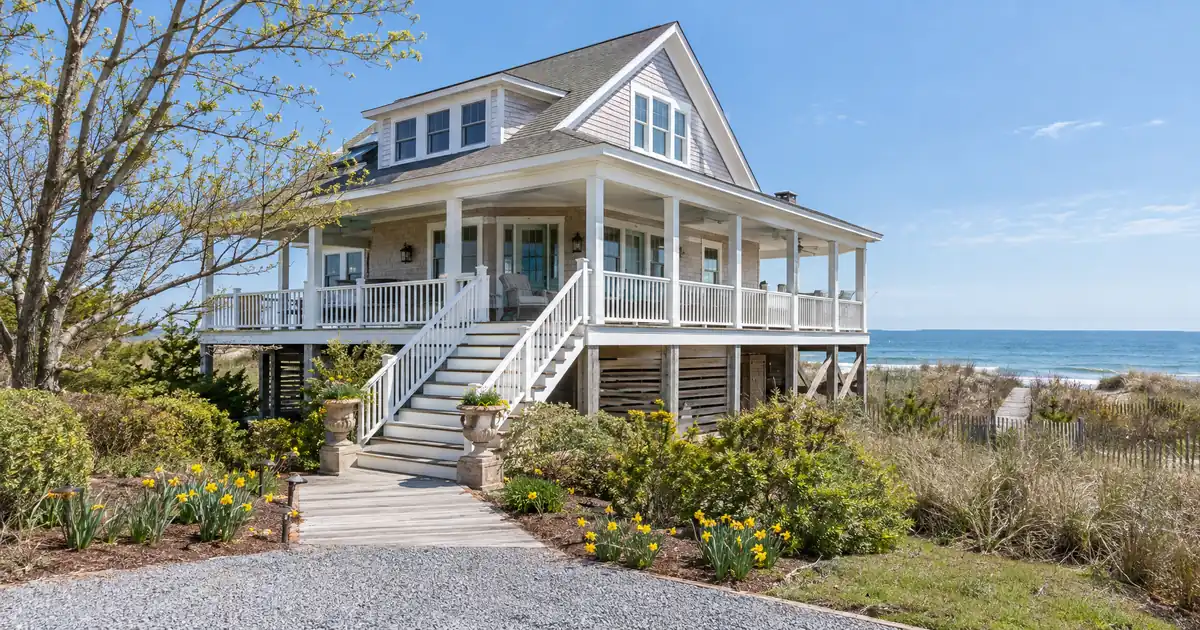
The Quick Read: Only when the hosting is truly occasional and the owner keeps the home mainly for personal use. A second-home loan assumes the borrower lives in the property part of the year and controls it, and rent cannot be used to qualify. If the plan is to run the property as a rental business, the loan belongs in the investment-property category, and for most investors that means DSCR.
- A second-home loan is built around personal use, not rental income.
- Rent from hosting does not count toward qualifying on a second-home file.
- A manager who controls the booking calendar is a red flag on a second-home loan.
- A DSCR loan tests the property’s rent against its full payment, not your personal income.
- When rental activity is the reason for the purchase, plan the file as a non-owner-occupied investment loan from day one.
What Does “Part-Year Host” Mean to a Lender?
A lender does not read platform labels. It reads intended use. “Part-year host” is a lifestyle term, and the file only sees two boxes: you will occupy the property, or you will not.
Short-Term Rental Calculator
Run the STR numbers in your market
Rate source: Freddie Mac 30-yr average via FRED® — Federal Reserve Bank of St. Louis · effective Oct 15, 2026
Prefilled with starting assumptions — enter your nightly rate, occupancy, taxes, and insurance for a more accurate picture.
Short-term rental income is documented with a 12-month history or a market data report. Program parameters update from Lendmire’s centralized guideline source.
As of Oct 15, 2026 · General Freddie Mac market benchmark, not a Lendmire loan offer. Nightly rate, occupancy, taxes, and insurance are editable estimates. Qualifying income for short-term rentals varies by program — some use appraisal market rent, others use documented STR history or projections — and is confirmed in underwriting. Not a Loan Estimate, approval, or commitment to lend. Program availability and eligibility are subject to lender guidelines, credit approval, property review, and underwriting.
At application and again at closing, the borrower certifies the intended use. A second-home certification says you will occupy the home. An investment certification says you will not live there and the loan is for business purposes. The two are mutually exclusive. You cannot sign one and operate the other.
That is why the day count matters less than the plan. Someone who buys a lake house to use every summer and rents it for a few weeks to cover costs is one borrower. Someone who buys the same house to put it on the platform every weekend and uses it twice a year is a different borrower. The property and the loan amount could be identical. The files are not.
What Does a Second-Home Loan Actually Require?
A second-home loan expects personal use first. The home is typically a single unit, the borrower occupies it for part of the year, and it stays available mainly for the owner’s own use. Rental pools and arrangements that hand occupancy control to a management company cut against that.
Agency guidance is the usual reference point here, and it is worth one contrast paragraph only. Fannie Mae’s Selling Guide on occupancy types says a loan can still be delivered as a second home when the lender spots rental income, but that income cannot be used to qualify and every other second-home requirement still applies. A lender training deck citing the same section lists the working conditions: a 1-unit home, occupied by the borrower for some portion of the year, kept available primarily for personal use (more than half the calendar year), and not a rental property or timeshare.
Those are agency rules. DSCR loans are not agency products, and the guidelines of the lenders in Lendmire’s wholesale network govern what gets placed. Treat the agency language as a picture of how a second home is defined, not as a DSCR requirement.
Underwriting is the other difference. A second-home loan is built on personal income, debt-to-income, credit and assets. Your primary home payment sits in that debt ratio, and the hosting income is left out. An investor carrying several financed properties can hit debt-to-income ceilings fast, regardless of how well the Airbnb performs.
Where Does a Part-Year Host Fit? Four Scenarios
The occasional host. An owner uses the home most of the year and rents it for a few weeks. Hosting is incidental. A second-home loan can fit, but the rent is never part of the qualifying math. Budget as if the income does not exist.
The summer-rental owner. The owner rents the whole summer season and uses the home in the off-season. This is the gray zone. The more of the calendar that goes to guests, the harder it is to describe the home as available mainly for personal use. This host should read the plan honestly before choosing a loan type.
The manager-run property. A manager fills the calendar and the owner books around guests. Control of occupancy has moved away from the owner. That cuts against the exclusive-use idea behind a second-home loan, and it points toward investment financing.
The host whose plans changed. The loan was a second home, the hosting grew, and now the property is effectively an STR. The path forward is usually a refinance into a non-owner-occupied short-term-rental loan with documented hosting history. Lendmire’s piece Can a Second-Home Owner Use Airbnb Income After Converting to STR? covers that transition.
How Is the Property Type and Location Decided?
Second-home loans generally want a single-unit property that sits a plausible distance from the primary residence. A duplex or a distant vacation market pushes the file toward investment, because the use story stops fitting a second home.
DSCR files are more flexible on structure. They often allow LLC vesting, multi-unit properties and out-of-area markets, subject to lender program eligibility. Property type still matters. Manufactured homes (single- and double-wide), log homes and barndominiums fall outside these programs entirely.
Is the 14-Day Rule a Lender Rule?
No. The 14-day figure shows up in two places, and neither one is a second-home loan test.
The first is tax. IRS Publication 527 treats a dwelling as a personal home if use exceeds the greater of 14 days or 10% of rental days, and a home rented fewer than 15 days is not treated as a rental activity. That is a tax classification. A lender can apply a different standard, so a property can look like a rental to the IRS and a second home to a lender, or the reverse.
The second is the business-purpose framework. The CFPB’s Regulation Z, section 1026.3 governs the exemption for business-purpose credit, and its commentary treats a property as non-owner-occupied only if the borrower does not expect to occupy it for more than 14 days in the coming year. A host who plans meaningful personal use has to think about that line, and about the lender’s own program rules, which vary.
Some lender blogs blend the IRS test into the second-home occupancy rule. They are separate tests. The 180-day rental cap you may see repeated is a rule of thumb, not a published rule.
Tax treatment varies; consult a qualified professional.
What Does a DSCR Loan Do Differently?
A DSCR loan is reviewed primarily on property-level rental income covering the payment, subject to lender guidelines. The ratio compares monthly rent to the full monthly obligation: principal, interest, taxes, insurance and any HOA dues. Personal income is not the test.
On Lendmire’s short-term-rental programs, the typical ranges look like this on the strongest files, subject to lender guidelines:
| Factor | Short-term rental (DSCR) |
|---|---|
| Purchase LTV | Up to 75% |
| Cash-out / refinance LTV | Up to 70% |
| Minimum credit score | 640 |
| Minimum coverage | 1.00 on purchases and on refinances |
| Hosting history | About 12 months expected |
| Loan amount | Up to $3,000,000 on standard programs |
Those numbers are select-program figures, not universal ones. 1.00 is where select programs start. A separate select-lender path goes below 1.00 coverage, with leverage and terms adjusted. A larger down payment can lift the ratio by lowering the payment, but it never erases leverage caps, credit floors, reserve rules or property eligibility. Reserves vary by lender, leverage, loan size and transaction type, commonly around 6 months of PITIA.
One more point. Clearing 1.00 does not mean the property has positive cash flow. DSCR compares rent to PITIA only. Repairs, vacancy, management, utilities and capex sit outside the calculation.
Second Home vs. DSCR: Which Box Are You In?
| Question | Second-home loan | DSCR loan |
|---|---|---|
| Who uses the home? | Owner, mainly | Guests and tenants |
| Does rent count to qualify? | No | Yes, property rent is the test |
| What is underwritten? | Personal income, DTI, assets | Property rent vs. payment |
| Typical title | Personal name | Personal name or LLC, per program |
| Property type | Single unit | Single or multi-unit, per program |
| Manager controls calendar? | Cuts against the loan | Normal |
If you answer “owner, mainly” and “rent is a bonus,” you are describing a second home. If rent is the reason the deal works, you are describing an investment property.
What Does the File Need on a Short-Term-Rental DSCR Loan?
Documentation is where most STR files slow down, so assemble it early. A typical file includes:
1. Appraisal rent evidence. Appraisers use the 1007 rent schedule on single-family properties and the 1025 on small residential income properties. 2. Platform payout statements, manager statements or bank deposits that show hosting history. 3. Entity papers if the property is vested in an LLC, subject to program terms. 4. Evidence of local permission for short-term renting. Short-term rental rules can vary by city, county, HOA, and property type, so investors should confirm local rules before relying on projected rental income. 5. A fresh insurance quote that matches the use, since a policy written for a second home can mismatch a rental file.
For a new host with no history, the 12-month hosting expectation is the first hurdle to plan around. Lendmire’s article Should a New Airbnb Host Leave a Second-Home Loan for DSCR? walks through that decision. The broader complete DSCR loans guide covers how the product works end to end.
What Is the Risk of Picking the Wrong Box?
Using a second-home label on what is really a rental business is a misrepresentation risk. The occupancy certification is a signed statement, and Nolo’s legal explainer notes that the rider calls for personal use for at least a year unless the lender agrees otherwise, with short-term renting generally the safe zone early on. A rental-heavy plan does not sit in that zone. A vendor overview of STR financing warns that breaching occupancy terms can trigger default. Treat it as secondary commentary, since the vendor sells STR data.
The cheaper-looking terms of a second-home loan come with restrictions that fail for a rental business. A lower stated cost is not a saving if the loan has to be unwound later.
How Should a Second-Home Host Budget When Rent Cannot Count?
Plan the carry as if hosting income were zero. The qualifying math on a second-home file leaves rent out, so the budget should too. Keep the home payment, the primary payment and reserves covered from personal income, and treat any hosting income as a cushion.
A practical checklist:
- Confirm the debt-to-income ratio with the second-home payment added to your existing obligations.
- Hold reserves for vacancy-free carry of both properties.
- Keep a hosting record from day one (platform statements, dates of personal use). If the plan later moves to DSCR, that record is the hosting history.
- Decide in advance what hosting level triggers a switch to investment financing.
When Does the Plan Outgrow a Second-Home Loan?
Three signs: the calendar fills with guests more than with you, a manager takes over bookings, or you start counting on rent to make the numbers work. Any one of those means the property is operating as an investment.
The move is typically a refinance into a non-owner-occupied loan. Cash-out on short-term-rental collateral tops out at 70% LTV on the programs described above, and standard rentals reach 75%.
Frequently Asked Questions
Can I rent my second home for a few weeks a year and keep the second-home loan?
Usually yes, if you mainly use the home yourself and the rental is incidental. The rent cannot be used to qualify, and the other second-home conditions still apply, including personal occupancy and control of the property. Exactly where “a few weeks” ends depends on the lender and the program.
Can Airbnb income help me qualify for a second-home loan?
No. Second-home underwriting looks at personal income, debt ratios, credit and assets. Rental income can exist on the property, but it is not counted toward qualifying. A DSCR loan is the product that tests the property’s rent.
Does the IRS 14-day rule decide my loan type?
No. That rule is a tax test for personal use and rental days. Lenders apply their own occupancy and control standards. A property can be classified one way for taxes and another way for the loan.
Can a property manager run my calendar on a second-home loan?
That cuts against the loan. Second-home financing assumes the owner keeps control of occupancy, and a manager who fills the calendar moves the property toward investment use. A DSCR file treats manager-run hosting as normal and asks for manager statements as evidence.
What if I already have a second-home loan and the hosting has grown?
The usual path is a refinance into a non-owner-occupied short-term-rental loan. Expect to document hosting history, with about 12 months expected on these programs, a credit score around 640 or higher, and 1.00 minimum coverage, subject to lender guidelines.
If you are buying or refinancing a rental property and want to see how the numbers work, Lendmire can help you compare DSCR loan options based on the property income, credit profile, leverage, and investor goals. Lendmire is a broker arranging financing through select lenders in its wholesale network, across 41 markets including Washington, D.C. Terms vary by borrower and property and are not a commitment to lend.
Key Terms Defined
Second-home loan: A mortgage for a home the borrower occupies part of the year and keeps for personal use, qualified on personal income.
Non-owner-occupied: A property the borrower does not live in, financed as an investment.
DSCR: The ratio of a property’s monthly rent to its full monthly payment, including principal, interest, taxes, insurance and any HOA dues.
PITIA: Principal, interest, taxes, insurance and association dues, the full monthly obligation on a property.
Hosting history: Platform payouts, manager statements or bank deposits that show how the property has performed as a short-term rental.
About Lendmire
As a non-QM mortgage broker (NMLS# 2371349), Lendmire facilitates DSCR investor loans across 41 markets, including Washington, D.C. DSCR eligibility is generally reviewed around property-level rental income instead of personal income documentation, subject to lender guidelines, serving LLC-structured portfolios and self-employed borrowers who don’t fit conventional boxes. A two-time Scotsman Guide Top Mortgage Workplace (2025, 2026).
Get Started
Ready to find the right loan for you?
In about 30 seconds you can review financing options available for your investment property. No commitment required.
Informational only. Not a Loan Estimate, approval, or commitment to lend. Program availability and eligibility are subject to lender guidelines, credit approval, property review, and underwriting.
References
1. Fannie Mae Selling Guide, Occupancy Types
2. Enact MI, Second Home Purchase training deck
4. Nolo, Investment Property vs. Second Home
This article is part of Lendmire’s short-term rental loan program — full qualification details, guidelines, and scenarios live on the program page.
Related reading: How a Five-Year Super Jumbo DSCR Loan Fits a Plan to Sell or Refinance · How to Document a Below-Market Lease for a DSCR Loan · Can You Get a DSCR Loan on a New Lease Before Any Rent Is Collected?
Brandon Miller
Founder & CEO, Mortgage Loan Originator, Lendmire LLC
- Mortgage Loan Originator · NMLS# 1129696 · Verify on NMLS Consumer Access
- North Carolina Real Estate Broker · License# 343312 · Verify on NCREC
- North Carolina Insurance Producer · License# 19053198 · Property, Casualty, Life, Health · Verify on NAIC SBS
- Lendmire LLC · Firm NMLS# 2371349 · Verify firm licensure
Disclosure information. Lendmire is a state-licensed mortgage brokerage under NMLS# 2371349. Lendmire is not a depository institution, direct lender, or financial advisor — all loans referenced are placed through wholesale lender partners and are subject to each lender's underwriting standards. This article is provided for general informational purposes and is not a commitment to lend, nor does it constitute financial, legal, or tax advice. Loan programs, terms, rates, and qualification standards change without notice and depend on borrower profile, property type, and the state in which the subject property is located. Equal Housing Opportunity provider. NMLS Consumer Access: nmlsconsumeraccess.org.