
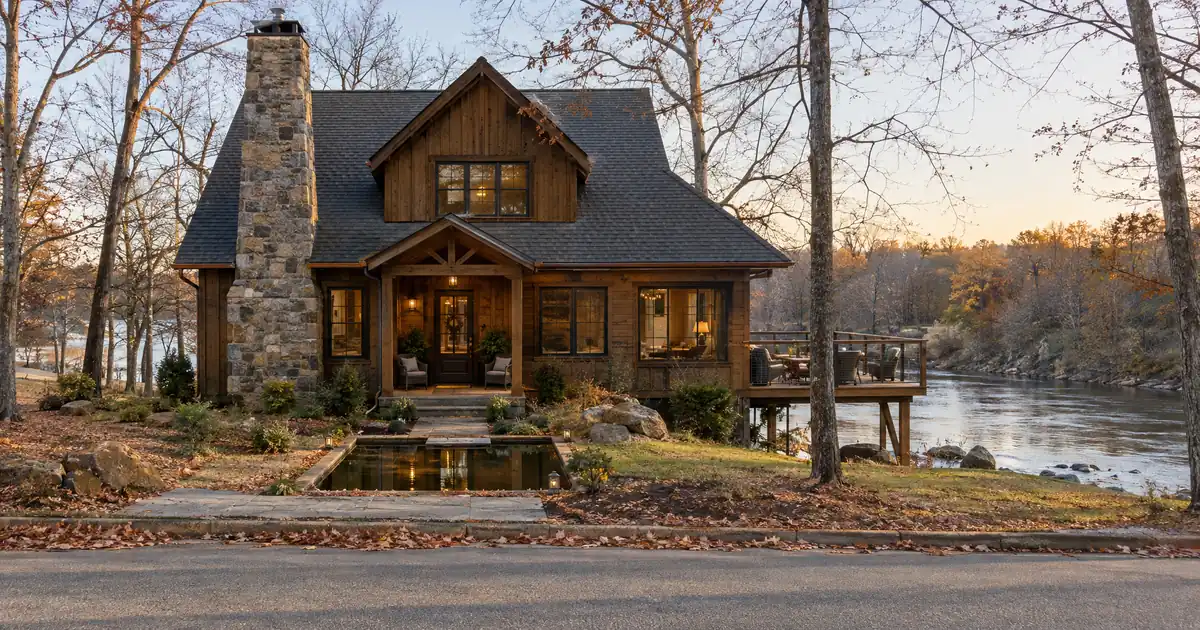
The Quick Read: Usually yes. A lake house financed with a DSCR loan is a non-owner-occupied rental, so it generally needs an insurance policy written for rental use rather than a standard homeowners policy, and a short-term rental needs coverage that expressly names that use. Flood coverage is a separate question handled by a separate policy.
- Dedicated means matched to how the property is actually used. It does not mean a standalone policy for each house.
- A homeowners form is written for a home you live in, which is why it tends to fail on a rental.
- Insurance sits inside the debt-service side of the coverage ratio, so a heavier lakefront premium lowers the number.
- Flood is commonly required in mapped high-risk zones and recommended elsewhere.
- Get a rental-ready insurance quote before you go under contract, not after.
What Does “Dedicated Policy” Actually Mean for a Lake Rental?
A dedicated policy is one built for the property’s real use. For a long-term rental, that is usually a landlord policy, also called a dwelling fire policy. For a short-term rental, it is a specialty policy or an endorsement that names nightly guest stays. A portfolio investor can often carry one multi-property policy, so “dedicated” is about fit, not count.
DSCR Calculator
Run the numbers in your market
Rate source: Freddie Mac 30-yr average via FRED® — Federal Reserve Bank of St. Louis · effective Oct 15, 2026
Prefilled with starting assumptions — enter your own rent or nightly figures, taxes, insurance, and HOA for a more accurate picture.
Program parameters update from Lendmire’s centralized guideline source. Taxes and insurance are editable estimates.
As of Oct 15, 2026 · General Freddie Mac market benchmark, not a Lendmire loan offer. Rent, nightly rate, occupancy, taxes, and insurance are editable estimates. Short-term rental figures are estimates only and vary significantly by season, property type, management approach, and local short-term-rental rules — confirm local regulations before relying on them. Qualifying income for short-term rentals varies by program — some use appraisal market rent, others use documented STR history or projections — and is confirmed in underwriting. Not a Loan Estimate, approval, or commitment to lend. Program availability and eligibility are subject to lender guidelines, credit approval, property review, and underwriting.
Progressive describes a dwelling fire policy as the product for a property you own and rent out, and notes that standard homeowners policies typically don’t cover homes being rented. Landlord coverage is commonly written on a DP-1, DP-2 or DP-3 form, while the familiar HO-3 is built for an owner who lives in the house.
Across the wholesale network Lendmire works with, the question lenders ask is simple: does the policy match the use described in the loan file? A mismatch is where files stall.
Why Does a Homeowners Policy Usually Fall Short?
Homeowners insurance covers a home you live in. DSCR loans are designed for non-owner-occupied investment properties, and because they are business-purpose loans, they are reviewed differently from a standard owner-occupied mortgage. That mismatch is the core problem.
Allstate explains that homeowners policies cover homes you occupy, landlord policies cover rented properties, and insurers often require an endorsement for short-term rentals. The same page notes a homeowners policy may extend limited coverage for a one-off rental or a rented room in an owner-occupied home.
The practical risk runs three ways. A claim on a rented house can be disputed. The loan file can stall when the policy doesn’t match the stated use. And the property can end up under-protected while guests or tenants are in it. Presenting an investment property as owner-occupied just to land a cheaper policy is the wrong fix. It trades a small premium saving for a real claims problem.
Here’s the catch on short-term use. A standard landlord policy is built around a tenant on a lease, not nightly guests, so it often doesn’t fit a vacation rental either. Match the form to the rental pattern.
Which Coverages Belong on a Lake Rental Policy?
A lake rental typically carries dwelling coverage, liability, and rent-loss protection, plus a decision on flood, docks, and watercraft. Some of these are driven by the lender and some by prudence.
| Coverage | What it protects | Lender-driven or owner-driven | Lake note |
|---|---|---|---|
| Dwelling | The house itself | Lender-driven | Core of any file |
| Liability | Guest or tenant injury claims | Lender-driven on short-term files | Water exposure raises stakes |
| Rent loss | Income after a covered loss | Often expected | Protects the coverage ratio |
| Flood | Rising water damage | Zone-dependent | Separate policy |
| Docks, sheds | Detached structures | Owner-driven | Often sublimited |
| Watercraft | Boats, jet skis | Owner-driven | Usually separate policies |
Rent-loss coverage deserves a closer look. ManageCasa explains that it reimburses rent lost when a covered event makes the property uninhabitable. A homeowners “loss of use” clause covers the owner’s own living costs, not lost tenant rent, per WP Insure.
Also be careful with booking-platform host protection. It may be secondary or limited, and a lender may not accept it as the primary policy. Treat it as an extra layer, not the foundation.
Where Does Insurance Sit in the DSCR Math?
Insurance is part of the denominator. DSCR compares monthly rent to PITIA, which is principal, interest, taxes, insurance and association dues. A higher premium, including any flood premium, lowers the coverage ratio.
Run the numbers on two otherwise identical lake houses, using a modeled comparison rather than market data. House A has a modest premium and clears roughly 1.25x. House B has the same rent and the same loan, but a lakefront premium load plus a flood policy. Its ratio can slide toward 1.05x or lower. Same rent, same price, thinner cushion.
Most standard DSCR programs in the network start at 1.00. That is where select programs begin, and stronger ratios open better pricing and leverage. A separate select-lender path takes coverage below 1.00 with leverage and terms adjusted. Clearing 1.00 is also not the same as positive cash flow, since repairs, vacancy, management, utilities and capex sit outside the calculation.
This is where lake properties surprise people. A thin file can go from workable to borderline on the insurance quote alone. For an investor weighing two lakes, the cheaper-to-insure property can be the better DSCR candidate even if the rent is slightly lower. Insurance trends are worth watching here, because premiums can move between quote and closing.
Dollar premiums vary widely by carrier, region and shoreline, and no reliable lake-specific benchmark exists, so get an actual quote instead of estimating.
Short-Term Rental, Long-Term Rental, or Both?
How the house is used decides both the policy and the income lenders count.
| Factor | Long-term rental | Short-term rental |
|---|---|---|
| Typical policy | Landlord / dwelling fire | Specialty STR or hybrid |
| Income basis | Lease rent | Hosting history, averaged income |
| Insurance fit | Standard landlord form | Must name guest stays |
| Mixed use | Hybrid policy if use switches | Hybrid policy if use switches seasonally |
On short-term rental files, select lenders in the network typically allow purchases to 75% LTV and expect a 640+ score and about 12 months of hosting history, with a 1.00 coverage floor on purchases and on refinances. Cash-out on short-term rental collateral generally sits around 70%. Short-term rental rules can vary by city, county, HOA, and property type, so investors should confirm local rules before relying on projected rental income.
If you plan to use the house yourself part of the year, raise that early. DSCR is investment-property financing, so personal-use limits are worth confirming before you contract. For more on how seasonal income gets averaged, see Lendmire’s piece How a Short-Term Rental DSCR Loan Averages a Lake House’s Seasonal Rent.
Flood and Water Exposure: The Separate Question
Flood is its own policy, and neither homeowners nor landlord coverage includes it. A lake house may sit in an FEMA special flood hazard area. NAR explains that flood insurance is federally required for a federally related mortgage in such an area, while moderate- and low-risk zones carry no such requirement, though coverage is still recommended.
DSCR loans are non-agency, so whether the federal mandate applies to a given investor loan depends on the lender and funding source. The safe way to describe it is that flood coverage is commonly required in mapped high-risk zones. Where it applies, the federal model notice states that coverage must be maintained for the life of the loan, and a lender can force-place it at the borrower’s expense. Force-placed coverage is rarely the cheap option.
Lakefront risk can exist even where maps show moderate risk. If the property is near the waterline, a private or federal flood quote is worth pulling regardless of what the lender requires. Also check for water-damage exclusions such as backup, seepage and erosion, which standard forms often carve out.
What Else Can Complicate a Lake Rental File?
Property type and access matter. Log homes, manufactured homes and barndominiums are not offered in the network’s DSCR programs. Frame-built cabins, A-frames and lake houses are reviewed one at a time, with road access and utilities checked.
Carrier appetite also varies. InsuranceGeek notes some carriers want your primary home placed with them first, so the first quote you get may not be the best one. If the first carrier declines the lake, an investor needs a fallback before the contract deadline, not after.
The Documents a Lender Will Want
Plan to produce a current insurance quote or binder that matches the rental use, the named insured that matches the borrower (including an LLC, subject to lender program eligibility), and the mortgagee clause once the loan is placed. For short-term files, expect to supply platform or manager statements for the hosting history, plus HOA or declaration rules where they apply.
A quote shows intent; a bound policy shows coverage. Lenders generally want the bound policy before funding, so the quote’s job is to prove the ratio works early.
DSCR vs. conventional financing
There are two common ways to finance an investment property, and they qualify you differently — here’s how investors weigh them.
Why investors choose it
- Qualifies on the property’s rental income — no personal tax returns, W-2s, or pay stubs needed to document income.
- No personal debt-to-income ceiling to clear, so existing mortgages and obligations don’t cap your borrowing the same way.
- Can be closed in an LLC, keeping the property inside a business entity.
- Built for scaling — not held to the limit on number of financed properties that conventional financing applies.
- Underwriting centers on the deal: generally qualifies when the rent covers the payment, a 1.00x coverage ratio being a common baseline (confirmed in underwriting).
- Designed specifically for investment property, including long-term and, where the program allows, short-term rentals.
Where it’s strong
- Often the lowest ongoing financing cost for a buyer who fully qualifies on personal income — a fit for a first property or a cost-first purchase.
Trade-offs for investors
- Requires full personal income documentation and must fit within a debt-to-income limit — salary, existing debts, and other mortgages all count.
- Typically held in your personal name rather than a business entity.
- Caps how many financed properties you can carry, which can become a ceiling as a portfolio grows.
- Evaluates you as a borrower as much as the property, which usually means more paperwork.
How investors usually choose: a first or single property often optimizes for the lowest financing cost; portfolio builders often optimize for leverage, vesting in an LLC, and scaling past conventional caps. The right answer depends on your goals, the property, and current guidelines — both paths run through select lenders in Lendmire’s wholesale network, with eligibility and terms confirmed in underwriting.
Common Mistakes
1. Keeping a homeowners policy after renting the house.
2. Assuming a landlord policy covers nightly guests.
3. Assuming flood is included in either policy.
4. Treating the Airbnb-style host guarantee as the main policy.
5. Waiting for the contract before asking for a quote.
6. Ignoring HOA or permit rules that decide whether short-term income counts at all.
A Practical Sequence
Start with the intended use, then request quotes. Check the flood zone, and pull a flood quote if the house is near the water. Run the DSCR with the real premium, then compare it against the leverage you want. On purchases, most files land at 75% to 80% LTV, with select high-leverage programs reaching 85% at roughly a 700+ score. Reserves commonly run around 6 months of PITIA, stepping up to about 9 months on loans above $1,500,000. Credit tiers start at a 620 floor in parts of the network, with most programs wanting around 660 or higher. All of this is subject to lender guidelines, and every file is reviewed individually. The complete DSCR loans guide covers the full structure.
If you’re buying or refinancing a rental property and want to see how the numbers work, Lendmire can help you compare DSCR loan options based on the property income, credit profile, leverage, and investor goals.
Frequently Asked Questions
Can I keep my homeowners policy if I only rent the lake house occasionally?
Usually not on a DSCR loan. A homeowners policy may extend limited coverage for a one-off rental, but a DSCR property is an investment property, so lenders look for rental-appropriate coverage. Telling the agent the real use avoids a disputed claim.
Does one policy have to cover only the lake house?
No. Dedicated means matched to use, not one policy per house. An investor with several rentals can often use a portfolio or multi-property policy, subject to the carrier and the lender’s requirements.
Is flood insurance required on every DSCR lake house?
Not universally. It is commonly required in mapped high-risk zones and recommended elsewhere, since lakefront risk can exist even outside them. Requirements depend on the lender and funding source, so confirm yours early.
Will a higher insurance premium hurt my DSCR?
Yes. Insurance is part of PITIA, so a larger premium lowers the ratio. On a lake house, a waterfront premium plus a flood policy can move the number meaningfully, which is why quotes belong before the contract.
Do docks and boats need separate coverage?
Often. Docks and detached structures may be covered at limited amounts, and boats and jet skis usually need their own policies. These are typically owner-driven rather than lender-driven, but they protect the property’s value.
About Lendmire
Lendmire is a non-QM mortgage brokerage (NMLS# 2371349) arranging DSCR investor loans in 41 markets, including Washington, D.C. DSCR eligibility is generally reviewed around property-level rental income rather than personal income, subject to lender and program guidelines, a fit for self-employed investors and LLC-owned portfolios. Lendmire was recognized as a Scotsman Guide Top Mortgage Workplace in 2025 and 2026.
Get Started
Ready to find the right loan for you?
In about 30 seconds you can review financing options available for your investment property. No commitment required.
Informational only. Not a Loan Estimate, approval, or commitment to lend. Program availability and eligibility are subject to lender guidelines, credit approval, property review, and underwriting.
References
1. Progressive — landlord insurance
2. Allstate — homeowners vs. landlord insurance
3. ManageCasa — landlord and tenant insurance
4. WP Insure — what a homeowners policy won’t cover
6. Cornell LII — 12 CFR Part 22, Appendix A
7. InsuranceGeek — landlord insurance
This article is part of Lendmire’s DSCR loan program — full qualification details, guidelines, and scenarios live on the program page.
Related reading: Does a Resort Condo Need a Dedicated Policy for a DSCR Loan? · How to Insure a Beach House Short-Term Rental for a DSCR Loan · Staying With a DSCR Lender That Sold Your Loan vs Using a Broker
Brandon Miller
Founder & CEO, Mortgage Loan Originator, Lendmire LLC
- Mortgage Loan Originator · NMLS# 1129696 · Verify on NMLS Consumer Access
- North Carolina Real Estate Broker · License# 343312 · Verify on NCREC
- North Carolina Insurance Producer · License# 19053198 · Property, Casualty, Life, Health · Verify on NAIC SBS
- Lendmire LLC · Firm NMLS# 2371349 · Verify firm licensure
Disclosures. The information presented in this article is general market commentary, not financial, legal, or tax advice. Lendmire is a mortgage brokerage (NMLS# 2371349) — not a direct lender or depository institution — and loan placement is subject to lender underwriting. Nothing in this content represents a commitment to lend. Loan terms, pricing, and program availability vary based on borrower qualifications, property characteristics, and state of subject property, and are subject to change at any time. Lendmire complies with Equal Housing Opportunity requirements. Consumer access: nmlsconsumeraccess.org.