
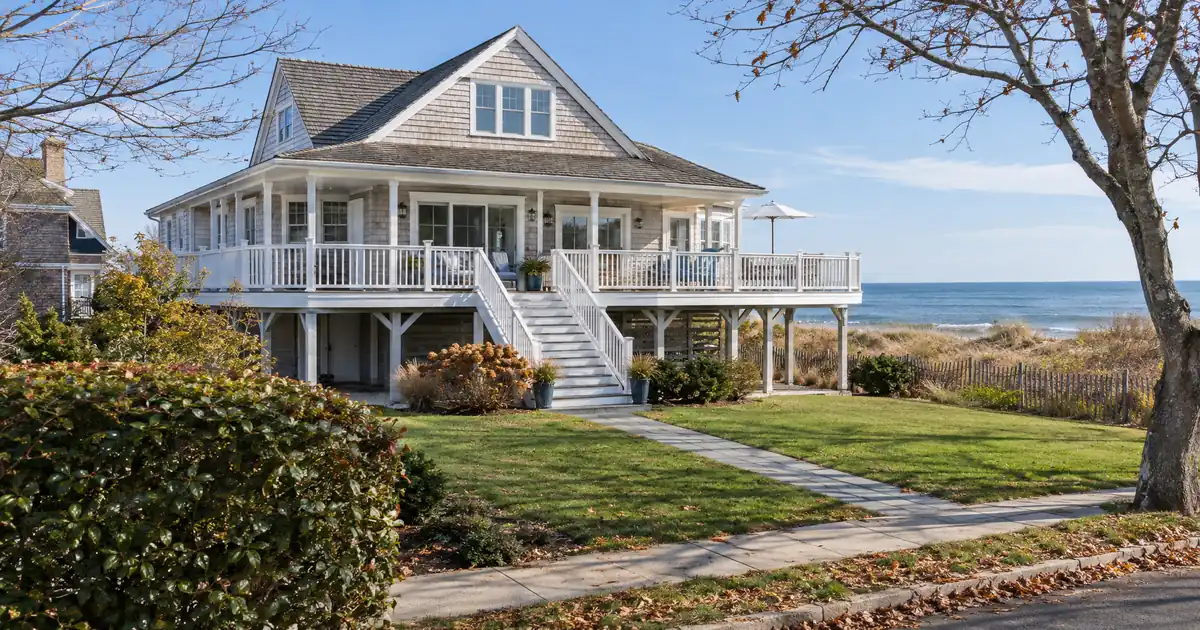
The Quick Read: A beach house rental headed into a DSCR loan generally needs several separate coverages, not one policy. Plan for a short-term-rental property policy, a wind or named-storm decision, a standalone flood decision, loss-of-rents coverage, and liability coverage. Lenders in the wholesale network check this stack before closing, and the premiums feed directly into the coverage ratio.
- A standard homeowners or landlord policy often excludes short-term rental use.
- Flood is almost never included in a base property policy. It is a separate purchase.
- Wind may be excluded or carry its own percentage deductible in coastal markets.
- Insurance is part of the monthly obligation, so a high coastal quote can shrink leverage or push a file under its coverage floor.
- Quote early, before the contract timeline is tight.
Short-term rental rules can vary by city, county, HOA, and property type, so investors should confirm local rules before relying on projected rental income.
Short-Term Rental Calculator
Run the STR numbers in your market
Rate source: Freddie Mac 30-yr average via FRED® — Federal Reserve Bank of St. Louis · effective Oct 15, 2026
Prefilled with starting assumptions — enter your nightly rate, occupancy, taxes, and insurance for a more accurate picture.
Short-term rental income is documented with a 12-month history or a market data report. Program parameters update from Lendmire’s centralized guideline source.
As of Oct 15, 2026 · General Freddie Mac market benchmark, not a Lendmire loan offer. Nightly rate, occupancy, taxes, and insurance are editable estimates. Qualifying income for short-term rentals varies by program — some use appraisal market rent, others use documented STR history or projections — and is confirmed in underwriting. Not a Loan Estimate, approval, or commitment to lend. Program availability and eligibility are subject to lender guidelines, credit approval, property review, and underwriting.
Why a Homeowners Policy Fails a Beach House Rental
Most homeowners policies exclude business activity, and many landlord policies do too. Renting a beach house by the night usually triggers one of those exclusions. Ramsey Solutions notes that a dedicated short-term-rental policy or endorsement is the usual fix.
Guesty makes a related point: converting a long-term rental to nightly use means you should not assume the existing policy transfers. It also warns that some insurers cancel a policy outright when they discover undisclosed rental activity.
Platform protection is not a substitute either. AirDNA says platform protections have major gaps, and that standard homeowners or landlord insurance usually will not cover guest-related incidents.
The practical takeaway is disclosure. Tell the agent exactly how the house will be used, and get the answer in writing. Carriers define short-term rental differently, so a policy that fits one host may not fit another.
The Coverage Layers a Coastal Rental Needs
Think of the insurance as layers. Each answers a different beach-specific risk, and the lender will care about most of them.
| Layer | What it covers | Common beach trap |
|---|---|---|
| Property (dwelling) | Structure, sized to replacement cost | Limit set at market value |
| Wind / named storm | Hurricane and wind damage | Excluded from base policy |
| Flood | Rising water damage | Not in any standard policy |
| Loss of rents | Income while uninhabitable | Restoration period too short |
| Liability | Guest injuries, beach and pool exposure | Umbrella excludes rental use |
The dwelling limit should follow replacement cost, not the purchase price and not the loan balance. Actual-cash-value policies are generally a poor fit for a financed coastal property.
On the base form, a landlord-style dwelling form is common for a single beach house. Some carriers say that form stops working once a host collects payment, so a commercial general liability or commercial homeowners policy may be needed instead. Both points come from insurance sellers, so treat them as practitioner commentary and ask your agent which form the carrier will actually write.
Wind and the Named-Storm Deductible
Coastal wind coverage is often sold separately or carries its own deductible. That deductible is usually a percentage of the dwelling limit rather than a flat dollar amount, which makes it a much larger out-of-pocket exposure than a standard deductible.
Where the private market is thin, state-backed insurers of last resort exist, and some coastal areas rely on state wind pools. A wind mitigation inspection can reduce premiums by documenting roof age, roof shape, roof attachment, and opening protection.
Here is why this matters to a lender. If wind is excluded and the borrower cannot place it elsewhere, the file has a gap that most programs will not ignore. Ask the agent two things up front: is wind included, and what is the deductible structure?
Flood Is a Separate Decision
Flood is not covered by standard homeowners or renters insurance, according to FEMA’s FloodSmart program. It is its own policy, either through the National Flood Insurance Program or a private carrier.
Here is the part investors often get wrong. The federal mandatory-purchase rule applies to loans from federally regulated, supervised, or insured lenders in Special Flood Hazard Areas, as FEMA’s agent resources explain. DSCR loans are non-agency business-purpose products, so that statute is not what drives the requirement. But a lender can still make flood coverage a contract condition. Many do, particularly in mapped flood zones.
Flood claims also happen outside the mapped zones. First Street reports that about 20% of NFIP claims come from outside the high-risk areas. So a house in a lower-risk zone may still warrant coverage even if the lender does not require it.
NFIP limits and the rebuild gap
FEMA’s flood insurance chapter sets a cap on NFIP residential building coverage, with a separate and lower cap on contents. That cap applies to the building coverage, not the home’s value. A beach house that would cost more than that to rebuild has a gap.
The options are generally private flood coverage written to a higher limit, or maximum NFIP coverage paired with excess flood coverage. Federal law lets lenders accept private flood coverage that is at least as broad as the NFIP policy, so get the lender’s acceptance of equivalence documentation early. If you cannot find more coverage, some lenders will accept the maximum available NFIP amount. Confirm that in writing.
The 30-day waiting period
NFIP coverage normally has a 30-day waiting period. FEMA waives it when the policy is bought in connection with making, increasing, extending, or renewing a mortgage loan. The Florida CFO explains that coverage starts at closing if the application and premium are presented at or before closing. A flood policy bought outside a loan transaction still waits the full 30 days. A newly mapped flood zone carries a shorter one-day wait if coverage is bought within 13 months of the map revision.
Loss of Rents: The Coverage That Protects the Income
For a DSCR file, the rent is the underwriting basis. Loss-of-rents coverage protects that income stream when the property is uninhabitable after a covered loss. Coastal rebuilds can run well past a standard restoration period, so ask for an extended period of restoration.
Here is the catch. A standard property policy’s loss-of-rents coverage typically follows covered perils only, and flood is usually excluded. The NFIP also excludes business interruption, loss of use, and temporary housing, per the NFIP Summary of Coverage. So an investor can satisfy a lender’s flood condition and still have no income protection after a flood. Private excess coverage can sometimes add business income for flood losses, but it needs to be asked for specifically.
It is a genuine tradeoff. Some owners accept the flood income gap and hold cash reserves instead. Others pay for private coverage that closes it. Neither answer is universal, and it depends on how much the property’s cash flow supports the rest of the portfolio.
Liability: Beach, Pool, and Everything Off the Property
Waterfront rentals raise off-premises exposure, such as a guest injured on the beach. A personal umbrella policy may not extend to short-term-rental activity, so confirm that in writing. Amenities like a pool, hot tub, dock, golf cart, or watercraft raise the exposure further, and carriers price them accordingly.
How Insurance Cost Changes the Coverage Ratio
Insurance is part of the monthly obligation (principal, interest, taxes, insurance, and any HOA dues) that the rent is measured against. That means a coastal quote with wind and flood layers can change the answer on a file.
Run the numbers this way. Picture two versions of the same beach house with identical rent. In the first, insurance is a basic landlord quote, and coverage clears about 1.15x. In the second, the real coastal quote adds wind and flood, and the coverage ratio slips to roughly 1.02x. Same house, same rent, much less cushion. These ratios are modeled assumptions for illustration, not market data.
Now push the premium one more notch higher. The file could fall below 1.00x. For short-term rentals, the network’s programs typically expect coverage of at least 1.00 on both purchases and refinances, subject to lender guidelines. A separate path below 1.00 is available through select lenders in the network, with leverage and terms adjusted. Whether that path makes sense depends on the property and the investor. If the only way a deal works is a thin ratio on an insurance quote that might climb, that is a signal to re-examine the property, not just the loan.
Also remember that clearing 1.00x is not the same as positive cash flow. Repairs, vacancy, management, utilities, and capital expenses sit outside the calculation.
Premiums can also rise sharply after heavy storm years. Stress-test the ratio at a higher insurance figure before committing. One benchmark worth knowing: AirDNA puts typical short-term-rental policies at $1,000 to $2,000 per year, but that is a generic range and likely excludes coastal wind and flood layers. Do not use it as a beach-house estimate.
What the DSCR Lender Checks Before Closing
Across the wholesale network, the insurance review comes down to a handful of items. Most programs we place files with look for the same things:
- A binder or declarations page showing the correct mortgagee clause and loan number.
- The named insured matching the borrowing entity. If the house is held in an LLC, the policy name needs to line up with the title and loan, subject to lender program eligibility.
- Dwelling coverage sized to replacement cost.
- Occupancy and use language that matches the loan’s short-term-rental classification. A policy written for a second home or long-term tenant is a mismatch.
- Flood determination and, where required, a flood policy.
- A separate wind policy, if wind is excluded from the base.
- A loss-of-rents endorsement and liability evidence.
- Elevation certificate and wind mitigation report where available.
For a short-term rental, programs in the network typically allow up to 75% LTV on a purchase and up to 70% on a refinance or cash-out, with a 640 minimum credit score and about 12 months of hosting experience expected, all subject to lender guidelines. Reserves vary by lender, leverage, and loan size. Insurance does not change those caps, but a high premium can lower the maximum loan the coverage ratio supports.
The pieces that most often cause trouble are procedural. A wrong mortgagee clause, a missing flood policy, or limits set at market value instead of replacement cost can hold up a file. For more on how a beach house is treated as business-purpose property, see Lendmire’s explanation of how a short-term rental DSCR loan treats a beach house as business purpose.
Step by Step: Get Covered Before You Close
1. Check the flood zone and elevation. Pull the FEMA map. Order an elevation certificate if the property sits in a higher-risk zone.
2. Quote before you are committed. Get wind, flood, and property quotes while you can still adjust the offer. Insurance is a payment input, so run the coverage ratio on the real figure.
3. Choose the right form. Disclose short-term-rental use and get written confirmation that the policy covers it.
4. Settle wind. Confirm whether wind is included, the deductible structure, and whether a mitigation inspection can lower the cost.
5. Set the dwelling limit at replacement cost.
6. Add loss of rents and liability. Ask about restoration period and flood exclusions.
7. Bind flood with the loan. Apply and pay at or before closing so the waiting period is waived.
8. Send the packet to the loan officer. Include the declarations page, flood policy, wind policy, and endorsements.
For the full picture of how these loans work, see Lendmire’s complete DSCR loans guide.
DSCR vs. conventional financing
There are two common ways to finance an investment property, and they qualify you differently — here’s how investors weigh them.
Why investors choose it
- Qualifies on the property’s rental income — no personal tax returns, W-2s, or pay stubs needed to document income.
- No personal debt-to-income ceiling to clear, so existing mortgages and obligations don’t cap your borrowing the same way.
- Can be closed in an LLC, keeping the property inside a business entity.
- Built for scaling — not held to the limit on number of financed properties that conventional financing applies.
- Underwriting centers on the deal: generally qualifies when the rent covers the payment, a 1.00x coverage ratio being a common baseline (confirmed in underwriting).
- Designed specifically for investment property, including long-term and, where the program allows, short-term rentals.
Where it’s strong
- Often the lowest ongoing financing cost for a buyer who fully qualifies on personal income — a fit for a first property or a cost-first purchase.
Trade-offs for investors
- Requires full personal income documentation and must fit within a debt-to-income limit — salary, existing debts, and other mortgages all count.
- Typically held in your personal name rather than a business entity.
- Caps how many financed properties you can carry, which can become a ceiling as a portfolio grows.
- Evaluates you as a borrower as much as the property, which usually means more paperwork.
How investors usually choose: a first or single property often optimizes for the lowest financing cost; portfolio builders often optimize for leverage, vesting in an LLC, and scaling past conventional caps. The right answer depends on your goals, the property, and current guidelines — both paths run through select lenders in Lendmire’s wholesale network, with eligibility and terms confirmed in underwriting.
Where the General Rule Breaks
- Rebuild cost above the NFIP cap. Private flood or excess coverage fills the gap. A lender may accept the NFIP maximum if nothing better exists.
- Condos. The master policy and a unit policy may both matter.
- Wrong policy form. Under a business-activity exclusion, even ordinary fire or storm claims can be denied. Treat that as a risk to rule out in writing, not a certainty.
- Unavailable or unaffordable wind or flood coverage. This can affect loan eligibility. If the property cannot be insured to the lender’s standard, the file may not proceed as structured.
- After closing. A flood policy lapse can trigger lender-placed coverage, which is usually costlier and narrower. Keep renewals on a calendar.
Not every property fits. DSCR on manufactured homes, log homes, and barndominiums is not offered through the network’s programs.
What to Ask the Agent
- Is this policy written for short-term rental use, and can you confirm that in writing?
- Is wind included, and what is the named-storm deductible?
- Is the dwelling limit based on replacement cost?
- How long is the loss-of-rents restoration period, and does it respond to flood?
- Does liability cover beach, pool, and other amenities?
- Will the named insured match our LLC and the mortgagee clause?
Bring the same list to the loan officer, but ask different questions there: what is the flood requirement, and what does the coverage ratio look like at the real premium?
Key Terms Defined
Binder: A temporary proof of coverage issued before the full policy is delivered.
Declarations page: The summary page showing the insured, the property, the limits, and the deductibles.
Named-storm deductible: A separate deductible, usually a percentage of the dwelling limit, that applies to hurricane or named-storm losses.
Loss of rents: Coverage that pays lost rental income while the property is uninhabitable after a covered loss.
Replacement cost: The cost to rebuild the structure, which sets the dwelling limit.
Mortgagee clause: The wording that names the lender on the policy so it is protected.
DSCR: The debt service coverage ratio, or monthly rent divided by the monthly obligation (principal, interest, taxes, insurance, and any HOA dues).
Frequently Asked Questions
Does Airbnb’s host protection count as insurance for my lender?
No. Platform protection is supplemental and generally covers only stays booked on that platform. Ramsey Solutions describes it as a supplement, not a substitute. Lenders look for a real property policy.
Do I need flood insurance if I am outside a flood zone?
The federal mandate does not apply outside the high-risk zones, but a DSCR lender can still require coverage as a contract term. Even without a requirement, flood claims occur outside mapped zones, so many investors buy it anyway.
Will flood coverage’s waiting period delay closing?
Usually not. The 30-day wait is waived when flood insurance is bought in connection with a mortgage loan, as long as the application and premium are presented at or before closing.
Can I use a landlord policy for a beach house short-term rental?
Often not without an endorsement. Many landlord policies exclude nightly rentals or need paid add-ons. Get written confirmation that the policy covers short-term-rental use before you rely on it.
What happens if the policy lapses after closing?
Your lender may buy lender-placed coverage on your behalf and add the cost to what you owe. That coverage is typically narrower and costlier than a policy you shop yourself, so track renewal dates.
If you are buying or refinancing a rental property and want to see how the numbers work, Lendmire can help you compare DSCR loan options based on the property income, credit profile, leverage, and investor goals. For an alternate view on documenting income, read Lendmire’s piece Short-Term Rental DSCR vs Bank Statement Loan for a Retiree’s Beach House.
Coastal insurance is the one line item an investor cannot afford to estimate late, because it can move the coverage ratio more than the rent can.
For current guidelines and terms, see Lendmire’s DSCR loan programs page.
About Lendmire
Lendmire (NMLS# 2371349), a non-QM mortgage broker serving investors in 41 markets including Washington, D.C., helps structure DSCR scenarios commonly evaluated around a property’s rental income rather than personal income paperwork, subject to lender guidelines. A Scotsman Guide Top Mortgage Workplace in 2025 and 2026, Lendmire places loans through wholesale investor lenders and is not a direct lender.
Get Started
Ready to find the right loan for you?
In about 30 seconds you can review financing options available for your investment property. No commitment required.
Informational only. Not a Loan Estimate, approval, or commitment to lend. Program availability and eligibility are subject to lender guidelines, credit approval, property review, and underwriting.
References
1. Ramsey Solutions – Short-Term Rental Insurance
2. Guesty – Short-Term Rental Insurance Guide
3. AirDNA – Short-Term Rental Insurance Guide
5. FloodSmart Agents – Flood Insurance 101
6. First Street – Benefits of Flood Insurance
This article is part of Lendmire’s short-term rental loan program — full qualification details, guidelines, and scenarios live on the program page.
Related reading: Can Lake House Short-Term Rentals Share One Portfolio DSCR Loan? · Short Sale vs Lost Rental for a DSCR Loan Waiting Period · How to Choose a DSCR Loan or Bank Commercial Loan on a Rental
Brandon Miller
Founder & CEO, Mortgage Loan Originator, Lendmire LLC
- Mortgage Loan Originator · NMLS# 1129696 · Verify on NMLS Consumer Access
- North Carolina Real Estate Broker · License# 343312 · Verify on NCREC
- North Carolina Insurance Producer · License# 19053198 · Property, Casualty, Life, Health · Verify on NAIC SBS
- Lendmire LLC · Firm NMLS# 2371349 · Verify firm licensure
Important disclosures. Lendmire (NMLS# 2371349) is a licensed mortgage brokerage. Lendmire is not a direct lender, depository institution, or financial advisor. All loan inquiries are subject to lender underwriting; this article does not constitute a commitment to lend. Rates, terms, and program guidelines are subject to change without notice and vary by borrower profile, property type, and state. Information in this article is general in nature and is not financial, legal, or tax advice. Equal Housing Opportunity. NMLS Consumer Access: nmlsconsumeraccess.org.