
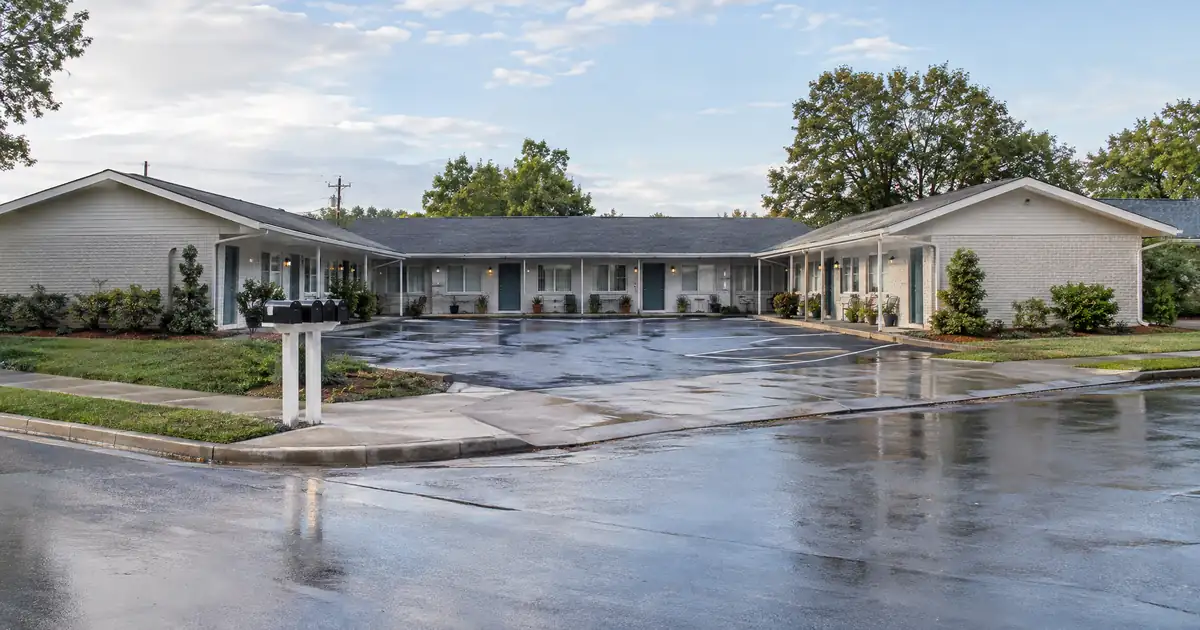
The Quick Read: A 2-4 unit Airbnb building sits on the residential side of the lending line and is reviewed on rent measured against the full monthly obligation, while a six-unit converted motel falls on the commercial side, where lenders look at stabilized income, legal use, and building condition before any coverage ratio matters.
- A 2-4 unit short-term rental follows a defined path: up to 75% LTV on a purchase, a 640 credit score, a 1.00 coverage floor, and about 12 months of hosting experience on typical files.
- A six-unit building is a narrower lane. Some lenders in the network go up to roughly eight to ten units, and others stop at four.
- The motel’s biggest risk is legal and physical, not credit. Zoning, the certificate of occupancy, and building systems can stop a deal before income is tested.
- Clearing 1.00 does not mean positive cash flow. Repairs, vacancy, management, and utilities sit outside the calculation. The exact numbers vary by lender and program and follow a full review of property, leverage, and credit.
The honest answer is that these two buildings suit different investors. The 2-4 unit Airbnb building is for the investor who wants a repeatable, rent-driven loan and is comfortable running a small hospitality operation. The six-unit converted motel is for the investor who is really buying a repositioning project. That investor has the patience for entitlement questions and the capital for building work, and wants more doors under one roof. A six-unit building can look almost identical to a fourplex. The lending treatment is very different.
Short-Term Rental Calculator
Run the STR numbers in your market
Rate source: Freddie Mac 30-yr average via FRED® — Federal Reserve Bank of St. Louis · effective Oct 15, 2026
Prefilled with starting assumptions — enter your nightly rate, occupancy, taxes, and insurance for a more accurate picture.
Short-term rental income is documented with a 12-month history or a market data report. Program parameters update from Lendmire’s centralized guideline source.
As of Oct 15, 2026 · General Freddie Mac market benchmark, not a Lendmire loan offer. Nightly rate, occupancy, taxes, and insurance are editable estimates. Qualifying income for short-term rentals varies by program — some use appraisal market rent, others use documented STR history or projections — and is confirmed in underwriting. Not a Loan Estimate, approval, or commitment to lend. Program availability and eligibility are subject to lender guidelines, credit approval, property review, and underwriting.
Side-by-Side
The column for the 2-4 unit building reflects Lendmire’s network guidelines for short-term-rental collateral. The motel column shows published industry norms for commercial-side files, and individual lenders set their own terms.
| Factor | 2-4 Unit Airbnb Building | Six-Unit Converted Motel |
|---|---|---|
| Property class | Residential investment property | Commercial multifamily |
| Review basis | Rent vs. PITIA, per property | Stabilized income vs. debt service |
| Income evidence | Host history, projection, or rent schedule | Rent roll, leases, operating statement |
| Appraisal style | Comparable sales plus rent analysis | Income approach |
| Entity vesting | LLC commonly supported | LLC commonly supported |
| Legal-use gate | STR permit, zoning, HOA | Residential CO, zoning, conversion status |
| Diligence load | Moderate | Heavy |
| Reserves | Often around 6 months of PITIA | Set by the lender; often stricter |
PITIA stands for principal, interest, taxes, insurance, and association dues. It is the full monthly housing obligation that rent has to cover. LLC vesting works on both sides, subject to lender program eligibility. Reserves are cash set aside after closing, and they vary by lender, leverage, loan size, and transaction type.
Why One More Unit Changes the Math
Unit five is where the loan family changes. Under 1-4 unit residential investor programs, DSCR (debt service coverage ratio) usually compares gross rent to PITIA. On five or more units, the commercial convention divides net operating income, or NOI, by total annual debt service. NOI is rent minus operating expenses, before debt payments.
That difference is why a six-unit building does not simply work like a fourplex. It is a different formula, a different appraisal, and often a different lender pool. Our complete DSCR loans guide covers the basic ratio logic if you want the full walkthrough.
DSCR loans are designed for non-owner-occupied investment properties. Because they are business-purpose investor loans, they are reviewed differently from a standard owner-occupied mortgage.
When a Six-Unit Converted Motel Is the Better Fit
The motel wins when your goal is scale and a value-add play, and you can absorb legal and construction risk. Six doors under one roof, on one parcel, with one set of systems can be efficient to operate once stabilized. If you already know how to reposition a building, the motel can offer more upside per transaction than a small Airbnb building.
Start with the question that matters most: what is the legal use today? Zoning, building code, and the certificate of occupancy (CO) answer three separate questions. One change-of-use explainer makes this point clearly: a good zoning answer does not prove a building can support residential occupancy.
The CO is the document that says how the building may legally be occupied. In some places, a hotel CO covers short stays only, while longer tenancies count as residential. Lexology describes this for New York City. That is jurisdiction-specific, so read it as an example and not a national rule. NYU’s Furman Center shows that in New York, zoning district can bar a hotel-to-housing conversion outright. Sage Investment advises confirming a permanent residential CO and the legal path to get one.
The physical side is just as real. UC Berkeley’s Terner Center quotes developers saying hotels were not designed, from a plumbing and mechanical standpoint, for full-time living. The same report documents delays from zoning, covenants, liens, and floor-area rules. Motel rooms also tend to lack separate metering for power and water, which matters when you want each unit to stand on its own as a tenant-paid apartment.
Underwriting then follows the commercial pattern. Expect the lender to ask for a rent roll, lease documentation, and an operating statement. Motel income only becomes apartment income when leases and a residential CO are in place. A partly converted building, or one with a front office or restaurant, may not qualify as pure residential. Eligibility depends on the residential share and the lease quality.
Here is how this plays out in practice. Many commercial-side files are won or lost on the legal-use documents long before anyone debates the coverage number. A building with a clean residential CO and signed leases gets a very different reception than one with a hotel CO and long-term tenants who do not match the legal use. Cleaning up that mismatch first is cheaper than discovering it during diligence.
A few more points apply to the motel:
- Ask any lender for leverage, coverage, credit, and reserve terms on a six-unit file before assuming the 2-4 unit tiers carry over. They often do not.
- Coverage below 1.00 is available through select lenders in the network, with leverage and terms adjusted. That is a separate path from the programs where 1.00 is the starting floor.
- Loan sizes run up to $3,000,000 on standard programs, and above $2,500,000 the network generally holds to 30-year fixed structures.
- A nightly-rental operation inside a five-plus unit building narrows the lender pool further. Many lenders treat that combination as a gap.
When a 2-4 Unit Airbnb Building Is the Better Fit
The small building wins when you want a clear, repeatable financing path and a property class lenders already understand. Appraisers use a standard form for it. The Fannie Mae Selling Guide shows the residential split: Form 1025 is for two- to four-unit properties, and Form 1004 is for one-unit properties. DSCR loans are not agency products. The appraisal form is the only part that matters here, because it captures rent unit by unit and gives the lender a rent analysis to work from.
The other advantage is that a 2-4 unit building can be financed with a DSCR loan while a second-home loan generally cannot, since second-home loans are designed for single-family properties. That is a major reason investors use DSCR for multiunit short-term rentals. Our piece DSCR vs Conventional Airbnb Loan on a 2-4 Unit goes deeper on that gap.
Across the wholesale network, the short-term-rental numbers look like this, and each file is underwritten individually:
- Purchases reach up to 75% LTV (loan-to-value, the loan as a share of the property’s value).
- Refinances run up to about 70%.
- Cash-out tops out around 70% on short-term-rental collateral, versus around 75% on standard long-term rentals.
- Expect a 640 minimum credit score and about 12 months of hosting experience.
- The coverage floor is 1.00 on purchases and refinances.
- Reserves commonly land around 6 months of PITIA, and they flex with leverage and loan size.
Income evidence usually takes one of three forms. The first is 12 months of platform or property-manager history. The second is a market projection from a data vendor, for properties with no track record. The third is a long-term rent schedule as the conservative fallback. Lenders often count only part of projected short-term income to account for operating costs, and that share varies by lender. Projections are supporting evidence and are not always taken at face value.
Short-term rental rules can vary by city, county, HOA, and property type, so investors should confirm local rules before relying on projected rental income. If short-term rentals are restricted, the income may not count at all. This is the first gate on the small building, just as the CO is the first gate on the motel.
DSCR does not mean zero paperwork. It means qualification runs on the property’s rental income, subject to lender guidelines, instead of on personal income documents. Platform statements, leases, permits, and insurance still matter. Our article Second Home vs DSCR Loan for a 2-4 Unit Airbnb Property walks through that choice for owner-use scenarios.
One Empty Unit: The Modeled Math
Unit count changes how much a single vacancy hurts. This is modeled arithmetic, not market data. Assume every unit earns the same rent and the monthly obligation stays fixed, which it does regardless of occupancy. Start each building at 1.30x coverage.
- Duplex: one empty unit removes half the income, so coverage falls to about 0.65x.
- Fourplex: one empty unit removes a quarter, so coverage falls to about 0.98x.
- Six-unit building: one empty unit removes a sixth, so coverage falls to about 1.08x.
By this logic, a six-unit building absorbs a vacancy better than a 2-4 unit one. That is an inference from the arithmetic, not a sourced finding. Two caveats matter. First, DSCR compares rent to PITIA only, so a ratio above 1.00 is not the same as positive cash flow. Second, a motel’s income only counts as apartment income once the conversion is legal and leased, so the extra doors help only after stabilization.
Where Both Options Get Investors Into Trouble
Mislabeling is the common failure. A property is not multifamily because its floor plan looks like apartments. Zoning and the CO decide use. A building that has been operated as a motel, then rented long term without approvals, creates risk that tends to surface late, as the Terner Center’s documentation of liens, covenants, and codes suggests.
On the short-term-rental side, the common failure is trusting a projection without checking whether the local rules allow the use. On the motel side, the common failure is pricing the deal on motel income and then discovering that apartment income is meaningfully lower.
Operating intensity also differs. Short-term rentals carry cleaning, turnover, and management costs that DSCR math does not capture. A converted motel carries building-systems risk and ongoing capital needs.
DSCR vs. conventional financing
There are two common ways to finance an investment property, and they qualify you differently — here’s how investors weigh them.
Why investors choose it
- Qualifies on the property’s rental income — no personal tax returns, W-2s, or pay stubs needed to document income.
- No personal debt-to-income ceiling to clear, so existing mortgages and obligations don’t cap your borrowing the same way.
- Can be closed in an LLC, keeping the property inside a business entity.
- Built for scaling — not held to the limit on number of financed properties that conventional financing applies.
- Underwriting centers on the deal: generally qualifies when the rent covers the payment, a 1.00x coverage ratio being a common baseline (confirmed in underwriting).
- Designed specifically for investment property, including long-term and, where the program allows, short-term rentals.
Where it’s strong
- Often the lowest ongoing financing cost for a buyer who fully qualifies on personal income — a fit for a first property or a cost-first purchase.
Trade-offs for investors
- Requires full personal income documentation and must fit within a debt-to-income limit — salary, existing debts, and other mortgages all count.
- Typically held in your personal name rather than a business entity.
- Caps how many financed properties you can carry, which can become a ceiling as a portfolio grows.
- Evaluates you as a borrower as much as the property, which usually means more paperwork.
How investors usually choose: a first or single property often optimizes for the lowest financing cost; portfolio builders often optimize for leverage, vesting in an LLC, and scaling past conventional caps. The right answer depends on your goals, the property, and current guidelines — both paths run through select lenders in Lendmire’s wholesale network, with eligibility and terms confirmed in underwriting.
The Verdict
Choose the 2-4 unit Airbnb building if you want a defined path, a standard appraisal, a lender pool built for the product, and income you can document with platform history. It is the lower-friction route and the better first step.
Choose the six-unit converted motel if you have the capital, construction experience, and patience to verify legal use and bring the building into compliance. It offers more doors and a different exit buyer pool. It also carries more ways for the deal to fail before it starts.
Many investors begin with the small building, build a hosting track record, and move to commercial-side assets later. Neither building clears itself. The strongest files show enough equity and enough rental coverage together, and no amount of down payment overrides a leverage cap, a credit floor, or a property that is not eligible. Tax treatment varies; consult a qualified professional.
Frequently Asked Questions
Is a six-unit motel residential or commercial?
It is commercial. Properties with five or more units sit outside the 1-4 unit residential class, so they use income-based appraisal and commercial-style underwriting. A physical layout that resembles apartments does not change that. The legal use under zoning and the certificate of occupancy governs how the building is treated.
Can I convert a motel and still use a DSCR loan?
Possibly, depending on the lender and the building. Programs that take five or more units vary, with some going up to roughly eight to ten units and others stopping at four. The lender will want proof that the building is legally operating as residential, plus leases and a stabilized income picture. A motel still running on a hotel CO is a harder case.
Does a 2-4 unit Airbnb need booking history to qualify?
Not always. A common path is 12 months of platform or manager statements. Properties without history may use a market projection from a data vendor, and some files fall back to a long-term rent schedule. The network also expects about 12 months of hosting experience from the investor on typical short-term-rental files.
Does clearing 1.00 mean the property cash flows?
No. DSCR compares rent to PITIA only. Repairs, vacancy, management, utilities, and capital expenses sit outside it. A property can clear 1.00 and still lose money after real operating costs, which is why stronger coverage matters.
Which building is easier to finance?
The 2-4 unit building, in most cases. It sits in a standard residential class with a defined appraisal form and a broader lender pool. The six-unit motel adds a legal-use review and a commercial-style underwriting process.
Next Steps
If you are buying or refinancing a rental property and want to see how the numbers work, Lendmire can help you compare DSCR loan options based on the property income, credit profile, leverage, and investor goals. As a broker arranging financing through select lenders in its wholesale network across 41 markets, including Washington, D.C., Lendmire can place either type of file with the lenders that fit it, subject to lender guidelines. This is not a commitment to lend. The site’s illustrative calculator can give you a rough estimate before you talk to anyone.
Whichever building you choose, the legal-use document is the first thing worth reading.
About Lendmire
A non-QM mortgage broker (NMLS# 2371349), Lendmire arranges DSCR financing for real estate investors in 41 markets — 40 states plus Washington, D.C. Because deals are underwritten primarily on property cash flow rather than personal income documentation, the structure suits self-employed buyers and entity-owned portfolios. Lendmire places loans through wholesale investor lenders; it is not a direct lender. Scotsman Guide named Lendmire a Top Mortgage Workplace in both 2025 and 2026.
Get Started
Ready to find the right loan for you?
In about 30 seconds you can review financing options available for your investment property. No commitment required.
Informational only. Not a Loan Estimate, approval, or commitment to lend. Program availability and eligibility are subject to lender guidelines, credit approval, property review, and underwriting.
References
1. Danielino Cocente: What Is a Change of Use in a Building
2. Lexology: Conversion of Hotels to Residential
3. NYU Furman Center: Challenges and Opportunities for Hotel-to-Housing Conversions in NYC
4. Sage Investment: Hotel-to-Apartment Conversions
5. Terner Center, UC Berkeley: Hotel Acquisitions
This article is part of Lendmire’s short-term rental loan program — full qualification details, guidelines, and scenarios live on the program page.
Related reading: How to Get a DSCR Lender to Use Your Lease Rent · How to Re-Quote Rental Insurance When a Renewal Sinks Your DSCR · How to Refinance the Home You Moved Out of With a DSCR Loan
Brandon Miller
Founder & CEO, Mortgage Loan Originator, Lendmire LLC
- Mortgage Loan Originator · NMLS# 1129696 · Verify on NMLS Consumer Access
- North Carolina Real Estate Broker · License# 343312 · Verify on NCREC
- North Carolina Insurance Producer · License# 19053198 · Property, Casualty, Life, Health · Verify on NAIC SBS
- Lendmire LLC · Firm NMLS# 2371349 · Verify firm licensure
Disclosure information. Lendmire is a state-licensed mortgage brokerage under NMLS# 2371349. Lendmire is not a depository institution, direct lender, or financial advisor — all loans referenced are placed through wholesale lender partners and are subject to each lender's underwriting standards. This article is provided for general informational purposes and is not a commitment to lend, nor does it constitute financial, legal, or tax advice. Loan programs, terms, rates, and qualification standards change without notice and depend on borrower profile, property type, and the state in which the subject property is located. Equal Housing Opportunity provider. NMLS Consumer Access: nmlsconsumeraccess.org.