
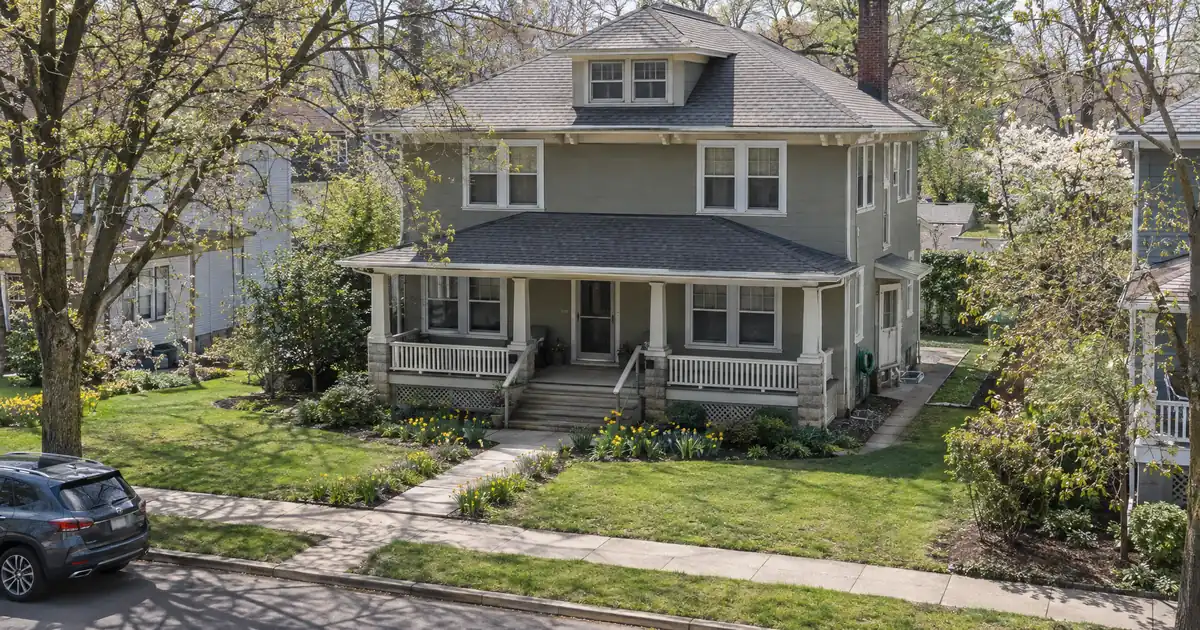
The Quick Read: ADU rent counts on a cash-out file when the unit is legal and the rent is proven by a signed lease backed by payment records, or by the appraiser’s market-rent schedule. Lenders then add the ADU rent to the main-house rent and test the total against the new, larger payment.
- Legal status comes first. An unpermitted unit may be excluded from income entirely.
- Many programs use the lower of the lease and the appraiser’s market rent, so an above-market lease does not help.
- A lease that was never paid does little. Bank statements showing rent landing are what lenders look for.
- On standard rentals, cash-out tops out around 75% LTV, with about 6 months of ownership expected.
- Coverage is rent against PITIA. It is not the same thing as positive cash flow.
The unit exists, the tenant pays, and the owner counts it. Then the appraisal comes back with the rent opinion on the main house only, and the cash-out shrinks. Most of that is preventable with paperwork gathered before the file goes in. This guide walks through the mechanics, the edge cases, and what to do when the number comes in light. For the full program picture, start with the complete DSCR loans guide.
DSCR Cash-Out Calculator
Run the cash-out numbers in your market
Rate source: Freddie Mac 30-yr average via FRED® — Federal Reserve Bank of St. Louis · effective Oct 15, 2026
Prefilled with starting assumptions — enter your property’s value, balance, taxes, and insurance for a more accurate picture.
Program parameters update from Lendmire’s centralized guideline source. Taxes and insurance are editable estimates.
As of Oct 15, 2026 · General Freddie Mac market benchmark, not a Lendmire loan offer. Property value, balance, taxes, and insurance are editable estimates. Maximum loan-to-value varies by lender, program, property type, and seasoning. Not a Loan Estimate, approval, or commitment to lend. Program availability and eligibility are subject to lender guidelines, credit approval, property review, and underwriting.
Key Terms Defined
ADU (accessory dwelling unit): A separate living unit on the same parcel as the main home, with its own sleeping, cooking, living, and bathroom facilities. Fannie Mae’s ADU guidance uses this definition.
PITIA: Principal, interest, taxes, insurance, and HOA dues where they apply. It is the monthly obligation the rent is tested against.
Market-rent schedule: The appraiser’s opinion of what the unit would rent for. Appraisers use Form 1007 for a single-family comparable rent schedule and Form 1025 for a 2-4 unit income property.
Rent roll: A list of every unit, its tenant, its rent, and its lease term.
Seasoning: The ownership period a lender expects before cash-out. On most files in the wholesale network that is about 6 months, measured from title recording.
Lower-of treatment: The practice of counting the lesser of the signed lease and the appraiser’s market rent.
Does ADU Rent Count Toward a DSCR Cash-Out?
Yes, when the unit is legally rentable and the rent is supported. DSCR loans are business-purpose investor loans, so the property qualifies primarily on rental income covering the payment, subject to lender guidelines. The ADU rent is added to the main-house rent, and that total is divided by PITIA.
On a cash-out, the payment tested is the new, larger one. That is where ADU rent earns its place. A property that covers its old payment comfortably can look thin once equity is pulled out. The ADU is often the difference.
Here is the logic with no dollar figures. Say the main house alone supports coverage in the low 0.9x range against the new payment. Add a documented ADU and the combined number can move to around 1.2x. Without the ADU documented, the file sits below the 1.00 mark where many select programs start. A separate select-lender path takes coverage below 1.00 with leverage and terms adjusted, but the cash-out then shrinks. Either way, the documented ADU is what changes the outcome.
One caution. Clearing 1.00 is not positive cash flow. Repairs, vacancy, management, utilities, and capex sit outside the ratio. A maximum pull can push the payment close to the rent, which is the trade-off Lendmire covers in its piece Should a DSCR Investor Take the Maximum Cash-Out Refinance on a Rental?. Exact terms depend on the lender’s guidelines, property type, leverage, and a full review of the borrower’s file.
Step Zero: Prove the ADU Is Legal
Legality evidence is the first thing a file needs. An unpermitted or non-conforming ADU may be excluded from income, or it may complicate the appraisal. Do not build a cash-out plan around a unit that cannot be shown as legal.
Gather these before ordering anything:
- Building permits and the final inspection sign-off
- A certificate of occupancy, where the jurisdiction issues one
- Zoning confirmation or legal non-conforming status in writing
- Plans or a floor layout showing a separate entrance and kitchen
- Insurance that matches the actual structure and its rental use
- Any HOA or deed language that limits rentals
The Oregon DEQ practitioner guide advises owners to hand the appraiser proof the ADU is legal, any rental agreements, and construction cost breakdowns. It also notes that on Form 1004 the appraiser should check the box for one unit with an accessory unit and attach rent schedules. That guide is practitioner material from an earlier period. It is useful for what appraisers want to see, not for DSCR rules.
Older units are the usual trouble. A garage conversion built decades ago may have no permit trail. City or county verification letters can fill the gap in some cases. In others, the unit simply cannot be counted.
Two Tracks of Rent Evidence
Underwriters want rent shown two ways: what is actually being paid, and what the market would pay. Either can be primary depending on the program. Having both ready is the cleaner file.
In-place rent. This is the signed lease for the ADU, plus proof the money arrives. A strong lease shows both parties, the unit address, start and end dates, the monthly rent, the deposit, and signatures. Payment proof is bank statements or a ledger showing deposits that match the lease amount. Lenders cross-check the two. A lease with no deposits behind it reads as paper.
Market rent. This is the appraiser’s schedule. Research on appraising ADU properties from Portland State University points to separate rent schedules for the main home and the ADU. It also shows that a property with an ADU can be reported on Form 1025, the 2-4 unit income form, or on Form 1004 with the ADU described. That paper is older and speaks to appraisal method only.
Scenario Table: What Document Carries the ADU
| ADU situation | Primary document | Supporting proof | Common pitfall |
|---|---|---|---|
| Leased, paid on time | Signed lease | Bank statements, deposits | Lease above market gets capped |
| Month-to-month | Lease or written terms | Payment history | No written terms at all |
| Vacant or new build | Appraiser market rent | Plans, permits, photos | Few ADU comps, low opinion |
| Family or related tenant | Lease and payments | Bank trail, appraiser rent | Rent at a token amount |
| Short-term use | Hosting history | Platform payout records | Form 1007 understates revenue |
Month-to-month tenancies have their own documentation habits. Lendmire’s piece How to Document Month-to-Month Rent on Your First Rental Cash-Out Refinance covers that setup in detail, and the same habits apply to an ADU tenant.
Related-party tenants need extra care. If the ADU tenant is a relative paying a token amount, expect the underwriter to lean on the appraiser’s number. A lease at fair rent, paid by a traceable bank transfer, is the better record. Cash rent with no deposit trail is the weakest form of proof. If rent arrives through a payment app, export the history and match each deposit to the lease amount.
Preparing the Appraisal for the ADU
The appraiser needs access to both units and a clear description of the ADU. Tell the lender at application that an ADU exists and is rented. If it is not flagged, the appraisal can be ordered on the main house alone, and the ADU rent never reaches the report.
Build a short ADU packet. Include square footage, finishes, appliances, the private entrance, the parking arrangement, and photos. Add the lease if there is one. This gives the appraiser what is needed to support a rent opinion for the unit.
Comparables are where opinions slip. Fannie Mae’s ADU guidance shows the appraiser stating that the rent figure is for the ADU, and falling back on adjusted non-ADU rentals when true ADU comps are scarce. That is agency appraisal mechanics, not a DSCR rule, but it shows where a rent opinion can come in lower. A packet with nearby rented ADUs helps the appraiser avoid that fallback.
Form classification matters too. Decide with the lender whether the property is treated as a one-unit with an ADU or as a two-unit. The choice changes which form the appraiser uses and how the rent schedules are built.
When the Lease and the Appraisal Disagree
Most programs in the wholesale network take the lower of the signed lease and the appraiser’s market rent. The reasoning is simple. A lease above market may not survive a tenant change. A lease below market understates what the unit can earn.
Two outcomes follow:
- Lease above market. The excess is wasted. The file is reviewed on the market figure.
- Lease below market. The file may qualify on the lease figure, which can cost cash-out proceeds. Even a modest gap in monthly rent changes the supportable payment, and so the loan amount.
If a long-time ADU tenant pays well below market, address it before applying. A renewal at fair rent, with a clean payment record behind it, strengthens the file. Raising rent on a tenant mid-application is not a fix. The new rent has no payment history yet.
If the ADU Rent Comes In Low
A low appraisal is a routine event, not a dead end. Work from the lightest fix to the heaviest.
| Fix | What it involves | Trade-off |
|---|---|---|
| Correct a factual error | Wrong square footage, missing ADU, wrong form | Needs clear documentation |
| Appraisal reconsideration | Send better ADU comps and the packet | Not every appraiser revises |
| Add proof of paid rent | Bank statements for the lease | Helps only if lease is at market |
| Reduce the cash-out | Lower the draw to fit the coverage | Less equity pulled |
| Pursue a sub-1.00 option | Select lenders, adjusted leverage and terms | Terms change |
Reconsideration works on facts. Missing ADU, wrong measurements, and stronger nearby comps are facts. An argument that the unit should rent for more because the owner wants it to is not.
DSCR vs. conventional financing
There are two common ways to finance an investment property, and they qualify you differently — here’s how investors weigh them.
Why investors choose it
- Qualifies on the property’s rental income — no personal tax returns, W-2s, or pay stubs needed to document income.
- No personal debt-to-income ceiling to clear, so existing mortgages and obligations don’t cap your borrowing the same way.
- Can be closed in an LLC, keeping the property inside a business entity.
- Built for scaling — not held to the limit on number of financed properties that conventional financing applies.
- Underwriting centers on the deal: generally qualifies when the rent covers the payment, a 1.00x coverage ratio being a common baseline (confirmed in underwriting).
- Designed specifically for investment property, including long-term and, where the program allows, short-term rentals.
Where it’s strong
- Often the lowest ongoing financing cost for a buyer who fully qualifies on personal income — a fit for a first property or a cost-first purchase.
Trade-offs for investors
- Requires full personal income documentation and must fit within a debt-to-income limit — salary, existing debts, and other mortgages all count.
- Typically held in your personal name rather than a business entity.
- Caps how many financed properties you can carry, which can become a ceiling as a portfolio grows.
- Evaluates you as a borrower as much as the property, which usually means more paperwork.
How investors usually choose: a first or single property often optimizes for the lowest financing cost; portfolio builders often optimize for leverage, vesting in an LLC, and scaling past conventional caps. The right answer depends on your goals, the property, and current guidelines — both paths run through select lenders in Lendmire’s wholesale network, with eligibility and terms confirmed in underwriting.
What to Expect From the Network’s Cash-Out Terms
These are typical ranges from select wholesale-network guidelines, subject to lender guidelines and not a commitment to lend. Cash-out on a standard rental tops out around 75% LTV. About 6 months of ownership is the common expectation, measured from title recording. Coverage of 1.00 is where many select programs start. Credit floors begin at 620 in parts of the network, with 660 more common and 700 or higher opening the strongest leverage. Reserves run about 6 months of PITIA on many files, and about 9 months on loans above $1,500,000. Standard programs go up to $3,000,000.
Short-term-rental ADUs run differently. Cash-out on short-term-rental collateral is capped at 70%, versus 75% on standard rentals. Expect a 640 or higher score and about 12 months of hosting history. Form 1007 measures long-term monthly rent and can understate short-term revenue, so those files use alternate income methods. Short-term rental rules can vary by city, county, HOA, and property type, so investors should confirm local rules before relying on projected rental income.
A larger equity cushion lowers the payment and can lift coverage. It does not erase leverage caps, credit floors, or reserve rules. The strongest files clear both tests: enough equity and enough rental coverage.
Where the General Rule Breaks
Newly built ADU. With no rent history, expect the program to rely on the appraiser’s market rent. A new lease is compared against that figure. Ask whether a recently finished unit affects seasoning on the specific program.
Owner-occupied main house. DSCR loans are for non-owner-occupied investment properties. An owner living in the main house with a rented ADU is a house-hack, not a DSCR candidate.
Agency rules. Agency ADU income rules do not govern DSCR files. Rates are not quoted here. Each lender program sets its own method.
Ineligible collateral. Manufactured homes, log homes, and barndominiums are not offered in the network’s DSCR programs, so an ADU of those types will not carry a file.
Pre-Application Checklist and Sequence
Gather in this order:
1. Legality file. Permits, final sign-off, zoning status, insurance, HOA language.
2. Lease and ledger. Signed ADU lease, plus bank statements showing each payment.
3. Main-house rent evidence. Lease or rent roll for the primary unit.
4. ADU packet. Square footage, finishes, appliances, entrance, photos.
5. Disclosure to the lender. Say the ADU exists and is rented before the appraisal is ordered.
6. Coverage test. Run combined rent against the new larger payment before applying, so the draw is sized to the number.
Reserves documentation, entity documents if the property is held in an LLC (subject to lender program eligibility), and ownership records for seasoning round out the file.
Frequently Asked Questions
Can I use ADU rent if there is no tenant yet?
Usually yes, through the appraiser’s market-rent figure instead of a lease. Expect the opinion to rest on comparable rentals, so the ADU packet and legal documents matter more. A newly signed lease is typically compared against that market figure.
What if my ADU is unpermitted?
It may be left out of income, or it can complicate the appraisal. Without permits or a verified legal status, plan the cash-out on the main-house rent alone. Older units sometimes have city or county verification that fills the gap.
Does rent from a family member count?
It can, but the proof needs to be stronger. A lease at fair rent with traceable bank payments helps. A token amount or cash with no record usually pushes the lender toward the appraiser’s figure.
Is a lease enough on its own?
No. Lenders cross-check the lease against bank statements and the appraiser’s rent. A lease with no payments behind it carries little weight, and a lease above market is capped.
Do agency ADU income rules apply to a DSCR loan?
No. Agency limits do not govern DSCR files, and each program sets its own method for counting ADU rent. Confirm the lender’s income approach before paying for reports.
For the mechanics of pulling equity out of a rental property, see Lendmire’s guide to cash-out refinance on an investment property.
About Lendmire
Lendmire (NMLS# 2371349), a non-QM mortgage broker serving investors in 41 markets including Washington, D.C., helps structure DSCR scenarios commonly evaluated around a property’s rental income rather than personal income paperwork, subject to lender guidelines. A Scotsman Guide Top Mortgage Workplace in 2025 and 2026, Lendmire places loans through wholesale investor lenders and is not a direct lender.
Get Started
Ready to find the right loan for you?
In about 30 seconds you can review financing options available for your investment property. No commitment required.
Informational only. Not a Loan Estimate, approval, or commitment to lend. Program availability and eligibility are subject to lender guidelines, credit approval, property review, and underwriting.
References
2. Oregon DEQ ADU practitioner guide
3. Portland State University: Appraising Properties with ADUs
This article is part of Lendmire’s investment property cash-out refinance program — full qualification details, guidelines, and scenarios live on the program page.
Related reading: How to Weigh Giving Up a Low First Mortgage for DSCR Cash-Out · DSCR Cash-Out Now vs Waiting for Hard Money and Rehab Card Payoff · Selling a Rental vs. a DSCR Cash-Out Refinance for the Next Purchase
Brandon Miller
Founder & CEO, Mortgage Loan Originator, Lendmire LLC
- Mortgage Loan Originator · NMLS# 1129696 · Verify on NMLS Consumer Access
- North Carolina Real Estate Broker · License# 343312 · Verify on NCREC
- North Carolina Insurance Producer · License# 19053198 · Property, Casualty, Life, Health · Verify on NAIC SBS
- Lendmire LLC · Firm NMLS# 2371349 · Verify firm licensure
Legal disclosures. Lendmire (NMLS# 2371349) is a state-licensed mortgage brokerage that arranges financing through wholesale lender relationships. Lendmire is not a direct lender, depository institution, or registered financial advisor. The discussion above is general informational content about real estate financing — it is not financial, legal, or tax advice, and readers should consult licensed professionals for guidance on their individual circumstances. Loan inquiries are subject to lender underwriting; this article does not represent a commitment to lend. Loan terms, rates, and qualification standards vary by borrower, property, and state, and are subject to change at any time. Equal Housing Opportunity. NMLS Consumer Access: nmlsconsumeraccess.org.