
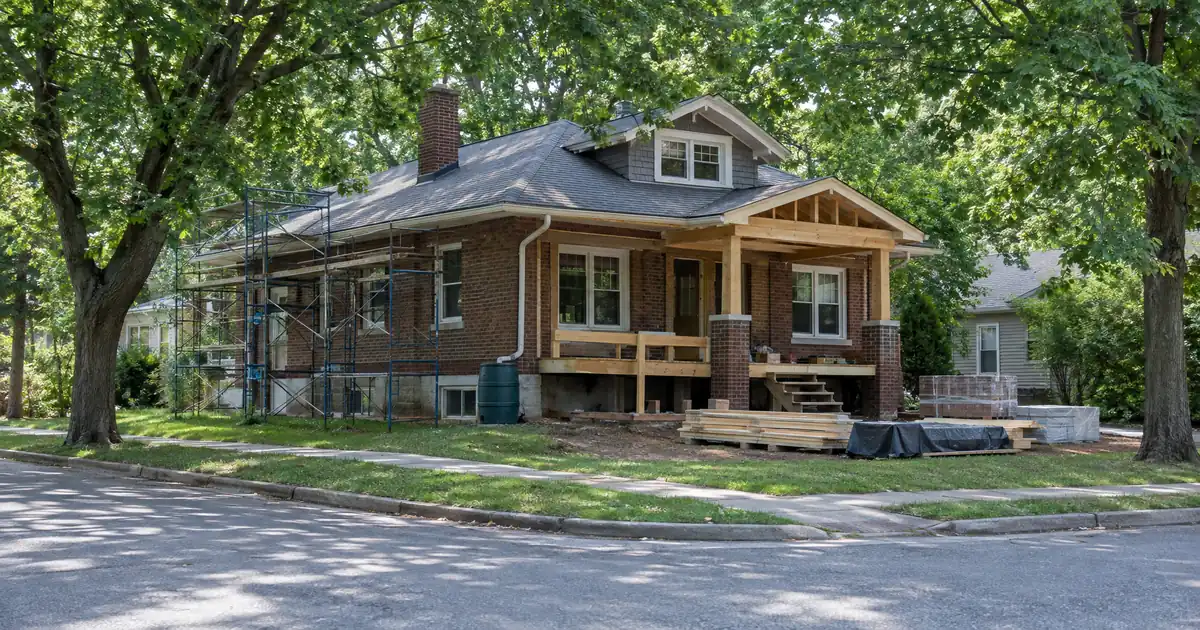
The Quick Read: Pace each draw request to work that is finished, paid for and documented, then plan the entire schedule backward from the day the hard money loan matures, because the refinance, the seasoning wait and the lease-up all have to fit inside that term.
- Rehab money is a holdback released against inspected work. It is not cash at closing.
- Interest generally runs on the drawn balance, so the payoff grows with each release.
- The seasoning clock usually starts at the recorded deed, so finishing rehab early does not shorten it.
- A slipped draw pushes the lease-up, the appraisal and the refinance. It can eat the cushion before maturity.
- The exit is a long-term DSCR loan, and its rules differ from the hard money loan’s rules.
Key Terms Defined
Draw: a release of rehab funds after a phase of work is finished and verified.
Holdback: the part of the loan set aside at closing for rehab and paid out only through draws.
Maturity: the date the short-term loan comes due and must be paid off or extended.
Seasoning: the waiting period a lender wants between buying a property and refinancing it on its new value.
Payoff: the amount needed to retire the bridge loan: drawn principal, accrued interest and any extension or exit fees.
Cost basis: the documented total of purchase price plus rehab money actually spent, which some lenders use to size a refinance.
DSCR: debt service coverage ratio. It compares a property’s rent to its full monthly obligation, meaning principal, interest, taxes, insurance and any association dues (PITIA).
DSCR Calculator
Run the numbers in your market
Rate source: Freddie Mac 30-yr average via FRED® — Federal Reserve Bank of St. Louis · effective Oct 15, 2026
Prefilled with starting assumptions — enter your own rent or nightly figures, taxes, insurance, and HOA for a more accurate picture.
Program parameters update from Lendmire’s centralized guideline source. Taxes and insurance are editable estimates.
As of Oct 15, 2026 · General Freddie Mac market benchmark, not a Lendmire loan offer. Rent, nightly rate, occupancy, taxes, and insurance are editable estimates. Short-term rental figures are estimates only and vary significantly by season, property type, management approach, and local short-term-rental rules — confirm local regulations before relying on them. Qualifying income for short-term rentals varies by program — some use appraisal market rent, others use documented STR history or projections — and is confirmed in underwriting. Not a Loan Estimate, approval, or commitment to lend. Program availability and eligibility are subject to lender guidelines, credit approval, property review, and underwriting.
The Two Clocks You Are Managing
Every BRRRR hold runs on two clocks. The loan clock starts at closing and ends at maturity. The seasoning clock starts when the deed records and decides when the exit lender will refinance on appraised value. Draws live on the first clock, but they must be timed so the second one finishes with room to spare.
| Clock | Starts | Ends | What moves it |
|---|---|---|---|
| Hard money term | Closing | Maturity or extension | Extensions, payoff |
| Draw clock | First completed phase | Final release | Inspections, contractors |
| Seasoning clock | Recorded deed | Lender’s wait is met | Nothing you do on site |
| Lease-up clock | Rent-ready | Signed lease, deposit | Condition, pricing, permits |
Hard money terms on the program we place typically run 6 to 18 months, interest-only, with no prepayment penalty. Terms, leverage and fees vary by lender, property, and experience, and nothing here is a commitment to lend. An investor who plans for the long end of that range is buying cushion, not just time.
The seasoning point matters because early finishing does not help. A rehab done in month two does not shorten a wait that began at recording. A rehab that drags to month seven can use up most of the term before the refinance even starts.
How a Draw Actually Moves
A draw is a stepwise release, and each step has a place where it commonly stalls. According to Yieldstack, rehab money sits in a holdback, an inspector verifies the work, and the lender releases funds less a retained portion. Here is the sequence.
1. Close. The purchase portion funds and the rehab budget goes into the holdback. Across the hard money structures we see, interest accrues on what has been disbursed rather than on the whole commitment, though the note controls.
2. Self-fund the first phase. Most lenders expect you to start with your own cash. Advance draws exist but are the exception, so working capital beyond the down payment is a real requirement.
3. Finish a phase and pay for it. Materials are generally reimbursed once installed, not while they sit in a garage.
4. Submit the request. DealRun’s construction draw glossary describes the usual package: photos of completed work, subcontractor lien waivers and sometimes paid invoices. A budget showing work done against work remaining helps.
5. Inspect, then fund. Inspection turnaround varies by lender, and every inspection adds latency while contractors wait on you.
6. Final release. Final lien waivers, closed permits, final photos and, where required, a certificate of occupancy usually come last. Retained holdbacks release at that point.
Up to 100% of the rehab budget can fund through draws against completed work on the program we place, which is a rehab-budget figure and not a purchase leverage figure. Purchase leverage on a fix-and-flip is tiered by documented completed projects, reaching 85%, 90% or 93% of project cost, with every tier capped at 75% of after-repair value. Experienced investors get the top tier. First-time investors qualify at the lower tiers.
Build the Schedule Backward From the Exit
Start with the refinance date and work backward. That single habit separates a clean exit from a scramble. The long-term loan that pays off the bridge is a DSCR loan. Subject to lender guidelines, a cash-out DSCR loan on an investment property tops out around 75% LTV across most of the network, and the common expectation is about 6 months of seasoning measured from title recording.
So the backward math looks like this. Maturity is the outer wall. The seasoning wait ends about 6 months after recording. The appraisal and underwriting need room after that, and the lease must be signed before them. Rehab must finish before the lease-up, and the last draw must clear before rehab is complete. The table below is a hypothetical calendar for a 12-month term. It uses the 10/25/25/25/15% five-draw schedule that DealRun publishes as an illustration only. Real draw counts and sizes vary by lender and scope.
| Month | Milestone | Draw | Cumulative drawn | Risk flag |
|---|---|---|---|---|
| 0 | Close, deed records | — | 0% | Seasoning clock starts |
| 1 | Demo and mobilization | 10% | 10% | Permits |
| 2 | Rough-ins complete | 25% | 35% | Failed inspection |
| 3 | Interior finishes | 25% | 60% | Change orders |
| 4 | Kitchen, baths, final items | 25% | 85% | Contractor stall |
| 5 | Final release, lease signed | 15% | 100% | Missing lien waivers |
| 6 | Seasoning met, apply for exit | — | 100% | Appraisal rent gap |
| 7 to 12 | Underwriting, payoff | — | 100% | Maturity cushion |
Notice that months 7 through 12 are cushion. That is the point.
Few Large Draws or Many Small Ones?
Draw count is a trade between contractor cash strain and inspection friction. Lenders structure anywhere from three draws to five or more, and none of those is a rule. Your note decides.
| Factor | Few large draws | Many small draws |
|---|---|---|
| Your out-of-pocket float | Higher | Lower |
| Inspection friction | Fewer visits | More visits |
| Contractor relations | Strained between releases | Smoother |
| Interest | Rises in bigger steps | Rises gradually |
| Slip risk | One miss costs more | One miss costs less |
On a light cosmetic rehab, fewer draws usually fit. On a heavy scope, smaller milestones keep subs paid and make a single failed inspection cheaper. It is a genuine toss-up on mid-sized jobs, and the better answer often depends on how much working capital you hold.
What Interest Does Between Draws
Payoff is not the loan amount. It is the principal drawn so far, plus accrued interest, plus any extension or exit fees. Yieldstack notes that draw speed, inspection cadence and interest on undrawn funds set your real carry cost, so the question to ask a lender is whether interest runs on drawn funds only.
A common worry is whether to delay a request to save interest. That is usually false economy. You cannot draw ahead of finished work, so the only choice is when to submit once a phase is done. Waiting stretches the rehab, strains the contractor and pushes the lease-up, and all of those cost more than a few weeks of interest on one tranche. Submit the moment the phase is finished and the paperwork is complete.
When Draws Slip
One slow inspection moves everything downstream, and the cascade is the part most investors never map.
| Slip | Downstream effect | Fix |
|---|---|---|
| Inspection delayed | Contractor idles, rehab stretches | Schedule inspections ahead of the finish date |
| Failed inspection | Re-inspection and a second wait | Walk the work against the scope line items first |
| Change order | Budget drift, extra self-funded cash | Get written approval before work starts |
| Permit open at the end | Final release held | Close permits as phases finish |
| Missing lien waiver | Draw held | Collect waivers with each payment |
| Rent gap at appraisal | Lower value or thinner coverage | Match the lease to market rent early |
The seasoning wait does not move when a draw slips, but the lease-up, appraisal and underwriting all shift later, and that is what eats the maturity cushion. If the cascade pushes the exit near the wall, ask about an extension before maturity, not after. Extension availability and fees vary by lender and are set in the note.
Paperwork That Keeps Your Cost Basis Intact
Some exit lenders size on the lower of cost or appraised value when the refinance falls inside the seasoning window, according to 4homes. That makes documented, drawn and paid rehab spend matter. Work that was never invoiced or never drawn can leave cash on the table.
- Keep each invoice, lien waiver and bank record matched to a draw.
- Hold the draw history together with photos of each completed phase.
- Close permits as you go, and keep the certificate of occupancy where one applies.
- Track contingency separately, since whether unspent budget releases depends on the note.
- Keep the lease and deposit proof consistent with the rent the appraiser expects.
Where the Exit Loan Sets Its Own Rules
The hard money loan and the DSCR loan that pays it off are two different products with two different tests. Hard money reviews the property, the plan and the exit, with credit at a 620 minimum and added conditions below 660. The DSCR loan underwrites rent against PITIA.
A few figures on the DSCR side, as the program allows and never as a promise: a DSCR loan on a cash-out refinance reaches about 75% LTV on an investment property, about 6 months of seasoning from recording is the common expectation, and reserves are commonly around 6 months of PITIA, stepping up to about 9 months above $1,500,000. The credit floor on a DSCR loan is 620, with tiers at 660, 680 and 700 opening more leverage. Select programs start at 1.00 coverage, and stronger ratios open better pricing and leverage. A separate select-lender path goes below 1.00 with leverage and terms adjusted.
For comparison, Lofty’s BRRRR guide reports that many lenders want 6 to 12 months of seasoning and that many investors look for post-refinance coverage of 1.20 to 1.25. Treat those as market-wide figures. The network figures above are what apply to the DSCR loans we place.
Clearing 1.00 is also not the same as positive cash flow. DSCR counts rent against PITIA only, so repairs, vacancy, management and utilities sit outside it.
The mechanics of paying off the bridge are covered in the hard money exit refinance program page, and the complete DSCR loans guide explains the loan you are refinancing into. For the specific problem of carrying empty units, see Lendmire’s piece How to Carry Vacant BRRRR Units on Hard Money Into a DSCR Loan.
Where the General Rule Breaks
Three edge cases change the timing logic.
- Payoff-only refinances. A refinance that only pays off the bridge is often treated more leniently than a cash-out inside the seasoning window, but this varies by lender.
- Delayed-financing exceptions. Those are written for cash purchases and generally do not rescue a purchase made with hard money.
- Ineligible collateral. Manufactured homes, log homes and barndominiums fall outside the DSCR programs in the network, so a rehab on one of those has no DSCR exit.
A Checklist Before the First Draw Request
1. Work backward from maturity and confirm the seasoning date leaves cushion.
2. Confirm in the note whether interest runs on drawn funds only.
3. Confirm the first-phase self-funding you need.
4. Ask about inspection turnaround, cadence and extensions.
5. Model four numbers: after-repair value, refinance LTV, cash left in the deal and post-refinance coverage.
6. Line up the DSCR lender before the purchase closes.
Frequently Asked Questions
Can I request a draw before a phase is finished?
Usually not. Most lenders release funds against completed, inspected work, and materials are generally reimbursed only once installed. Some private lenders offer advance draws, but they are the exception, so plan to self-fund the first phase.
Does finishing rehab early speed up the refinance?
Not by itself. Seasoning usually runs from the recorded deed, so an early finish does not shorten the wait. It does let you lease sooner, which protects your cushion before maturity.
What if I run out of rehab budget?
Change orders and overruns generally come out of your pocket, since the holdback is fixed. Get changes approved in writing and keep contingency tracked separately. Whether unspent budget or contingency releases depends on the note.
Do draws affect seasoning?
No. The clock for a cash-out refinance starts at recording, and about 6 months of ownership is the common expectation on the DSCR loans we place. Draws affect when you are ready to lease and apply, not when seasoning ends.
What if the bridge matures before the refinance?
Ask about an extension early, since availability and fees vary by lender. Otherwise the payoff comes due, including drawn principal, accrued interest and any fees.
Next Step
If you are buying, rehabbing or refinancing an investment property on a short timeline and want to see how the numbers work, Lendmire can help you compare hard money options based on the project, the exit plan, leverage and your goals. The sharpest draw schedule is the one built from the exit date, because the calendar that matters most is the one that ends with a signed lease and a clean payoff.
About Lendmire
As a DSCR and non-QM mortgage broker, Lendmire — NMLS# 2371349 — connects investors with wholesale lending channels across 41 markets, including Washington, D.C. The property’s rental income, not the borrower’s tax returns, is central to lender review, which works for self-employed operators and portfolios beyond four financed properties. Scotsman Guide named Lendmire a Top Mortgage Workplace in both 2025 and 2026.
Get Started
Ready to find the right loan for you?
In about 30 seconds you can review financing options available for your investment property. No commitment required.
Informational only. Not a Loan Estimate, approval, or commitment to lend. Program availability and eligibility are subject to lender guidelines, credit approval, property review, and underwriting.
References
1. Yieldstack — fix-and-flip loan draw schedule
2. DealRun — construction draw schedule glossary
3. 4homes — BRRRR refinance timing, seasoning and appraisals
This article is part of Lendmire’s hard money loan program — full qualification details, guidelines, and scenarios live on the program page.
Related reading: How to Build a Rent Roll for a DSCR Takeout After a BRRRR Rehab · How to Refinance Out of Hard Money With a DSCR Loan Before the Payoff · Can You Put a DSCR-Financed Rental in a Trust After Closing?
Brandon Miller
Founder & CEO, Mortgage Loan Originator, Lendmire LLC
- Mortgage Loan Originator · NMLS# 1129696 · Verify on NMLS Consumer Access
- North Carolina Real Estate Broker · License# 343312 · Verify on NCREC
- North Carolina Insurance Producer · License# 19053198 · Property, Casualty, Life, Health · Verify on NAIC SBS
- Lendmire LLC · Firm NMLS# 2371349 · Verify firm licensure
Required disclosures. Lendmire (NMLS# 2371349) operates as a licensed mortgage broker, not a direct lender or depository. The discussion in this article is general in nature and should not be relied upon as financial, legal, or tax advice — every investment scenario is unique and should be reviewed by a qualified professional. Any loan inquiry is subject to lender underwriting, and this article is not a commitment to lend or a guarantee of approval. Mortgage rates, loan terms, and program guidelines vary by borrower, property, and state, and may change without notice. Equal Housing Opportunity. Verify licensure at NMLS Consumer Access.