
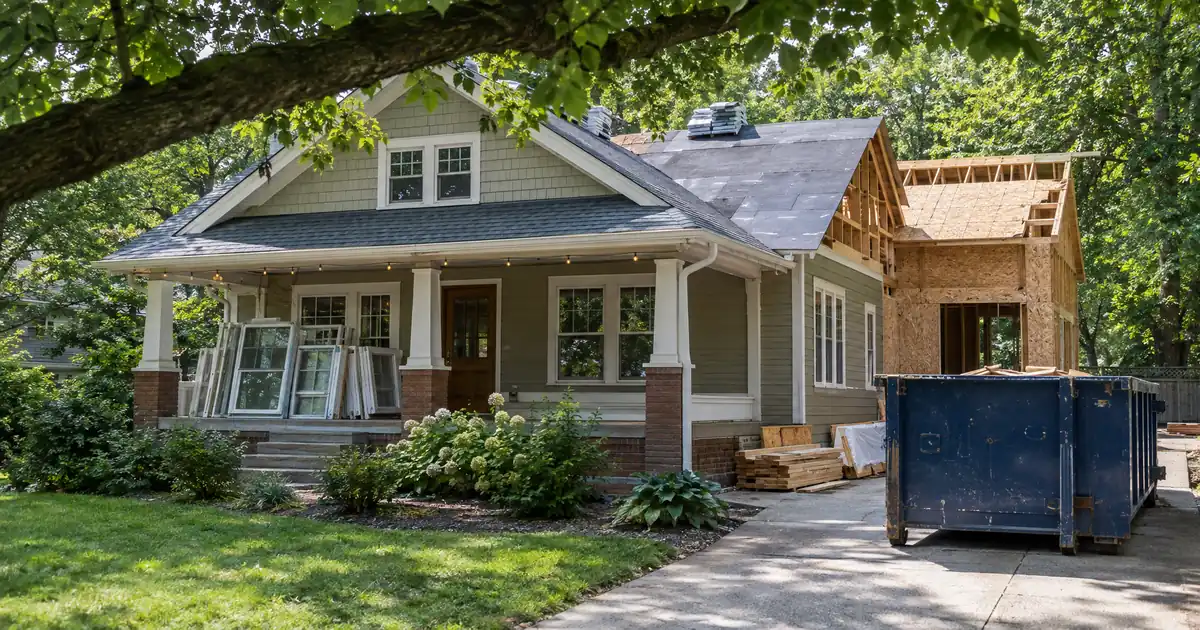
The Quick Read: Only when the revised budget is documented and the larger total still fits under the loan’s after-repair-value cap, and even then the extra money is the lender’s call, never an automatic right, so the default answer for a cosmetic flip that runs over is that you cover the gap from your own reserves. Lenders fund the approved budget, not the invoices that follow.
- The rehab budget is a fixed pot, released in draws after you show completed work.
- More money usually needs a change order, proof of the cause, and a revised budget.
- The after-repair-value (ARV) cap is the real ceiling. If the extra pushes you past it, the overage is your cash.
- Upgrades you chose and underbids get a harder look than hidden conditions found mid-demo.
- Contingency, not a second loan request, is your first line of defense.
Why the Loan Doesn’t Just Grow
A hard money loan is built around a plan. The lender looks at the purchase, the rehab budget, the after-repair value, and your exit. Across the wholesale network Lendmire works with, fix-and-flip leverage typically runs 85% to 93% of project cost depending on how many completed projects you can document, and every tier is capped at 75% of ARV. Those figures vary by lender, property, and experience, and nothing here is a commitment to lend.
What this loan actually costs to carry.
Hard money is sized against the project and priced by time. Enter the deal and see how much the program will lend, the cash required at closing, the carry while you hold it, and what is left at the exit.
Leverage tiers on the current program: 85% with fewer than 2, 90% with 2 or more, 93% with 5 or more completed projects — every tier capped at 75% of after-repair value. Loan amounts up to $5,000,000, larger by exception; terms of 6 to 18 months, interest-only, no prepayment penalty. The rehab portion funds in draws against completed work, not at closing.
Program parameters shown update from Lendmire’s centralized guideline source. Rate, points, and months are editable assumptions, not quoted terms.
Cost cap sets the loan · positive spread
Illustrative estimate only — not a quote, Loan Estimate, approval, or commitment to lend. Rate, points, and months are editable assumptions. Hard money is business-purpose financing for real estate investors, not a consumer mortgage. Leverage on the current program tops out at 93% of project cost for investors with a documented track record, capped at 75% of after-repair value, with rehab funding up to 100% of the documented budget released in draws; actual terms vary by lender, borrower experience, property, and exit. Lendmire is a mortgage broker, not a lender.
Up to 100% of the rehab budget funds in draws against completed work. Read that carefully. It means the approved budget, not whatever the job ends up costing.
When costs jump, the lender’s exposure jumps with them, but the collateral’s value doesn’t. That mismatch is the whole story. The lender is already funded into the deal, so the question it asks is simple: does the new total still make sense against what the house will be worth?
How Rehab Money Actually Moves
Rehab money is held back and released as work gets done. You pay the contractor first, show photos or an inspection, and the lender reimburses you. Lenders hold funds this way because they have seen contractors paid up front and never return. Draw schedules generally rely on a third-party inspection to verify completed work and on line-item budget tracking.
Two practical consequences follow.
First, you front the cash between draws. Your liquidity matters as much as the headline rehab percentage. A flipper who is tapped out after draw one can stall even when the budget is fine.
Second, a line item that burns through its allocation early leaves a hole at the next draw. The lender won’t backfill it just because you asked. Reallocating money from one line to another is a different request from raising the total, and lenders treat it far more kindly.
Even the agency-backed renovation loan works on this principle. Fannie Mae’s selling guide puts any cost increase on the borrower or lender and keeps renovation funds in escrow with a contingency reserve. Hard money has no such formal reserve unless you build one yourself. That is a contrast, not a rule for your deal.
Are Cosmetic Flips Safer? Not the Way You’d Hope
Cosmetic means paint, flooring, fixtures, kitchens and baths, light carpentry. The term is used loosely, and it also shows up in fraud and appraisal contexts. Here it only means a light-scope renovation with no structural work planned.
The risk is the opposite of what people assume. A light scope has a small budget, so a single surprise is a big percentage of it. Pull up old flooring and find a rotted subfloor. Open a wall for a vanity and find outdated wiring. A finish choice can trigger a permit. Experienced investors describe cosmetic jobs that turned structural in the middle of demolition, with the schedule stretching and carrying costs stacking up.
Cosmetic flips also run on thin margins, which means there’s less room to absorb an overrun.
Does the Loan Grow When Costs Run Over?
It can happen in one of a few ways, and the outcome depends on how the overrun is handled.
Path one: reallocation. A small overrun in one line gets covered by moving money from another line or from contingency. You submit a change order, the lender approves it in writing, and the total doesn’t change. This is the easy path.
Path two: a modification. The total goes up. The lender will want the cause documented, a revised budget, and proof that the new total still works against ARV. It is discretionary, and it often depends on your track record and whether the lender is already funded into the deal.
The common outcome: you pay the difference. Investors often absorb the overage themselves and accept lower final proceeds, or they price the resale a bit higher. That’s the realistic baseline.
The Ceiling Test
The test is the same each time. Take the revised total project cost, apply the leverage tier you qualified for, and check the result against 75% of ARV. If the loan fits under the cap, a lender may consider the increase. If it doesn’t, the extra becomes your cash.
Here is an illustrative example, using modeled percentages rather than market data. Say your loan sits at 65% of ARV against that 75% cap, leaving some headroom. A modest overrun in extra rehab fits under the cap, though the lender still has to agree to the increase. A larger overrun that exceeds the headroom doesn’t fit, and you’d fund the portion beyond the cap yourself.
One more wrinkle: spending more doesn’t raise value on its own. The appraisal follows comparable sales, not your invoices. An improvement may support a higher appraised value, depending on comps and underwriter review. A budget that grows while ARV stays flat just eats the margin. The common 70% rule screens flips by taking ARV times 0.70 and subtracting rehab. Run it again with the revised rehab number, because a deal that cleared the screen at the original budget may not clear it now.
What Kind of Overrun Is It?
Lenders and investors treat causes differently. A condition nobody could have priced beforehand gets more sympathy than a large estimate error. Brokers see the same pattern across lenders: documented surprises get a hearing, and “I wanted nicer tile” doesn’t.
| Cause | How a lender tends to view it | Best response |
|---|---|---|
| Hidden condition (subfloor, wiring) | Most sympathetic | Photos, third-party report, change order |
| Permit-driven scope | Sympathetic if documented | Permit paperwork, revised budget |
| Underbid by contractor | Weaker case | Rebid, renegotiate, use contingency |
| Upgrades you added | Weakest case | Get approval before work starts, or fund yourself |
| Delay-driven carry | Not a rehab cost | Plan reserves, tighten schedule |
Scope changes you choose on purpose are a different matter from overruns. Get the lender’s approval before the work starts, not after the invoice arrives.
How to Ask (and When)
Ask before the money is spent, not after. A lender that hears about a problem at the next draw request is far more cooperative than one that finds it on a final invoice.
A solid request package usually contains:
- the contractor’s change order explaining the unforeseen work
- third-party verification, such as an engineer’s or inspector’s report, for hidden conditions
- a revised budget showing where every dollar goes
- an updated comp review or ARV estimate, if the added work changes value
- a revised schedule
Then be honest about the odds. An increase is discretionary, may take re-underwriting, and may involve a fee. Sometimes the better move is to fund the gap, cut scope, or choose a cheaper finish instead of asking.
Many investors have also heard stories of a lender, often a private or family source, that simply funded the gap because it was already invested in the deal. That happens. It is the exception, and an institutional lender working through a wholesale network usually needs the paperwork.
What the Overrun Does to Profit and Exit
Overruns hit three places at once: profit, carry, and the exit.
Carry matters most because hard money terms are short, typically 6 to 18 months, and interest-only, and they vary by lender, property, and experience. Interest runs on drawn funds for longer when the job drags. The BPM REIA stress test on a sample flip models a 15% rehab overrun plus three extra months of holding. Profit before financing drops from $88,000 to $73,000. Those are the site’s illustrative figures, not market data, but the shape holds: delay often costs more than the overrun itself.
The exit also tightens. If you planned to refinance into long-term financing, a higher cost basis doesn’t guarantee a higher appraisal. If you planned to sell, the equity cushion you counted on may be thinner than when you started.
Many investors refinance out of hard money into long-term DSCR financing once the property is stabilized and rented, and Lendmire brokers that path. Keep one thing straight: a DSCR loan is reviewed primarily on property-level rental income covering the payment, subject to lender guidelines. Clearing a 1.00 coverage ratio is where many select programs start, not proof of positive cash flow, since repairs, vacancy, and management sit outside the calculation. Coverage below 1.00 is available through select lenders in the network, with leverage and terms adjusted. The complete DSCR loans guide walks through how that exit works.
If More Financing Isn’t Available
When the cap blocks an increase, you still have moves:
- Use contingency. A common investor guideline is 10% to 15% of the project, and some investors use 10% for a small cosmetic job and 20% for something less certain.
- Bring in your own cash or a partner. It lowers returns but keeps the flip alive.
- Cut or phase scope. Skip the upgrade, finish the must-haves, and sell.
- Renegotiate with the contractor. Rebid unfinished lines.
- Plan the exit. Lendmire’s piece How to Exit Hard Money When the Flip Didn’t Sell covers that path.
The honest take: the stronger play on a thin cosmetic margin is usually to fund the gap and protect the schedule, not to chase a modification. Tight-margin flips rarely survive a request, a re-review, and three more months of interest.
Prevent It Before Closing
- Get written bids, not verbal ones.
- Inspect for the usual cosmetic-job surprises: subfloor, old wiring, plumbing behind walls, and anything finishes could turn into a permit.
- Size contingency to the budget. A small budget needs a higher percentage.
- Hold liquid reserves for the gap between draws, not just the overrun.
- Don’t count on the lender’s money to fix your estimate.
Key Terms Defined
Draw: A release of rehab funds after the lender confirms completed work.
Holdback: The rehab portion of the loan the lender keeps back and releases in draws.
Change order: A written change to the scope or cost of the work, approved before the work is done.
After-repair value (ARV): What the property is expected to be worth once the renovation is finished.
Value ceiling: The cap on the loan as a share of ARV, which limits any increase no matter the cost.
Contingency: Money set aside inside the budget for surprises.
Frequently Asked Questions
Will a hard money lender cover costs above the approved budget?
Not automatically. The approved budget is what gets funded, paid out against completed work. Anything more is discretionary and needs documentation and room under the ARV cap. Treat the extra funding as a possibility to ask about, not something to plan around.
Can I move money between budget lines?
Often yes, with written approval. Reallocation doesn’t raise the total loan, so lenders usually handle it more easily than a request for more money. Submit a change order before the work happens, since lenders typically want the change documented first.
Does a modification need a new appraisal?
It can, depending on the change. If the added work changes the expected value or the cap math, a lender may want updated comps or a fresh value opinion. Whether one is required varies by lender, property, and experience.
Are cosmetic flips less likely to go over?
They tend to go over by smaller dollar amounts, but small budgets are sensitive. A single hidden problem can be a large share of the whole budget, and thin margins leave little room to absorb it.
What if the flip stalls and I need a way out?
You can sell, bring in cash, or refinance into longer-term financing. A rental property that stabilizes may fit a DSCR refinance, subject to lender guidelines, credit, and property review.
If You’re Weighing This on a Live Deal
If you are buying, rehabbing or refinancing an investment property and want to see how the numbers work, Lendmire can help you compare hard money options based on the project, the exit plan, leverage, and your goals. Lendmire is a mortgage broker arranging financing through select lenders in its wholesale network across 41 markets, including Washington, D.C.
For current guidelines and terms, see Lendmire’s hard money loan programs page.
About Lendmire
Lendmire is a DSCR-focused mortgage brokerage, NMLS# 2371349, placing investor loans across 41 markets, including Washington, D.C. DSCR eligibility is generally reviewed by the lender around a property’s rental income rather than personal income documentation, which fits LLC-held rentals, self-employed investors, and portfolios scaling past conventional financed-property limits. Scotsman Guide named Lendmire a Top Mortgage Workplace in both 2025 and 2026.
Get Started
Ready to find the right loan for you?
In about 30 seconds you can review financing options available for your investment property. No commitment required.
Informational only. Not a Loan Estimate, approval, or commitment to lend. Program availability and eligibility are subject to lender guidelines, credit approval, property review, and underwriting.
References
1. Fannie Mae Selling Guide B5-3.2-04: Homestyle Renovation Mortgages Costs and Escrow Accounts
2. BPM REIA – Analyse a Florida Flip
This article is part of Lendmire’s hard money loan program — full qualification details, guidelines, and scenarios live on the program page.
Related reading: ARV Appraisal vs Lender Value for a First Flip on Hard Money · How Much Hard Money Lends on a Ten-Unit With Vacancies · Gap Funding vs Money Partner vs a Bigger Hard Money Loan
Brandon Miller
Founder & CEO, Mortgage Loan Originator, Lendmire LLC
- Mortgage Loan Originator · NMLS# 1129696 · Verify on NMLS Consumer Access
- North Carolina Real Estate Broker · License# 343312 · Verify on NCREC
- North Carolina Insurance Producer · License# 19053198 · Property, Casualty, Life, Health · Verify on NAIC SBS
- Lendmire LLC · Firm NMLS# 2371349 · Verify firm licensure
Required disclosures. Lendmire (NMLS# 2371349) operates as a licensed mortgage broker, not a direct lender or depository. The discussion in this article is general in nature and should not be relied upon as financial, legal, or tax advice — every investment scenario is unique and should be reviewed by a qualified professional. Any loan inquiry is subject to lender underwriting, and this article is not a commitment to lend or a guarantee of approval. Mortgage rates, loan terms, and program guidelines vary by borrower, property, and state, and may change without notice. Equal Housing Opportunity. Verify licensure at NMLS Consumer Access.