
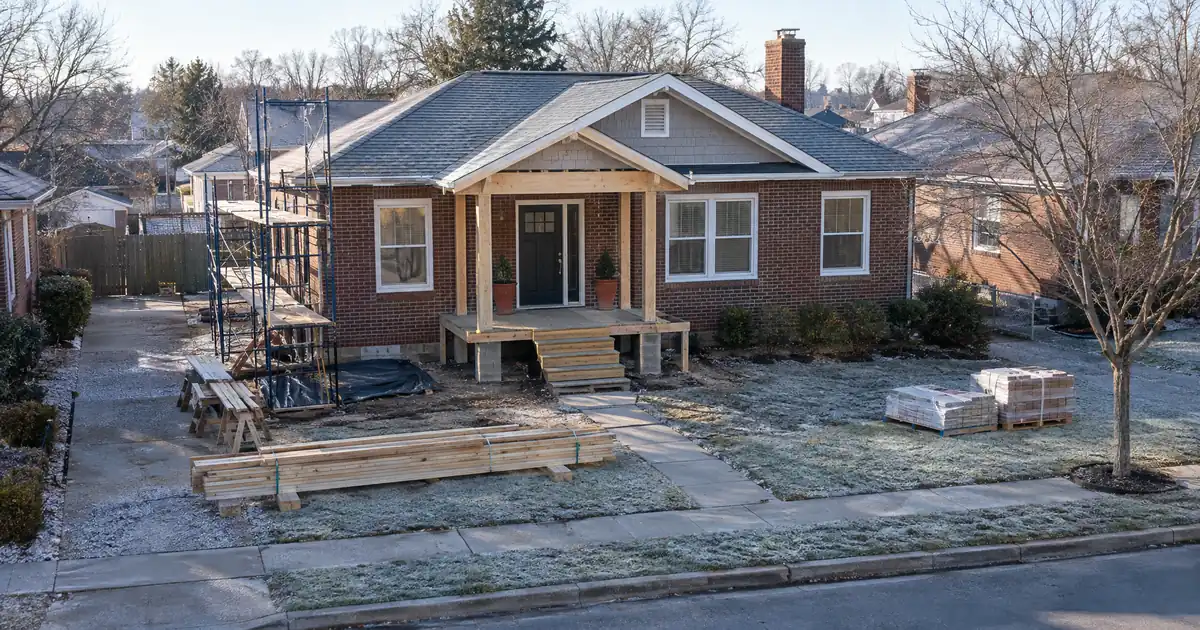
The Quick Read: A conventional loan is built for borrowers who plan to hold a finished property. A hard money loan is built for a flip that needs purchase money, rehab money, and a short runway. For most first-time flippers buying a property that needs work, hard money is the structure that fits the project. Conventional fits a move-in-ready buy you plan to keep.
- Conventional underwrites you: credit, income, debt, and reserves.
- Hard money underwrites the deal: the property, the rehab plan, the after-repair value, and your exit.
- Conventional lenders typically fund one lump sum at closing. Hard money holds rehab money back and releases it in draws.
- On the hard money side, first-timers sit in the lower leverage tier. Experience raises it.
- A flip is a short-term plan. The loan has to fit that plan, or the plan has to change.
Side-by-Side
The table shows published industry norms for conventional loans. The hard money column reflects typical guidelines across select lenders in Lendmire’s wholesale network. Both vary by lender, property, and experience, and nothing here is a commitment to lend.
What this loan actually costs to carry.
Hard money is sized against the project and priced by time. Enter the deal and see how much the program will lend, the cash required at closing, the carry while you hold it, and what is left at the exit.
Leverage tiers on the current program: 85% with fewer than 2, 90% with 2 or more, 93% with 5 or more completed projects — every tier capped at 75% of after-repair value. Loan amounts up to $5,000,000, larger by exception; terms of 6 to 18 months, interest-only, no prepayment penalty. The rehab portion funds in draws against completed work, not at closing.
Program parameters shown update from Lendmire’s centralized guideline source. Rate, points, and months are editable assumptions, not quoted terms.
Cost cap sets the loan · positive spread
Illustrative estimate only — not a quote, Loan Estimate, approval, or commitment to lend. Rate, points, and months are editable assumptions. Hard money is business-purpose financing for real estate investors, not a consumer mortgage. Leverage on the current program tops out at 93% of project cost for investors with a documented track record, capped at 75% of after-repair value, with rehab funding up to 100% of the documented budget released in draws; actual terms vary by lender, borrower experience, property, and exit. Lendmire is a mortgage broker, not a lender.
| Factor | Conventional (industry norms) | Hard Money (network) |
|---|---|---|
| Review basis | Borrower credit, income, DTI | Property, rehab plan, exit |
| Documentation | Pay stubs, traditional personal-income documentation, asset statements | Contract, scope of work, budget, entity papers |
| Property types | Livable, reviewable condition | Non-owner-occupied, 1-4 units |
| Entity vesting | Usually underwritten to individuals | Entities such as LLCs, subject to program eligibility |
| Rehab money | Generally none built in | Held back, released in draws |
| Term structure | Long-term, amortizing | 6-18 months, interest-only |
| Reserves | Several months commonly expected | Cash for carry and overruns; varies by lender |
Two terms need a plain definition. DTI is debt-to-income: your monthly debts divided by your monthly income. After-repair value (ARV) is what the property should be worth once the work is done.
What Each Lender Is Actually Looking At
Conventional lenders ask whether you can repay from your own income. They pull credit, verify income, calculate DTI, and order an appraisal of the property as it stands. Many standard programs are built for homes the borrower will live in. Investor versions exist, but they usually ask for more cash and more reserves than an owner-occupied purchase.
Hard money lenders ask whether the deal works. They look at the purchase price, the scope of work, the budget, and the likely value after repairs. Nav’s investor explainer calls ARV the most important number in hard money underwriting. It says lenders typically estimate it with a broker price opinion or an independent appraisal, using comparable renovated sales nearby.
Your credit still matters here. Across our network, the typical minimum score is 620, with extra conditions below 660. Underwriting stays asset-based. The lender is weighing the property, the plan, and the exit, and your file is one input among several.
Why Conventional Often Stalls on a Flip
Three things get in the way.
Property condition. A conventional appraiser values the house as it sits. A gutted kitchen or a missing roof can fail condition standards before the loan ever reaches a closing table.
Rehab money. A conventional loan funds once, at closing. Nothing in that structure pays a contractor in stages, so you would need separate cash for the renovation.
Fit with your own finances. The loan counts against your personal debt and credit. Once you hold a mortgage on your own home, a second one for a flip competes with it in your DTI.
None of this makes conventional a bad product. It was designed for a different job: long-term ownership of a property in decent shape.
When Conventional Is the Better Fit
Conventional is the better fit in a narrower set of first flips than most beginners hope.
- The property is already in livable shape. A light cosmetic refresh on a reviewable house is a different story from a gut rehab.
- You have strong, documentable income and credit. Conventional rewards W-2 and tax-return profiles that fit its boxes.
- You may hold the property. If the plan could slide from flip to long-term rental, a long-term amortizing loan removes the maturity problem.
- You have no desire to carry a short maturity. A conventional loan has no balloon pressure. A flip that sits on the market does not push you toward a deadline.
- You can pay the renovation out of pocket. If cash covers the work, the lack of draw funding stops mattering.
The tradeoff is flexibility. You are borrowing against your personal profile, and the loan generally will not stretch to cover the repairs.
When Hard Money Is the Better Fit
Hard money is the better fit when the property needs real work and the plan is to sell or refinance.
The leverage structure explains why. Across our network, fix-and-flip leverage is tiered by documented completed projects and measured against project cost. That is loan-to-cost. A first-timer with fewer than two completed projects typically sits at 85% of project cost. Two or more completed projects typically reach 90%, and five or more reach 93%. Every tier is capped at 75% of ARV. Where the two limits collide, the lower one controls.
Rehab money is separate. Up to 100% of the rehab budget typically funds in draws against completed work. That is a rehab-budget figure, not a purchase LTV. There is no true 100% purchase program, and the top leverage tier is reserved for experienced investors. All of it varies by lender, property, and experience.
Other typical terms:
- Terms run 6-18 months, interest-only, with no prepayment penalty.
- Loan amounts go up to $5,000,000, with larger loans by exception.
- Collateral is non-owner-occupied residential property, 1-4 units.
- Entity borrowers such as LLCs are common, subject to lender program eligibility.
The draw process is what makes it fit a flip. Per Nav, you finish a phase, request a draw, and the lender sends an inspector to verify the work. That protects the lender. It also gives a beginner a built-in checkpoint.
Hard money fits poorly when the budget is thin and the sale price is a guess. The structure is only as good as the plan inside it.
The Exit Plan Decides Both Choices
A flip loan is a bet on a sale or a refinance. The market data shows why that plan needs margin. ATTOM’s first-quarter flip report put flips at 8% of home sales, with a typical gross return of 25.4% and a typical flip lasting 165 days. The same report found that 10.2% of flips sold to FHA buyers.
That 165-day figure matters. A typical flip has to fit inside the loan term, with room left over for delays. A 6-18 month maturity leaves room. A badly scoped project does not.
The gross return also overstates what you keep. WREN’s summary of ATTOM’s data notes that the gross figure excludes rehab, financing, taxes, and insurance. It says experienced flippers estimate those costs at 20% to 33% of ARV.
If a buyer will use FHA financing, HUD’s property flipping rule can touch your sale. HUD says a property resold shortly after acquisition is not eligible for FHA insurance unless an exemption applies. Practitioners say a later resale can still draw extra valuation review. That rule hits your buyer, not your own financing.
Tax treatment varies; consult a qualified professional.
Business-Purpose Loans: A Short Note
A flip loan to your LLC is a business-purpose loan. The OCC’s TILA handbook explains that credit for business purposes, and credit to non-natural persons, is generally exempt from Regulation Z. It also cautions that a checked business-purpose box may not be enough without documentation of how the money is used. Keep your project paperwork clean.
What a First-Timer Can Do to Strengthen a Hard Money File
Lenders weigh inexperience. These steps help.
1. Bring a realistic scope of work. Itemized costs beat round numbers.
2. Line up a contractor early. A named general contractor with a track record eases a lender’s concerns.
3. Support your ARV with recent comps. Renovated sales close to the property carry the most weight.
4. Hold cash beyond the down payment. Interest carry and overruns come out of your pocket.
5. Write down two exits. A sale is the base plan. A refinance into long-term financing is the backup.
On that backup: many investors refinance out of hard money into long-term DSCR financing once the property is stabilized, and Lendmire brokers that path. DSCR compares rent to the monthly payment, and the file qualifies primarily on property-level rental income covering the payment, subject to lender guidelines. The complete DSCR loans guide covers the mechanics. For the first-flip angle, see Lendmire’s piece Can a First-Time Flipper Repay Hard Money With a DSCR Cash-Out?.
The Verdict
Pick the loan that matches the property and the plan, not the one that sounds cheaper or safer.
- Choose conventional if the house is livable, your personal profile is strong, and you may keep it.
- Choose hard money if the property needs real work and you plan to sell or refinance on a short runway.
- Use both in sequence if you want to buy and renovate on a short-term loan, then move into long-term financing.
A first-timer’s biggest risk is a thin margin. Structure cannot fix a deal that only works with perfect timing.
Frequently Asked Questions
Can a first-time flipper get a conventional loan for a flip?
Sometimes, but it is a narrow fit. A conventional loan works best when the property is livable, your income and credit document cleanly, and you can pay for renovations from your own cash. If the property needs significant work, the appraisal and condition requirements often become the obstacle.
Does hard money ignore my credit?
No. Underwriting is asset-based, so the property, plan, and exit carry the most weight. Across our network, the typical minimum score is 620, with additional conditions below 660. First-time investors qualify at the lower leverage tiers, and terms vary by lender, property, and experience.
Can I buy the property in an LLC?
Often, yes. Hard money commonly lends to entity borrowers, subject to lender program eligibility. Conventional loans are generally underwritten to individuals. Check how title and vesting will work before you sign a contract.
What happens if the flip does not sell before the term ends?
You need a backup. Terms run 6-18 months, and the loan carries no prepayment penalty, so you can pay off early if a sale or refinance comes through. If the sale stalls, many investors refinance into long-term rental financing once the property is stabilized.
Can hard money fund 100% of the purchase?
No. There is no true 100% purchase program. A first-timer typically sees 85% of project cost, capped at 75% of ARV. Up to 100% of the rehab budget can fund in draws against completed work. The top leverage tier is reserved for experienced investors.
Next Step
If you are buying, rehabbing or refinancing an investment property on a short timeline and want to see how the numbers work, Lendmire can help you compare hard money options based on the project, the exit plan, leverage, and your goals. Lendmire is a broker that arranges these loans through select lenders in its wholesale network across 41 markets, including Washington, D.C. Call 828-256-2183 to talk through a first project.
A first flip rewards the investor who prices the exit before the purchase.
For current guidelines and terms, see Lendmire’s hard money loan programs page.
About Lendmire
Lendmire (NMLS# 2371349) is a mortgage brokerage focused on DSCR investor financing, helping arrange programs through wholesale and investor-lending channels in 41 markets, including Washington, D.C. DSCR loans are evaluated by the lender on property cash flow rather than personal income, subject to lender guidelines, supporting LLC closings and accommodating investors with four or more financed properties. Scotsman Guide Top Mortgage Workplace in both 2025 and 2026.
Get Started
Ready to find the right loan for you?
In about 30 seconds you can review financing options available for your investment property. No commitment required.
Informational only. Not a Loan Estimate, approval, or commitment to lend. Program availability and eligibility are subject to lender guidelines, credit approval, property review, and underwriting.
References
2. attomdata.com: Q1 Home Flipping Report
3. WREN, Home Flipping Returns Summary
5. OCC Comptroller’s Handbook, Truth in Lending Act
This article is part of Lendmire’s hard money loan program — full qualification details, guidelines, and scenarios live on the program page.
Related reading: How to Choose a DSCR Loan for a First Suburban Short-Term Rental · DSCR Cash-Out Now vs Waiting for Hard Money and Rehab Card Payoff · FHA Loan House Hack vs DSCR Loan for a First-Time Investor
Brandon Miller
Founder & CEO, Mortgage Loan Originator, Lendmire LLC
- Mortgage Loan Originator · NMLS# 1129696 · Verify on NMLS Consumer Access
- North Carolina Real Estate Broker · License# 343312 · Verify on NCREC
- North Carolina Insurance Producer · License# 19053198 · Property, Casualty, Life, Health · Verify on NAIC SBS
- Lendmire LLC · Firm NMLS# 2371349 · Verify firm licensure
Disclosures. The information presented in this article is general market commentary, not financial, legal, or tax advice. Lendmire is a mortgage brokerage (NMLS# 2371349) — not a direct lender or depository institution — and loan placement is subject to lender underwriting. Nothing in this content represents a commitment to lend. Loan terms, pricing, and program availability vary based on borrower qualifications, property characteristics, and state of subject property, and are subject to change at any time. Lendmire complies with Equal Housing Opportunity requirements. Consumer access: nmlsconsumeraccess.org.