
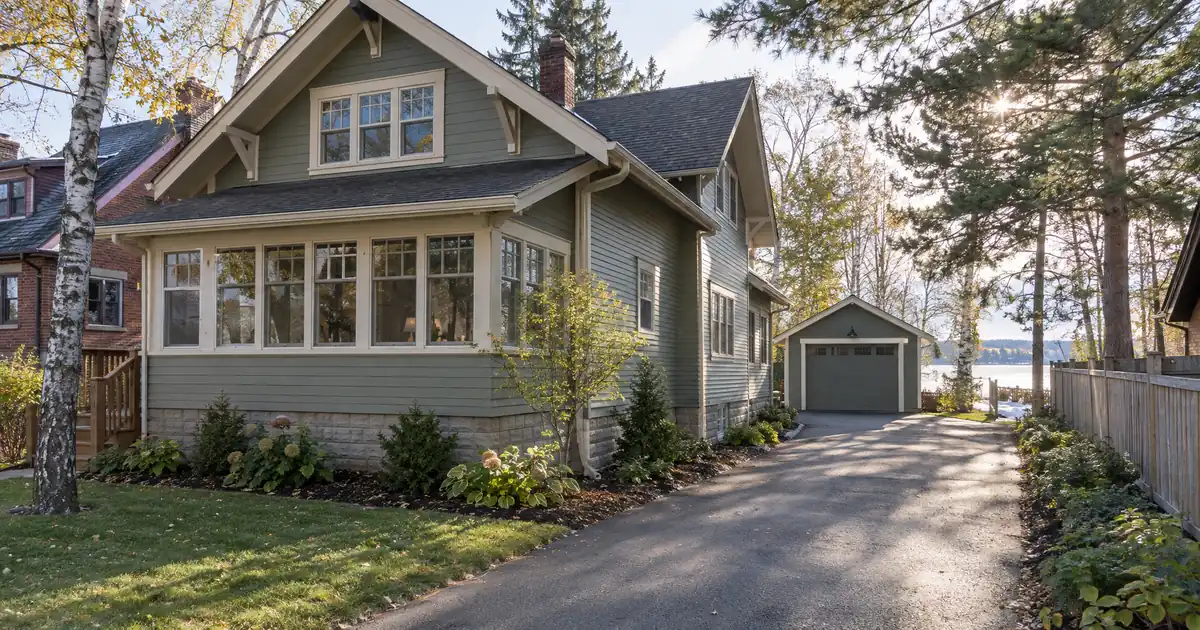
The Quick Read: A storm-damaged Minnesota rental can usually support a DSCR cash-out refinance only after it is rentable again, because the appraisal sets value, the appraiser’s market rent feeds the coverage ratio, and most programs want the property in safe, livable condition before they will size a larger loan against it. The insurance claim and the refinance run on separate tracks. Repair money often has to be bridged before any cash comes out.
- Cash-out on standard rentals tops out around 75% LTV across most of the network, with about 6 months of seasoning measured from deed recording.
- Condition is its own test. A strong coverage ratio does not offset a property that is unrentable at appraisal.
- Coverage of 1.00 is where many select programs start. A separate select-lender path goes below 1.00 with leverage and terms adjusted.
- Insurance proceeds are not equity. Value is reset by the appraisal after repairs.
- Cash-out is a way to recapitalize after repair, not a way to fund repairs on an unrentable building. Final terms depend on lender guidelines, property type, leverage, and the borrower’s complete credit picture.
Minnesota is the example here because hail, wind, and freeze damage are common and because roof coverage terms have been shifting. The mechanics apply to any storm-hit rental. Lendmire is a broker that arranges these loans through select lenders in its wholesale network, across 41 markets including Washington, D.C. Every file is underwritten individually, and nothing here is a commitment to lend.
DSCR Cash-Out Calculator
Run the cash-out numbers in Minnesota
Rate source: Freddie Mac 30-yr average via FRED® — Federal Reserve Bank of St. Louis · effective Oct 15, 2026
Prefilled with starting assumptions — enter your property’s value, balance, taxes, and insurance for a more accurate picture.
Program parameters update from Lendmire’s centralized guideline source. Taxes and insurance are editable estimates.
As of Oct 15, 2026 · General Freddie Mac market benchmark, not a Lendmire loan offer. Property value, balance, taxes, and insurance are editable estimates. Maximum loan-to-value varies by lender, program, property type, and seasoning. Not a Loan Estimate, approval, or commitment to lend. Program availability and eligibility are subject to lender guidelines, credit approval, property review, and underwriting.
Key Terms Defined
DSCR (debt service coverage ratio): Monthly rent divided by the full monthly housing obligation (principal, interest, taxes, insurance, and any association dues).
Cash-out refinance: A new loan that pays off the old one and returns the leftover cash to the owner after costs and reserves.
Seasoning: The minimum ownership period before cash-out is available, measured from the date the deed was recorded.
Actual cash value (ACV): An insurance payout that subtracts depreciation from the cost of the damaged item.
Replacement cost value (RCV): An insurance payout that eventually covers the cost of restoring the item, usually released in stages.
Loss-of-rent coverage: Insurance that replaces rent while a covered loss keeps the unit from being rented.
As-is versus subject-to value: As-is value is what the property is worth in its current state. Subject-to value is the value assuming listed repairs are finished.
How Does a DSCR Cash-Out Treat a Storm-Damaged Rental?
Condition is the first gate. Appraisers rate overall condition from C1 to C6, and McKissock Learning describes C6 as major damage or serious deferred maintenance that may affect structural integrity or safety. The same page says that if any part of a dwelling warrants C6, the whole dwelling is rated C6. It describes C5 as major repairs needed, where the home is still livable but has diminished utility.
The HUD Appraisal Report and Data Delivery Guide carries the same definitions. It adds that when an appraisal is done “subject to repairs,” the rating and adjustments must reflect the repairs as completed. That matters because the appraiser is not valuing your contractor’s bid. The appraiser is valuing a finished building.
A hail-ruined roof with active interior leaks can push a rating toward C5 or C6. So can wind damage that breaches the building envelope. Cosmetic hail dents, or a damaged roof that still sheds water, may not.
DSCR loans are not agency products, so those agency cutoffs do not set the rule. Each program in the network sets its own line. The practical read across most programs is the same: if the property cannot be rented safely today, the file usually needs repairs first and the refinance second.
How Underwriting Handles It, Step by Step
The sequence below is how a storm-damaged file moves through review. Each step can stall the next.
1. The claim is settled first. The policy type decides how much repair money arrives and when. The Minnesota Department of Commerce gives a clear example: a roof that costs $10,000 to replace, with shingles depreciated by half, pays $5,000 under an ACV policy, less the deductible. A replacement cost policy pays the same $5,000 up front and releases the balance after the work is done and the bill is submitted.
2. The existing mortgage lender may control the claim money. On a mortgaged property, claim checks are commonly payable to both the owner and the servicer. The servicer often releases funds in stages against a contractor bid and inspections. A private or hard-money lien follows its own note. Whatever sits in that holdback has to be accounted for in the payoff.
3. Repairs are finished and documented. Lenders want evidence the work is done, not promised. That usually means the adjuster report, itemized invoices, permits and final inspection, dated photos, and lien waivers. Some programs ask for a completion certification from the appraiser, so confirm what the specific program accepts.
4. The appraisal does two jobs. It reports the value that caps leverage. It also gives a market-rent opinion that feeds the coverage ratio. Single units commonly use a standard appraisal with a rent schedule (Form 1007). Two- to four-unit properties use the multi-unit form (Form 1025) with an operating income statement. On DSCR cash-out, an appraisal waiver essentially never applies.
5. Rent is set for the ratio. DSCR compares rent to the full monthly obligation. It does not deduct vacancy, management, or repairs. Programs typically use the lower of the lease rent and the appraiser’s market rent. When a tenant moved out because of the storm, there is no in-place lease, so the appraiser’s market rent carries the numerator, provided the unit is rentable.
6. Seasoning and value basis are checked. The seasoning clock starts at deed recording. Inside that window, lenders typically size on cost basis rather than a new appraised value. An owner who bought recently may find that repair spending is not automatically credited as value.
7. Cash to the owner is what remains. The new loan, minus the payoff, costs, and reserves, is the check. Repair receipts create no claim to a refund.
What Does the Cash-Out Check Look Like?
The check is capped from two directions. Leverage limits the loan to a percentage of appraised value. On standard rentals, cash-out sits at about 75% LTV across most of the network. Short-term rental collateral is lower, with cash-out at 70% LTV. Rent then has to cover the new, larger obligation at the ratio the program requires. The lower of the two results governs. These specifics are subject to lender guidelines and a full review of property, leverage, and credit.
Credit also matters. Parts of the network start at a 620 score, most programs want around 660, and 700 or higher opens the strongest leverage tiers. Reserves commonly run about 6 months of PITIA, and loans above $1,500,000 typically step up to about 9 months. Loan sizes run up to $3,000,000 on standard programs. All of this is subject to lender guidelines and varies by borrower and property.
Your Options at a Glance
| Option | Best fit | Storm-damage effect | Main trade-off |
|---|---|---|---|
| DSCR cash-out | Repaired, rented, seasoned | Needs rentable condition | Larger obligation tightens coverage |
| DSCR rate-and-term | Payoff only, no cash back | Same condition test | No cash to recover repair spend |
| Bridge or rehab, then DSCR | Unrentable or mid-repair | Funds work before takeout | Two closings, short-term terms |
| Pay cash from reserves | Strong liquidity | No condition test | Ties up capital |
A rate-and-term refinance has its own leverage ceiling and returns no cash at closing. A refinance that returns cash is a cash-out and sits under the 75% line.
Which Path Fits Which Level of Damage?
| Damage level | Typical sequence | What to document |
|---|---|---|
| Cosmetic | Cash-out may proceed | Photos, adjuster note |
| Functional but impaired | Repair, then refinance | Invoices, final inspection |
| Major or structural | Bridge or rehab, then takeout | Scope, permits, lien waivers |
| Uninhabitable | Restore fully before any DSCR loan | Completion proof, rentability |
The dividing line is rentability at appraisal. Vacancy alone does not disqualify a property. Unrentable condition does.
A Worked Example
Run the numbers this way. These are modeled assumptions, not market data.
Picture a duplex bought long enough ago to clear seasoning. It carried strong coverage before the storm, around 1.25x. Hail then damaged the roof. The owner repaired it, and the insurer paid ACV first, with the depreciation holdback released after the invoice was submitted.
Now the owner wants cash out. The appraiser values the finished property. The lender takes up to 75% of that value on a standard rental and subtracts the payoff, costs, and reserves. Whatever remains is the check.
Here is where it tightens. A larger loan raises the monthly obligation. A higher post-claim premium also raises it, because insurance sits inside PITIA. If the obligation climbs enough, coverage can slide from 1.25x toward 1.10x with rent unchanged.
If the ratio drops below 1.00, a sub-1.00 path is available through select lenders in the network, with leverage and terms adjusted. That usually means less cash out, not more. Whether it works depends on lender guidelines, credit approval, and property review.
Also remember that clearing 1.00 is not the same as positive cash flow. Repairs, vacancy, management, and utilities sit outside the calculation.
DSCR vs. conventional financing
There are two common ways to finance an investment property, and they qualify you differently — here’s how investors weigh them.
Why investors choose it
- Qualifies on the property’s rental income — no personal tax returns, W-2s, or pay stubs needed to document income.
- No personal debt-to-income ceiling to clear, so existing mortgages and obligations don’t cap your borrowing the same way.
- Can be closed in an LLC, keeping the property inside a business entity.
- Built for scaling — not held to the limit on number of financed properties that conventional financing applies.
- Underwriting centers on the deal: generally qualifies when the rent covers the payment, a 1.00x coverage ratio being a common baseline (confirmed in underwriting).
- Designed specifically for investment property, including long-term and, where the program allows, short-term rentals.
Where it’s strong
- Often the lowest ongoing financing cost for a buyer who fully qualifies on personal income — a fit for a first property or a cost-first purchase.
Trade-offs for investors
- Requires full personal income documentation and must fit within a debt-to-income limit — salary, existing debts, and other mortgages all count.
- Typically held in your personal name rather than a business entity.
- Caps how many financed properties you can carry, which can become a ceiling as a portfolio grows.
- Evaluates you as a borrower as much as the property, which usually means more paperwork.
How investors usually choose: a first or single property often optimizes for the lowest financing cost; portfolio builders often optimize for leverage, vesting in an LLC, and scaling past conventional caps. The right answer depends on your goals, the property, and current guidelines — both paths run through select lenders in Lendmire’s wholesale network, with eligibility and terms confirmed in underwriting.
Insurance, Proceeds, and the Rent Gap
Insurance and refinancing collide in three places.
Proceeds are not equity. The insurer pays for the loss. The appraisal resets value after repair. CBS Minnesota reports that many policies now shift from full replacement cost to depreciation-based ACV payouts as roofs age. It also reports that hail claims once averaging $10,000 to $15,000 now routinely reach $40,000 to $60,000. The gap between what the insurer pays and what the work costs is the owner’s cash need.
Loss-of-rent coverage replaces rent, not the mortgage. Policygenius explains that fair rental value coverage pays lost rent while a covered loss prevents renting, and that it does not pay mortgage payments or taxes directly. Loss-of-rent payments are an insurance recovery, not lease rent. Whether a given program counts them toward the ratio is a guideline question, so treat it as unconfirmed until the lender says so.
The new loan needs adequate hazard coverage. When the policy has an ACV roof endorsement or a higher wind and hail deductible, the owner should confirm the new lender accepts it before relying on the refinance.
Where the General Rule Breaks
- Open claim, unfinished repairs. Some programs may report value subject to completion. Whether yours does, and what holdback applies, depends on the program.
- Multi-unit with partial damage. A rent roll plus the multi-unit rent schedule is typical. A vacant unit can shrink the numerator.
- Short-term rentals. Cash-out on short-term rental collateral is capped at 70% LTV, against 75% on standard rentals. Expect a 640 or higher score and about 12 months of hosting history. Short-term rental rules can vary by city, county, HOA, and property type, so investors should confirm local rules before relying on projected rental income.
- Existing hard-money or bridge lien. Cash back equals the new loan minus the payoff, costs, and reserves. Rehab receipts do not create a refund.
- Policy gaps. Cosmetic-damage exclusions and ACV roof endorsements can leave an uninsured shortfall that no refinance fills.
- Property types outside the programs. Manufactured homes, log homes, and barndominiums are not offered in the network’s DSCR programs, regardless of damage or repair.
- Recent purchase. Inside seasoning, sizing tends to rely on cost basis, so repair spend may not lift the loan amount. Terms depend on the lender’s guidelines, the property type, the leverage, and a full review of the credit profile.
Use of proceeds is a separate matter. Tax treatment can depend on how the funds are used and how the property is held; investors should keep clear records and speak with a qualified tax professional before relying on any deduction.
Misconceptions That Derail Files
“Insurance money is free equity.” It is not. The appraisal after repair sets value, and loss-draft funds may sit with the existing lender.
“A strong DSCR overrides condition.” Coverage and condition are separate tests. A good ratio does not shorten seasoning or make an unrentable building rentable.
“My contractor bid sets the loan.” The lender’s own appraisal sets it. Repair spending may support a higher appraised value, depending on comps and underwriter review.
“Replacement cost pays everything up front.” It typically pays ACV first and releases the depreciation holdback after the work is documented.
“Loss-of-rent insurance covers the mortgage.” It replaces rent for a limited period and does not pay the loan directly.
Which Path Makes Sense After a Storm?
The answer follows the damage level and the owner’s cash. If the building is rentable and seasoned, a cash-out may work after repairs are documented. If it is not rentable, the stronger play is usually a short-term bridge or rehab loan, then a DSCR takeout once the property is restored and leased. Honestly, a rate-and-term refinance can be the better call when the owner only needs to restructure, since it avoids the extra leverage and the tighter ratio.
Lendmire’s guide on using a DSCR cash-out for storm repairs on a coastal rental goes deeper on the repair-funding side. For program basics, the complete DSCR loans guide walks through the full structure.
Post-Storm File Checklist
- Dated photos before and after repairs.
- Adjuster report and the claim payment history.
- Contractor scope, itemized invoices, permits, and final inspection.
- Lien waivers from every contractor.
- Current lease status, or proof the unit is rentable and listed.
- Hazard policy declarations showing roof terms and deductible.
- Payoff statement, including any loss-draft balance held by the servicer.
- Entity documents and reserves documentation. LLC-titled borrowers are accepted depending on program guidelines.
Frequently Asked Questions
Can I cash out on a storm-damaged rental?
Usually only when the property is rentable at appraisal. If the damage leaves it unsafe or unlivable, the common route is repair first, then refinance. A bridge product can fund the work in between. Each program sets its own condition cutoff.
Does an insurance payout count as equity?
No. The payout reimburses the loss. Equity comes from the appraised value after repair, less what is owed. Any claim money still held by the existing lender has to be settled in the payoff.
What if my tenant moved out because of the damage?
With no in-place lease, the appraiser’s market rent typically carries the ratio, provided the unit is rentable. A vacant unit in a multi-unit property can reduce the rent counted. Loss-of-rent insurance is a recovery, not lease rent.
Will a higher insurance premium hurt qualification?
Yes, it can. Premiums sit inside PITIA, so a higher premium and a larger cash-out loan both push the obligation up. That lowers coverage if rent stays flat. Many select programs start at 1.00, and a sub-1.00 path through select lenders adjusts leverage and terms.
How long until I can refinance for cash?
Seasoning of about 6 months from deed recording is the common expectation for cash-out. Beyond that, the real gate is whether repairs are finished and documented. Seasoning and repair completion are separate tests.
Next Steps
If you are buying or refinancing a rental property and want to see how the numbers work, Lendmire can help you compare DSCR loan options based on the property income, credit profile, leverage, and investor goals. Eligibility review depends on lender guidelines, credit approval, and property review. Begin by sorting your damage level and your repair funding, because that sequence decides which structure fits.
For how equity extraction works on an investment property, see Lendmire’s guide to cash-out refinance on an investment property.
About Lendmire
Lendmire — NMLS# 2371349 — is a DSCR and non-QM mortgage brokerage with investor loan programs in 41 markets, including Washington, D.C. DSCR eligibility is commonly reviewed by the lender around property-level rent rather than personal income documentation, subject to lender guidelines, and the brokerage helps arrange financing for LLC-owned portfolios beyond conventional financed-property limits. Recognized by Scotsman Guide as a Top Mortgage Workplace in 2025 and 2026.
Get Started
Ready to find the right loan for you?
In about 30 seconds you can review financing options available for your investment property. No commitment required.
Informational only. Not a Loan Estimate, approval, or commitment to lend. Program availability and eligibility are subject to lender guidelines, credit approval, property review, and underwriting.
References
1. McKissock Learning, Appraisal Condition Ratings C1 to C6
3. Minnesota Department of Commerce, Prepare for a Natural Disaster
4. CBS Minnesota, Hail claims and roof coverage changes
5. Policygenius, Fair Rental Value Coverage
This article is part of Lendmire’s investment property cash-out refinance program — full qualification details, guidelines, and scenarios live on the program page.
Related reading: Can You Get a Cash-Out Refinance With an Eviction Filed on the Rental? · Does ADU Rent Increase the Cash-Out Refinance on a Rental? · Delayed Financing vs Seasoning on a Rental Cash-Out Refinance
Brandon Miller
Founder & CEO, Mortgage Loan Originator, Lendmire LLC
- Mortgage Loan Originator · NMLS# 1129696 · Verify on NMLS Consumer Access
- North Carolina Real Estate Broker · License# 343312 · Verify on NCREC
- North Carolina Insurance Producer · License# 19053198 · Property, Casualty, Life, Health · Verify on NAIC SBS
- Lendmire LLC · Firm NMLS# 2371349 · Verify firm licensure
Disclosures. The information presented in this article is general market commentary, not financial, legal, or tax advice. Lendmire is a mortgage brokerage (NMLS# 2371349) — not a direct lender or depository institution — and loan placement is subject to lender underwriting. Nothing in this content represents a commitment to lend. Loan terms, pricing, and program availability vary based on borrower qualifications, property characteristics, and state of subject property, and are subject to change at any time. Lendmire complies with Equal Housing Opportunity requirements. Consumer access: nmlsconsumeraccess.org.