
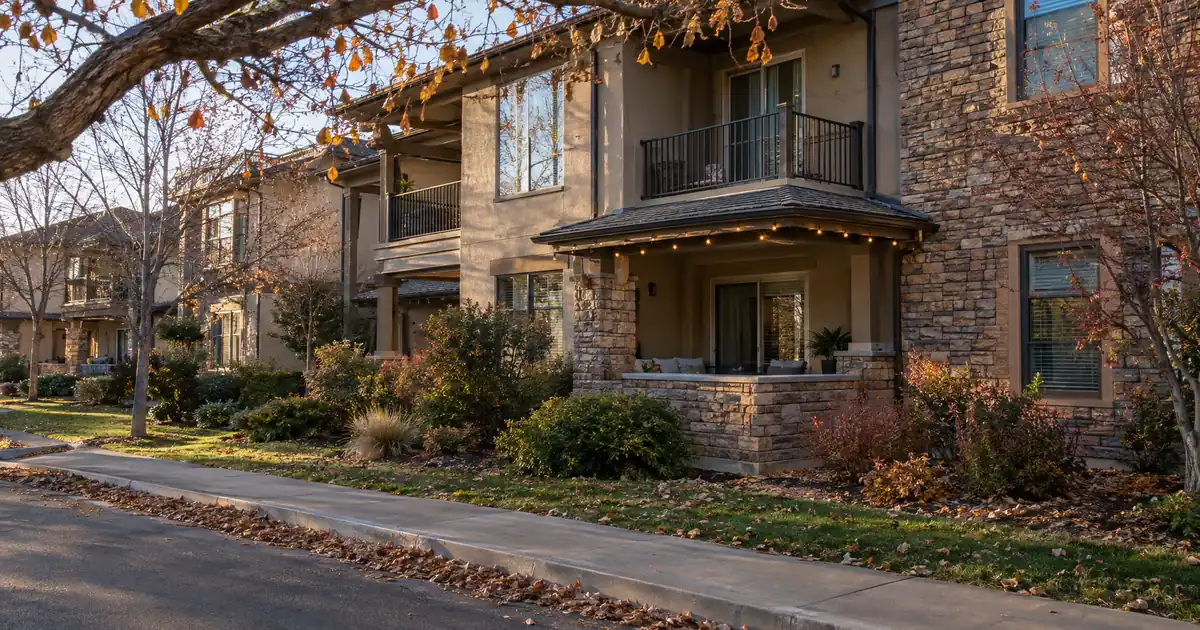
The Quick Read: A standard homeowners or landlord policy usually does not cover paid-guest stays, so a condotel unit or rural cabin generally needs a policy written for short-term rental use, and the lender reviews that coverage alongside the loan. No single federal rule sets the requirement. Insurers, HOAs, lenders, and platforms each set their own, and the premium sits inside the DSCR payment.
- Regular paid stays are usually treated as business activity, not personal use.
- A condotel needs two layers: the building’s master policy and the owner’s unit policy.
- A cabin turns on fire-station distance, wildfire exposure, and loss-of-rents coverage.
- The premium is part of PITIA, so a heavier policy lowers the coverage ratio.
- Insurance does not change the leverage caps. It decides whether the file is clean enough to review.
Short-term rental purchases on the strongest files run up to 75% LTV, with refinances and cash-outs up to 70% on short-term-rental collateral. Those are typical ranges across select lenders in the wholesale network, subject to lender guidelines. Insurance has to be settled before any of that matters.
Short-Term Rental Calculator
Run the STR numbers in your market
Rate source: Freddie Mac 30-yr average via FRED® — Federal Reserve Bank of St. Louis · effective Oct 15, 2026
Prefilled with starting assumptions — enter your nightly rate, occupancy, taxes, and insurance for a more accurate picture.
Short-term rental income is documented with a 12-month history or a market data report. Program parameters update from Lendmire’s centralized guideline source.
As of Oct 15, 2026 · General Freddie Mac market benchmark, not a Lendmire loan offer. Nightly rate, occupancy, taxes, and insurance are editable estimates. Qualifying income for short-term rentals varies by program — some use appraisal market rent, others use documented STR history or projections — and is confirmed in underwriting. Not a Loan Estimate, approval, or commitment to lend. Program availability and eligibility are subject to lender guidelines, credit approval, property review, and underwriting.
Why Your Current Policy Probably Doesn’t Work
Standard homeowners insurance generally excludes commercial activity, and renting to paid guests counts. The Insurance Information Institute’s short-term rental outlook says failing to tell the insurer can lead to denied claims, reduced liability coverage, higher deductibles, or cancellation.
The Wisconsin Office of the Commissioner of Insurance puts the line in plain words. A rider for occasional rentals gives limited coverage, and regular rentals need business insurance.
On DSCR files this shows up as a mismatch. The buyer holds a landlord quote, the property runs as a nightly rental, and the lender asks for evidence the policy fits the use. Fix the policy first. Argue about the ratio second.
Who Actually Requires the Coverage?
Five parties can set an insurance requirement, and they rarely agree.
| Party | What it may require | Where to find it |
|---|---|---|
| Your insurer | Disclosure of rental use | Policy form and exclusions |
| HOA or building | Owner unit policy, liability | Condo documents |
| Lender | Policy evidence, liability, loss of rents | Loan conditions |
| Platform | Its own host terms | Help pages |
| Local government | Varies by place | Local office |
Short-term rental rules can vary by city, county, HOA, and property type, so investors should confirm local rules before relying on projected rental income.
Does the Platform’s Host Protection Count?
No. Airbnb’s own help page says its host damage protection and host liability insurance do not replace homeowner’s insurance, renter’s insurance, or adequate liability coverage. It adds that hosts may face other insurance requirements too.
There is a second gap. Platform protection applies to that platform’s bookings. A host who also books on another site or takes direct guests needs coverage that follows the property, not the booking channel. A lender reviewing a file wants the property’s own policy.
Key Terms Defined
Master policy: The association’s policy covering the building structure and common areas of a condo or condotel.
HO-6: The unit owner’s condo policy, covering personal property, liability, and loss of use.
DP-3: A dwelling-fire form often used for landlord-owned property, covering the dwelling on an open-perils basis.
Loss of rents: Coverage that pays lost rental income when a covered loss makes the property unusable.
Loss assessment: Coverage that pays your share when the association bills owners for a shortfall.
PITIA: Principal, interest, taxes, insurance, and association dues, the payment that rent is compared against.
Which Policy Form Fits an STR?
The label on the policy matters less than the form underneath it. BiggerPockets says true short-term rental insurance is built on a commercial form: commercial property plus commercial general liability. A landlord policy that mentions short-term rental is still a landlord policy.
The picture is not one-sided. A specialty STR agency says a DP-3 often fits a single, modest-scale rental. It covers the dwelling on an open-perils basis, while contents are named-perils and usually settle at actual cash value unless endorsed to replacement cost.
| Form | Typical fit | Common gap |
|---|---|---|
| HO-6 with rental endorsement | Condo unit, light use | May exclude regular STR |
| DP-3 | One modest rental | Contents at cash value |
| Commercial homeowners / habitational | Full-time operation | Higher premium |
The practical test is to read the declarations page and exclusions. If the carrier will not write STR use in plain terms, the label does not help.
The Condotel: Two Layers, Sometimes Three
A condotel unit needs the building’s master policy and the owner’s own policy, and the lender reviews them together. The mechanics run in order.
1. Identify the master policy type. A bare-walls master covers basic structure and common areas, leaving interiors to the owner. An all-in master extends to fixtures and installations, but not belongings, per Turner Group.
2. Add the unit policy. The master covers structure and common areas. The owner’s HO-6 covers personal property, liability, guest medical payments, and loss of use, as a market source’s explainer lays out.
3. Confirm the HO-6 accepts STR use. Never assume an HO-6 or rented-to-others endorsement covers short-term rental. Risman says STR activity may be restricted or excluded, so review carrier rules and HOA rules first.
4. Add loss assessment. When a loss exceeds the master limit, the association can split the shortfall among owners. Standard condo policies typically include only a limited amount of loss assessment, so a higher limit is worth pricing.
5. Handle flood separately. Flood is excluded from standard property policies. A FEMA condominium brochure explains that building coverage sits in the association’s master flood policy and cannot be bought in the unit owner’s name. An insurance advisor’s guide says that master flood policy pays nothing toward owner contents, so a unit owner usually needs a separate policy.
6. Assemble the evidence. Master policy, unit policy, flood where it applies, and the STR layer go to the lender as one package.
Picture a unit owner whose HO-6 sits in the file, but the carrier’s rental endorsement covers only occasional use. The unit rents most weekends. That file stalls on the policy, not on the ratio.
When the Condotel Has a Rental Pool
A hotel-style building with a rental pool or operator adds a third party. The association, the operator, and the owner each insure different pieces, and association-level flood coverage may not be available in some hotel-style buildings. Neutral guidance on operator-held policies is thin. Get the operator agreement and the master certificate before you price the deal.
The Rural Cabin: Distance Sets the Price
A cabin is underwritten on remoteness. A specialty agency says the form is usually a DP-3 for a single-property cabin owner, or a commercial habitational form for full-time operations or lodges.
Underwriters look at how far the cabin sits from a fire station, whether the department is professional or volunteer, and the defensible space around the structure, per FBIA. When a station is far away, water supply and suppression systems carry more weight.
Expect add-ons: wildfire endorsements, plus freeze and equipment-breakdown coverage for remote mechanical systems. Hot tubs, fire pits, and decks raise premises-liability exposure.
Loss of rents ties insurance to the income side. Vantage Point Risk explains it pays lost rent if wildfire or smoke makes the property uninhabitable and the cause of loss is covered. Without it, a burned cabin means debt service with no income. Not ideal.
Liability type matters as much as the limit. BiggerPockets says the declarations page should read commercial general liability, not premises liability. The limit gives the amount. The type shows where that amount responds.
Where the General Rule Breaks
Occasional versus regular rental. An endorsement may cover occasional rentals, but regular rentals generally need business coverage. Some policies also cap rental days.
Wildfire markets. Insurers may apply separate wildfire deductibles, and state backstops differ. A Tahoe-area article describes California’s FAIR Plan as a named-peril policy and notes Nevada has no insurer of last resort. Treat that as a state example, not a national rule. A named-peril policy is not equal to a full STR policy.
Vacancy and seasonal gaps. Risman lists vacancy provisions, water backup, and ordinance-or-law coverage as items to check. A cabin empty in the off-season can run into a vacancy clause.
HOA rules can override a clean policy. Even with the right coverage, the association can block STR use. Files stall more often on legal use than on the ratio.
How the Premium Hits the DSCR
DSCR compares rent to PITIA only. Insurance sits on the payment side, so a heavier STR policy, wildfire load, or flood cost lowers the coverage ratio. Specialty STR coverage costs more than landlord coverage, and remote cabins can be hard to place.
Run it both ways. Take a cabin whose pro forma assumed landlord-level coverage. Once the real STR quote lands, coverage can drop from comfortable to near 1.00. Clearing 1.00 is also not positive cash flow. Repairs, vacancy, management, utilities, and capex sit outside the calculation.
Across the wholesale network, most short-term rental files expect about 12 months of hosting history and a score of 640 or higher, with 1.00 coverage on purchases and on refinances. Reserves vary by lender, leverage, and loan size, commonly around 6 months of PITIA. Programs change and every file is underwritten individually. The complete DSCR loans guide covers the full structure.
Insurance does not move the leverage caps. It decides whether the lender can review the file cleanly. When the property sits in an LLC, the entity should be the named insured, subject to lender program eligibility.
Cabins in particular raise their own file questions on leverage and hosting history, covered in Lendmire’s piece How to Qualify for a Short-Term Rental Loan on a Cabin or Rural Airbnb.
Order of Operations
1. Confirm legal use. Read the condo documents or local rules before anything else.
2. Get the insurance quote. Quote the actual STR form, with liability type, loss of rents, and any wildfire or flood layer.
3. Rerun the ratio. Put the real premium into PITIA and test the coverage number.
4. Gather the evidence. Master policy and unit policy for a condotel, or the cabin policy with loss-of-rents confirmed, plus the named insured if held in an entity.
5. Submit the file. Quote first, file second.
Common Misconceptions
- The HOA insures my condo. The master policy covers the building and common areas, not your interior, belongings, or liability.
- AirCover is my insurance. Airbnb says it is not a replacement.
- A DP-3 labeled short-term rental is STR insurance. Check the actual form and exclusions.
- The master flood policy covers my unit. It does not cover contents.
- A $1M liability limit is the same everywhere. The liability type decides how far it reaches.
Tax treatment varies; consult a qualified professional.
Frequently Asked Questions
Is short-term rental insurance legally required?
Usually not at the federal level, and no federal regulator sets it. In practice, insurers, HOAs, lenders, platforms, and some local permits can require it.
Does a condo policy cover Airbnb stays?
Often not. An HO-6 may exclude or restrict regular short-term rental, so ask the carrier directly. The right form may be an endorsed HO-6, a DP-2, or a commercial or specialty policy.
Does the HOA’s policy cover my unit?
It covers the building and common areas, not your belongings or liability. How much interior falls on you depends on whether the master policy is bare-walls or all-in.
Will a vacant cabin be covered?
Possibly not for every loss. Vacancy provisions can limit coverage during seasonal gaps, so confirm how the policy treats empty periods before you rely on it.
Can a lender require specific coverage?
Yes. Lenders in the network typically review the master and unit policies together, confirm liability limits and loss of rents, and expect the entity to be the named insured when applicable. Qualification is subject to lender guidelines.
Next Step
If you are buying or refinancing a rental property and want to see how the numbers work, Lendmire can help you compare DSCR loan options based on the property income, credit profile, leverage, and investor goals. Lendmire’s article 30-Year vs Interest-Only Short-Term Rental DSCR Loan on a Rural Cabin shows how term choice interacts with coverage. Lendmire is a broker arranging DSCR financing through select lenders in its wholesale network, across 41 markets including Washington, D.C.
For current guidelines and terms, see Lendmire’s DSCR loan programs page.
About Lendmire
A non-QM mortgage broker (NMLS# 2371349), Lendmire arranges DSCR financing for real estate investors in 41 markets — 40 states plus Washington, D.C. Because deals are underwritten primarily on property cash flow rather than personal income documentation, the structure suits self-employed buyers and entity-owned portfolios. Lendmire places loans through wholesale investor lenders; it is not a direct lender. Scotsman Guide named Lendmire a Top Mortgage Workplace in both 2025 and 2026.
Get Started
Ready to find the right loan for you?
In about 30 seconds you can review financing options available for your investment property. No commitment required.
Informational only. Not a Loan Estimate, approval, or commitment to lend. Program availability and eligibility are subject to lender guidelines, credit approval, property review, and underwriting.
References
1. Insurance Information Institute outlook via BusinessWire
2. Wisconsin Office of the Commissioner of Insurance
3. Airbnb Help: Responsible hosting
4. BiggerPockets: Landlord vs STR policy
5. DP-3 often fits a single, modest-scale rental
6. Turner Group
7. Risman
9. Atesa Risk Advisors: FL condo flood
10. FBIA
12. BiggerPockets
13. Duvoire: Tahoe STR insurance
This article is part of Lendmire’s short-term rental loan program — full qualification details, guidelines, and scenarios live on the program page.
Related reading: Do DSCR Lenders Add Price Adjustments on a Short-Term Rental? · DSCR Insurance Premium Requirements After a Renewal Doubles · DSCR Seasoning and Lease Requirements for a Newly Leased Rental
Brandon Miller
Founder & CEO, Mortgage Loan Originator, Lendmire LLC
- Mortgage Loan Originator · NMLS# 1129696 · Verify on NMLS Consumer Access
- North Carolina Real Estate Broker · License# 343312 · Verify on NCREC
- North Carolina Insurance Producer · License# 19053198 · Property, Casualty, Life, Health · Verify on NAIC SBS
- Lendmire LLC · Firm NMLS# 2371349 · Verify firm licensure
Required disclosures. Lendmire (NMLS# 2371349) operates as a licensed mortgage broker, not a direct lender or depository. The discussion in this article is general in nature and should not be relied upon as financial, legal, or tax advice — every investment scenario is unique and should be reviewed by a qualified professional. Any loan inquiry is subject to lender underwriting, and this article is not a commitment to lend or a guarantee of approval. Mortgage rates, loan terms, and program guidelines vary by borrower, property, and state, and may change without notice. Equal Housing Opportunity. Verify licensure at NMLS Consumer Access.