
The Quick Read: It depends on the DSCR program, because the securities line and the rental loan are two separate approvals, and the purchase lender decides whether borrowed cash counts toward the down payment. Some programs in a wholesale network accept documented, asset-secured borrowing, some cap the borrowed share, and some want part of the cash to be fully your own. The unit count does not change that rule, but it does change the appraisal and often the leverage and reserve tiers.
- Unsold stocks are not cash to close. Cash must be drawn, deposited, and traceable.
- Down payment and reserves are separate tests, and borrowed money may satisfy one but not the other.
- On most files, purchase leverage runs 75%-80% LTV, so expect to bring 20%-25% down, subject to lender guidelines.
- Passing the coverage test is not the same as positive cash flow, and the line payment comes out of your pocket.
- Ask the purchase lender before you draw. A draw is hard to undo.
What Is a Securities Line, and How Is It Different From Margin?
A securities-backed line of credit (SBLOC) is a revolving line secured by the investments in your brokerage account. You borrow against the portfolio instead of selling it. FINRA’s explainer describes the line as revolving, with interest-only payments, and notes the lender can change which securities qualify as collateral and adjust your limit.
DSCR Calculator
Run the numbers in your market
Rate source: Freddie Mac 30-yr average via FRED® — Federal Reserve Bank of St. Louis · effective Oct 15, 2026
Prefilled with starting assumptions — enter your own rent or nightly figures, taxes, insurance, and HOA for a more accurate picture.
Program parameters update from Lendmire’s centralized guideline source. Taxes and insurance are editable estimates.
As of Oct 15, 2026 · General Freddie Mac market benchmark, not a Lendmire loan offer. Rent, nightly rate, occupancy, taxes, and insurance are editable estimates. Short-term rental figures are estimates only and vary significantly by season, property type, management approach, and local short-term-rental rules — confirm local regulations before relying on them. Qualifying income for short-term rentals varies by program — some use appraisal market rent, others use documented STR history or projections — and is confirmed in underwriting. Not a Loan Estimate, approval, or commitment to lend. Program availability and eligibility are subject to lender guidelines, credit approval, property review, and underwriting.
A margin loan is a related product, but most SBLOCs are set up as a separate credit line rather than a margin account balance. Either way, the line is underwritten to you and your portfolio. The rental is not the collateral.
That matters for the rest of this article. Two lenders look at two different things. The securities lender asks whether your portfolio supports the line. The DSCR lender asks whether the property’s rent covers its payment, and where the cash to close came from.
Can the Proceeds Go Toward a Rental Purchase?
On the line side, generally yes. Real estate is commonly a permitted use for these lines, though the terms of your own line control. The harder question sits on the purchase side, and the DSCR lender answers it, not the securities firm.
Borrowed funds fall into three camps across the programs a broker sees. Some programs accept documented, asset-secured borrowing. Some accept it with a cap on the borrowed share. Some require a slice of the down payment to be unborrowed money. A fully borrowed down payment can fail under the second and third camps, and a plan built on 100% borrowed cash is really close to financing the whole purchase.
Investor forums reflect the same split, anecdotally. One BiggerPockets thread on using a line of credit for a down payment says many lenders will not accept line-of-credit money as valid down-payment capital, so investors should find out which ones will. Those posts are old and the posters are not underwriters. Treat them as color, not rules.
How Does a DSCR Lender Treat Borrowed Down-Payment Funds?
Treatment varies by program, and the answer is rarely a flat no or a flat yes. Because a broker sees many lenders’ guidelines side by side, the pattern is consistent: secured borrowing against an asset is viewed more kindly than unsecured borrowing, and credit cards, personal loans, and unsecured lines get the harshest treatment.
Documentation drives most outcomes. The lender wants to trace the money from the line to your account to the closing table. Lenders that review a couple of months of statements will look hard at large deposits, so a clean paper trail matters.
Down payment and reserves are separate tests. Most programs want about 6 months of PITIA in reserves, and loan balances above $1,500,000 typically step up to about 9 months. A program may accept borrowed funds for one test and not the other. Unsold securities may count toward reserves under some programs, but they never count as cash to close.
Ask these before you draw anything:
- Are borrowed funds secured by an asset eligible for the down payment?
- Can they count toward reserves?
- Is there a cap on the borrowed share, or a required slice of unborrowed funds?
- How long must the funds sit in my account, and how many months of statements are reviewed?
- Does an undrawn line need to be disclosed or documented?
For the full program picture, Lendmire’s complete DSCR loans guide walks through leverage, credit, and reserves across the network.
Do Unsold Stocks Count as a Down Payment?
No. Shares sitting in a brokerage account are an asset, not cash to close. To use them, you either sell them or borrow against them, and the lender then looks at what lands in your account.
Selling is the cleanest path for underwriting, because sold-and-settled proceeds are your own money with a clear trail. The tradeoff is real. Selling can trigger a taxable event and takes you out of the market. Tax treatment varies; consult a qualified professional.
Borrowing keeps the portfolio invested. A joint SEC and FINRA investor alert warns that these lines carry unintended tax consequences and the possibility that you may have to sell your holdings. So the “I don’t sell” advantage comes with strings.
Does the Line Payment Affect Your DSCR?
Not directly, and that is the trap. DSCR compares the property’s rent to its own PITIA: principal, interest, taxes, insurance, and any HOA dues. The securities line’s interest-only payment does not sit in that ratio.
But it is a real obligation on you. Clearing 1.00 on the property is not the same as positive cash flow. Repairs, vacancy, management, utilities, and capex all sit outside the calculation, and so does your line payment.
Picture an investor who clears roughly 1.2x on a fourplex and feels comfortable. On paper the rent covers the loan. Add the line’s payment, which can change as the line’s pricing moves, and the personal cash picture can look much thinner than the ratio suggests. The property passes. The investor’s monthly budget might not.
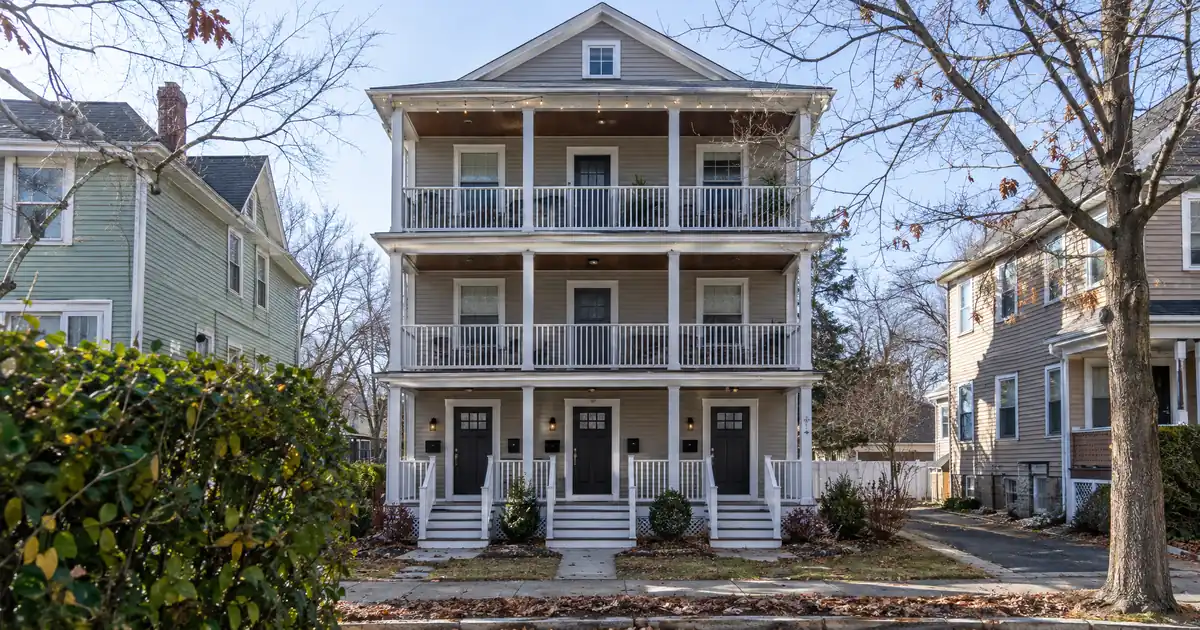
What Changes With a 2-4 Unit Building?
The funds-source rule does not change. What changes is the property side.
- Rents combine. The rent from all units is tested against one payment, so a vacant unit pulls coverage down for the whole building.
- The appraisal differs. A 2-4 unit gets the small residential income property report, Form 1025, with a market-rent conclusion per unit. An appraisal practice page describes Form 1025 as the standard report for 2-4 unit residential income property. A single-family rental uses the Form 1007 rent schedule instead.
- Tiers can tighten. Leverage and reserve tiers are often more conservative than on single-family, though it varies by lender.
- The check is bigger. Multi-unit prices run higher, so the down payment is larger and the pull toward borrowing it grows.
On purchases, most files land at 75%-80% LTV, and select high-leverage programs reach 85% LTV with roughly a 700+ score. Credit tiers start at a 620 floor in parts of the network, with most programs wanting around 660. Standard programs cover loans up to $3,000,000. A bigger down payment can lift the coverage ratio, but it never erases leverage caps, credit floors, or reserve rules. The strongest files clear both tests: enough equity and enough rental coverage.
Coverage of 1.00 is where select programs start. Coverage below 1.00 is a separate path, available through select lenders in the network with leverage and terms adjusted. If your building is thin on rent, that path exists, but it asks more of the borrower elsewhere.
What Can Go Wrong?
Plenty of risks sit on the securities side, and they stack on top of ordinary landlord risk.
A maintenance call. If your portfolio falls below the value needed to support the line, you must post collateral or repay, and the SEC/FINRA alert says that typically means two or three days. If you cannot, the firm can sell your securities. A concentrated portfolio is especially exposed, because one stock or sector event can trigger a call and force sales at the bottom.
The stacked stress test. Run both risks together. A market drop shrinks your line’s collateral value just as a unit sits vacant. Rental coverage falls, the line payment keeps coming, and you may need to sell holdings at the worst moment. The practical cushion is to borrow less than the maximum and keep spare collateral or cash elsewhere.
Seasoning or sourcing problems. A draw that lands in your account in the middle of underwriting can raise questions if you did not clear it with the lender first.
Entity mismatch. The line is personal. If the building closes in an LLC, funds have to move cleanly from you to the entity, subject to lender program eligibility. Messy transfers create documentation headaches.
Over-borrowing. Pulling the whole down payment from the line leaves nothing for reserves, repairs, or a bad quarter.
DSCR vs. conventional financing
There are two common ways to finance an investment property, and they qualify you differently — here’s how investors weigh them.
Why investors choose it
- Qualifies on the property’s rental income — no personal tax returns, W-2s, or pay stubs needed to document income.
- No personal debt-to-income ceiling to clear, so existing mortgages and obligations don’t cap your borrowing the same way.
- Can be closed in an LLC, keeping the property inside a business entity.
- Built for scaling — not held to the limit on number of financed properties that conventional financing applies.
- Underwriting centers on the deal: generally qualifies when the rent covers the payment, a 1.00x coverage ratio being a common baseline (confirmed in underwriting).
- Designed specifically for investment property, including long-term and, where the program allows, short-term rentals.
Where it’s strong
- Often the lowest ongoing financing cost for a buyer who fully qualifies on personal income — a fit for a first property or a cost-first purchase.
Trade-offs for investors
- Requires full personal income documentation and must fit within a debt-to-income limit — salary, existing debts, and other mortgages all count.
- Typically held in your personal name rather than a business entity.
- Caps how many financed properties you can carry, which can become a ceiling as a portfolio grows.
- Evaluates you as a borrower as much as the property, which usually means more paperwork.
How investors usually choose: a first or single property often optimizes for the lowest financing cost; portfolio builders often optimize for leverage, vesting in an LLC, and scaling past conventional caps. The right answer depends on your goals, the property, and current guidelines — both paths run through select lenders in Lendmire’s wholesale network, with eligibility and terms confirmed in underwriting.
Line, Sale, or Cash? The Funding Options Side by Side
| Funding source | Underwritten to | Main risk | Likely DSCR acceptance |
|---|---|---|---|
| Securities line | You and portfolio | Maintenance call | Varies by program |
| Selling shares | Not applicable | Tax event, out of market | Generally clean |
| Own cash | Not applicable | Lower liquidity | Clean |
| Unsecured credit | You, personally | Harsh lender view | Often declined |
The flip point is straightforward. If your gain is small and your portfolio is concentrated, selling is often the simpler, cleaner route. If your gain is large, your portfolio is diversified, and the program accepts documented secured borrowing, the line can make sense, provided you can carry the payment without leaning on the rent.
Key Terms Defined
SBLOC: A revolving credit line secured by the securities in your brokerage account.
PITIA: Principal, interest, taxes, insurance, and any association dues, the full monthly payment used in the coverage test.
Seasoning: How long funds have sat in your account before the lender will count them.
Maintenance call: A demand to add collateral or repay when your portfolio value falls.
Cash to close: The money you must deliver at closing, as opposed to assets you hold.
Reserves: Liquid funds held after closing, commonly around 6 months of PITIA.
Frequently Asked Questions
Does a DSCR lender accept securities line proceeds as a down payment?
Some programs do and some do not. Networks hold a mix: programs that accept documented secured borrowing, programs that cap the borrowed share, and programs that want some of the cash to be fully unborrowed. Confirm with the purchase lender before you draw.
Can I use the line for reserves as well?
Not automatically. Down payment and reserves are separate tests, and borrowed money may satisfy one but not the other. Reserves commonly run around 6 months of PITIA, and larger loans can require more, so ask how each program treats borrowed funds for reserves.
Is a 2-4 unit treated differently from a single-family rental on this question?
Not on the funds-source rule. The difference shows up in the appraisal, which uses Form 1025 with per-unit rents, and often in leverage and reserve tiers. Rents from all units combine against one payment.
Will the line’s payment lower my DSCR?
No, because the ratio tests only the property’s rent against its own PITIA. The line’s payment still reduces your personal cash flow, so a property can pass coverage while your budget feels strained.
Should I sell shares instead of borrowing?
It depends on your tax position, portfolio concentration, and the program. Selling gives the cleanest paper trail but can trigger a taxable event.
If you are buying or refinancing a rental property and want to see how the numbers work, Lendmire can help you compare DSCR loan options based on the property income, credit profile, leverage, and investor goals. Lendmire is a broker arranging financing through select lenders in its wholesale network, and any program is subject to lender guidelines and is not a commitment to lend.
About Lendmire
Lendmire (NMLS# 2371349) is a mortgage brokerage focused on DSCR investor financing, helping arrange programs through wholesale and investor-lending channels in 41 markets, including Washington, D.C. DSCR loans are evaluated by the lender on property cash flow rather than personal income, subject to lender guidelines, supporting LLC closings and accommodating investors with four or more financed properties. Scotsman Guide Top Mortgage Workplace in both 2025 and 2026.
Get Started
Ready to find the right loan for you?
In about 30 seconds you can review financing options available for your investment property. No commitment required.
Informational only. Not a Loan Estimate, approval, or commitment to lend. Program availability and eligibility are subject to lender guidelines, credit approval, property review, and underwriting.
References
2. BiggerPockets: Is it responsible to use a line of credit for a down payment?
3. SEC/FINRA Investor Alert: Securities-Backed Lines of Credit
4. Appraisal Colorado: Form 1025 overview
This article is part of Lendmire’s DSCR loan program — full qualification details, guidelines, and scenarios live on the program page.
Related reading: DSCR Reassessment Requirements for a California Rental Purchase · DSCR Flood Insurance Rules for a Lakefront or Riverfront Rental · Short-Term Rental DSCR Loan to Buy Out Siblings or a Partner
Brandon Miller
Founder & CEO, Mortgage Loan Originator, Lendmire LLC
- Mortgage Loan Originator · NMLS# 1129696 · Verify on NMLS Consumer Access
- North Carolina Real Estate Broker · License# 343312 · Verify on NCREC
- North Carolina Insurance Producer · License# 19053198 · Property, Casualty, Life, Health · Verify on NAIC SBS
- Lendmire LLC · Firm NMLS# 2371349 · Verify firm licensure
Compliance and disclosures. Lendmire (NMLS# 2371349) is a licensed mortgage broker and is not a direct lender, depository institution, financial advisor, or tax professional. Content in this article is general market analysis and educational information — not financial, legal, or tax advice for any specific situation. Lendmire does not guarantee loan approval; every transaction is subject to underwriting by the funding lender. Mortgage pricing and loan program guidelines are subject to change at any time without notice and vary by borrower characteristics, property type, and state regulations. Lendmire complies with Equal Housing Opportunity. Licensure verification: NMLS Consumer Access.