
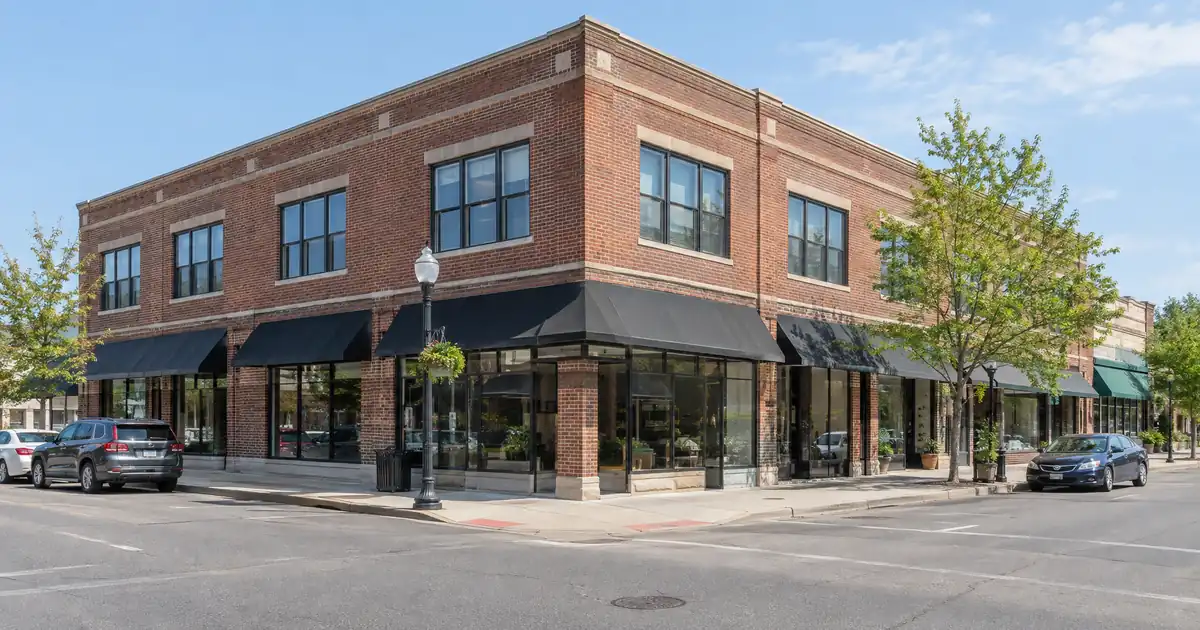
The Quick Read: It depends on the program, because an 8-unit building is commercial multifamily by market convention, yet select DSCR (debt service coverage ratio) programs reach up to 8 units with commercial-style underwriting, so you are not automatically forced into a traditional bank commercial loan, though whether a DSCR route exists depends on the lender’s unit cap.
- The market’s dividing line sits between four and five units. Eight units lands on the commercial side.
- Some DSCR programs stop at 4 units, some reach 8, and some reach 10. Never assume.
- A DSCR loan compares rental income to the loan payment. On 5+ units, many programs measure net income instead of gross rent.
- A stabilized, leased building fits DSCR best. Heavy vacancy or a major rehab points elsewhere.
- Leverage on a 5-to-8 unit file is typically at or below the range for smaller buildings, subject to lender guidelines.
Where Does Residential End and Commercial Begin?
The line falls at four units. One to four units is treated as residential. Five or more is treated as commercial. This is market convention, not a single federal definition, and lenders apply it in their own ways.
DSCR Calculator
Run the numbers in your market
Rate source: Freddie Mac 30-yr average via FRED® — Federal Reserve Bank of St. Louis · effective Oct 15, 2026
Prefilled with starting assumptions — enter your own rent or nightly figures, taxes, insurance, and HOA for a more accurate picture.
Program parameters update from Lendmire’s centralized guideline source. Taxes and insurance are editable estimates.
As of Oct 15, 2026 · General Freddie Mac market benchmark, not a Lendmire loan offer. Rent, nightly rate, occupancy, taxes, and insurance are editable estimates. Short-term rental figures are estimates only and vary significantly by season, property type, management approach, and local short-term-rental rules — confirm local regulations before relying on them. Qualifying income for short-term rentals varies by program — some use appraisal market rent, others use documented STR history or projections — and is confirmed in underwriting. Not a Loan Estimate, approval, or commitment to lend. Program availability and eligibility are subject to lender guidelines, credit approval, property review, and underwriting.
Why four? Most standard DSCR loans on 1-4 units are built to be pooled and sold into residential securitizations. A building with five or more units generally does not fit that structure. It gets grouped with commercial real estate loans instead.
That is the whole reason an 8-unit building feels like a different animal. The rent is still rent. The tenants still sign leases. But the lender’s playbook changes.
Some lenders have built a middle path. They keep several residential-DSCR features, such as qualifying on the property rather than your traditional personal-income documentation, but add commercial-style underwriting. Think lower leverage, heavier property paperwork, and a narrower pool of lenders.
Key Terms Defined
Eight-unit files use a lot of vocabulary. Here are the terms that matter.
- PITIA: principal, interest, taxes, insurance, and any association dues. It is the full monthly obligation on the loan.
- NOI (net operating income): rental income after vacancy and operating expenses, before any loan payment.
- LTV (loan-to-value): the loan amount as a percentage of the property’s value.
- Amortization: the schedule over which the loan balance is paid down.
- Balloon: a large remaining balance due in one lump when a shorter loan term ends, even though payments were scheduled over a longer period.
- Rent roll: a unit-by-unit list of tenants, rents, lease dates, and occupancy.
- Personal guarantee: your personal promise to repay if the borrowing entity cannot.
How Does the Coverage Math Change at Eight Units?
On 1-4 units, lenders typically divide gross market rent by PITIA. On larger buildings, many lenders switch to NOI divided by annual debt service. VoucherMatch’s small multifamily playbook makes the same point: at 5-10 units, lenders care more about NOI against debt service.
Why does that matter? Expenses come out first. The same building scores lower on NOI than on gross rent.
Run the numbers on a modeled 8-unit building. Say the rent roll produces about 1.30x on gross rent over PITIA. Once you subtract vacancy, repairs, management, and operating costs, the same building might land near 1.05x on an NOI basis. These ratios are illustrative modeling assumptions, not guidelines from any lender. But the gap is real.
Two cautions:
- The formula varies. Some small-balance programs still run gross rent over PITIA on 5+ units. Others use NOI. Confirm the formula before you accept a quoted ratio.
- Clearing the ratio is not cash flow. Coverage compares rent to the payment. Repairs, vacancy, management, utilities, and capital expenses sit outside the DSCR calculation.
Lenders also look at trailing operations, not just today’s rents. The same playbook models vacancy and credit loss at 5% on in-place trailing numbers and 7% on market rents. Expect your numbers to get haircut.
If you self-manage, underwriters usually still assign a management expense. Don’t budget zero.
What Changes in Your File Once You Cross Five Units?
Four things move: the appraisal, the documents, the guarantee, and the lender pool.
Appraisal. On 1-4 units, residential forms apply. Form 1025 covers small residential income properties, and Form 1007 covers the rent schedule. At five units, the appraiser typically moves to a full narrative report using the income approach. That means market rents, vacancy assumptions, operating expenses, and a cap rate drawn from comparable income-producing sales.
Documents. Expect a rent roll, copies of leases, and trailing operating statements. Entity papers are common. If your seller’s books are thin, expect friction.
Guarantee. Traditional banks usually want your personal signature on a commercial loan, even when an LLC is the buyer. DSCR programs vary. Borrowing through an LLC is common, subject to lender program eligibility.
Lender pool. Many lenders do not touch this size at all. That is why the segment gets called the gap: too big for residential DSCR, too small for institutional multifamily debt.
One more point on the business side. DSCR loans are designed for non-owner-occupied investment properties. Because they are business-purpose investor loans, they are reviewed differently from a standard owner-occupied mortgage. Federal Truth in Lending guidance treats business-purpose credit as exempt and looks at the primary purpose of the loan, so lenders document that purpose. This applies at any unit count, which means it does not separate four units from eight.
DSCR vs. a Traditional Commercial Loan on Eight Units
Here is the side-by-side. DSCR column details depend on the specific program.
| Factor | Bank Commercial Loan | 5-8 Unit DSCR Program |
|---|---|---|
| Reviewed on | Property plus borrower finances | Property income, per lender guidelines |
| Coverage formula | NOI over debt service | NOI or gross rent, varies |
| Typical structure | Shorter term, balloon | Longer fixed, some interest-only |
| Balloon risk | Common | Often absent, program-specific |
| Personal guarantee | Usually requested | Varies by program |
| Lender pool | Local and regional banks | Select lenders only |
| Best fit | Strong bank relationship | Stabilized building, property-driven file |
Traditional bank commercial loans commonly pair a 20-to-25-year amortization with a 5-to-10-year balloon. That means a refinance event waits at the end. Some investors like that. They re-leverage at each balloon as the building’s value grows. Others lose sleep over it.
DSCR programs on larger buildings may offer longer fixed terms and interest-only periods. Across the wholesale network, the 30-year fixed is the spine of the program. Extended terms such as 40-year and interest-only periods come through select lenders, and adjustable structures exist for investors who want them. Whether any of those apply to an 8-unit file depends on the program.
How Much Leverage and Credit Do You Need?
Expect a purchase on an investment property to run a lower leverage ceiling at eight units than a small residential rental. Across most programs in Lendmire’s network, a purchase of a 1-4 unit investment property typically lands at 75%-80% LTV, meaning 20%-25% down. Market commentary puts typical 5-8 unit DSCR caps at 70%-75% LTV, per that same VoucherMatch playbook. Plan for the lower end, and treat any exact number as program-specific.
Other typical ranges, subject to lender guidelines:
- Credit score: a 620 floor exists in parts of the network, most programs want around 660, and 700+ opens the strongest leverage tiers.
- Coverage: 1.00 is where many select programs start. A separate select-lender path takes coverage below 1.00, with leverage and terms adjusted. Stronger ratios open better pricing and leverage.
- Loan size: up to $3,000,000 on standard programs. Above $2,500,000, the network generally holds to 30-year fixed structures.
- Reserves: commonly around 6 months of PITIA, stepping up to about 9 months on loans above $1,500,000. Reserves vary by lender, leverage, loan size, and transaction type.
A bigger down payment lowers the payment and can lift your coverage. It does not erase the credit floor, the reserve rule, or property eligibility. The strongest files clear both tests: enough equity and enough rental coverage.
The complete DSCR loans guide covers the basics for newer investors.
Which Route Fits Your Eight-Unit Deal?
Match the loan to the building, not the other way around.
| Your Situation | Likely Fit |
|---|---|
| Fully leased, stable, clean books | 5-8 unit DSCR, if a program exists |
| Partly vacant | Bridge or other short-term financing |
| Heavy rehab planned | Bridge first, permanent loan later |
| Strong local bank relationship | Bank commercial loan |
| Want a long fixed term, no balloon | DSCR where available |
| Plan to occupy a unit yourself | Owner-occupant commercial route |
| Mixed-use with large commercial space | Usually commercial, not DSCR |
On occupancy: stabilized, leased buildings fit best. Eight leases do not equal eight stable income streams. Underwriters want operating history.
On mixed-use: an 8-unit building with a dominant commercial component is typically ineligible for DSCR programs. A fully residential 8-unit and a mixed-use 8-unit are different files.
On short-term rentals: the answer depends on the program. Standard-rental and short-term-rental files carry different leverage and seasoning expectations. Short-term rental rules can vary by city, county, HOA, and property type, so investors should confirm local rules before relying on projected rental income.
What Other Routes Exist (and Which Are Ruled Out)?
Short answer: agency debt is a narrow door, and ordinary residential loans are closed.
Agency debt is a contrast point only, because DSCR loans are not agency products, and agency eligibility is not open to every 8-unit deal. Larger balances tend to reach it more often.
Conventional and FHA-style residential loans are built for 1-4 units. They do not cover an 8-unit building. Bridge loans cover buildings that are not yet stable. Bank commercial loans cover relationship-driven deals.
Lenders also need not be local. An out-of-state investor can use a lender elsewhere, and DSCR programs are not tied to a local bank relationship.
What Happens at Nine or Ten Units?
It depends on the lender. Some DSCR programs cap at 8. Some stretch to 10. Past the cap, you are in commercial territory with a bank or another commercial lender. Each lender sets its own ceiling, so never read one program’s cap as a rule for all.
A Practitioner’s Note on Where Files Stall
Across the wholesale network, 8-unit files rarely fail on credit. They stall on paperwork and expenses. Seller operating statements arrive incomplete, the rent roll doesn’t match the leases, or the NOI comes in well below what the investor assumed. Running your own NOI before shopping avoids most of that surprise. A rent roll that clears 1.0x on gross can fall short on NOI.
Readiness Checklist Before You Apply
Test your own building first.
- Pull a current rent roll and match it to signed leases.
- Gather trailing operating statements, not just current rents.
- Calculate your own NOI, including a management expense and a vacancy allowance.
- Check occupancy. Stabilized buildings fit best.
- Confirm the building is fully residential and not scattered units.
- Confirm your credit profile and reserves against the ranges above.
- Ask each lender which coverage formula it uses before you accept a ratio.
The “scattered units” point matters. Five separate dwellings spread across locations are not one multifamily building. They generally fall back to 1-4 unit treatment per property.
Frequently Asked Questions
Is an 8-unit building residential or commercial?
Commercial, by market convention. One to four units is residential, and five or more is commercial. No single federal definition covers all lending, so lenders apply the line in their own way.
Can I get a DSCR loan on 8 units?
Sometimes. Some programs stop at four units, some reach eight, and some reach ten. Those that reach 8 use commercial-style underwriting with lower leverage, subject to lender guidelines and credit approval.
Do I need traditional personal-income documentation for an 8-unit DSCR loan?
DSCR loans qualify primarily on property-level rental income covering the payment, subject to lender guidelines. They still require property documents such as a rent roll, leases, and operating statements. Your credit profile and reserves are still reviewed.
Can I buy an 8-unit building in an LLC?
Yes, an LLC can be the buyer, and DSCR programs accept LLC borrowers. Traditional banks usually still want a personal guarantee. DSCR programs vary on that point.
What if the building is partly vacant?
Stabilized, leased buildings fit DSCR best. Heavy vacancy or a major rehab usually points to bridge or other financing first. You can move into a longer-term loan once the building is leased up.
Your Next Step
If you are buying or refinancing a rental property and want to see how the numbers work, Lendmire can help you compare DSCR loan options based on the property income, credit profile, leverage, and investor goals. As a broker, Lendmire arranges financing through select lenders in its wholesale network, across 41 markets including Washington, D.C. Call 828-256-2183, or use the quote request page.
An 8-unit building sits in the gap, and the investors who do best there are the ones who run their own NOI before any lender does.
For current guidelines and terms, see Lendmire’s DSCR loan programs page.
About Lendmire
Lendmire (NMLS# 2371349), a non-QM mortgage broker serving investors in 41 markets including Washington, D.C., helps structure DSCR scenarios commonly evaluated around a property’s rental income rather than personal income paperwork, subject to lender guidelines. A Scotsman Guide Top Mortgage Workplace in 2025 and 2026, Lendmire places loans through wholesale investor lenders and is not a direct lender.
Get Started
Ready to find the right loan for you?
In about 30 seconds you can review financing options available for your investment property. No commitment required.
Informational only. Not a Loan Estimate, approval, or commitment to lend. Program availability and eligibility are subject to lender guidelines, credit approval, property review, and underwriting.
References
1. VoucherMatch RentalCalcs – small multifamily playbook
This article is part of Lendmire’s DSCR loan program — full qualification details, guidelines, and scenarios live on the program page.
Related reading: DSCR Loan Reassessment Rules for a Purchase or Refinance · How to Improve Your Credit Tier for a Super Jumbo DSCR Loan · Can You Use One Super Jumbo DSCR Loan for 20 or More Rentals?
Brandon Miller
Founder & CEO, Mortgage Loan Originator, Lendmire LLC
- Mortgage Loan Originator · NMLS# 1129696 · Verify on NMLS Consumer Access
- North Carolina Real Estate Broker · License# 343312 · Verify on NCREC
- North Carolina Insurance Producer · License# 19053198 · Property, Casualty, Life, Health · Verify on NAIC SBS
- Lendmire LLC · Firm NMLS# 2371349 · Verify firm licensure
Important disclosures. Lendmire (NMLS# 2371349) is a licensed mortgage brokerage. Lendmire is not a direct lender, depository institution, or financial advisor. All loan inquiries are subject to lender underwriting; this article does not constitute a commitment to lend. Rates, terms, and program guidelines are subject to change without notice and vary by borrower profile, property type, and state. Information in this article is general in nature and is not financial, legal, or tax advice. Equal Housing Opportunity. NMLS Consumer Access: nmlsconsumeraccess.org.