
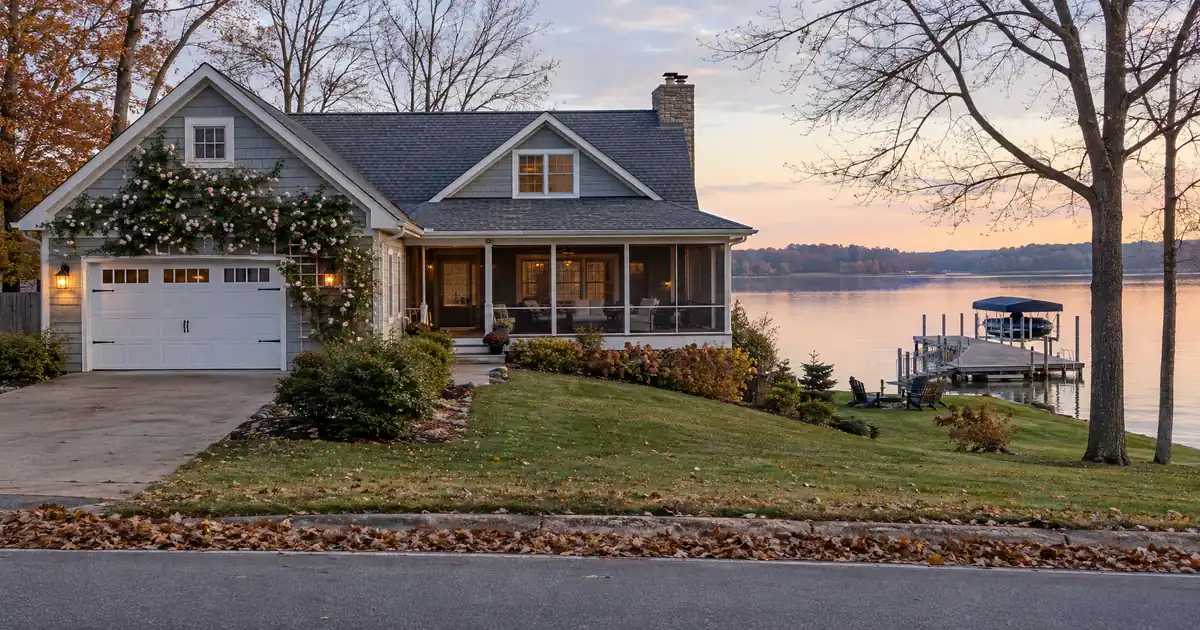
The Quick Read: It depends on how much you rent and who controls the booking calendar. A second home loan tolerates occasional rental when you keep the house mainly for your own use, but a lake house run as a real Airbnb business belongs in investment financing, where a DSCR loan is a common fit. A DSCR loan is reviewed primarily on property-level rental income covering the payment, subject to lender guidelines.
- Occasional rental can coexist with a second home loan when you use the house personally and control the calendar. The rental income just cannot be what qualifies you.
- A property manager or rental pool that controls bookings generally pushes the loan into investment territory.
- For hosted short-term rentals, select lenders in Lendmire’s wholesale network typically go up to 75% LTV on a purchase and up to 70% on a refinance. They look for a 640 score and about 12 months of hosting history, subject to lender guidelines.
- The risky move is signing a second-home affidavit while planning full-time hosting. Decide the classification before you close.
When Is a Lake House Rented on Airbnb Still a Second Home?
A lake house stays a second home when you genuinely use it, you keep exclusive control of it, and any rental is incidental. The loan is built on the idea that the house is yours to enjoy. Guests are a side effect, not the point.
Short-Term Rental Calculator
Run the STR numbers in your market
Rate source: Freddie Mac 30-yr average via FRED® — Federal Reserve Bank of St. Louis · effective Oct 15, 2026
Prefilled with starting assumptions — enter your nightly rate, occupancy, taxes, and insurance for a more accurate picture.
Short-term rental income is documented with a 12-month history or a market data report. Program parameters update from Lendmire’s centralized guideline source.
As of Oct 15, 2026 · General Freddie Mac market benchmark, not a Lendmire loan offer. Nightly rate, occupancy, taxes, and insurance are editable estimates. Qualifying income for short-term rentals varies by program — some use appraisal market rent, others use documented STR history or projections — and is confirmed in underwriting. Not a Loan Estimate, approval, or commitment to lend. Program availability and eligibility are subject to lender guidelines, credit approval, property review, and underwriting.
Lenders look at three things. The first is personal use: do you stay there for part of the year? The second is control: do you decide who stays and when? The third is income: is the loan approved on your own paycheck and assets, with the house’s rent left out of the math?
At application, you certify how you will use the property. At closing, you sign an occupancy affidavit, which is a sworn statement of how you will use the house. Many second-home loans also carry a rider that commits you to personal use for a stated period. Read both. The loan documents govern your situation, and a blog post or a forum thread does not.
An investor thread on BiggerPockets reads the conventional second-home language as allowing short-term rental while you are away. That is one investor’s interpretation. Treat it as a reason to ask your lender in writing, not as permission.
Lake houses are drift-prone. Demand peaks in summer, the owner is tempted to fill every open weekend, and a few weekends become a season. Then a season becomes the business.
The Control Test: Co-Hosts, Managers, and Rental Pools
Control is where most lake house owners get tripped up. If someone other than you decides who occupies the house, the property looks like a rental business, not a personal retreat. Helping with logistics is fine. Handing over the calendar is not.
| Arrangement | Who controls bookings | Likely read |
|---|---|---|
| You list, price, and message guests | You | Personal control |
| A friend hands off keys and cleans | You | Usually still personal control |
| Co-host edits calendar and pricing | Shared | Gray area; ask in writing |
| Management company accepts bookings | The manager | Investment territory |
| Lake community rental pool | The pool operator | Investment territory |
Lake communities with on-site rental programs are the classic trap. Joining one can feel like a convenience, but it hands occupancy decisions to someone else. Many lenders treat that as a rental property regardless of how many weeks you personally use the house.
Co-hosts are the real gray zone. A co-host who answers guest messages is one thing. A co-host who sets rates, accepts bookings, and blocks your own dates is another. If the arrangement is the second kind, assume the lender will see an investment property and ask before you sign anything.
Where Does Your Lake House Fall on the Usage Spectrum?
Most owners sit somewhere between occasional rental and full-time hosting. The table shows how a lender is likely to read four common patterns.
| Owner profile | Personal use | Rental pattern | Likely read |
|---|---|---|---|
| Weekend family | Most of the year | A few stays when away | Second home |
| Summer-only host | Some weekends | Most of peak season | Gray; confirm with lender |
| Manager-run | A few weeks | Manager fills calendar | Investment |
| Full-time listing | Rare | Listed year-round | Investment |
Picture a family that keeps the lake house for most weekends and lists it for a handful of stays when they are away. They keep the calendar, the income is modest, and they do not rely on it to pay the loan. That profile sits comfortably inside a second home loan.
Say you own a lake house and plan to host every weekend from late spring through early fall. You use it a few times yourself. The house is available to guests far more than it is available to you. Many lenders would read that as a rental business, and the loan documents you signed may not allow it. Ask first, and think about whether investment financing fits better.
Consider an owner who hires a management company to run everything. Guests book through the manager, and the owner mostly collects statements. Even if the owner uses the house twice a year, the manager controls occupancy. That is investment territory.
Run the numbers on a full-time listing and the result is clearer. Here the rent is the whole point of owning the house. A DSCR lender wants to see that rent clear the monthly obligation, and a rent that comfortably covers it might land around 1.2x. Nobody pretends this is a second home, and the loan should not pretend either.
Why Rental Income Does Not Help a Second Home Loan Qualify
On a second home loan, the lender reviews your file on your own income, debts, and assets. The lake house’s rental income generally cannot be used to help you qualify. The platform does not matter. Airbnb, VRBO, or a direct booking is all the same kind of income.
For contrast only, Fannie Mae’s Selling Guide describes the conventional second home. The borrower must occupy it for part of the year and have exclusive control of it. It cannot be a rental property or subject to an agreement that gives a management firm control over occupancy. The same page says that if rental income is identified, the loan can still be delivered as a second home so long as the income is not used to qualify. DSCR loans are not agency products, so this text does not govern them. It simply shows what second home means in the conventional world, and many non-agency programs borrow similar language.
The practical problem is clear. If your plan only works because guests pay the mortgage, you are leaning on the one income stream the second home loan will not count. That mismatch is the signal that the plan belongs in a different loan.
Rental income from a different property is a separate question. Income from other rentals you own may count under a lender’s rules. Income from the house you are financing generally does not.
What Changes When You Move to a DSCR Loan
A DSCR loan, short for debt service coverage ratio, divides the property’s rent by its monthly PITIA. PITIA is principal, interest, taxes, insurance, and any association dues. If the rent covers the payment, the number clears 1.00. The loan is reviewed primarily on property-level rental income covering the payment, subject to lender guidelines. For the full walkthrough, see Lendmire’s complete DSCR loans guide.
DSCR loans are designed for non-owner-occupied investment properties. Because they are business-purpose investor loans, they are reviewed differently from a standard owner-occupied mortgage.
Across the wholesale network Lendmire places files with, short-term rental programs typically run like this:
- Purchase: up to 75% LTV on the strongest files, with a coverage floor of 1.00.
- Refinance: up to 70% LTV on a short-term-rental refinance, with a coverage floor of 1.00.
- Cash-out: up to 70% LTV on short-term-rental collateral.
- Credit score: 640 minimum.
- Hosting history: about 12 months of host experience is usually expected.
- Loan size: up to $3,000,000 on standard programs, with smaller balances routed through select lenders.
- Reserves: commonly around 6 months of PITIA, though they vary by lender, leverage, and loan size.
Coverage of 1.00 is where many select programs start. A separate select-lender path takes coverage below 1.00, with leverage and terms adjusted. Every file is underwritten individually, and none of this is a commitment to lend.
One caution matters more than any of those figures. Clearing 1.00 is not the same as positive cash flow. DSCR compares rent to PITIA only. Repairs, vacancy, management fees, utilities, and capital expenses sit outside the calculation. A lake house that clears 1.00 can still lose money in a slow summer.
Seasonality is the lake-specific wrinkle. A lake house often has a short high season, so a full trailing twelve months of income captures the slow months as well as the peak. If your best months carry the year, expect the lender to look at the whole picture.
Many lake properties are log cabins. Log homes, manufactured homes, and barndominiums are not offered through these programs. If your lake property is one of those types, the loan question changes before classification even comes up.
For a deeper side-by-side, Lendmire’s piece Second Home Loan vs DSCR Loan for a Lake House: What Each Allows walks through the trade-offs. A larger down payment helps too. It lowers the payment and can lift the coverage number. But it does not erase leverage caps, credit floors, reserve rules, or property eligibility. The strongest files have enough equity and enough rental coverage.
If You Have Already Closed on a Second Home Loan
Owners who bought the lake house as a second home and then started hosting have options. The first is to be honest about where you stand. Intent at application matters. A genuine change in circumstances after closing is treated differently from a plan that already existed when you signed.
The risk is real, but it helps to keep it in proportion. Nolo explains that signing a second-home affidavit and then listing the house full-time can amount to occupancy fraud. Federal law allows fines up to $1,000,000 and up to 30 years in prison. Nolo also says a lender that finds out can accelerate the loan, meaning demand full repayment, and foreclosure can follow even if every payment was made. It adds that prosecutors rarely pursue isolated cases.
In practice, the more common outcome is quieter. The lender calls the loan due or pushes you into a refinance. That is a hassle you can avoid by correcting the classification on your own terms.
The cleaner path is to refinance into a DSCR investment loan once the hosting is real and documented. A lender will look at legal operation, documented income, and coverage. Platform history, payout statements, and bank deposits are the usual evidence. If you want the full picture of how each product reads a lake house Airbnb, Lendmire’s piece How a Second Home Loan or DSCR Loan Reads a Lake House Airbnb covers it.
Keep It, Restructure It, or Refinance It?
You have three realistic paths. The right one depends on how much you host and who controls the calendar.
| Path | Best fit | Main trade-off |
|---|---|---|
| Keep the second home loan | Rare, owner-run rental | Must stay incidental |
| Restructure your use | Summer hosting you can trim | Gives up some income |
| Refinance to DSCR | Real Airbnb business | Investment terms apply |
Keeping the loan only works if you honestly keep the rental incidental. Restructuring means trimming hosting back until it fits, which costs you income but keeps the original loan. Refinancing fits an owner whose hosting is already a business. You trade the second-home label for investment terms and a loan built to count the rent.
If you are still shopping, the cheaper-looking second home loan can be a false saving. When rental income is part of the plan, the loan cannot count it, so you are relying on the very income that justified the purchase. Classify the loan correctly before closing, and the rest of the decision gets easier.
Rules That Sit Outside Your Loan
Your loan can be fine while the lake community says no. Short-term rental rules can vary by city, county, HOA, and property type, so investors should confirm local rules before relying on projected rental income. A host can satisfy the lender’s occupancy rule and still break a local one.
Your insurance policy matters too. A standard homeowner policy may not cover paying guests, so ask your insurer how it treats short-term rental use.
Keep a simple file. A personal-use log, proof that you control the calendar, your permit paperwork, and your insurance confirmation answer most questions before they are asked.
Your Lender Call Checklist
Before you list the house, call the lender or the loan officer who handled it. Pull your note, your security instrument, and any second-home rider first.
- Does the loan allow short-term rental, and how much?
- Does the rider limit rental use for a set period?
- Does a co-host with calendar access change the classification?
- What happens if my hosting grows after closing?
- Can I refinance into an investment loan if it does?
Ask for the answers in writing. If you are buying and already plan to host, start with the right loan type. That means telling the lender the truth about your plan before you apply.
Key Terms Defined
Second home: a house you occupy for part of the year, control exclusively, and do not run as a rental business.
Occupancy affidavit: the signed statement at closing that says how you will use the property.
Rental pool: an arrangement where a manager or community program places guests in your house and controls bookings.
DSCR: debt service coverage ratio, a comparison of the property’s rent to its monthly payment.
PITIA: principal, interest, taxes, insurance, and association dues, which together make up the monthly payment a lender tests.
LTV: loan-to-value, the loan amount as a percentage of the property’s value.
Frequently Asked Questions
Is it fraud to list a second-home lake house on Airbnb?
Not by default. Occasional rental that stays incidental is generally compatible with a second home loan. It becomes a problem when you signed the affidavit while already planning full-time hosting. Describe your real plan at application, and ask the lender about any change later.
Does it matter whether I use Airbnb, VRBO, or book guests directly?
No. Lenders look at how the house is used and who controls it, not at which platform the guests come from. The rental income is the same kind of income either way.
Can a co-host help without changing my loan classification?
Usually yes when the co-host handles messages and cleaning while you keep control of pricing and the calendar. If the co-host accepts bookings or blocks your dates, the arrangement looks more like a management agreement. Confirm with your lender in writing.
Can I refinance out of a second home loan once the hosting is established?
Yes, that is a common path. Select lenders in Lendmire’s wholesale network typically look for about 12 months of hosting history, a 640 score, and coverage of at least 1.00 on a short-term-rental refinance, with leverage up to 70% LTV. Each file is underwritten individually.
Will a bigger down payment keep a rented lake house on a second home loan?
No. A larger down payment lowers the payment and can lift coverage on a DSCR loan, but it does not change the classification. The classification depends on use and control, not on how much equity you put in.
Next Step
If you are buying or refinancing a rental property and want to see how the numbers work, Lendmire can help you compare DSCR loan options based on the property income, credit profile, leverage, and investor goals. Lendmire is a broker that arranges financing through select lenders in its wholesale network, covering 41 markets, including Washington, D.C.
A lake house that earns its keep in peak season but sits quiet the rest of the year is the case where classification and seasonal coverage both need a straight answer before closing.
About Lendmire
A DSCR-focused mortgage broker, Lendmire (NMLS# 2371349) places investor financing across 41 markets — 40 states plus Washington, D.C. — with DSCR eligibility generally reviewed by the lender on property cash flow instead of tax returns, subject to lender guidelines. Scotsman Guide named Lendmire a Top Mortgage Workplace in 2025 and 2026.
Get Started
Ready to find the right loan for you?
In about 30 seconds you can review financing options available for your investment property. No commitment required.
Informational only. Not a Loan Estimate, approval, or commitment to lend. Program availability and eligibility are subject to lender guidelines, credit approval, property review, and underwriting.
References
1. BiggerPockets: Can a Second Home Be Used as a Rental Property
2. Fannie Mae Selling Guide: Occupancy Types
3. Nolo: Mortgage Occupancy Fraud
This article is part of Lendmire’s short-term rental loan program — full qualification details, guidelines, and scenarios live on the program page.
Related reading: How to Document Guest-House Rent on a Luxury Airbnb DSCR Loan · Liquid Cash vs Retirement vs HELOC as Airbnb DSCR Loan Reserves · How a Community-Property Lender Counts Spouse Debt on an Airbnb DSCR Loan
Brandon Miller
Founder & CEO, Mortgage Loan Originator, Lendmire LLC
- Mortgage Loan Originator · NMLS# 1129696 · Verify on NMLS Consumer Access
- North Carolina Real Estate Broker · License# 343312 · Verify on NCREC
- North Carolina Insurance Producer · License# 19053198 · Property, Casualty, Life, Health · Verify on NAIC SBS
- Lendmire LLC · Firm NMLS# 2371349 · Verify firm licensure
Disclosures. The information presented in this article is general market commentary, not financial, legal, or tax advice. Lendmire is a mortgage brokerage (NMLS# 2371349) — not a direct lender or depository institution — and loan placement is subject to lender underwriting. Nothing in this content represents a commitment to lend. Loan terms, pricing, and program availability vary based on borrower qualifications, property characteristics, and state of subject property, and are subject to change at any time. Lendmire complies with Equal Housing Opportunity requirements. Consumer access: nmlsconsumeraccess.org.