
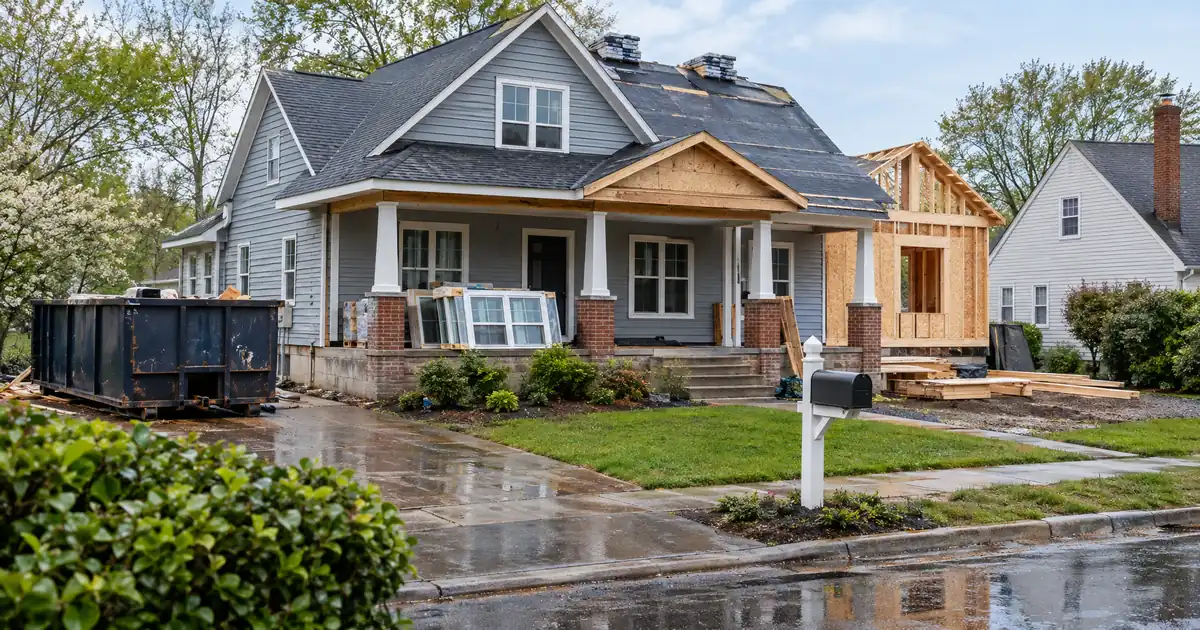
The Quick Read: On a DSCR exit refinance, the new lender sizes your loan on one of two bases: what you put into the property (cost basis) or what its own appraiser says the finished property is worth (appraised value). A large rehab bill does not set either number for you, because the appraiser decides what the work is worth and the lender’s written seasoning rule decides which basis applies.
- Seasoning (the minimum time you have owned the property) usually decides which basis the lender uses.
- A gut rehab bill is evidence of cost, not proof of value.
- Cash-out refinances on standard rentals top out around 75% LTV across most of the network, subject to lender guidelines.
- The rent test and the value test both have to pass, and the tighter one caps the loan.
The Honest Answer: Who Each Option Is For
Cost-basis sizing is for the investor who needs out of the bridge loan before the property has been owned long enough to be valued on its own. It is predictable, and it usually leaves some of your equity in the deal. Appraised-value sizing is for the investor who can wait out the seasoning period and whose finished property will appraise well above what was spent. It can return capital, but only if the appraisal holds.
DSCR Cash-Out Calculator
Run the cash-out numbers in your market
Rate source: Freddie Mac 30-yr average via FRED® — Federal Reserve Bank of St. Louis · effective Oct 15, 2026
Prefilled with starting assumptions — enter your property’s value, balance, taxes, and insurance for a more accurate picture.
Program parameters update from Lendmire’s centralized guideline source. Taxes and insurance are editable estimates.
As of Oct 15, 2026 · General Freddie Mac market benchmark, not a Lendmire loan offer. Property value, balance, taxes, and insurance are editable estimates. Maximum loan-to-value varies by lender, program, property type, and seasoning. Not a Loan Estimate, approval, or commitment to lend. Program availability and eligibility are subject to lender guidelines, credit approval, property review, and underwriting.
Neither is better in the abstract. The deciding question is simple: how far above your total cost will a stranger’s appraisal land, and can you afford to wait to find out? Across the wholesale network where Lendmire places files, the strongest exits clear two tests at once. The property needs enough equity and enough rental coverage.
Side-by-Side
The “cost basis” column reflects published industry norms for unseasoned exits. The “appraised value” column reflects the same norms for seasoned ones. Lendmire’s wholesale network places both kinds of files, and each lender’s written guidelines control.
| Factor | Cost-Basis Sizing | Appraised-Value Sizing |
|---|---|---|
| Review basis | Purchase price plus documented rehab | Lender-ordered appraisal of finished property |
| Typical trigger | Property not yet seasoned | Seasoning requirement met |
| Key documents | Closing statement, receipts, draw records | Appraisal with rent schedule, lease or rent roll |
| Property types | Standard rentals; manufactured, log, barndominium not offered | Same |
| Entity vesting | LLC possible, subject to program eligibility | Same, but retitling can disturb the seasoning count |
| Waiting period | Shorter; the loan sizes on what you spent | Longer; you wait for seasoning to clear |
| Reserve expectations | Commonly around 6 months of PITIA | Same, and varies with loan size and leverage |
| Main risk | Equity stays trapped in the property | Low appraisal leaves a cash shortfall |
PITIA means principal, interest, taxes, insurance, and any association dues. It is the full monthly housing obligation that your rent must cover.
Why Cost and Value Drift Apart on a Gut
A gut rehab is the scope where this gap is widest. You strip the house to the studs, replace systems and finishes, and spend a large sum. Then an appraiser compares the finished house to similar renovated homes that sold nearby.
McKissock Learning, an appraisal education provider, notes that cost does not always equal value because buyers in some markets pay well above or below replacement cost. It also says the sales comparison approach carries the most weight in most residential assignments. For you, that means the contractor invoices are not the appraiser’s starting point. Recent sales of comparable finished homes are.
Two things follow. First, necessary work such as a roof, wiring, plumbing, or mechanicals is required to make the house livable, but buyers pay a limited premium for it. Second, spending past the neighborhood’s price ceiling is simply not credited. An overbuilt gut can cost more than the market will ever pay.
For a deeper look at how the appraisal drives a bridge-loan exit, see Lendmire’s piece Hard Money Rehab Dollars Versus DSCR Appraised Value for a BRRRR.
How the Exit Lender Sizes the Loan
The process runs in a fixed order on most files we place:
1. The lender checks time on title against its written seasoning rule. Confirm what starts the clock. It is usually the deed recording, not rehab completion or a lease signing. 2. The lender picks the value basis. If seasoned, it sizes on appraised value. If unseasoned, it sizes on cost basis, or on the lower of cost and appraisal. 3. The lender orders its own appraisal. For a single-family rental, the appraiser also reports market rent on Form 1007, the Single-Family Comparable Rent Schedule. For two to four units, the report is the Small Residential Income Property Appraisal Report, Form 1025. DSCR files borrow these agency forms for appraisal reporting only. 4. Two tests run in parallel. The value test multiplies the LTV cap by the value basis. The rent test divides market rent (many programs use the lower of lease and market rent) by PITIA. 5. The new loan pays off the bridge. Whatever remains after closing costs is cash back. If the appraisal comes in light, you bring cash.
That second test deserves respect. A strong appraisal does not rescue a loan whose rent cannot cover the payment. And clearing the coverage ratio is not the same as positive cash flow. DSCR compares rent to PITIA only. Repairs, vacancy, management, utilities, and capital expenses sit outside the calculation.
The Back-Solve: Does Your Gut Budget Fit Under the Ceiling?
Work backward from the exit before you commit to the scope. Here is a modeled example. These are illustrative assumptions in index units, not market data, and they ignore closing costs.
Say your total cost basis is 100 index points: purchase plus documented rehab. Assume the cash-out ceiling is 75% LTV, which is where most standard-rental programs in the network top out. Final terms depend on lender guidelines, property type, leverage, and the borrower’s complete credit picture.
- If sizing falls back to cost basis, the loan is 75 points. Twenty-five points of your capital stay in the deal.
- If the property appraises at 100, the same loan is 75 points. Waiting bought you nothing.
- If it appraises at 125, the loan is about 94 points. You recover most of your capital, but not all.
- To get every point back, the appraisal must reach about 133 points. That is cost divided by the LTV cap.
That last number is the useful one. On a 75% cash-out ceiling, a gut returns all your capital only when the finished appraisal lands roughly a third above everything you spent. The other rule of thumb you may have heard, the 70% rule, is buying guidance. It is a purchase target of 60 to 75% of after-repair value minus repairs, according to investor-education material, not a lender requirement. These specifics are subject to lender guidelines and a full review of property, leverage, and credit.
Short-term rental collateral runs tighter. Cash-out on short-term rentals is typically 70% LTV, so the required appraisal premium is higher still.
When Cost-Basis Sizing Is the Better Fit
Choose the cost-basis path when certainty matters more than recovering every dollar of equity. It fits these situations:
- The bridge note is about to mature. If seasoning has not cleared, you may have to refinance on cost basis, extend the bridge, or sell. Cost basis at least keeps you in control.
- The appraisal will probably land near your cost. When the finished value and total spend converge, waiting for seasoning buys little. Lendmire’s piece How to Exit Hard Money at Cost Basis and Cash Out on Full Value walks through that decision.
- Comparable renovated sales are thin. If few finished homes have sold nearby, your appraisal is a guess you cannot control. Documented cost is a fact you can control.
- You overspent relative to the neighborhood. Spending above what the market pays is not credited by an appraisal, so cost basis may be the ceiling you actually have.
- Your hold costs are climbing. Seasoning is a second waiting period after the rehab, and carrying costs run through it.
The tradeoff is plain. Cost-basis sizing gives you a known loan and may leave equity trapped. It also depends on you documenting every dollar: receipts, draw records, and the closing statement.
When Appraised-Value Sizing Is the Better Fit
Choose appraised value when the finished property should appraise comfortably above your total cost and you can afford the wait. It fits these situations:
- Strong comparable sales support a high finished value. Several recent renovated sales close to your finish level and size give the appraiser real support.
- You bought well below market. A deep discount at purchase plus a disciplined scope creates the room that makes this path pay.
- Your capital is needed for the next deal. Pulling equity out only matters if it funds something. A seasoned, value-based exit is the route that can return it.
- Your carry is manageable. The waiting period costs money. Budget for it before you buy.
Market surveys report seasoning periods anywhere from 6 to 12 months across lenders, according to Lofty’s BRRRR guide. Across the programs we place files with, about 6 months is the common expectation, though each lender’s guideline controls. Cash-out sizing on a standard rental typically runs up to 75% LTV.
The honest downside is concentration risk. Investor-education sources describe the refinance appraisal as the make-or-break moment of the whole strategy, and adviceonly.com’s glossary notes that a shortfall simply becomes capital left in the property. Do not run your exit numbers on your own optimistic after-repair estimate. Use sold comparables, not asking prices.
Where the Two Tests Collide
Most investors focus on value and forget rent. A few patterns come up repeatedly in DSCR files built on heavy rehabs.
A high appraisal can still produce a smaller loan than expected if market rent on the rent schedule is modest. Many programs use the lower of the actual lease and appraiser’s market rent. On a single-family rental, the appraiser’s Form 1007 number governs the rent side, not the rent you hoped to charge.
Coverage floors vary. 1.00 is where many select programs start. A separate select-lender path takes coverage below 1.00, with leverage and terms adjusted. Stronger coverage typically opens better leverage and pricing tiers.
A bigger down payment or lower balance can lift the coverage ratio. It does not erase the leverage cap, the credit floor, the reserve rules, or property eligibility. Credit expectations also move with the tier: a 620 floor exists in parts of the network, most programs want around 660, and 700+ unlocks the strongest leverage tiers.
Short-term rental plans add another wrinkle. The appraiser’s rent figure reflects long-term market rent, which can sit below nightly-rate potential. Short-term rental rules can vary by city, county, HOA, and property type, so investors should confirm local rules before relying on projected rental income.
What Appraisers See in a Gut
The appraiser is not grading your effort. The appraiser is building a case from comparable sales. Fannie Mae’s appraisal guidance offers a useful contrast here. An appraisal relying solely on the cost approach is not acceptable in that framework, though the approach may support the analysis on a property undergoing renovation. DSCR loans are not agency loans, but the appraisal logic carries over: sales comparison leads, and cost is a cross-check.
You can help the appraiser see the work. Hand over a scope summary, before-and-after photos, permits where applicable, and the invoices. A wide gap between the cost approach and sales comparison is a signal for the appraiser to revisit inputs, and your documentation is how you win a reconsideration with comp-level evidence.
Tax treatment varies; consult a qualified professional.
If the Appraisal Comes In Low
Your options are limited but real:
- Bring cash to close the gap between the loan and the bridge payoff.
- Take a smaller loan if the property still clears the coverage test.
- Wait and reappraise if the shortfall is a seasoning or comp-timing problem.
- Request a reconsideration of value with comp-level evidence.
- Sell, if the numbers no longer support holding.
Which one fits depends on the bridge note’s maturity and how much carry you can absorb. Reserves matter too. Expect roughly 6 months of PITIA on most files. Loans above $1,500,000 typically step up to about 9 months, and conservative rate-and-term files at modest leverage under that size can see reserves waived. These vary by lender, leverage, loan size, and transaction type.
DSCR vs. conventional financing
There are two common ways to finance an investment property, and they qualify you differently — here’s how investors weigh them.
Why investors choose it
- Qualifies on the property’s rental income — no personal tax returns, W-2s, or pay stubs needed to document income.
- No personal debt-to-income ceiling to clear, so existing mortgages and obligations don’t cap your borrowing the same way.
- Can be closed in an LLC, keeping the property inside a business entity.
- Built for scaling — not held to the limit on number of financed properties that conventional financing applies.
- Underwriting centers on the deal: generally qualifies when the rent covers the payment, a 1.00x coverage ratio being a common baseline (confirmed in underwriting).
- Designed specifically for investment property, including long-term and, where the program allows, short-term rentals.
Where it’s strong
- Often the lowest ongoing financing cost for a buyer who fully qualifies on personal income — a fit for a first property or a cost-first purchase.
Trade-offs for investors
- Requires full personal income documentation and must fit within a debt-to-income limit — salary, existing debts, and other mortgages all count.
- Typically held in your personal name rather than a business entity.
- Caps how many financed properties you can carry, which can become a ceiling as a portfolio grows.
- Evaluates you as a borrower as much as the property, which usually means more paperwork.
How investors usually choose: a first or single property often optimizes for the lowest financing cost; portfolio builders often optimize for leverage, vesting in an LLC, and scaling past conventional caps. The right answer depends on your goals, the property, and current guidelines — both paths run through select lenders in Lendmire’s wholesale network, with eligibility and terms confirmed in underwriting.
Balanced Verdict
Run the break-even math before you buy the property, not after you finish the rehab. If your finished value probably lands near your total cost, cost-basis sizing is the honest plan and the equity you leave in the deal is the price of certainty. If you have strong sold comps, a deep purchase discount, and room to carry the property through seasoning, appraised-value sizing is where a gut earns its keep.
The middle ground is the risky one. Spending heavily on a scope that tops out under a third above cost leaves you stuck with capital in the property under either basis. Keep the full structure in mind: leverage caps, seasoning, reserves, and the rent test all apply, and every file is underwritten individually. Programs change.
Read Lendmire’s complete DSCR loans guide for the full qualification picture. If you are buying or refinancing a rental property and want to see how the numbers work, Lendmire can help you compare DSCR loan options based on the property income, credit profile, leverage, and investor goals.
Key Terms Defined
Gut rehab: A renovation that strips the property to its structure and replaces systems and finishes.
Cost basis: The purchase price plus documented rehab spending.
Appraised value: The value the lender’s own appraiser concludes, mainly from comparable sales.
Seasoning: The minimum time you must own a property before a lender sizes a loan on its new appraised value.
LTV: Loan-to-value, the loan amount as a percentage of the value basis the lender uses.
DSCR: Debt service coverage ratio, the property’s rent divided by its full monthly housing payment (PITIA).
Break-even appraisal: The lowest appraised value at which the new loan fully repays what you put in.
Frequently Asked Questions
Does a full gut add its cost in appraised value?
Not reliably. The appraiser values the finished home against comparable sales, so spending beyond what nearby renovated homes sell for is not credited. A gut may support a higher appraised value, depending on comps and underwriter review, but the invoices alone do not set it.
Can I refinance right after the rehab ends?
You can, but the lender will likely size on cost basis if seasoning has not cleared. About 6 months of ownership is the common expectation across the network, and each lender’s written guideline controls. Confirm what starts the clock before you buy.
Does the lender use my after-repair estimate?
No. The lender orders its own appraisal, and that value is the input. An optimistic estimate can trap capital, according to US Realty Training’s BRRRR guide, if you plan your exit around it.
What if the appraisal covers the loan but the rent does not?
The rent test can cap the loan below what the value test allows. Both tests run together and the tighter one controls. Coverage below 1.00 is available through select lenders in the network, with leverage and terms adjusted.
Can I vest the property in an LLC?
Often yes, subject to lender program eligibility. Moving title between entities can disturb the seasoning count, so settle the vesting plan before you buy and defer to the lender’s written guideline.
For current guidelines and terms, see Lendmire’s DSCR loan programs page.
About Lendmire
Lendmire — NMLS# 2371349 — is a mortgage brokerage specializing in DSCR investor loans, helping arrange financing across 41 markets, including Washington, D.C., through wholesale and investor-lending channels. The model centers on property-level rental income reviewed by the lender rather than W-2 documentation, subject to lender guidelines, suiting entity-owned and multi-property investors. Lendmire holds Scotsman Guide Top Mortgage Workplace recognition for 2025 and 2026.
Get Started
Ready to find the right loan for you?
In about 30 seconds you can review financing options available for your investment property. No commitment required.
Informational only. Not a Loan Estimate, approval, or commitment to lend. Program availability and eligibility are subject to lender guidelines, credit approval, property review, and underwriting.
References
1. McKissock Learning: The Cost Approach, an Underutilized Approach to Value
2. Fannie Mae Form 1007, Single-Family Comparable Rent Schedule
5. adviceonly.com: BRRRR Method Glossary
6. Fannie Mae Selling Guide B4-1.3-10 (contrast only)
7. US Realty Training’s BRRRR guide
This article is part of Lendmire’s DSCR loan program — full qualification details, guidelines, and scenarios live on the program page.
Related reading: Can a 5-Unit Building Qualify for a DSCR Loan? · DSCR Loan Reassessment Rules for a Purchase or Refinance · How Combined Loan-to-Value Is Set on One Luxury Rental With a DSCR First
Brandon Miller
Founder & CEO, Mortgage Loan Originator, Lendmire LLC
- Mortgage Loan Originator · NMLS# 1129696 · Verify on NMLS Consumer Access
- North Carolina Real Estate Broker · License# 343312 · Verify on NCREC
- North Carolina Insurance Producer · License# 19053198 · Property, Casualty, Life, Health · Verify on NAIC SBS
- Lendmire LLC · Firm NMLS# 2371349 · Verify firm licensure
Legal disclosures. Lendmire (NMLS# 2371349) is a state-licensed mortgage brokerage that arranges financing through wholesale lender relationships. Lendmire is not a direct lender, depository institution, or registered financial advisor. The discussion above is general informational content about real estate financing — it is not financial, legal, or tax advice, and readers should consult licensed professionals for guidance on their individual circumstances. Loan inquiries are subject to lender underwriting; this article does not represent a commitment to lend. Loan terms, rates, and qualification standards vary by borrower, property, and state, and are subject to change at any time. Equal Housing Opportunity. NMLS Consumer Access: nmlsconsumeraccess.org.